
Car Accidents | Virginia
What Evidence Helps Show Who Caused a Crash
A plain-language look at the records, recordings and witness accounts that can help explain how a collision happened.
Published November 9, 2026
After a crash, many people want to know who caused it and how that can be shown. Car accident fault evidence usually comes from several sources working together, not from one document. The short answer is that the strongest proof shows what each driver did before, during and after the crash.
What Evidence Helps Prove Fault After a Car Accident?
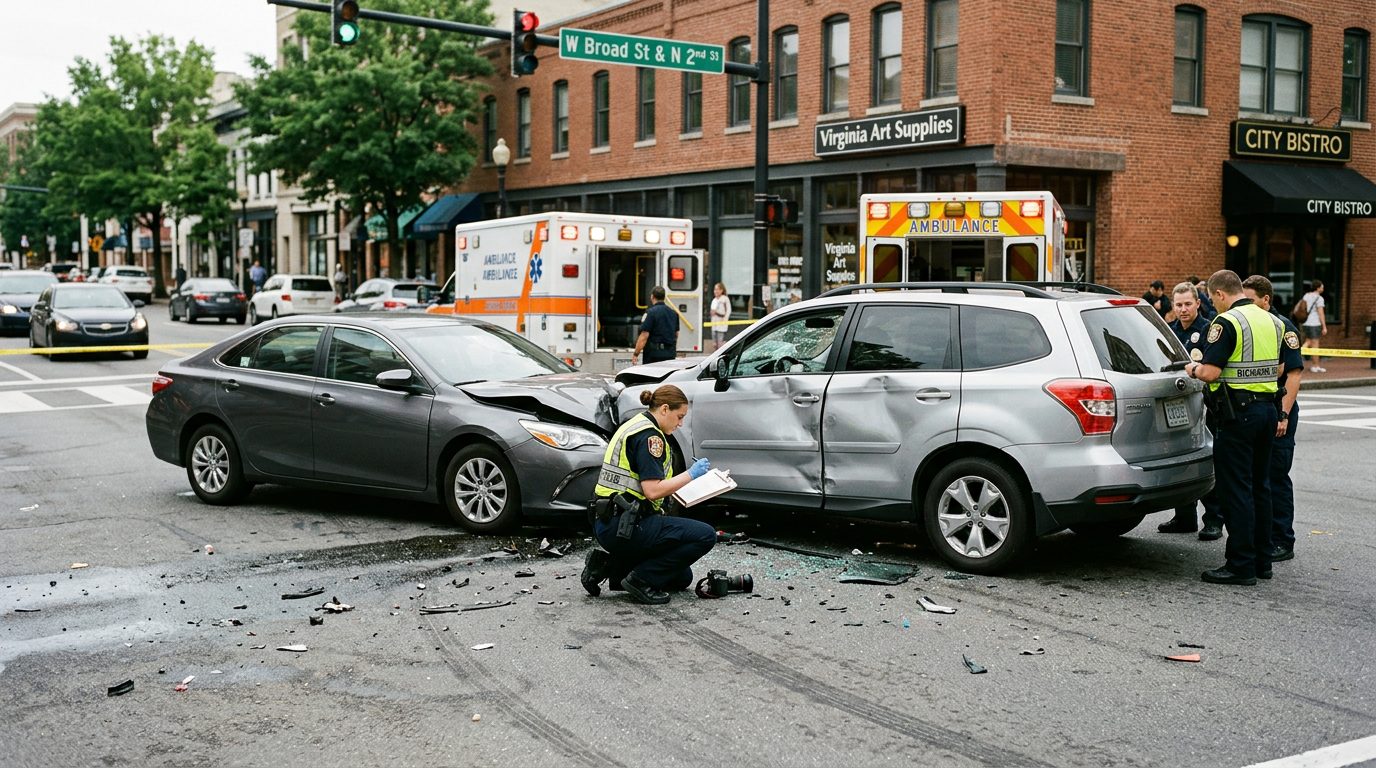
Photos, police reports, video, witness accounts and vehicle damage all help show each driver’s actions. Each item covers a different part of the story. A police report records what the officer saw and heard. Photos capture the scene as it looked that day. Video can show the order of events. Witnesses can describe what they saw from where they stood. Vehicle damage can show how the cars moved.
No single item decides fault on its own. A photo can contradict a driver’s account, and a witness can explain what a photo cannot show. When the pieces line up, they carry much more weight together than any one of them does alone. The firm’s guide to car accidents in Virginia covers the wider crash process, from the scene to the claim.
If a crash left you hurt and unsure what proof matters now, the firm is ready to talk through your situation and whether you may have a claim. Talk it through with Correll Law Firm — we can walk you through how a situation like yours is usually handled and what your options are.
Do Police Determine Fault in an Accident?
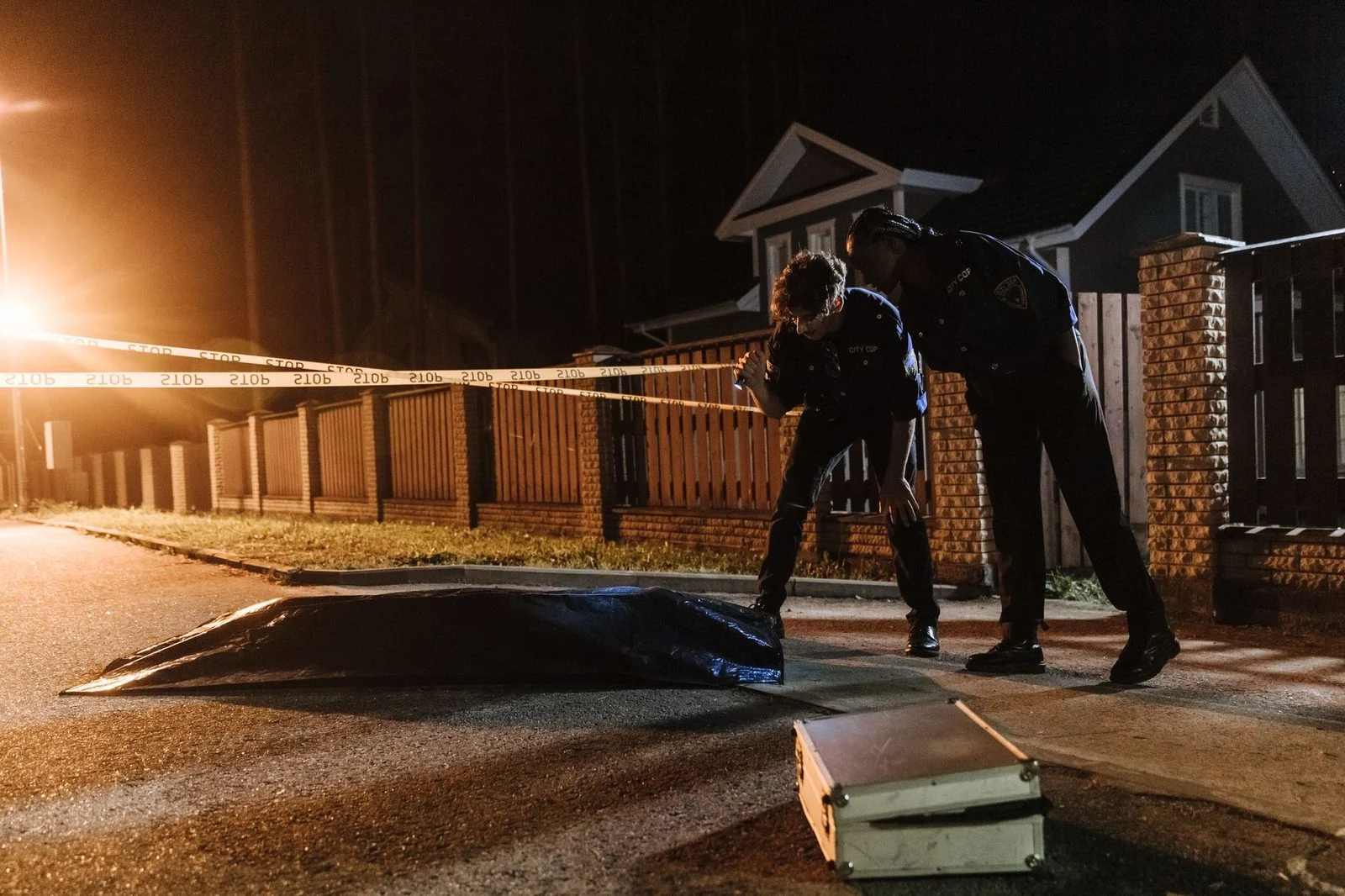
A police report is the officer’s record of what was seen and said at the scene. Police do not usually make the final fault decision, so the report is one piece of evidence, not the whole story. Most reports record the officer’s observations, statements from drivers and witnesses, road and weather conditions, and any citations issued.
Officers often arrive after the crash has happened. Their notes may rely on what people tell them in the minutes after impact. That is why the report should be read closely and compared with the other evidence. Errors in names, lanes or directions are worth raising early.
Virginia requires a driver involved in a crash with injury or death to stop and report it to police immediately (Va. Code §§ 46.2-371, 46.2-894). The duty to report a crash is separate from the deadline to file a lawsuit, which is covered later on this page.
Photos, Video, Dash Cam Footage, and Vehicle Damage
Scene photos and video often show where vehicles came to rest, skid marks, traffic signals, lane markings and debris. Photos taken on the day of the crash are often the most useful, because roads get cleared and cars get moved or repaired. Wide shots help, but close shots of damage and road marks help too.
Dash cam footage can show the order of events and the color of a signal. This footage is often time-sensitive. Many devices record over older files on a loop, so the footage may be lost unless it is saved. Nearby business and traffic cameras may also capture the crash, but their recordings are often kept for a short time only.
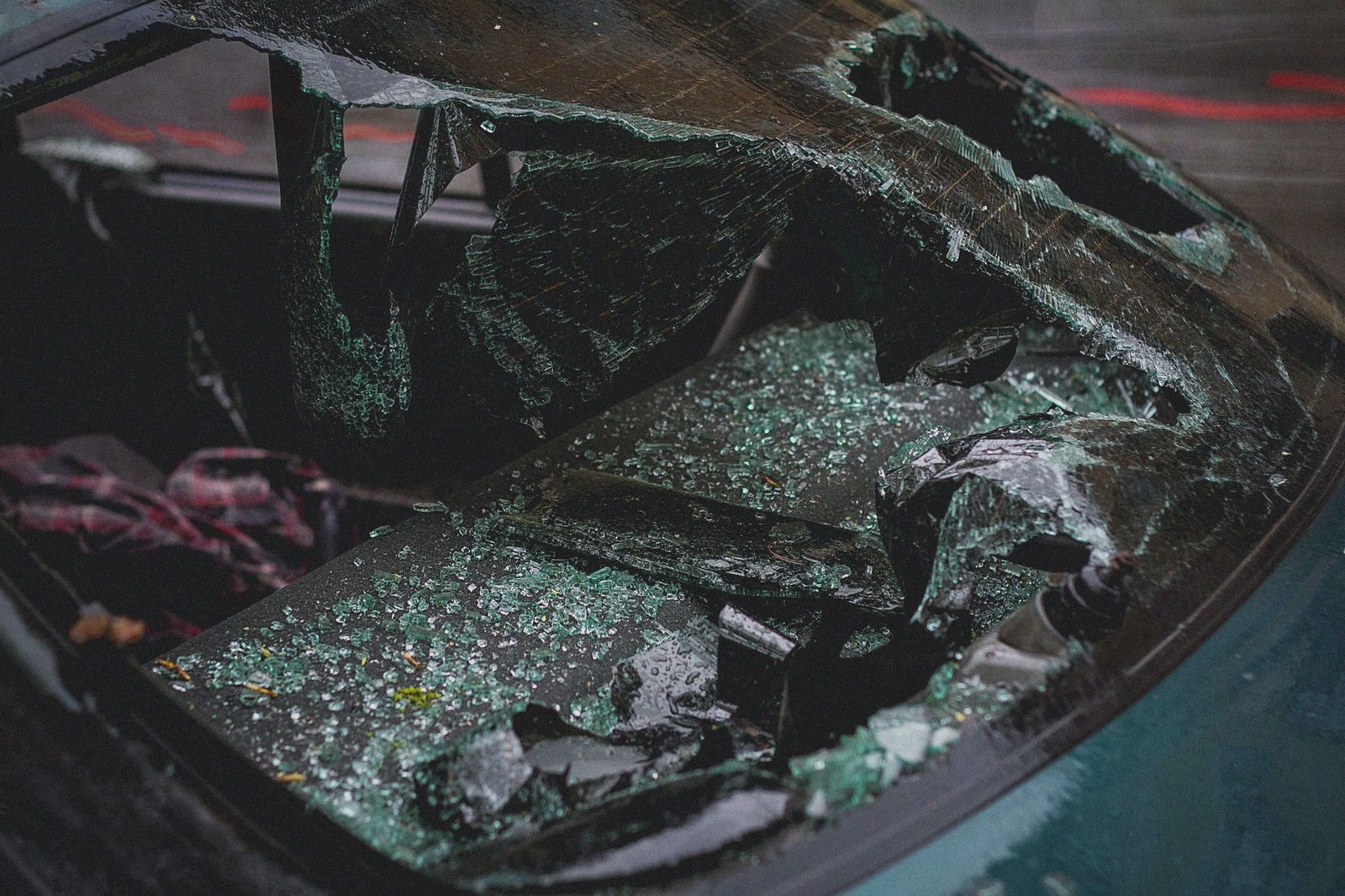
Damage is another clue. The location and pattern of damage can show the angle of impact and how each vehicle moved. Accident reconstruction analysis uses these details, along with measurements from the scene, to test each driver’s account. Vehicle damage alone does not settle the question, though. A rear-end impact often points one way, but the facts behind it still matter.
Witness Statements and Contact Information
Independent witnesses can help settle facts the drivers dispute, such as who had the green light or who changed lanes. A witness with no stake in the claim may be seen as more neutral than a driver. Get names and phone numbers before the witness leaves the scene.
Ask each witness what they saw and where they were standing. A view from across an intersection can differ from a view from the sidewalk beside the car. Write down what each witness said in their own words, along with the date and time.
Witness memories fade over time. Statements taken close to the crash are generally easier to rely on because details are fresh. A short written note made the same day often holds more detail than a recollection given months later.
How Do Insurance Companies Determine Fault?
Insurance companies review the evidence they receive and form an initial view of who was at fault. Common inputs include the police report, recorded statements from the drivers, photos, damage estimates and medical information. The insurer’s view is an assessment, not a final ruling.
If you disagree with the insurer’s view, you can send more evidence. Useful additions include witness contact details, video, and an accident reconstruction analysis. Property-damage liability coverage pays for damage an at-fault driver causes to other people’s vehicles and property, as the IIHS bulletin on liability claims explains.
An insurer’s review does not decide a lawsuit. If a case goes forward, a court or jury decides fault. Keep copies of everything you send and receive, so the record stays complete and in date order.
Why Admitting Fault at the Scene Can Hurt
Saying “it was my fault” at the scene can be repeated later as a statement about what happened. Statements made at the scene, in texts, on social media and to insurers are often saved. An apology can be heard as an admission, even when it is meant as courtesy.
In the minutes after a crash, the facts are often unclear, even to the people in the cars. A driver may not yet know what the other driver did or what the signal showed. Keep what you say short and factual. Exchange names, insurance details and vehicle information, and leave the question of blame for later, when the evidence is in.
Many people also post about the crash online without thinking. A photo of a short walk or a day out can be read by an insurer as proof that injuries were minor. Keeping social media quiet while a claim is open is a simple way to avoid that problem.
Not sure what your next step is?
Talk it through with Correll Law Firm — we can walk you through how a situation like yours is usually handled and what your options are.
What Happens If Both Drivers Share Some Blame?
Virginia follows contributory negligence: if you are found even partly at fault, you may be barred from recovering, with limited exceptions. Talk to a lawyer about your facts.
Evidence showing each driver’s actions before the crash is central to this question. The answer depends on the facts of the crash.
Commercial Vehicle Crashes and Additional Records
Crashes involving commercial trucks can involve records beyond the police report. Under 49 C.F.R. § 395.8, motor carriers must require each driver to record duty status for each 24-hour period, except for a private motor carrier of passengers (nonbusiness), as defined in § 390.5 of this subchapter. That record includes total miles driven and the vehicle identification.
Under 49 C.F.R. § 395.11, carriers must keep categories such as bills of lading, dispatch records and electronic mobile communication records, but need not keep more than eight supporting documents for a driver’s 24-hour period; if more than eight exist, they must keep the supporting documents containing the earliest and the latest time indications among the eight retained. These records can show where a truck was, when it was driving and what its trip looked like before the crash.
Retention rules matter too. Under 49 C.F.R. § 379.3, companies subject to that part must keep records for the minimum periods set out in its appendix A. After those periods, the records may be destroyed at company discretion, but this does not excuse compliance with any other government body’s longer retention requirements. A written request to preserve records, sent early, can therefore matter. Which records matter most turns on how the crash happened.
Preserving Evidence and Timing
Evidence can disappear quickly, so timing matters as much as the evidence itself. Virginia generally allows two years from the date of injury to file a personal injury lawsuit (Va. Code § 8.01-243(A)); the clock runs from the date of injury, not the date of discovery, with narrow exceptions. The statute text is at Va. Code § 8.01-243.
Some claims carry notice requirements that run out sooner, so the lawsuit deadline is not the only date to track. Video can be overwritten, damaged vehicles are often repaired or sold, and phone data can be lost. Keep the vehicle, photos, medical records and all correspondence with insurers in one place.
A dated written log of symptoms, treatment and missed work also helps. It keeps details fresh while memories are still clear.
Frequently Asked Questions
Does a police report prove fault in a Virginia car accident?
A police report is useful evidence, but it is one record among several. Fault is decided by insurers or, if a case goes forward, by a court or jury.
Are dash cam videos useful for proving fault?
Yes. Dash cam footage can show the order of events and traffic signals, so it is worth saving before it is overwritten.
What records can show fault in a commercial truck accident?
Duty-status logs and supporting documents, such as dispatch records, must be retained by the motor carrier for a period of not less than 6 months from the date of receipt. They can bear on fault, so early written requests help preserve them.