
Wrongful Death | Virginia
A Pedestrian Killed by a Car: Your Family Deserves Answers
Published October 28, 2026
A pedestrian killed by car wrongful death Virginia case follows a specific legal path. The family’s claim is brought by the personal representative of the person who died. Virginia’s statutes set the rules for who may recover, what the claim covers and when it must be filed. This guide explains those rules in plain language so families can understand where they stand.
Who can bring a wrongful death claim in Virginia?
The personal representative of the person who died brings the claim, not the family members who share in it, except that an action for fetal death under subsection B is brought by the natural mother.
A Virginia wrongful death action is filed by the decedent’s personal representative within two years of the death (Va. Code §§ 8.01-50(C), 8.01-244(B)), on behalf of the family members the statute protects.
The main rules are in Va. Code § 8.01-50 and Va. Code § 8.01-244.
Under Va. Code § 8.01-53, the statute sets an order of priority. A surviving spouse and children come first. Parents may share in the award with a surviving spouse when the decedent left no child or grandchild. When the decedent left a surviving spouse, children, or children of a deceased child, parents may share only if, within 12 months before the death, they regularly received support or services from the decedent for necessaries, including living expenses, food, shelter, health care expenses, or in-home assistance or care; but if the decedent left a surviving spouse and parents and no child or grandchild, the award is distributed to the surviving spouse and those parents without that condition.
If a loved one was killed while walking near a Virginia road, you do not have to face the questions alone, and we can talk through your facts. Talk it through with Correll Law Firm — we can walk you through how a situation like yours is usually handled and what your options are.

What kinds of crashes lead to these claims?
Most pedestrian wrongful death claims begin with a passenger vehicle striking someone walking along or crossing a road.
Some involve commercial trucks or other company vehicles. The firm handles truck accidents and commercial vehicle accidents, and those cases often raise questions about who owned and employed the driver.
Early fact-gathering usually focuses on the driver, the vehicle’s owner and the employer. Those answers shape which parties and insurers the family may need to examine.
Some drivers leave the scene. Hit-and-run crashes raise the same wrongful death questions, plus the question of who was driving. Police investigation and records may help identify the vehicle and driver, and witness names and camera footage can matter.
The Governors Highway Safety Association publishes state-by-state pedestrian fatality data, which shows how often these crashes occur across the country.
What must a driver do after a crash that kills someone?
A driver’s first legal duty after a fatal crash is to stop and report it.
Virginia requires a driver involved in a crash with injury or death to stop and report it to police immediately (Va. Code §§ 46.2-371, 46.2-894).
The duty appears in Va. Code § 46.2-371 and Va. Code § 46.2-894. Reporting the crash is not the lawsuit deadline. The two-year period in the next section applies to filing a lawsuit.
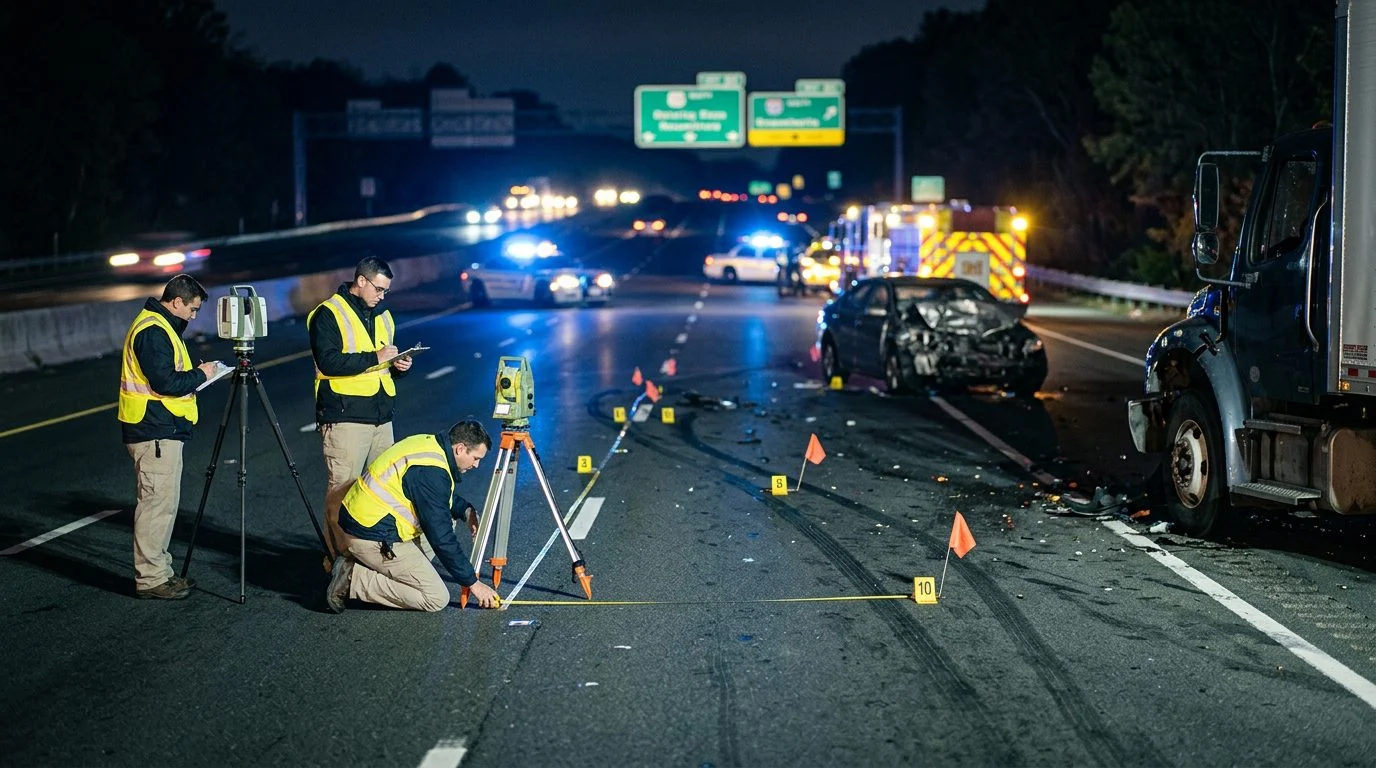
A police crash report may record the parties, the vehicles, the location and the officer’s observations. Families should keep photographs, witness names, and medical and funeral records connected to the death. Evidence such as vehicle data and photos can be lost over time, so early collection helps.
How long does a family have to file?
The wrongful death clock starts at the death, not the crash. Under Va. Code § 8.01-244, the two years run from the death of the injured person.
Virginia generally allows two years from the date of injury to file a personal injury lawsuit (Va. Code § 8.01-243(A)); the clock runs from the date of injury, not the date of discovery, with narrow exceptions.
That personal injury rule, found in Va. Code § 8.01-243, is separate from the wrongful death clock, so families should not mix the two. Some claims carry notice requirements that run out sooner than two years. One example appears in the questions below. Writing down the crash date and the date of death early keeps the timeline easy to check.
What can a Virginia wrongful death claim recover?
Virginia wrongful death damages cover the family’s sorrow, mental anguish and loss of the decedent’s companionship, guidance and care; lost income and services; medical expenses from the injury; funeral expenses; and, for willful or wanton conduct, punitive damages (Va. Code § 8.01-52). The statute at Va. Code § 8.01-52 lists these categories, and the amounts depend on the facts.
It is a separate claim from the family’s wrongful death claim.
Virginia allows punitive damages for actual malice, or for willful or wanton conduct or recklessness showing a conscious disregard for the safety of others, capped at $350,000 (Va. Code § 8.01-38.1). The limit is in Va. Code § 8.01-38.1.
Does the injured person’s own conduct matter?
Yes, it can, because Virginia’s fault rule can bar recovery entirely.
Virginia follows contributory negligence: if you are found even partly at fault, you may be barred from recovering, with limited exceptions. Talk to a lawyer about your facts.
Investigators look at the crash report, witness statements and physical evidence. They examine where the pedestrian was walking, the lighting and visibility, and the driver’s speed, attention and compliance with the duty to stop.
Not sure what your next step is?
Talk it through with Correll Law Firm — we can walk you through how a situation like yours is usually handled and what your options are.
How does a pedestrian wrongful death claim move forward?
The path depends on the facts, but a claim often moves through the same general stages.
- Gathering the crash report, medical records and funeral records.
- Identifying the drivers, vehicle owners, employers and insurers involved.
- Preparing the filing by the personal representative before the deadline.
- Negotiating with insurers, and filing a lawsuit where needed.
Insurers may contact the family early. Families can ask that questions be routed through the firm. Timing varies with the parties involved and whether a lawsuit is needed. The firm can explain each stage to the family in plain language.
How Correll Law Firm handles these cases
Correll Law Firm has offices in Harrisonburg and Winchester and handles pedestrian killed by car wrongful death Virginia matters. It serves families in the Shenandoah Valley, Richmond and Henrico County.
The firm also handles car accidents, truck accidents, commercial vehicle accidents, catastrophic injuries, traumatic brain injury and spinal cord injury. Work on a wrongful death matter starts with the crash report, medical records and the family’s timeline. Because a person may survive for a period after a crash, the firm’s catastrophic injury work can overlap with these matters. Support staff help with records and appointments.

Frequently asked questions about pedestrian killed by car wrongful death Virginia
Can more than one party be sued for the same death?
Yes, in some cases.
What if the driver left the scene?
Leaving the scene is a serious offense. A driver convicted under Va. Code § 46.2-894 for a crash that causes injury or death is guilty of a Class 5 felony.
Do notice rules apply to a claim against a city or county?
They can. A negligence claim against a county, city or town is forever barred unless a written statement of the nature of the claim, including the time and place of the injury, is filed within six months after the cause of action accrued, under Va. Code § 15.2-209. Failure to file the statement does not bar the claim if the locality’s attorney, chief executive or mayor, or any insurer or entity providing coverage or indemnification of the claim, had actual knowledge of the claim within six months after the cause of action accrued.