
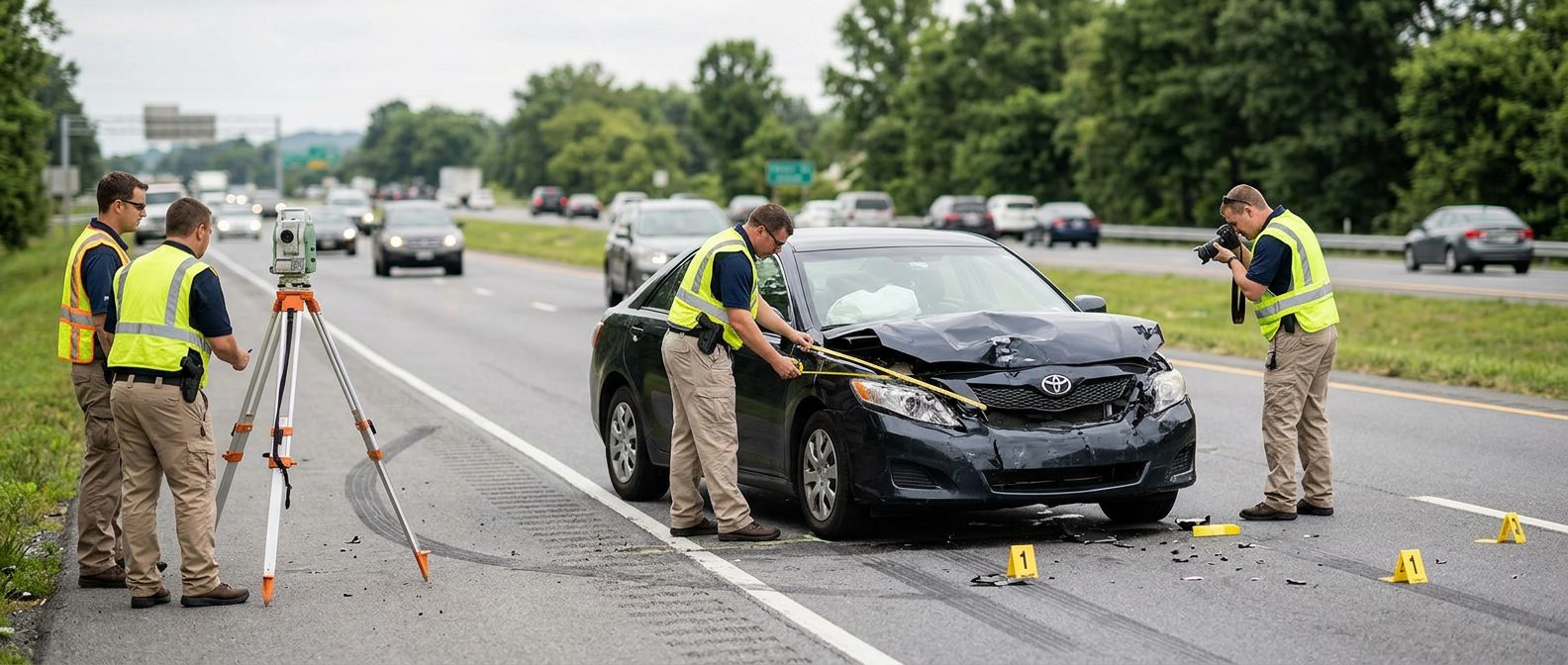
Catastrophic Injuries in Winchester, VA
When a serious injury changes everything
If you or a family member has suffered a catastrophic injury—a traumatic brain injury, spinal cord damage, or life-altering harm from a crash—Correll Law Firm is here to help you understand your rights and pursue the compensation you need.
Published October 02, 2026
Catastrophic Injuries in Winchester: What You Need to Know
A catastrophic injury is one that causes permanent, life-altering disability—leaving you unable to work, care for yourself, or live as you did before. These injuries don’t heal. They reshape your entire life, your family’s future, and your financial security.
If you or someone you love has suffered a catastrophic injury in a car or truck accident in Winchester, Front Royal, Harrisonburg, or anywhere in the Shenandoah Valley, understanding what qualifies as catastrophic and how the law treats these claims is the first step toward securing the compensation you need for lifetime care.

Not sure what your next step is?
Talk it through with our team — the first case evaluation is free, confidential, and carries no obligation.
What Qualifies as a Catastrophic Injury?
A catastrophic injury is defined by its permanence and its impact on your ability to function and earn a living. It’s not simply a severe injury that heals with time—it’s one that causes lasting, often permanent impairment.
The key difference lies in recovery. A broken leg that heals within months is serious but not catastrophic. A spinal cord injury that leaves you paralyzed is catastrophic. A traumatic brain injury that changes your memory, personality, or motor function for life is catastrophic. Catastrophic injuries typically require ongoing medical care, rehabilitation, and assistive devices. They prevent you from returning to work or force you into a lower-paying job. They demand attendant care, home modifications, and lifetime support.
Why does the term matter? Because catastrophic injuries can lead to claims for lifetime medical expenses, lost earning capacity over decades, and the cost of personal care.
Examples of Catastrophic Injuries
Catastrophic injuries take many forms, and all are common outcomes of serious car and truck accidents in Virginia.
Traumatic Brain Injury (TBI) occurs when a blow or jolt to the head disrupts normal brain function. Survivors often experience cognitive changes, memory loss, personality shifts, and loss of motor control. Some regain limited function; others remain permanently disabled. Recovery is unpredictable and often incomplete.
Spinal Cord Injury (SCI) results from trauma to the spine, causing partial or complete paralysis. An incomplete injury may leave you with weakness or loss of sensation in your legs or arms. A complete injury causes total loss of function below the injury site. Paralysis is permanent. Lifetime mobility aids, accessible housing, and personal care attendants become necessities.
Severe Burns destroy skin and underlying tissue, causing disfigurement, chronic pain, and infection risk. Survivors endure repeated surgeries, skin grafts, and ongoing wound care. Scarring and contractures (tightening of tissue) limit movement and function. Psychological trauma compounds the physical injury.
Amputation means the permanent loss of a limb. Beyond the immediate shock, amputees face phantom pain, the need for prosthetics, and the challenge of relearning basic tasks. Return to work often requires retraining or a career change.
Severe Crush Injuries occur when heavy force compresses the body, damaging organs, bones, and soft tissue. Survivors may suffer chronic pain syndromes, organ dysfunction, and permanent weakness. Recovery is slow and often incomplete.
In the Shenandoah Valley, these injuries arise most often from high-speed car collisions, multi-vehicle crashes, and commercial truck accidents—incidents that generate the force needed to cause lasting, life-changing harm.
The Long-Term Impact of Catastrophic Injury
Catastrophic injury doesn’t end when you leave the hospital. It begins there.
Lifetime Medical Expenses include surgeries, physical and occupational therapy, medications, imaging, specialist visits, and assistive devices (wheelchairs, walkers, communication aids). Home modifications—ramps, accessible bathrooms, specialized beds—are often necessary. These costs accumulate over decades and can easily exceed $1 million for a severely injured person.
Lost Earning Capacity is the income you can no longer earn. If you were 35 and earning $60,000 a year when injured, and you cannot work for the next 30 years, you’ve lost $1.8 million in gross income (before taxes and benefits). For higher earners, the loss is far greater. Vocational experts calculate this loss based on your age, education, work history, and the permanence of your disability.
Personal Care and Assistance Needs are real and ongoing. Paralyzed individuals need help with bathing, dressing, toileting, and transfers. Brain-injured survivors may need supervision and cognitive support. These attendant-care costs—often $20 to $40 per hour, 24 hours a day—dwarf immediate medical bills.
Psychological and Emotional Toll is profound. Depression, anxiety, and loss of identity are common among catastrophic-injury survivors. The loss of independence, the pain, the dependence on others—these take a psychological price that compounds the physical injury.
Family Impact is often overlooked. Spouses become caregivers. Children grow up with a disabled parent. Siblings may sacrifice their own futures to help. The financial and emotional strain on families is immense.
These realities explain why damages in catastrophic cases extend far beyond the initial hospital bill. They reflect the true cost of living with permanent disability.
Have questions about what happened?
Ask our team directly. The first conversation is free, confidential, and there is no obligation to continue.
Is It Worth Pursuing a Claim for a Catastrophic Injury?
It depends on the facts of your case. The cost of lifetime care is real, and a lawyer can help you evaluate whether pursuing a legal claim makes sense.
Insurance coverage and the defendant’s assets determine what recovery is possible. A negligent driver’s policy may carry $100,000 in liability coverage—far below the true cost of your care. A commercial truck operator may carry $1 million or more. In some cases, multiple parties share liability, multiplying available coverage. An attorney investigates all potential sources of compensation.
Legal representation helps you navigate the complexity. Insurance adjusters are trained to minimize payouts. They’ll argue that you’ll recover more than you will, that your injuries aren’t as permanent as they are, or that you contributed to the accident. An attorney counters these arguments with medical evidence, expert testimony, and the law.
Early legal guidance also protects your rights. Statements you make to an adjuster can be used against you. Social media posts can undermine your claim. Evidence disappears. Witnesses’ memories fade. An attorney preserves evidence, documents your injuries, and ensures you don’t inadvertently harm your case.
For many families, pursuing a claim is a practical necessity. The cost of lifetime care is too high to absorb alone.
Why Proving a Catastrophic Injury Can Be Challenging
Insurance companies don’t simply accept that an injury is permanent. They scrutinize long-term disability claims and often dispute causation.
Medical Documentation Must Establish Permanence. It’s not enough to show that you’re injured now. You must prove that the injury will never fully heal, that it will affect your function and earning capacity for life. This requires ongoing medical records, specialist opinions, and sometimes vocational assessment.
Defense Arguments Complicate Proof. The other side will argue that you may recover more function with time, that pre-existing conditions contributed to your disability, or that your limitations are psychological rather than physical. Comprehensive medical records and expert testimony counter these arguments.
Future Damages Require Expert Analysis. Calculating the cost of lifetime care involves life-care planners, economists, and vocational experts. These professionals estimate your life expectancy, project future medical costs, calculate lost earning capacity, and quantify the cost of attendant care. Their work is detailed and often challenged by the defense.
Strong legal representation ensures that your injury is thoroughly documented and expertly presented.
How Correll Law Firm Helps Winchester Residents with Catastrophic Injuries
Correll Law Firm represents people with catastrophic injuries throughout the Shenandoah Valley. We understand the stakes and the complexity.
We investigate the accident thoroughly to establish liability and fault. We coordinate with your medical providers to document injury severity and permanence. We engage life-care planners and economic experts to calculate the true cost of your lifetime care. We negotiate with insurance companies and defendants for fair compensation. When settlement is inadequate, we litigate on your behalf.
We also understand Virginia law. Virginia Code § 8.01-243 generally allows two years to file a personal injury lawsuit, with some exceptions. Virginia follows pure contributory negligence—if you were partially at fault, you may recover nothing unless the other party had a “last clear chance” to avoid the accident. These rules shape how we investigate and present your case.
With offices in Winchester and Harrisonburg, we serve the Shenandoah Valley.
What to Do After a Catastrophic Injury in Winchester
Seek immediate medical attention. Follow all treatment recommendations and keep detailed records of every visit, test, and procedure.
Document the accident. If possible, photograph the scene, vehicle damage, and your injuries. Gather contact information from witnesses.
Avoid discussing the injury or accident on social media or with insurance adjusters without legal counsel. Statements made early can be used against you later.
Contact a personal injury attorney early. The sooner you involve an attorney, the sooner evidence is preserved, witnesses are interviewed, and your rights are protected.
Don’t delay. Generally, Virginia’s statute of limitations requires that you file a lawsuit within two years after the cause of action accrues, unless otherwise provided by statute. Waiting too long can bar your claim entirely.

Want to know where you stand?
Tell us what happened and our team will walk you through the options available to you, at no cost.
Frequently Asked Questions
What is the difference between a serious injury and a catastrophic injury?
A serious injury heals with time and treatment; a catastrophic injury causes permanent or long-term impairment that affects your ability to work and live independently.
How long do I have to file a lawsuit in Virginia?
You generally have two years from the date of injury to file a personal injury lawsuit in Virginia (Va. Code § 8.01-243).
Can I recover if I was partially at fault for the accident?
Virginia follows contributory negligence: if you are found even partly at fault, you may be barred from recovering, with limited exceptions. Talk to a lawyer about your facts.
What damages can I recover in a catastrophic injury case?
Damages include medical expenses (past and future), lost earning capacity, pain and suffering, loss of enjoyment of life, and the cost of attendant care and home modifications.
What role do experts play in a catastrophic injury case?
Medical experts establish the permanence of your injury. Life-care planners and economists calculate the cost of lifetime care and lost earning capacity. Their testimony is often central to proving damages.
If you or a loved one has suffered a life-altering injury from a car or truck accident in Winchester or the Shenandoah Valley, you can reach out to us to understand your rights and options. Schedule a free case evaluation with Correll Law Firm today. We’ll listen to your story, explain your options, and help you understand what comes next.
Types of catastrophic injuries we handle
Traumatic brain injury
Damage to the brain from impact or trauma can cause cognitive, physical, and emotional changes that affect work, relationships, and daily life. Recovery is often long and unpredictable.
Spinal cord injury
Injury to the spine can result in partial or complete paralysis, loss of sensation, and permanent changes to mobility and independence. Medical care and ongoing support are often lifelong needs.
Severe burns, amputations, and organ damage
Catastrophic injuries from vehicle crashes can include severe burns, loss of limbs, and internal injuries requiring emergency surgery and extended hospitalization.
Wrongful death
When a crash or accident results in death, surviving family members may have a claim for the loss of income, companionship, and the costs of end-of-life care.
Why families turn to Correll Law Firm
We focus on catastrophic cases
We concentrate our practice on serious and catastrophic injuries from vehicle crashes—car accidents, truck accidents, and commercial vehicle collisions. We understand the medical, financial, and emotional complexity these cases demand.
Local presence across the Shenandoah Valley and beyond
With offices in Winchester and Harrisonburg, we serve families throughout the Shenandoah Valley, Richmond, Henrico County, and surrounding areas. We know the roads, the hospitals, and the community.
We listen and advocate for you
A catastrophic injury disrupts your life. We take time to understand your situation, answer your questions, and work toward fair compensation for your medical bills, lost wages, and pain and suffering.
No fees unless there is a recovery
No attorney’s fee unless we win. Clients may remain responsible for costs accrued in the case.
Time matters
Virginia law sets a deadline for filing a lawsuit after an injury. The sooner you reach out, the sooner we can review your case and protect your rights.
Ready to discuss your case?
Related practice areas
- Catastrophic Injury Lawyer in Virginia | Correll Law Firm
- Catastrophic Injuries Henrico County | Legal Help