
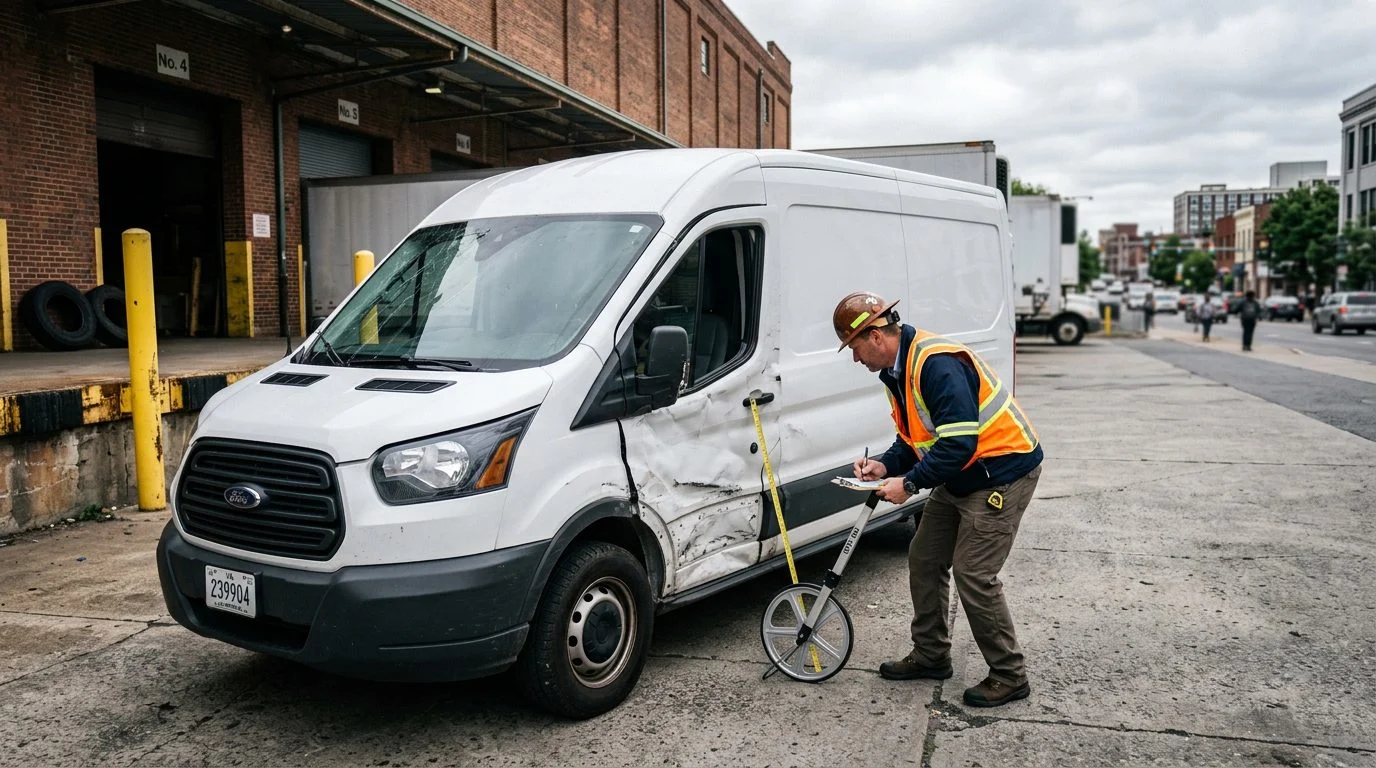
Commercial Vehicle Accidents | Winchester, Harrisonburg and Virginia
When a Commercial Vehicle Crash Turns Your Life Upside Down
Correll Law Firm focuses on people hurt in crashes with tractor-trailers, box trucks, buses and other commercial vehicles, serving the Shenandoah Valley, Richmond and Henrico County.
Published October 21, 2026
A commercial vehicle accident is a crash involving a large business vehicle, such as a tractor-trailer, box truck, delivery van or bus. These crashes often involve more parties and more records than a typical car crash, so the facts take longer to sort out. This page explains how these cases differ and what to expect from a commercial vehicle accidents law firm in Virginia.
What Is a Commercial Vehicle Accident?
A commercial vehicle accident happens when a vehicle used for business is involved in a crash that injures someone. Common examples include tractor-trailers, box trucks, delivery vans and buses.
These vehicles are much larger and heavier than passenger cars. Their size means a crash often causes more damage and more serious injuries for the people in the other vehicle. Many are driven for a company that moves freight or passengers, which adds a business layer to the crash.
Interstate commercial carriers generally must obtain a USDOT Number and follow federal motor carrier safety rules. Those rules create records that can matter after a crash, so a case may involve more than the police report.
If a commercial vehicle crash left you or someone you love seriously hurt, you may have a claim worth reviewing, and the firm is ready to review the facts with you. Talk it through with Correll Law Firm — we can walk you through how a situation like yours is usually handled and what your options are.

Who This Page Is For
This page is for people hurt in a crash with a commercial vehicle and for families who lost someone in one.
- Drivers and passengers in a car, SUV or pickup hit by a large truck or bus
- Pedestrians and cyclists struck by a commercial vehicle
- Family members facing a wrongful death after a commercial vehicle crash
- Readers who were seriously injured and want to understand their options
The firm serves people across the Shenandoah Valley, including Winchester and Harrisonburg, and people in Richmond and Henrico County.
You may not know yet whether your crash qualifies. You don’t need to sort out the legal details first.
What the Firm Handles in Commercial Vehicle Cases
The firm handles truck accidents, commercial vehicle accidents, car accidents, catastrophic injuries, traumatic brain injury, spinal cord injury and wrongful death.
- Truck accidents involving tractor-trailers and other large trucks
- Commercial vehicle accidents involving box trucks, delivery vans and buses
- Car accidents involving another vehicle
- Catastrophic injuries, meaning severe injuries that may have lasting effects
- Traumatic brain injury
- Spinal cord injury
- Wrongful death after a fatal crash
As a commercial vehicle accidents law firm serving Virginia, the firm focuses on these crash types and the serious injuries they can cause. The firm has offices in Winchester and Harrisonburg.
Serious injury cases often involve a long recovery. A lawyer reviewing these matters looks at medical records, bills and how the injury affects work and daily life.
How Commercial Vehicle Cases Differ From Car Crashes
Commercial vehicle cases often involve more possible responsible parties and more records than a typical car crash.
More possible parties. The driver, the employer, the vehicle owner, a company that loaded the cargo and a maintenance provider may each play a role. A lawyer can review the facts to see who may be responsible.
Shared responsibility.
Driving hours. Federal rules limit how long commercial drivers may work. Under the federal hours-of-service rule, except as otherwise provided in 49 C.F.R. § 395.1, a driver of a property-carrying commercial motor vehicle may not drive after a period of 14 consecutive hours after coming on-duty following 10 consecutive hours off-duty. A driver may drive 11 hours in that period.
Inspection and driver files. Carriers must keep each driver vehicle inspection report for three months from the date it was prepared, under 49 C.F.R. § 396.11. Under 49 C.F.R. § 391.51, except as provided in paragraph (d), a driver qualification file is kept while the driver works for the carrier and for three years after, and certain listed records may be removed from the file three years after the date of execution.
Records held by the company. A carrier often holds trip logs, inspection reports and dispatch data. You may not have access to these on your own, so early requests can matter. A lawyer may wish to review what has been preserved.
Insurance. A commercial vehicle may be covered by more than one policy, and each policy has its own limits. A lawyer can review which policies may apply.
Deadlines and Reporting Duties
Virginia sets a deadline for filing a lawsuit, and a driver in certain crashes must report them right away.
Virginia requires a driver involved in a crash with injury or death to stop and report it to police immediately (Va. Code §§ 46.2-371, 46.2-894). The two-year period below applies to filing a lawsuit, not to reporting a crash.
Virginia generally allows two years from the date of injury to file a personal injury lawsuit (Va. Code § 8.01-243(A)); the clock runs from the date of injury, not the date of discovery, with narrow exceptions.
A Virginia wrongful death action is filed by the decedent’s personal representative within two years of the death (Va. Code §§ 8.01-50(C), 8.01-244(B)), on behalf of the family members the statute protects.
Timing matters. The sooner a crash is reviewed, the easier it may be to preserve photos, witness names and records.
Virginia follows contributory negligence: if you are found even partly at fault, you may be barred from recovering, with limited exceptions (Williams v. Harrison, 255 Va. 272 (1998)). Talk to a lawyer about your facts.
What to Expect at a Free Case Evaluation
The process usually follows these steps.
- Describe the crash. Share the date, the place, the vehicles involved and the injuries you or your family member suffered.
- Bring what you have. Police reports, medical records and letters from insurance companies help the review.
- Attorney review. A lawyer looks at the basic facts and explains which Virginia rules may apply.
- Your decision. You may decide whether to continue after the evaluation.
Some people make avoidable mistakes early. They may give a recorded statement to an insurer before reviewing their situation, or they may lose photos and witness names that were easy to collect at the scene.
Every matter is different. The firm cannot predict how long a case will take, so the evaluation starts with your facts, not a timeline. Serious injury matters often need medical records gathered over time.
You may wish to discuss your situation with a lawyer before you make decisions about insurance claims or deadlines.
Not sure what your next step is?
Talk it through with Correll Law Firm — we can walk you through how a situation like yours is usually handled and what your options are.

Frequently Asked Questions
Is a tractor-trailer crash different from a car crash?
Yes. Commercial vehicles are larger, often run for a business and follow federal trucking rules, so more parties and records may be involved.
Can a truck crash cause a traumatic brain or spinal cord injury?
Serious crashes can cause these injuries. The firm handles traumatic brain injury and spinal cord injury matters.
Does a commercial vehicle accidents law firm in Virginia handle wrongful death cases?
Yes. Wrongful death is one of the matters the firm handles.