
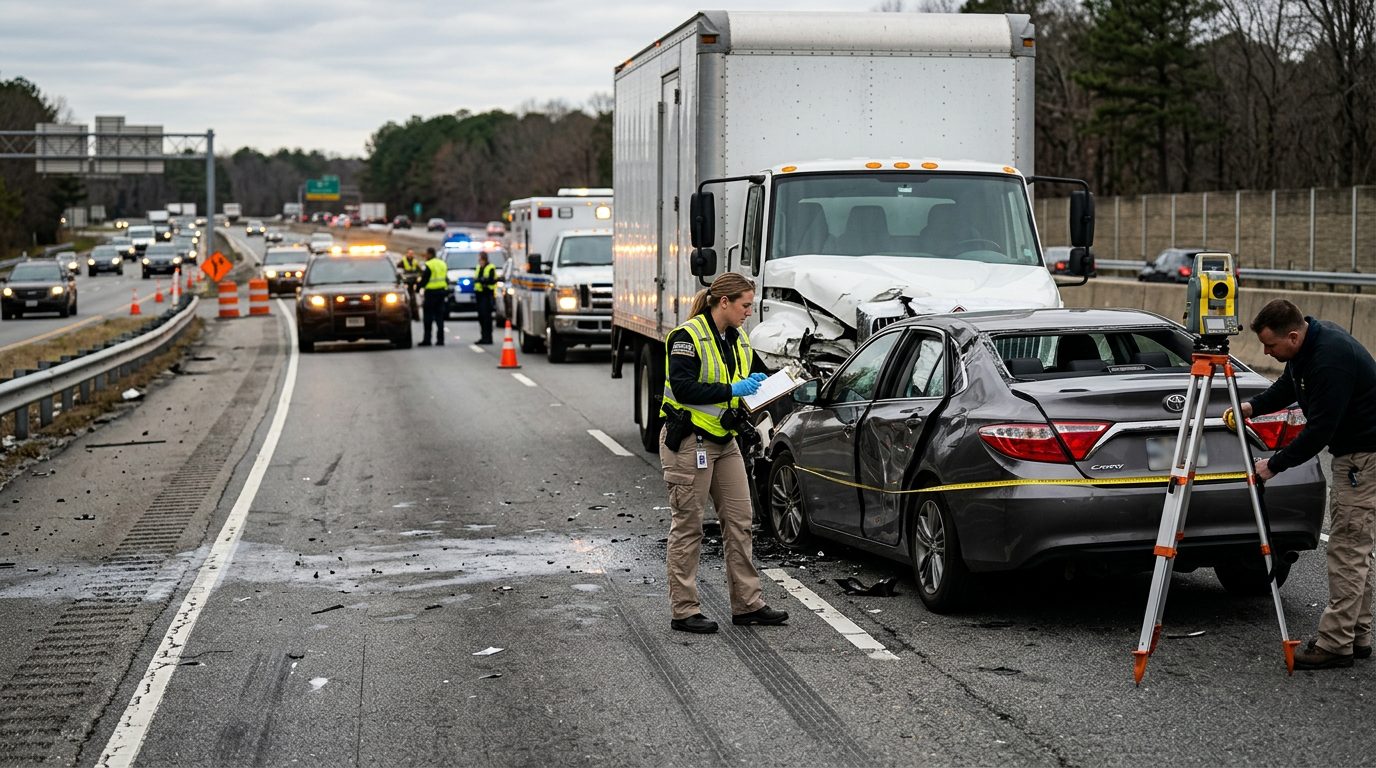
Spinal Cord Injury | Richmond and Henrico County
A Spinal Cord Injury From a Richmond-Area Crash: Clear Answers for Your Family
Correll Law Firm represents people seriously hurt in car and commercial truck crashes, including spinal cord injuries, from Richmond and Henrico County to the Shenandoah Valley.
Published October 23, 2026
A spinal cord injury damages the nerves that carry signals between the brain and the rest of the body. For people hurt in car and truck crashes, it can change movement, feeling and daily life. It can also raise questions about who may be responsible. Correll Law Firm handles car accidents, commercial truck crashes, catastrophic injuries and wrongful death cases for people from the Shenandoah Valley to Richmond and Henrico County. This page explains the basics in plain words.
What a Spinal Cord Injury Is
A spinal cord injury is damage to the spinal cord itself, the bundle of nerves inside the spine. The cord carries messages between the brain and the arms, legs, trunk and organs. When it is hurt, some of those messages can slow down or stop.
The bones of the spine protect the cord. An injury can happen even when no bone is broken. A bruise, tear or crush to the cord can change how the body works. Some crashes also tear the ligaments that hold the spine in place, letting bones shift and press on the cord.
Damage can happen at the moment of impact. Swelling and bleeding can make the injury worse over the next hours and days. That is one reason emergency teams watch closely and repeat tests. Because the cord is hard to see from outside, doctors often rely on imaging and exams.
For an overview, read the firm’s spinal cord injury overview. Families in Richmond and Henrico County can also review the Richmond practice page.
Not sure what your next step is?
Talk it through with Correll Law Firm — we can walk you through how a situation like yours is usually handled and what your options are.
How Spinal Cord Injuries Are Classified
Doctors usually classify a spinal cord injury by its level on the spine and by how complete it is.
Level. The spine has four main regions. The cervical spine is the neck. The thoracic spine is the upper and middle back. The lumbar spine is the lower back. The sacral spine sits at the base of the spine, near the hips. The level helps explain which parts of the body may be affected.
Completeness. A complete injury means little or no movement or feeling below the injury. An incomplete injury means some movement or feeling remains below it. Doctors often make this call only after the early swelling goes down and testing can be repeated.
Classification is a medical judgment, and it can change as a patient’s condition is tracked over time. Two people with injuries at the same level can have very different recoveries. A label on paper doesn’t predict one person’s future.
Cervical Spine Injuries and Early Signs of Spinal Shock
A cervical spine injury affects the neck. Spinal shock is a temporary loss of nerve function below the injury, and it can happen right after a spinal cord injury.
The cervical spine is the upper part of the spine, made of seven vertebrae called C1 through C7. Injuries here can affect the arms, hands and breathing, depending on the level and severity. Crash forces that snap the head forward or sideways can injure the neck.
Medical teams watch for signs of spinal shock in the first hours and days. These can include sudden loss of movement or feeling below the injury, loss of reflexes, low blood pressure, and changes in bladder or bowel control. Some signs are hard to judge from outside the hospital.
If a neck or back injury is possible, the person needs emergency medical care right away. Bystanders should avoid moving someone who may have a spinal injury unless they are in immediate danger. Keep the person still and wait for trained responders.
How Crashes Cause Spinal Cord Injuries in Richmond and Henrico County
Crashes cause spinal cord injuries when impact forces, a sudden stop or a rollover damage the spine. Common patterns include:
- High-speed impacts that throw the head and neck forward, backward or sideways
- Rollovers that can crush or twist the spine
- Ejection from a vehicle
- Pedestrian impacts, where a person is struck and thrown
- Commercial truck collisions, where the greater weight and momentum of a large vehicle can produce much more force
Virginia requires a driver involved in a crash with injury or death to stop and report it to police immediately (Va. Code §§ 46.2-371, 46.2-894). It is separate from the deadline to file a lawsuit, which is covered below.
For related reading, see the work van crash page.
Long-Term Effects, Recovery and Daily Life
Long-term effects depend mainly on the level and completeness of the injury. Recovery looks different for each person. Common effects can include:
- Weakness or paralysis in the arms, legs or trunk
- Pain, numbness or unusual sensations
- Bladder and bowel management needs
- Breathing support for higher-level injuries
- Changes in sexual function
Rehabilitation teams often focus on mobility, daily tasks and adaptive equipment such as wheelchairs, braces and home changes. Many people work toward greater independence over time, though progress varies.
A systematic review of the direct cost of spinal cord injury reports that medical and rehabilitation costs vary by treatment period and other factors. Benefits can matter while a claim is pending.
Research on repairing spinal cord tissue continues. Families should ask the medical team about current options. For questions about jobs, see can you work after a spinal cord injury crash.
Who May Be Responsible and What a Claim Can Involve
Responsibility may rest with the driver who caused the crash. In truck cases, it may also reach others, depending on the facts.
Virginia allows punitive damages for actual malice, or for willful or wanton conduct or recklessness showing a conscious disregard for the safety of others, capped at $350,000 (Va. Code § 8.01-38.1).
For crashes that cause death, a Virginia wrongful death action is filed by the decedent’s personal representative within two years of the death (Va. Code §§ 8.01-50(C), 8.01-244(B)), on behalf of the family members the statute protects. Virginia wrongful death damages cover the family’s sorrow, mental anguish and loss of the decedent’s companionship, guidance and care; lost income and services; medical expenses from the injury; funeral expenses; and, for willful or wanton conduct, punitive damages (Va. Code § 8.01-52).
Not sure what your next step is?
Talk it through with Correll Law Firm — we can walk you through how a situation like yours is usually handled and what your options are.
Time Limits and What the Process Involves
Virginia generally allows two years from the date of injury to file a personal injury lawsuit (Va. Code § 8.01-243(A)); the clock runs from the date of injury, not the date of discovery, with narrow exceptions. Timing questions deserve early attention, because some claims follow different rules.
A claim usually moves through a few stages:
- Gathering medical records, the police crash report, photos and witness details
- Working with medical providers to understand current and future care needs
- Communicating with insurance companies
- Deciding, based on the facts, whether to settle or file a lawsuit
Timelines vary. How long a claim takes depends on the facts, the medical picture and how the claim is resolved.

Frequently Asked Questions
Is every spinal cord injury permanent?
Outcomes vary with the level and completeness of the injury. Medical teams track recovery over time.
How does an injured person’s own share of blame affect a claim?
Virginia follows contributory negligence: if you are found even partly at fault, you may be barred from recovering, with limited exceptions (Williams v. Harrison, 255 Va. 272 (1998)). Talk to a lawyer about your facts.
Does a crash need to be reported to police?
Yes. Virginia requires the driver to stop and report the crash, as explained above. That duty is separate from the lawsuit deadline.
Family members do not file the claim; they share in the recovery.