
Brain Injury Car Accidents
Proving Fault in a Brain Injury Car Accident Claim
Virginia follows contributory negligence: if you are found even partly at fault, you may be barred from recovering, with limited exceptions (Contributory negligence bars recovery in Virginia). Talk to a lawyer about your facts. Learn what evidence matters and how to protect your claim from the start.
Published October 05, 2026
Proving fault in a traumatic brain injury car accident case means showing that the other driver’s negligence caused both the crash and your injury. Understanding what evidence courts and insurers use to determine fault can help you protect your claim from the start.
What Proving Fault Means in a Brain Injury Car Accident Case
Fault means establishing that the other driver’s negligence caused the crash and your traumatic brain injury. In Virginia, fault isn’t determined by a single factor or a percentage threshold. Instead, courts examine all the evidence to decide whether negligence occurred and who bears responsibility.
Proving fault is necessary to recover damages for medical expenses, lost income, pain and suffering, and other losses. Without proof that the other driver was negligent, an insurance company is unlikely to pay your claim. The strength of your fault evidence also affects settlement negotiations and what happens if your case goes to trial.
Questions about fault—including whether you share some responsibility for the accident—are decided based on your individual situation. Because Virginia law applies differently to different facts, you should discuss your accident with a lawyer to understand how it may apply to your case.
If a car accident left you with a brain injury and you're unsure how fault will be determined in your case, you may want to discuss your accident's specific facts with a lawyer. Talk it through with our team — the first case evaluation is free, confidential, and carries no obligation.

How Police Reports Help Establish Fault
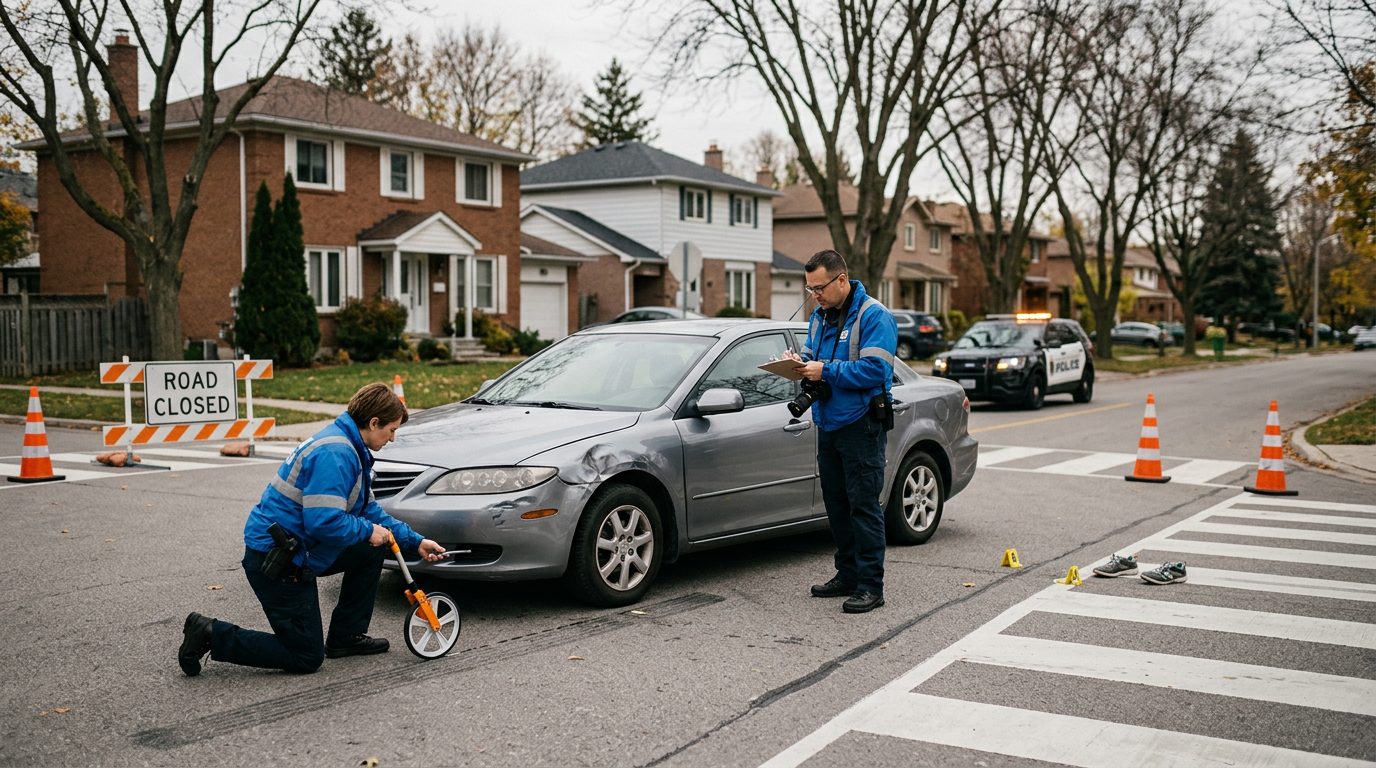
Police reports are often the first piece of evidence in a fault investigation. An officer who responds to the crash scene documents what they observe: the position of the vehicles, road conditions, traffic signals, skid marks, and debris patterns. The report also includes statements from witnesses and the drivers involved.
Citations issued at the scene can support a fault argument. If the other driver received a ticket for a traffic violation—running a red light, speeding, failing to yield—that citation is evidence of negligence. However, a citation alone is not conclusive proof of fault. Courts consider it as part of the larger picture of what happened.
The police report may also note vehicle damage patterns, which can indicate the point of impact and the direction of force. This information helps accident reconstruction experts and insurance adjusters understand how the collision occurred. Early access to the police report is important; request it from the police department as soon as possible after the accident.
Medical Records and Injury Documentation
Medical records establish the critical connection between the crash and your traumatic brain injury. Emergency room notes, CT scans, MRI imaging, and neurological examinations document that you suffered a brain injury immediately after the accident.
A traumatic brain injury is defined as a bump, blow, or jolt to the head that changes how the brain normally works. It can range from mild (concussion) to severe. Diagnosis typically involves imaging studies and a neurological exam performed by an emergency physician or neurologist.
Ongoing treatment records—follow-up appointments, therapy notes, and specialist evaluations—show the severity and long-term effects of your injury. These records are essential to proving the injury was directly caused by the accident, not a pre-existing condition. Insurance companies often argue that a brain injury existed before the crash or resulted from something else. Your medical documentation refutes that claim by creating a clear timeline: no brain injury before the accident, imaging and symptoms immediately after.
Seek medical attention as soon as possible after a car accident, even if you feel okay. Some brain injuries don’t cause obvious symptoms at first. Prompt medical evaluation creates a strong record that links your injury to the crash.
Accident Reconstruction and Physical Evidence
Accident reconstruction experts analyze the physical evidence left at the crash scene to determine how the collision occurred. They examine vehicle damage patterns, skid marks, impact angles, and the final resting positions of the vehicles. They also review photographs and measurements taken by police.
Modern vehicles often contain data recorders (sometimes called “black boxes”) that record speed, braking, steering, and other information in the seconds before and after a crash. This data can show whether a driver was speeding, braking, or accelerating at the moment of impact—powerful evidence of negligence.
Debris patterns tell a story too. The location and scatter of vehicle parts, glass, and other debris indicate the direction of force and the point of impact. A skilled reconstruction expert can testify about what the physical evidence shows regarding fault and how the accident happened.
Photographs of the crash scene—taken by police, witnesses, or the drivers—preserve evidence that may change or disappear. Vehicle damage, road conditions, traffic signals, and sight lines are all documented. This visual record supports the reconstruction expert’s analysis and helps a jury or insurance adjuster understand what happened.
Witness Statements and Testimony
Eyewitness accounts of how the crash happened are valuable evidence of fault. Witnesses who saw the accident unfold can describe what the other driver did—whether they ran a red light, failed to yield, were speeding, or drove recklessly.
Witness statements should be documented as soon as possible after the accident. Exchange contact information with anyone who saw the crash. Write down what they say while it’s fresh. Multiple witnesses who tell a consistent story strengthen your account of fault. Insurance adjusters and courts give more weight to testimony from independent bystanders than to statements from the drivers involved.
Witness credibility and consistency matter. A witness who was close to the accident, had a clear view, and is not connected to either driver carries more weight than a witness who was far away or has a relationship with one of the parties. If you go to trial, witnesses may testify under oath about what they saw.
Virginia courts examine all evidence—police reports, medical records, accident reconstruction, witness statements, and physical evidence—to determine whether negligence occurred. The facts of each accident are unique, and fault depends on those specific circumstances.
Questions about fault, including whether you share some responsibility for the accident, are decided based on your individual situation. Virginia law requires that fault questions be evaluated in light of the specific facts of your case, not by a rigid formula. This is why discussing your accident’s details with a lawyer is important. A lawyer can review your evidence and explain how Virginia law may apply to your particular circumstances.
Not sure what your next step is?
Talk it through with our team — the first case evaluation is free, confidential, and carries no obligation.
Why Proving Fault Matters for Your Brain Injury Claim
Establishing fault is the foundation for recovering compensation. Without proof of fault, an insurance company has no obligation to pay your claim. The strength of your fault evidence affects settlement negotiations. A strong case—with clear police citations, medical documentation, accident reconstruction, and consistent witness statements—puts you in a better position to negotiate a fair settlement.
If your case goes to trial, the evidence you gather now becomes the testimony and exhibits presented to a jury. Early investigation and evidence preservation are critical. Photographs fade, witnesses move away or forget details, and physical evidence is removed from the crash scene. Act quickly to preserve what you can.

Next Steps if You Have a Brain Injury from a Car Accident
Gather and preserve all evidence immediately: police reports, medical records, photographs of vehicle damage and the crash scene, and contact information for witnesses. Request the police report from the police department as soon as possible.
Seek immediate medical attention to document your injury and create a medical record. Tell the emergency room doctor or your primary care physician exactly how the injury occurred. Be specific about the accident and your symptoms. This creates a clear link between the crash and your brain injury.
Avoid discussing fault or the details of the accident with insurance adjusters without legal guidance. Insurance companies are skilled at using your own words against you. Let a lawyer handle communications with the insurance company on your behalf.
Contact a personal injury lawyer to review your case. A lawyer can investigate the accident, gather evidence, consult with medical and reconstruction experts if needed, and explain your options. Early legal guidance protects your claim and helps you understand what to expect.
If a car accident left you with a brain injury and you’re unsure how fault will be determined in your case, you may want to discuss your accident’s specific facts with a lawyer. Correll Law Firm handles traumatic brain injury claims throughout Virginia. No attorney’s fee unless we win. Clients may remain responsible for costs accrued in the case. Schedule your free case evaluation today.
Related practice areas
- Traumatic Brain Injury from Car and Truck Accidents: Legal Help in Virginia
- Wrongful Death Statute of Limitations in Virginia