
Truck Accidents | Virginia
Brain Injured in a Truck Crash? Understand Your Options Against a Trucking Company
Published October 31, 2026
The Short Answer: It Depends on the Facts
Often, a person hurt in a truck crash may be able to bring a claim against more than the driver. Whether a trucking company or another party can be named depends on the facts of the crash.
The question has two parts. The first is who may be responsible. The second is whether a claim is filed on time under Virginia law. Both parts turn on evidence, so early records matter.
A brain injury adds weight to both parts. Symptoms can appear or change over days or weeks, and proving the injury takes careful documentation. The firm handles traumatic brain injury cases for people hurt in car and commercial truck crashes. Its offices are in Winchester and Harrisonburg, and it represents people from the Shenandoah Valley, Richmond and Henrico County.
If a truck crash has left you or someone you love with a brain injury, you do not have to work through the next steps alone. Talk it through with Correll Law Firm — we can walk you through how a situation like yours is usually handled and what your options are.

Who May Be Responsible After a Truck Crash That Causes a Brain Injury
The driver, the company that runs the truck, and other parties tied to the vehicle or its load may each be connected to a crash. Which of them can be named depends on the facts.
Investigators usually ask direct questions. Who hired, trained or dispatched the driver? Who owned the truck and kept it in repair? Did a loading company, a maintenance shop or another motorist contribute? The answers show who controlled the truck and the trip.
A single crash can involve several potentially responsible parties.
Why a Brain Injury Changes What Needs to Be Documented
Medical records are the core proof of a brain injury. They should start early and continue over time.
Some people feel fine at the scene and notice changes later. Memory lapses, trouble concentrating, headaches, poor sleep and mood changes can show up days or weeks after a crash. Each visit should be written down.
Useful medical records often include:
- emergency and hospital records from the day of the crash
- imaging results
- neurological and neuropsychological testing
- follow-up notes from treating medical professionals
A personal symptom journal can fill gaps between visits. Write down the date, memory problems, trouble focusing, headaches, sleep, mood and any work or school changes. A dated journal gives a clear picture of daily life after the crash. It supports medical records but does not replace them.
Records That Help Identify Each Responsible Party
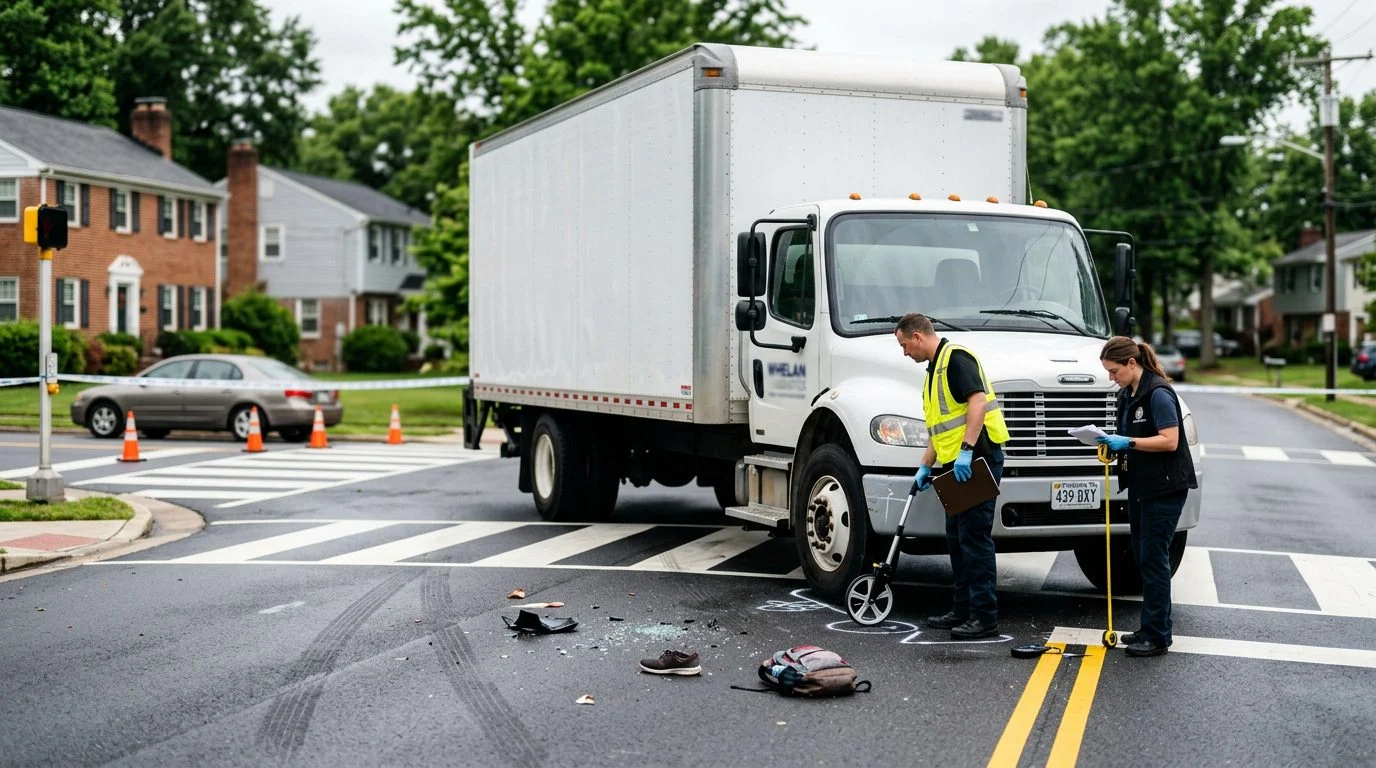
The most useful records show who controlled the truck, what it carried and what happened at the scene.
Start with the police crash report. Virginia requires a driver involved in a crash with injury or death to stop and report it to police immediately (Va. Code §§ 46.2-371, 46.2-894). The statutes are at Va. Code § 46.2-371 and Va. Code § 46.2-894. The report can list vehicles, drivers, witnesses and the officer’s observations.
Carrier and driver records come next. Certain carriers must obtain a USDOT number (Virginia DMV). Carriers, except a private motor carrier of passengers (nonbusiness), must require each driver to record duty status for every 24-hour period, and no driver or motor carrier may make a false report about it (49 C.F.R. § 395.8).
Vehicle and cargo records help too. Maintenance and repair history, electronic data from the engine or brakes where available, and shipping papers can show the truck’s condition and the route. Photos, dashcam or surveillance footage and witness names can be lost or overwritten over time, so collect them early.
How Virginia’s Filing Deadline Affects the Claim
The lawsuit deadline is one of the most time-sensitive questions in a truck crash case. Virginia generally allows two years from the date of injury to file a personal injury lawsuit (Va. Code § 8.01-243(A)); the clock runs from the date of injury, not the date of discovery, with narrow exceptions. Va. Code § 8.01-243(A) provides that, unless otherwise provided in this section or by other statute, every action for personal injuries, whatever the theory of recovery, shall be brought within two years after the cause of action accrues (Va. Code § 8.01-243).
Some claims carry shorter notice requirements. A negligence claim against a county, city or town requires a written statement of the nature of the claim, including the time and place of injury, within six months after the claim accrues, with limited exceptions (Va. Code § 15.2-209). Va. Code § 15.2-209 reads: “Failure to provide such statement shall not bar a claim against any county, city, or town, provided that the attorney, chief executive, or mayor of such locality, or any insurer or entity providing coverage or indemnification of the claim, had actual knowledge of the claim, which includes the nature of the claim and the time and place at which the injury is alleged to have occurred, within six months after such cause of action accrued.” Va. Code § 15.2-209 reads: “Every claim cognizable against any county, city, or town for negligence shall be forever barred unless the claimant or his agent, attorney, or representative has filed a written statement of the nature of the claim, which includes the time and place at which the injury is alleged to have occurred, within six months after such cause of action accrued.” A claim against the Commonwealth or a transportation district requires a written statement within one year (Va. Code § 8.01-195.6). Va. Code § 8.01-195.6 reads: “Failure to provide such statement shall not bar a claim against the Commonwealth or a transportation district, provided that (i) for claims against the Commonwealth, the Division of Risk Management or any insurer or entity providing coverage or indemnification of the claim or the Attorney General or (ii) for claims against a transportation district, the chairman of the commission of the transportation district, had actual knowledge of the claim, which includes the nature of the claim, the time and place at which the injury is alleged to have occurred, and the agency or agencies alleged to be liable, within one year after such cause of action accrued.” Va. Code § 8.01-195.6 reads: “Every claim cognizable against the Commonwealth or a transportation district shall be forever barred unless the claimant or his agent, attorney or representative has filed a written statement of the nature of the claim, which includes the time and place at which the injury is alleged to have occurred and the agency or agencies alleged to be liable, within one year after such cause of action accrued.”
Notice rules can expire before the two-year lawsuit period ends. Preserving the crash report, vehicle data and footage early protects the evidence, even though the lawsuit period is longer.
How Fault and Willful Conduct Can Affect a Claim
Fault turns on how the crash happened, and the records above are the main evidence of that. Virginia follows contributory negligence: if you are found even partly at fault, you may be barred from recovering, with limited exceptions. Talk to a lawyer about your facts.
The driver’s logs, the maintenance history and the crash report can help show what happened before the collision.
Some crashes involve conduct beyond ordinary carelessness.
Not sure what your next step is?
Talk it through with Correll Law Firm — we can walk you through how a situation like yours is usually handled and what your options are.

When a Brain Injury Crash Is Fatal
When a crash causes death, Virginia law provides a wrongful death action (Va. Code § 8.01-50). The timing rules appear in Va. Code § 8.01-244.
A Virginia wrongful death action is filed by the decedent’s personal representative within two years of the death (Va. Code §§ 8.01-50(C), 8.01-244(B)), on behalf of the family members the statute protects. Virginia wrongful death damages cover the family’s sorrow, mental anguish and loss of the decedent’s companionship, guidance and care; lost income and services; medical expenses from the injury; funeral expenses; and, for willful or wanton conduct, punitive damages (Va. Code § 8.01-52). The damage categories are set out in Va. Code § 8.01-52.
Family members do not file the action. They share in the recovery. Va. Code § 8.01-53 sets out which family members share in the recovery, and the order of priority depends on which of them survive.
The records described above apply equally to a fatal crash. The police report, carrier records and medical records help show how the crash happened and how the injury led to death.
Common Questions
What should be gathered first after a truck crash?
Get the police report, witness names and photos of the scene and vehicles when possible. Keep every medical record from the start.
Can more than one company be sued?
It may be possible, depending on the facts.
A truck crash that causes a brain injury can involve more than one responsible party. Virginia’s lawsuit deadline, notice rules and fault standards are separate questions, and early records help with all of them.