
Wrongful Death
Proving Wrongful Death in Virginia: What You Must Show
Understanding the legal elements required to hold someone accountable when a death results from negligence or misconduct.
Published October 05, 2026
Is It Hard to Prove a Wrongful Death Lawsuit in Virginia?
Proving a wrongful death claim in Virginia is not simple, but it is not impossible either. Building a personal injury claim generally involves showing what happened, how the other party’s conduct caused harm, and the losses that resulted. A lawyer can explain how these pieces fit together based on the facts of your situation. The difficulty lies not in the law itself, but in gathering the evidence, managing the emotional weight of the process, and navigating the specific facts of your situation.
If you've lost a loved one in a car or truck accident and are trying to understand whether you have a wrongful death claim, you may wish to talk with us about what happened. Talk it through with our team — the first case evaluation is free, confidential, and carries no obligation.

What You Have to Prove in a Wrongful Death Claim
Virginia law allows the personal representative of a deceased person to bring a wrongful death action if the death was caused by the wrongful act, neglect, or default of another person or entity. To succeed, you must prove four elements:
- Duty of care — the defendant owed a legal obligation to the person who died
- Breach of duty — the defendant failed to meet that obligation
- Causation — the breach directly caused the death
- Damages — the death resulted in measurable losses to the family or estate
Each element must be proven separately. If any one is missing or unproven, the claim may fail.
Duty of Care
The first element requires showing that the defendant owed a legal duty of care to the person who died.
In car and truck accidents, drivers owe a duty to operate their vehicles safely, obey traffic laws, and avoid conduct that endangers others. Commercial vehicle operators and the companies that employ or own them also owe duties to the public. In most accident cases, establishing that a duty existed is straightforward—the law presumes that anyone operating a motor vehicle on a public road owes a duty of reasonable care to others on that road.
Breach of Duty
You must prove the defendant failed to meet that duty—that they acted negligently or recklessly.
Breach is often the clearest element to establish in accident cases. Evidence of breach may include:
- Police accident reports citing traffic violations or unsafe driving
- Witness statements describing the defendant’s conduct
- Traffic camera or dashcam footage
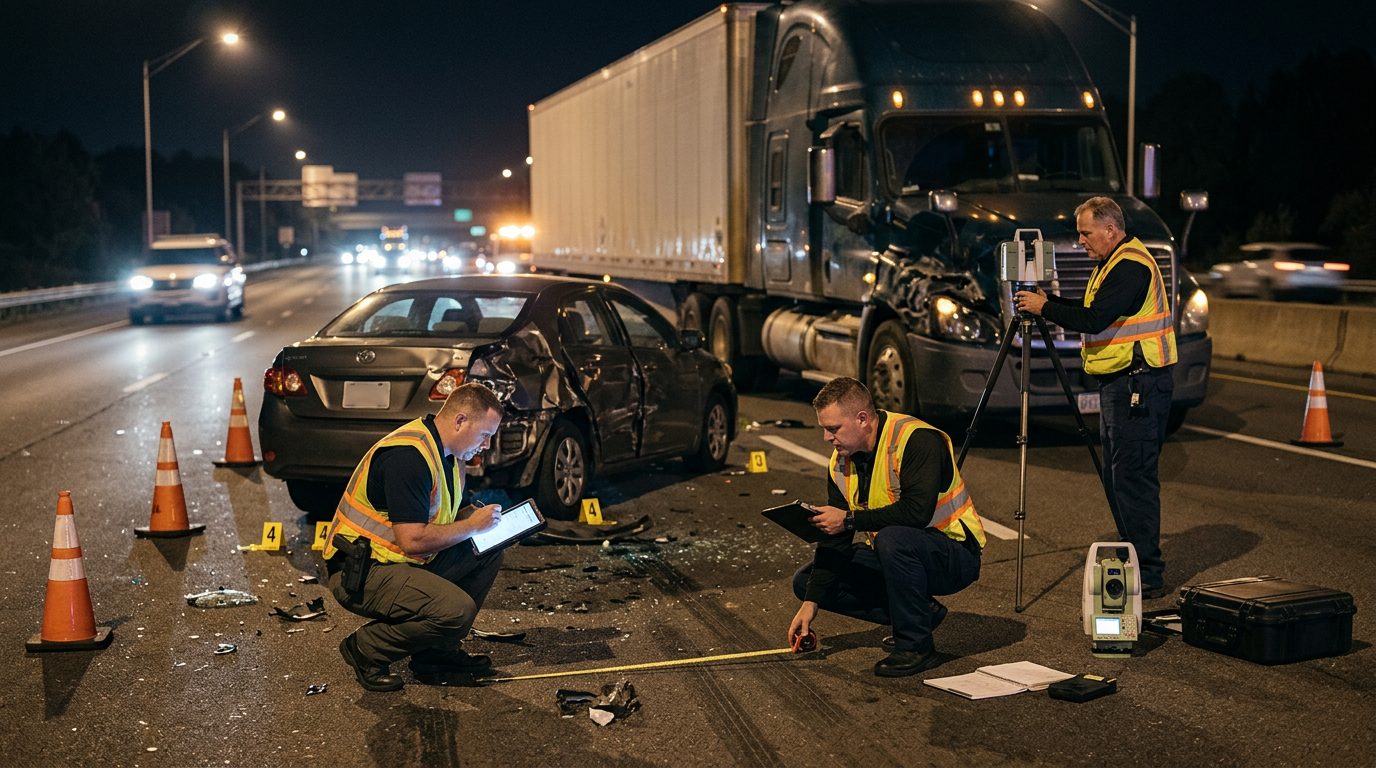
- Accident reconstruction analysis showing the defendant’s vehicle was operated unsafely
- Violations of commercial vehicle regulations (for truck accidents)
For example, if a police report shows the defendant was speeding or ran a red light, that is strong evidence of breach. If a truck driver failed to maintain their vehicle or violated hours-of-service rules, that also demonstrates breach.
Causation
You must show that the defendant’s breach directly caused the death—that but for their negligence, your loved one would not have died.
Causation requires medical evidence linking the injuries sustained in the accident to the death. This is often where wrongful death cases become more complex. In some accidents, the link is clear: a person is struck by a vehicle and dies immediately from the injuries. In others, especially cases involving traumatic brain injuries, spinal cord injuries, or pre-existing medical conditions, causation may require expert medical testimony to establish that the defendant’s conduct caused the fatal injuries.
Medical experts—such as emergency physicians, trauma surgeons, or pathologists—may be needed to explain how the accident injuries led to death. Without this expert testimony, causation can be difficult to prove, particularly if the deceased had other health issues.
Damages
You must prove the losses suffered by the family or estate as a result of the death.
Virginia law allows recovery for:
- Sorrow, mental anguish, and solace — the loss of companionship, society, comfort, guidance, and kindly offices of the deceased
- Lost income — compensation for the income the deceased would have earned over their lifetime
- Loss of services, protection, care and assistance — compensation for the reasonably expected loss of services, protection, care and assistance provided by the decedent
- Care, treatment and funeral expenses — expenses for the care, treatment and hospitalization of the decedent incident to the injury resulting in death, and reasonable funeral expenses
- Punitive damages — may be recovered for willful or wanton conduct, or such recklessness as evinces a conscious disregard for the safety of others
Proving damages requires documentation: medical bills, funeral invoices, income records, and testimony from family members about the deceased’s role in the household.
Not sure what your next step is?
Talk it through with our team — the first case evaluation is free, confidential, and carries no obligation.
What Makes Proving Wrongful Death Difficult
The emotional weight of the process itself can make pursuing a claim feel overwhelming, even when the legal elements are present. Beyond emotion, several practical challenges arise:
Gathering sufficient evidence — Obtaining police reports, medical records, witness statements, and expert opinions takes time and resources. Witnesses may be hard to locate or reluctant to participate. Medical records may be incomplete or scattered across multiple providers.
Disputes over causation — Defendants and their insurers often dispute whether the accident truly caused the death, especially if the deceased had pre-existing conditions or if time passed between the accident and death. Medical causation can be contested, requiring detailed expert testimony.
Disputes over damages — The defendant may challenge the amount of lost income, the value of lost companionship, or the reasonableness of funeral expenses.
Fault questions — In Virginia, contributory negligence is a complete defense. Virginia follows contributory negligence: if you are found even partly at fault, you may be barred from recovering, with limited exceptions. Talk to a lawyer about your facts. The outcome depends on the evidence and the circumstances of the accident.
Common Reasons a Judge Might Dismiss a Wrongful Death Claim
A wrongful death case may be dismissed if:
- One of the four elements cannot be proven — If you cannot establish duty, breach, causation, or damages, the claim fails.
- Insufficient evidence of causation — If medical evidence does not clearly link the accident injuries to the death, a judge may dismiss the case.
- Procedural errors — If the claim is filed outside the applicable deadline or the wrong parties are named, dismissal may follow.
- Lack of legal standing — If the person filing the claim is not the personal representative of the estate or a family member with standing under Virginia law, the case may be dismissed.
- Questions about punitive damages — Whether punitive damages may come into play depends heavily on the specific facts, and a lawyer can review your circumstances with you. If the defendant’s conduct was merely negligent, punitive damages cannot be awarded.

Why Legal Guidance Matters
Wrongful death law in Virginia involves specific rules about who can file a claim, what must be proven, and how damages are calculated. The deadline to file is generally two years from the date of death, but exceptions exist and notice requirements may apply to certain claims.
The strength of your claim depends entirely on the facts of your situation—the type of accident, the evidence available, the nature of the injuries, and the circumstances surrounding the death. An attorney can review the accident, gather evidence, consult medical experts if needed, and advise you on whether a claim is viable and what it may involve.
The process is not simple, but it is designed to hold negligent parties accountable and provide compensation to families who have lost a loved one.
No attorney’s fee unless we win. Clients may remain responsible for costs accrued in the case.
This content is for informational purposes only and does not constitute legal advice. The outcome of any case depends on the specific facts and circumstances. Consult with an attorney about your situation.
Related practice areas
- Wrongful Death Claims from Car and Truck Accidents in Virginia
- Wrongful Death from Car Accidents: Richmond and Henrico County
- Wrongful Death in Richmond
- Is a Wrongful Death Lawsuit Worth It? Virginia Guide