
Virginia Car Accident Claims
Partly at Fault in a Virginia Car Accident? Understand Contributory Negligence
Virginia's partial-fault rule can affect a car accident claim even when the other driver was mostly to blame. Here is how the rule works and which facts tend to matter most.
Published November 2, 2026
Can I still recover damages after a Virginia car accident if I was partly at fault under Virginia’s contributory negligence rule?
Partial fault can bar recovery in Virginia, so this question matters right away. The answer depends on the facts of the crash.
Virginia follows contributory negligence: if you are found even partly at fault, you may be barred from recovering, with limited exceptions. Talk to a lawyer about your facts.
The rule applies to the injured person’s own conduct at the time of the crash, so it looks closely at how each driver acted in the moments before impact. This page explains how the rule works, how fault is examined, and which deadlines run alongside it. For a broader look at car and truck crash claims, read the firm’s guide to car and truck crash claims.
If you were hurt in a Virginia crash and worry you share some blame, you may have a claim, and the firm is glad to talk through your facts. Talk it through with Correll Law Firm — we can walk you through how a situation like yours is usually handled and what your options are.

How does Virginia’s contributory negligence rule work in a car accident claim?
When a defense argues that the injured driver contributed to a crash, the review focuses on that driver’s own actions. Speed, attention, lane position, use of turn signals, and how the driver responded to traffic and road conditions are the kinds of facts that get examined.
Those facts are reviewed together with the other driver’s actions, the road layout, and the timing of events. Each crash turns on its own record, so a general description of the rule cannot predict how it will apply to a specific collision.
How is fault examined after a Virginia car accident?
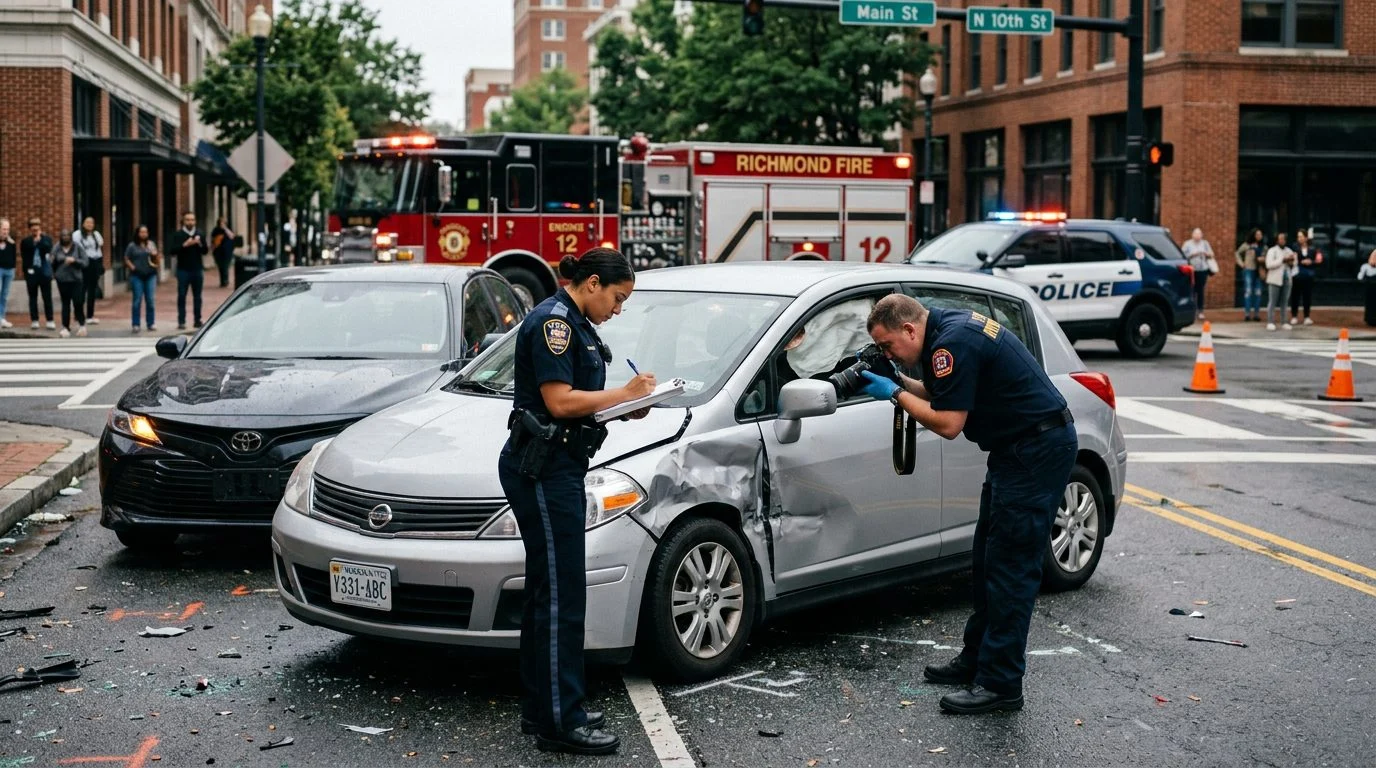
Fault is decided on evidence from the scene and the days after the crash. Adjusters and courts look at facts, not at which driver seems more sympathetic.
Common evidence includes:
- The police crash report and the officer’s notes
- Statements from each driver and any witnesses
- Photographs of the vehicles, the roadway and traffic signals
- Vehicle damage patterns, which can show the angle of impact
- Weather, lighting and roadway conditions
Insurance adjusters and courts review the same material. Early statements can become part of the record, even when they were made in a hurry or while you were hurt. Writing down what you remember soon after a crash can help keep details clear. Photographs taken at the scene often capture details that fade later.
Police reports are not the final word. Officers record what they see and what drivers say, but fault is still judged from the full set of evidence. For how the process usually unfolds once a claim is opened, see the claim timeline for Virginia car accidents.
What is the deadline to file a Virginia car accident lawsuit?
Virginia generally allows two years from the date of injury to file a personal injury lawsuit (Va. Code § 8.01-243(A)); the clock runs from the date of injury, not the date of discovery, with narrow exceptions.
A person weighing a fault question should not assume extra time is available, because waiting can shorten the time left to act.
Some claims carry notice requirements that run out sooner than two years, so timing deserves early attention. Missing a filing deadline can end a claim, no matter how strong the evidence of the other driver’s fault may be.
Why does reporting the crash matter if fault may be disputed?
Virginia requires a driver involved in a crash with injury or death to stop and report it to police immediately (Va. Code §§ 46.2-371, 46.2-894).
The two-year period in the previous section is the deadline to file a lawsuit, not the deadline to report a crash (Va. Code § 8.01-243). Va. Code § 8.01-243 sets the time to file a personal injury lawsuit, which is two years after the cause of action accrues; it does not set a crash reporting deadline.
A prompt police report creates an early, neutral record of the scene. When drivers later disagree about what happened, that record can matter.

How does the fault rule apply to truck and commercial vehicle crashes in Virginia?
What changes is how many parties and records must be reviewed.
Commercial crashes often involve a driver, a carrier and sometimes others, each with records to review. Federal rules also apply. Under 49 C.F.R. § 392.2, a commercial motor vehicle must be operated in accordance with the laws of the jurisdiction where it operates. Where a Federal Motor Carrier Safety Administration rule imposes a higher standard of care, that rule must be complied with.
Commercial carriers and their insurers may raise their own defenses on fault, so early evidence matters more in these cases. Driving-time and maintenance records may also be part of the review.
For more on these claims, see commercial truck claims in Virginia. Medical recovery timing also affects when a claim can be fully evaluated, as covered in medical recovery timing after a car accident.
Frequently asked questions
Does Virginia car accident contributory negligence always bar recovery?
Virginia follows contributory negligence: if you are found even partly at fault, you may be barred from recovering, with limited exceptions. Talk to a lawyer about your facts.
Some notice requirements run out sooner.