
Car Accidents | Virginia
Who Was at Fault in a Virginia Car Accident, and What It Means for Your Claim
Plain-language guidance from Correll Law Firm for people hurt in car, truck and commercial vehicle crashes across the Shenandoah Valley, Richmond and Henrico County.
Published October 21, 2026
But Virginia also follows contributory negligence, which can bar recovery if the injured person is found even partly at fault (Contributory negligence bars recovery in Virginia). This page explains how fault works in plain terms. Correll Law Firm, based in Winchester with a Harrisonburg office, handles car accident and truck accident claims for people across the Shenandoah Valley, Richmond and Henrico County.
Is Virginia a Fault State for Car Accidents?
Yes. In many crash claims, the central question is who caused the crash.
Some drivers assume their own insurer always pays first, no matter who caused the crash. Virginia’s courts focus on the negligent conduct that led to the injury. That focus shapes how a claim is pursued against the at-fault driver and that driver’s insurer.
That means a claim is not limited to one driver in every case.
A claim against an insurer and a lawsuit against a driver are separate steps. Many claims are first presented to an insurance company. A lawsuit is filed only if a claim cannot be resolved.
Not sure what your next step is?
Talk it through with Correll Law Firm — we can walk you through how a situation like yours is usually handled and what your options are.
How Fault Is Determined in a Virginia Car Accident
Fault is decided by evidence about what each driver did before the crash. No single document settles it.
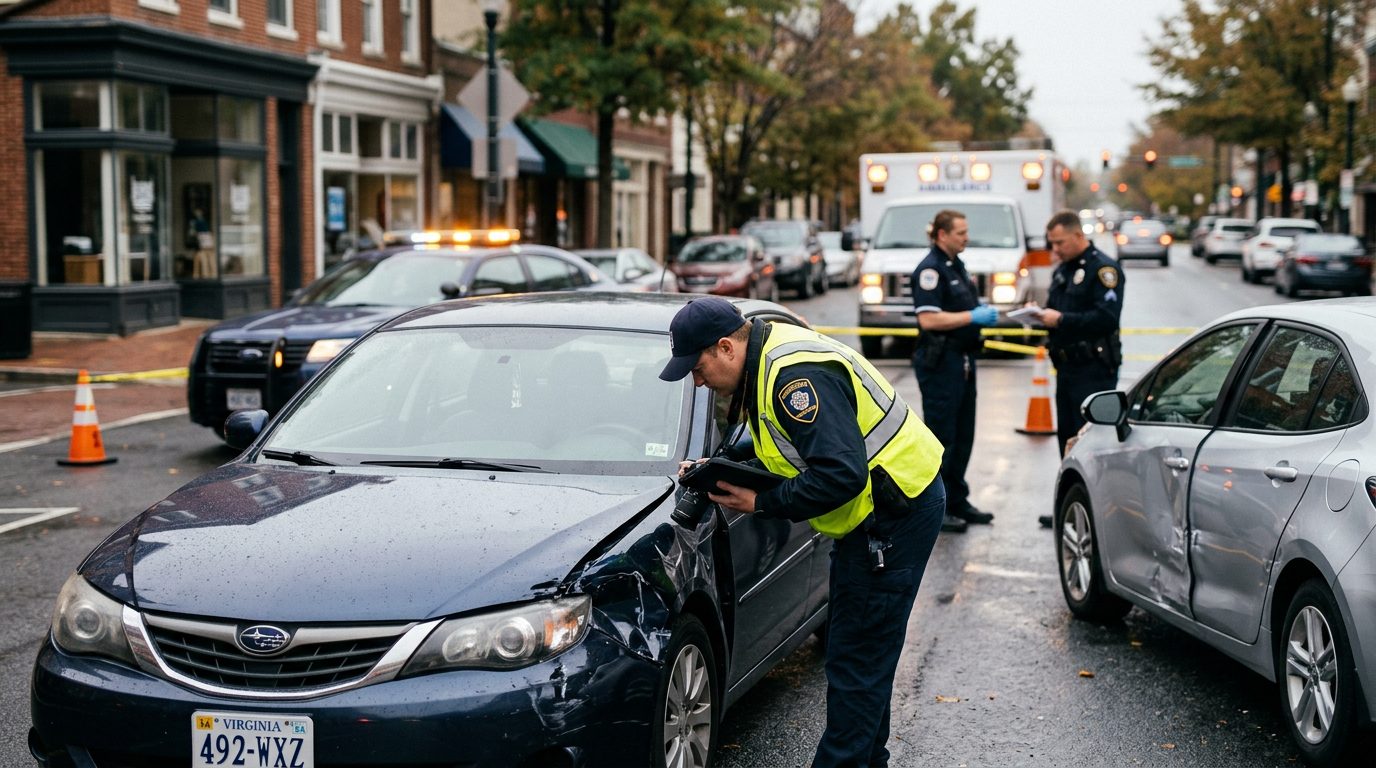
Useful evidence often includes the police report, photos of the scene, vehicle damage, traffic signals or signs, and statements from witnesses. Some cases also use accident reconstruction, which is an analysis of speed, distance and movement. Insurance adjusters review this evidence first. If a case goes to trial, a jury decides fault.
Courts ask about proximate cause.
A common mistake is waiting too long to preserve evidence. Photos taken soon after a crash, and names of people who saw it, can matter later. Memories fade, and vehicles are often repaired or sold.
Virginia’s Contributory Negligence Rule and Your Recovery
Virginia follows contributory negligence: if you are found even partly at fault, you may be barred from recovering, with limited exceptions (Contributory negligence bars recovery in Virginia). Talk to a lawyer about your facts.
A small share of fault can therefore matter a great deal.
Virginia recognizes narrow exceptions. This exception is limited and fact-specific.
How Fault Affects Your Insurance Claim
If the other driver caused the crash, that driver’s insurer is usually where a claim for vehicle damage and related losses begins. Property-damage liability coverage pays for damage an at-fault driver causes to other people’s vehicles or property. It is separate from other automobile coverages (Insurance Institute for Highway Safety).
If you share some fault, your own policy may still play a role. Coverage depends on the terms of the policy you bought, so it’s worth reading those terms closely.
Accepting fault too quickly can hurt a claim. A short statement at the scene, such as “I’m sorry this happened,” may be heard as an admission. Stick to facts, like where you were and what the weather was like.
Can You Challenge an Insurance Company’s Fault Decision?
Yes. An insurer’s fault decision is not final just because the insurer made it. You can provide more evidence and dispute the findings.
Useful support includes photos, witness names and contact details, medical records, repair estimates and any written statements. Keep copies of everything you send and receive. Written correspondence creates a clear record of your position.
The State Corporation Commission’s Bureau of Insurance accepts insurance complaints and explains its complaint procedures (Bureau of Insurance complaint information). The Bureau cannot represent a claimant in litigation or set the value of a claim.
Virginia law also addresses some insurer refusals. If an insurer denies or fails to pay a motor vehicle property damage, medical expense, or loss of income benefit claim to its insured, and a court later finds the refusal was not made in good faith, the insurer shall be liable to its insured for double the amount of the judgment, plus interest from 30 days after the claim was submitted in writing, together with reasonable attorney fees and expenses (Va. Code § 8.01-66.1).
Common At-Fault Scenarios in Virginia Car Accidents
Certain driving mistakes often lead to a fault finding. Every crash still turns on its own facts.
Rear-end collisions are a common example. The driver who hits the vehicle ahead is often found at fault, though the details of a sudden stop can change that picture. Running a red light or stop sign is another common basis for fault.
Speeding or driving too fast for conditions can also be a factor. So can failing to yield the right of way. Distracted driving counts too.
Impaired driving is a serious factor. Virginia law makes it unlawful to drive with a blood alcohol concentration of 0.08 percent or more, or while under the influence of alcohol or drugs to a degree that impairs safe driving (Va. Code § 18.2-266).
Many crashes involve more than one mistake. Fault can be shared, and the evidence often shows several factors at once.
Not sure what your next step is?
Talk it through with Correll Law Firm — we can walk you through how a situation like yours is usually handled and what your options are.
What Happens to Your Driving Record After an At-Fault Crash?
An at-fault crash can affect your insurance rates, but how long it counts depends on your insurer and your policy. Insurers review driving history under their own rules.
Some insurers may consider the crash when setting premiums or deciding whether to renew. Others may weigh it less heavily, especially if your record is clean after the crash. The effect is not the same for every driver.
A crash also has effects beyond the insurance bill. Recovery from injuries, time away from work and repair costs can all add stress. Keeping clear records helps you understand what has happened.
Is Being at Fault for a Car Accident a Crime?
Being at fault in a crash is usually a civil matter, meaning a claim for damages. Some conduct around a crash can also be a crime.
Virginia requires a driver involved in a crash with injury or death to stop and report it to police immediately (Va. Code §§ 46.2-371, 46.2-894). The two-year period for filing a lawsuit is a separate deadline, not a reporting deadline.
A driver who violates that section in a crash that results in injury or death is guilty of a Class 5 felony (Va. Code § 46.2-894). Virginia law also allows punitive damages in a personal injury or death case arising from a felony violation of that section (Va. Code § 8.01-44.5:1).
A criminal case and a civil claim are separate. The outcome of one does not automatically decide the other.
What to Do If You Are Found at Fault or Partially at Fault
Stay calm, report the crash, and avoid admitting fault until you understand the facts.
Report the crash to your own insurance company promptly. Give accurate facts, but avoid guessing about speed or distance. Those guesses can be used later.
Gather and keep evidence. That includes photos, witness names, medical records, repair estimates and receipts. Keep a log of who you spoke with at each insurer and when.
Think carefully before accepting a settlement offer or a written fault determination. You may wish to talk with a lawyer before you sign anything.
When Should You Think About Legal Help After a Virginia Car Accident?
You may wish to speak with a lawyer if fault is disputed, an insurer denies your claim, or your injuries are serious. Crashes involving more parties, including commercial trucks, often bring more records and more questions.
Serious injuries such as traumatic brain injury or spinal cord injury can change the scope of a claim. They also take time to evaluate with medical records. Fatal crashes raise separate questions for surviving family members.
The firm handles car accident and truck accident claims and serves people across the Shenandoah Valley, Richmond and Henrico County. It also handles commercial vehicle accidents, catastrophic injuries and wrongful death matters.
Is Virginia a fault state?
Yes. Virginia looks at who caused the crash when deciding who may be responsible for losses.
Can I still have a claim if I was partly at fault?
Possibly, but under contributory negligence, even partial fault can bar recovery (Contributory negligence bars recovery in Virginia). The facts decide how the rule applies.
Can more than one driver be responsible?
Yes.