
Car & Truck Crash Claims | Virginia
School Bus Crash Injuries: Key Facts for Virginia Families
A crash involving a school bus can upend a family's routine in an instant. This guide explains the early steps that often shape an injury claim in Virginia.
Published November 14, 2026
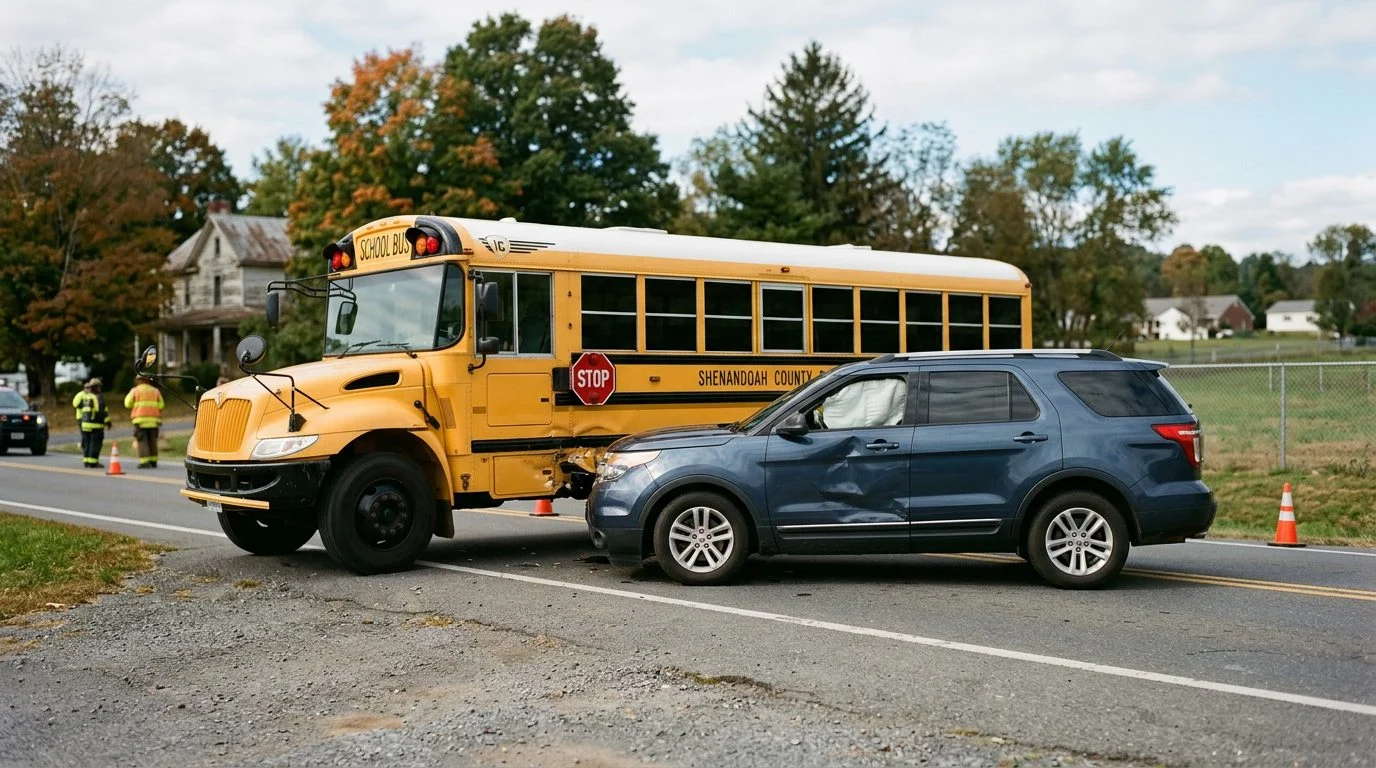
After a school bus crash, many families ask whether an injury claim is possible in Virginia. A claim may be possible when another person’s or company’s conduct may have caused the injuries.
This guide covers who may be involved, which injuries are common, what evidence to protect, the filing deadlines that apply and how a claim generally moves forward.
What a School Bus Crash Injury Claim Covers and Who It Is For
A school bus crash injury claim asks the parties whose conduct may have caused injuries to pay for the harm they caused. The claim can be pursued through insurers or, if needed, a lawsuit.
The claim may belong to an injured child, an injured adult passenger, a driver or pedestrian hit by a bus, or the family of someone who died. Each claim turns on the crash, the injuries and the parties involved, so no two look exactly alike. Motor coaches used for charter trips or tours raise many of the same questions.
The firm has an office in Winchester and an office in Harrisonburg. It handles car, truck and commercial vehicle crashes, catastrophic injuries and wrongful death cases for people in the Shenandoah Valley, Richmond and Henrico County. For broader guidance on crashes involving commercial vehicles, see commercial vehicle accidents.
Not sure what your next step is?
Talk it through with Correll Law Firm — we can walk you through how a situation like yours is usually handled and what your options are.
Who May Be Involved in a School Bus or Motor Coach Crash
Several people and companies may share responsibility after a bus crash. Each one plays a different role.
- The bus driver. Speed, attention, following distance and stop-arm use are all part of the review.
- The operator. The company that runs the route or motor coach has its own duties under federal rules. Federal rules say a motor carrier must require drivers to observe the duties prescribed for them in part 325 of subchapter A or in this subchapter (49 C.F.R. § 390.11).
- The vehicle owner and maintenance contractors. Brakes, steering, lights and stop-arm equipment may be relevant. The owner can differ from the operator.
- Other motorists. A driver who passed a stopped bus or drove into a loading area may have contributed.
The crash report and early investigation help identify each party and its insurance. For federal crash data on large trucks and buses, see the Federal Motor Carrier Safety Administration.
Injuries Common in School Bus and Motor Coach Crashes
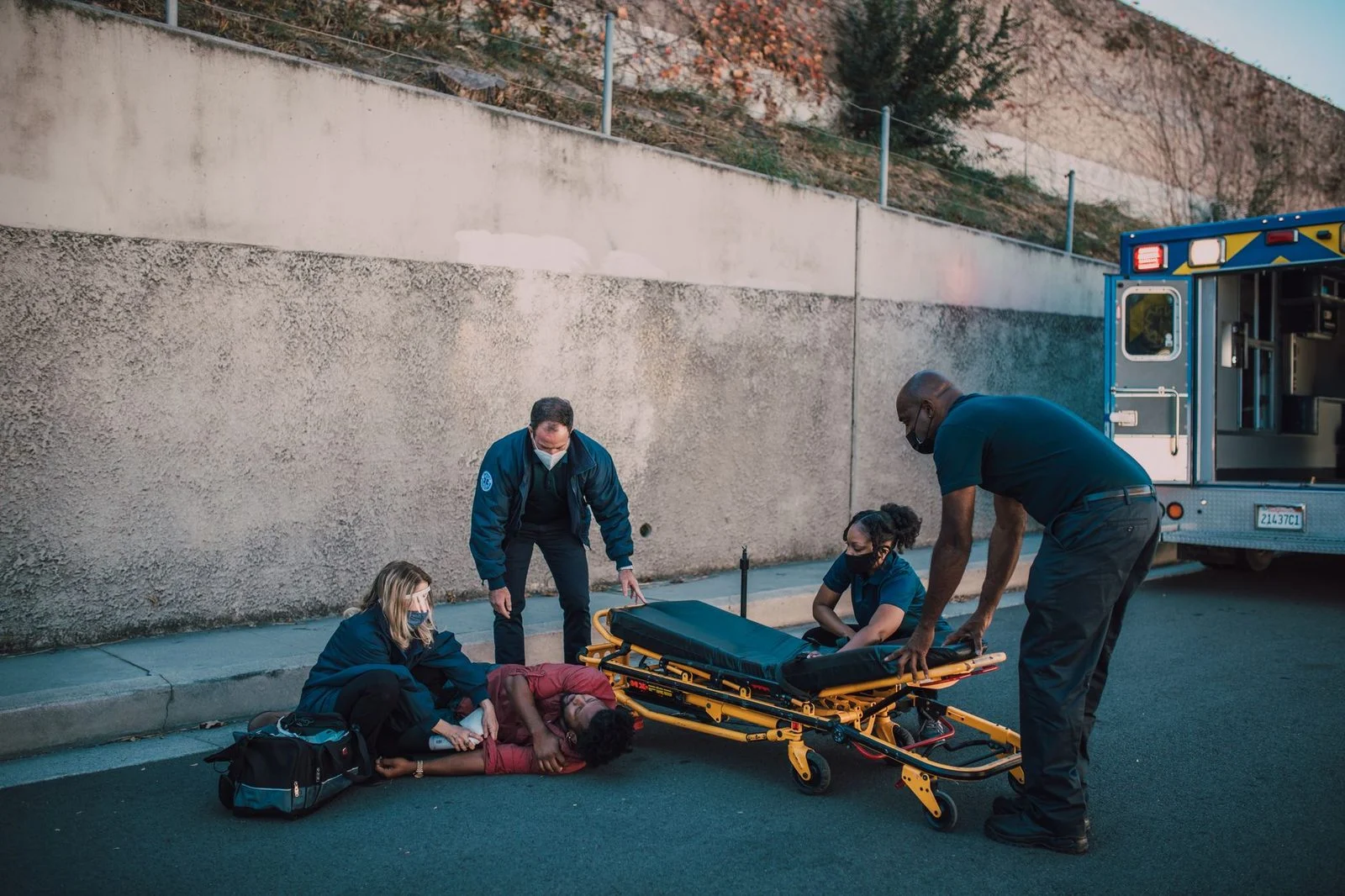
Bus crashes often cause head, neck, spine and fracture injuries. A bus can stop or turn suddenly, and people inside can be thrown forward or sideways.
Federal bus rules require standees, aisle seats and stowed baggage to be arranged so occupants are protected from falling or displaced articles and can reach every exit (49 C.F.R. § 392.62). When those rules are not followed, occupants face the risk the rules were written to prevent.
Other injury patterns are common too:
- Traumatic brain injury. Some head injury symptoms appear later, not at the scene. A medical check after any head impact matters. See traumatic brain injury.
- Spinal cord injury. These injuries can affect movement and daily life for a long time. They often call for long-term care planning. See spinal cord injury.
- Pedestrians and smaller vehicles. Students near a loading area, or occupants of a car struck by a large bus, can suffer serious chest, spine and brain injuries.
The Reporting Duty, the Crash Report and Evidence to Preserve
Virginia requires a driver involved in a crash with injury or death to stop and report it to police immediately (Va. Code §§ 46.2-371, 46.2-894). The same statute also requires the driver to stop as close to the scene as possible and give reasonable help to an injured person (Va. Code § 46.2-894).
Evidence can disappear quickly. The most useful items often include:
- The bus itself, which may be repaired or returned to service.
- Onboard camera footage, GPS data and telematics records.
- Maintenance and inspection records.
- Driver duty-status records. Federal rules require motor carriers, except for a private motor carrier of passengers (nonbusiness), to require drivers to record duty status for each 24-hour period, including total miles driven and vehicle identification (49 C.F.R. § 395.8).
- Photos, witness names and contact details, and medical records from the first visit on.
A copy of the crash report, which records the scene, vehicles, parties and witnesses, is worth requesting as soon as it’s available. A written preservation letter, sent early to the operator and any other holder of records, asks that these items be kept.
Filing Deadlines and How Fault Is Decided
Virginia sets a general filing deadline for injury lawsuits, and some claims carry shorter notice rules. Virginia generally allows two years from the date of injury to file a personal injury lawsuit (Va. Code § 8.01-243(A)); the clock runs from the date of injury, not the date of discovery, with narrow exceptions.
If a criminal case arises from the same facts, the time it is pending may not count toward the civil filing period, under conditions set out in Va. Code § 8.01-229.
If a county, city or town may be responsible for negligence, the claim is forever barred unless a written statement of the nature of the claim, which includes the time and place at which the injury is alleged to have occurred, is filed within six months after it accrues under Va. Code § 15.2-209; Va. Code § 8.01-229 covers disabilities that toll the statute of limitations. The rule has an exception if the locality’s attorney, chief executive or mayor, or its insurer or any entity providing coverage or indemnification of the claim, had actual knowledge of the claim, including its nature and the time and place of injury, within that time (Va. Code § 15.2-209).
Virginia follows contributory negligence: if you are found even partly at fault, you may be barred from recovering, with limited exceptions. Talk to a lawyer about your facts.
How a School Bus Crash Claim Typically Proceeds
A claim usually moves through medical care, evidence gathering, insurance talks and, if needed, a lawsuit. Timing varies widely because injuries, parties and court schedules all differ.
- Medical care and records. Every visit, test and follow-up is documented. Those records connect treatment to the crash.
- Evidence and notice. The crash report, photos, witness details and preservation letters are gathered early.
- Investigation. The driver’s conduct, the operator’s training, and the vehicle’s maintenance are reviewed, and the company’s hiring and retention of the driver may be examined.
- Insurance and damages. Coverage is identified. Medical bills, lost income and future care needs are totaled.
- Negotiation or lawsuit. Responsible parties may negotiate. If a fair resolution is not reached, a lawsuit may be needed, and the deadlines above apply.
Not sure what your next step is?
Talk it through with Correll Law Firm — we can walk you through how a situation like yours is usually handled and what your options are.
When a School Bus Crash Causes a Death
A wrongful death claim after a bus crash follows a different path than an injury claim. A Virginia wrongful death action is filed by the decedent’s personal representative within two years of the death (Va. Code §§ 8.01-50(C), 8.01-244(B)), on behalf of the family members the statute protects.
Family members do not file the case themselves. They share in the recovery.
Virginia wrongful death damages cover the family’s sorrow, mental anguish and loss of the decedent’s companionship, guidance and care; lost income and services; medical expenses from the injury; funeral expenses; and, for willful or wanton conduct, punitive damages (Va. Code § 8.01-52). Readers who want the exact wording of the damages categories can review Va. Code § 8.01-52.
The cap is set in Va. Code § 8.01-38.1.
Virginia allows punitive damages for actual malice, or for willful or wanton conduct or recklessness showing a conscious disregard for the safety of others, capped at $350,000 (Va. Code § 8.01-38.1).
Frequently Asked Questions About School Bus Crash Claims in Virginia
Can a school bus crash lead to an injury claim in Virginia?
It may, when another person’s or company’s conduct may have caused the injuries. Each claim turns on its own facts.
What happens when a school bus hits your car?
The crash report, the driver’s account, the bus’s condition and any camera footage shape the early review. Get medical care and keep records of every visit.
Who can be responsible after a school bus injures a child?
The driver, the operator, the vehicle owner, maintenance contractors and other motorists can each have a role. The crash report helps identify them.
Does the bus company share responsibility?
The company that runs the bus has its own duties under federal rules.
Can a family sue after a school bus crash causes a death in Virginia?
Yes, Virginia law allows a wrongful death claim on behalf of the family members the statute protects. The personal representative files it.
What should I do first after a crash?
Get medical care, make sure the crash is reported to police, and keep copies of every record.