
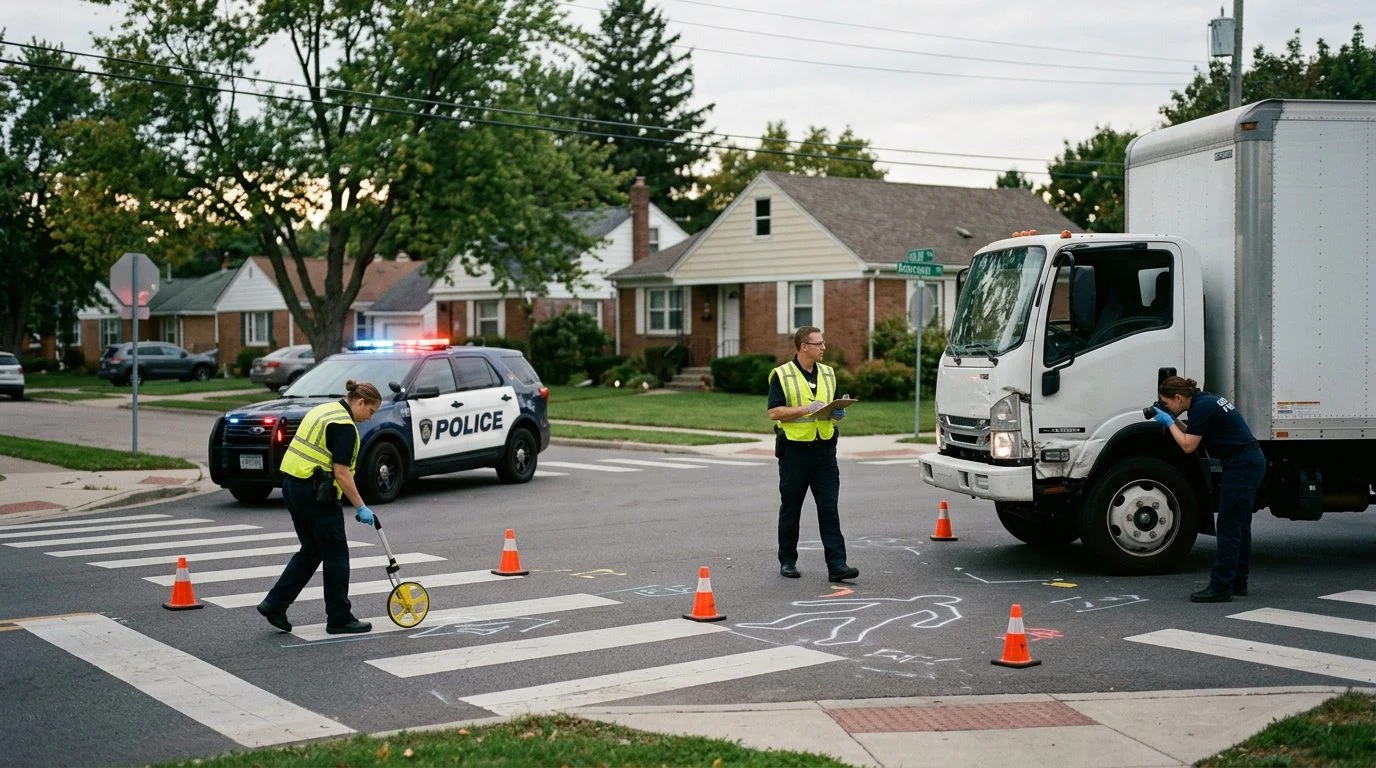
Truck Crash Brain Injuries | Harrisonburg and the I-81 Corridor
Brain Injuries From a Truck Crash on I-81: Getting Answers and Support
Correll Law Firm represents people hurt in commercial truck crashes and their families, from our Winchester and Harrisonburg offices, serving the Shenandoah Valley and beyond.
Published November 7, 2026
A truck crash brain injury on I-81 near Harrisonburg can change daily life in a single moment. This guide explains how these crashes happen, what evidence often matters, and which Virginia time limits apply. The firm handles truck accidents, commercial vehicle accidents, traumatic brain injury and wrongful death matters.
Who This Page Is For and What the Firm Handles
This page is for drivers, passengers, pedestrians and families hurt in a crash involving a tractor-trailer or other commercial vehicle. It also speaks to families who lost a loved one in one of these crashes.
Commercial vehicles are trucks and buses used for work. Crashes with them often raise questions that a typical car crash does not. Trucking company records and the federal rules that govern commercial drivers can shape a claim.
The firm’s offices are in Winchester and Harrisonburg. It handles car accidents, truck accidents, commercial vehicle accidents, catastrophic injuries, traumatic brain injury, spinal cord injury and wrongful death. It serves people in the Shenandoah Valley, the Front Royal area, and Richmond and Henrico County.
Brain injury claims also depend heavily on medical records. The harm is not always easy to see, so the paper trail matters.
If a truck crash left you or someone you love with a head injury, you may have a claim, and the firm is ready to talk through the facts with you. Talk it through with Correll Law Firm — we can walk you through how a situation like yours is usually handled and what your options are.

How Tractor-Trailer Crashes on I-81 Can Cause Brain Injuries
A tractor-trailer crash can cause a brain injury even when the head never strikes anything hard. The Administration for Community Living notes that automobile crashes can cause traumatic brain injuries.
Interstate 81 runs through Rockingham and Augusta counties near Harrisonburg. Cars and heavy trucks share its lanes, and traffic can slow or stop suddenly. Common crash patterns include:
- Rear-end impacts, when a car strikes a slowed or stopped truck
- Jackknifing, when a trailer swings out of line with the cab
- Lane changes into another vehicle’s path
- Rollovers
- Chain crashes involving several vehicles
Head injuries often happen when the head strikes a windshield, window frame or steering area. They can also happen when the head moves violently during a sudden stop.
Symptoms can be slow to appear. Headaches, confusion, memory trouble, dizziness and mood changes deserve a medical evaluation. That evaluation matters even when the person feels fine at the scene.
Could Fatigue or Distraction Have Contributed?
Investigators often ask whether a driver was tired, distracted or working past legal limits. The answer usually comes from records, not from memory alone.
Other federal rules bar driving when fatigue, illness or another cause leaves a driver’s alertness so impaired that driving becomes unsafe (49 C.F.R. § 392.3).
These logs can show when a driver was on duty and when the driver was driving.
Phone records and dispatch messages may show what a driver was doing in the minutes before a crash, when those records exist. Reviewing them shows what happened, rather than what was assumed.
Were Mechanical Problems Involved?
Mechanical failure is a common question after a truck crash. Maintenance records often hold part of the answer.
Federal rules require brakes on a motor vehicle to be capable of operating at all times, with listed exceptions (49 C.F.R. § 393.48). Brakes are one of several parts that investigators examine.
Other components often reviewed include:
- Tires and wheels
- Steering and suspension
- Lights and reflectors
- Cargo securement and trailer coupling
Maintenance and inspection records for the truck and trailer can show whether required checks were done. They can also show repeated repairs of the same part, which can matter.
A damaged truck may be repaired or returned to service quickly. Early requests to inspect the vehicle and keep its parts can make a real difference.
What Evidence Should Be Collected?
The most useful evidence usually comes from the police report, medical records, the scene and company records. Virginia requires a driver involved in a crash with injury or death to stop and report it to police immediately (Va. Code §§ 46.2-371, 46.2-894).
Key evidence includes:
- Medical records from the first emergency visit onward, including imaging and follow-up care
- Photos of the scene, the vehicles and any visible injuries
- Names and contact details for witnesses, plus any dashcam or traffic camera footage
- Trucking company records, such as driver qualification files, inspection reports and electronic logs
- A written symptom journal covering headaches, memory trouble, sleep changes and mood changes, and how they affect work and family
Some footage and electronic data can be overwritten. An early start on the investigation helps protect this evidence.
Virginia Legal Points to Know
Virginia time limits and fault rules affect every truck crash brain injury claim. The points below come from Virginia statutes and court decisions.
- Filing deadline: Virginia generally allows two years from the date of injury to file a personal injury lawsuit (Va. Code § 8.01-243(A)); the clock runs from the date of injury, not the date of discovery, with narrow exceptions. Some claims carry notice requirements that run out sooner.
- Partial fault: Virginia follows contributory negligence: if you are found even partly at fault, you may be barred from recovering, with limited exceptions (Williams v. Harrison, 255 Va. 272 (1998)). Talk to a lawyer about your facts.
- Punitive damages: Virginia allows punitive damages for actual malice, or for willful or wanton conduct or recklessness showing a conscious disregard for the safety of others, capped at $350,000 (Va. Code § 8.01-38.1).
- Wrongful death deadline: A Virginia wrongful death action is filed by the decedent’s personal representative within two years of the death (Va. Code §§ 8.01-50(C), 8.01-244(B)), on behalf of the family members the statute protects.
- Wrongful death damages: Virginia wrongful death damages cover the family’s sorrow, mental anguish and loss of the decedent’s companionship, guidance and care; lost income and services; medical expenses from the injury; funeral expenses; and, for willful or wanton conduct, punitive damages (Va. Code § 8.01-52).
Not sure what your next step is?
Talk it through with Correll Law Firm — we can walk you through how a situation like yours is usually handled and what your options are.
How a Brain Injury Claim After a Truck Crash Is Handled
A brain injury claim usually moves through an initial review, an investigation, medical documentation, and then settlement talks or a lawsuit.
- Initial review. The firm looks at the crash facts, the injuries and the people involved.
- Investigation. The firm reviews the crash report, vehicle and company records, and witness statements.
- Medical documentation. The brain injury is documented, including how it affects daily life and work.
- Review of responsibility. Which people or companies may be responsible depends on the facts.
- Negotiation or lawsuit. The firm may negotiate with insurers. Where needed, a lawsuit is filed within the Virginia time limit described above.
Brain injury cases often take time. Recovery and the full medical picture may take months to become clear, and the timeline depends on the facts.

Frequently Asked Questions About Truck Crash Brain Injuries
Can a truck crash brain injury show up later?
Yes, symptoms can be slow to appear. A medical evaluation after any head impact is important, even if symptoms seem mild at first.
Can a truck crash also cause a spinal cord injury?
Yes, one crash can cause more than one type of injury. The firm handles spinal cord injury matters as well.
Are commercial vehicle crashes different from car crashes?
Often, yes. Federal rules and trucking company records can apply to commercial drivers in ways they do not apply to most car drivers.
Does the firm handle wrongful death cases?
Yes, wrongful death is one of the practice areas the firm handles. The legal points above describe how Virginia treats these claims.