
Spinal Cord Injury | Car Crashes | Virginia
Spinal Cord Injury After a Car Crash in Virginia: What to Know Now
Plain-language information from Correll Law Firm for people hurt in Virginia crashes and the families who support them, from the Shenandoah Valley to Richmond and Henrico County.
Published November 4, 2026
What Is a C2 Injury?
A C2 injury is damage to the second bone in the neck. A C2 spinal cord injury means the spinal cord itself is also damaged at that level.
The C2 vertebra is also called the axis. It sits just below the skull. The bone above it, C1 (the atlas), supports the head and lets you nod. C2 lets you turn your head from side to side.
A C2 injury can involve the bone, the ligaments that hold it in place, or the spinal cord that runs through the vertebral canal. The cord is involved only in some cases. Many people with a C2 fracture never have cord damage.
Medical records after a crash often use terms like these. They can be hard to read. Knowing what each term means can help you ask better questions.
Not sure what your next step is?
Talk it through with Correll Law Firm — we can walk you through how a situation like yours is usually handled and what your options are.
Why the C2 Level Matters
The level of an injury matters because the spinal cord carries signals between the brain and the body. The higher the injury, the more body functions it can affect. Injuries in the upper neck can affect breathing, as well as movement and feeling in the arms, trunk and legs. How much is affected depends on how severe the injury is.
Doctors also look at whether an injury is complete or incomplete. A complete injury leaves no function below the injury point. An incomplete injury leaves some function below it. That difference shapes what a person may be able to do afterward.
Recovery varies from person to person. The outlook depends on the facts of the injury and the care that follows. For a closer look at daily life after this injury, read the firm’s guide on the effects of a C2 spinal cord injury.
Fracture, Ligament Injury, or Cord Injury: How They Differ
A fracture, a ligament injury and a cord injury are three different problems. One crash can cause more than one of them. A fracture is a break in the bone. A stable fracture stays in line. An unstable fracture can shift, which raises the risk that the cord is hurt.
A ligament injury is a tear in the tissue that holds the bones together. Neck stability depends on the ligaments as well as the bone. A cord injury is damage to the spinal cord itself. It may be a bruise, a stretch, or pressure from a shifted bone or swelling.
Imaging helps show which of these problems is present. X-rays show bone alignment. CT scans show bone detail more clearly. MRI scans show ligaments and the cord. Which tests are used depends on the case and the doctor’s judgment. Many people need more than one test.
How Car and Truck Crashes Cause C2 Injuries
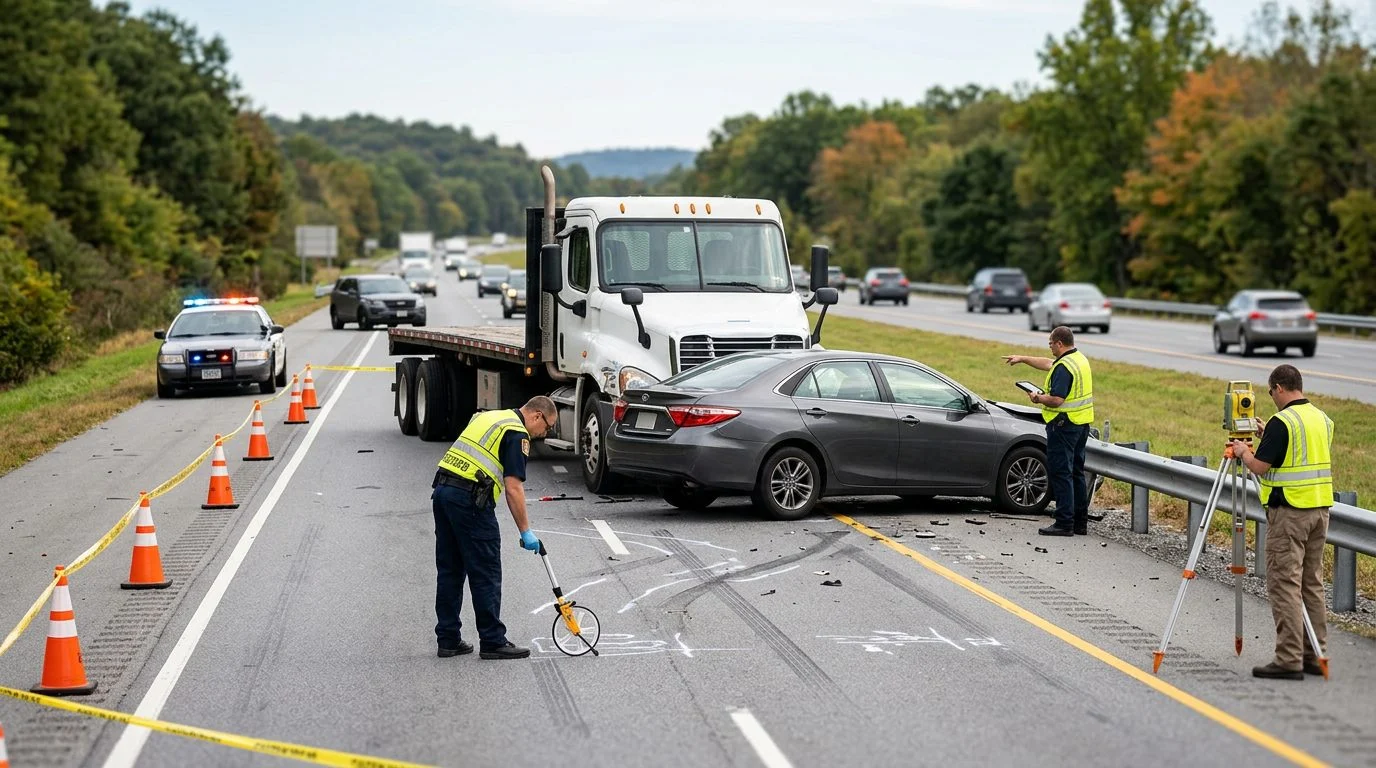
A crash can injure the C2 when the head and neck move beyond their normal range. This can happen in front-end impacts, rear-end collisions and side impacts. Sudden, forceful movement puts stress on the upper neck. High-energy crashes, including truck collisions and rollovers, can apply greater force to the neck.
Neck pain after a crash does not always mean a fracture or cord injury. But neck pain alone does not rule out a serious injury. Only a medical evaluation can check.
Crashes can involve more than one driver.
Fault can also affect a claim. Virginia follows contributory negligence: if you are found even partly at fault, you may be barred from recovering, with limited exceptions. Talk to a lawyer about your facts.
Symptoms That Need Emergency Care Right Away
Trouble breathing, weakness or loss of movement in the arms or legs, and loss of bladder or bowel control call for emergency medical care right away. These signs can point to serious spinal cord damage.
Other warning signs include severe neck pain, pain that spreads into the shoulders or arms, and numbness or tingling that moves down the body. New confusion, or loss of consciousness after a head impact, also needs prompt evaluation.
Symptoms can change over time. A person who seems stable at the scene can still have a serious injury that shows up later. Medical evaluation matters even when a person says they feel okay.
Why Brain and Spinal Injuries Are Often Evaluated Together
Brain and spinal injuries are often checked together because the head and neck move as one unit in a crash. A hard blow to the head can happen at the same time as a neck injury.
Care teams look at both areas because an injury in one place can draw attention away from the other. Pain from a head injury can make a neck injury harder to notice, and the reverse can also happen. A careful check of both areas helps avoid missed injuries.
Traumatic brain injury can occur alongside a spinal injury, and both can have long effects. The firm handles traumatic brain injury claims and catastrophic injury claims that arise from crashes, as well as spinal cord injury claims.
Not sure what your next step is?
Talk it through with Correll Law Firm — we can walk you through how a situation like yours is usually handled and what your options are.
Common Questions About the Upper Neck and Paralysis
The upper neck holds two bones with different jobs. Whether a C2 spinal cord injury causes paralysis depends on the facts of the injury.
What does the C1 vertebra do?
C1, the atlas, sits right under the skull. It supports the head and lets you nod up and down.
Can a bruised spinal cord cause paralysis?
Yes. A bruised or compressed cord can cause loss of movement or feeling. Whether that loss is temporary or lasting depends on the injury and the care that follows.
What are paraplegia and tetraplegia?
Paraplegia is paralysis of the legs and lower trunk. Tetraplegia, also called quadriplegia, affects the arms, trunk and legs. Which one applies depends on where the cord is hurt and how severely.
Can a person recover from a C2 injury?
Recovery varies. Rehabilitation often focuses on regaining movement, strength and daily skills. The outlook depends on the injury, the treatment and the person’s overall health.
Legal Considerations After a C2 Injury in a Crash
Virginia generally allows two years from the date of injury to file a personal injury lawsuit (Va. Code § 8.01-243(A)); the clock runs from the date of injury, not the date of discovery, with narrow exceptions.
Some claims carry notice requirements that run out sooner. Under Va. Code § 15.2-209, a person with a negligence claim against a county, city or town generally must file a written statement describing the claim, including the time and place at which the injury is alleged to have occurred, with the locality’s attorney, chief executive or mayor within six months after the cause of action accrued, or the claim is barred. Failing to file that statement does not bar the claim if the locality’s attorney, chief executive or mayor, or an insurer or entity providing coverage or indemnification of the claim, had actual knowledge of the claim, including what it involved and the time and place of the alleged injury, within those six months. If the claimant was under a disability when the cause of action accrued, the tolling provisions of § 8.01-229 apply. Timing questions are worth raising early, while records and witness memories are still fresh.
Medical records, imaging results and the crash report help document a C2 injury and how it happened. Photos from the scene can also matter.
Correll Law Firm handles spinal cord injury claims that arise from car and truck crashes, including commercial vehicle crashes. The firm has offices in Winchester and Harrisonburg. It represents people from across the Shenandoah Valley, Richmond and Henrico County.