
Catastrophic Injuries | Virginia
A C5 Spinal Cord Injury After a Virginia Crash: What Families Need to Know
Plain-language information for people living with a C5 spinal cord injury and the families who support them, serving the Shenandoah Valley, Richmond and Henrico County.
Published October 30, 2026
A C5 spinal cord injury is damage to the spinal cord at the fifth cervical level, in the neck. It can affect movement and feeling in the shoulders, arms, hands and trunk, and it can affect breathing. Outcomes vary widely from person to person. This page explains what the term means, how doctors describe severity, and which Virginia legal questions may follow a crash.
Where the C5 Level Sits in the Spine
C5 is the fifth cervical vertebra, one of the seven bones in the neck. The spinal cord runs through the spine, and each level sends and receives signals for different parts of the body. Damage at one level can block messages going to the body, coming from the body, or both.
Nerves that leave the cord at C5 help control the shoulders, the upper arms and, in part, the elbows. The cervical cord also carries signals for the breathing muscles. That is one reason neck injuries are treated as serious.
Doctors describe an injury by the level where the cord is affected, not by the bone’s name alone. The bone and the cord do not always line up exactly. Doctors check strength, feeling and reflexes, and they read the scans together, to map which signals still get through.
If a crash left you or someone you love with a C5 spinal cord injury, you do not have to face the legal questions alone, and we are glad to talk through your situation. Talk it through with Correll Law Firm — we can walk you through how a situation like yours is usually handled and what your options are.

Complete and Incomplete C5 Injuries
A complete injury means a loss of movement and feeling below the level of injury. An incomplete injury means some function below that level is still present.
Incomplete injuries cover a wide range. Some cause only mild weakness that a person may barely notice. Others leave large losses of movement, feeling or both.
Doctors describe severity with a standard grading scale. The grade is usually assessed in the early days after the injury, and it can change as swelling goes down. A grade given in the first days is a snapshot, not a final answer.
Imaging shows the damage, and a neurological exam shows what the person can still move and feel. Doctors keep testing over time and record each change. For families, this is often the most confusing part, because the first diagnosis may shift in the weeks that follow.
What Quadriplegia Means at the C5 Level
Quadriplegia, also called tetraplegia, means weakness or paralysis in the arms, trunk and legs caused by an injury in the neck.
At the C5 level, people often keep some shoulder and upper-arm movement. Elbow bending may be limited, and hand use varies widely from one person to the next.
Many people need help with daily tasks at first, such as dressing, eating and moving from bed to chair. Some gain more independence with therapy and equipment, but the amount differs from person to person. Caregivers often take on hands-on roles at home, and training from the treatment team helps them do this safely.
Higher injuries, such as C1, carry greater breathing risk than C5. In the first period after any cervical injury, the medical team watches breathing, blood pressure and skin closely.
How C5 Injuries Happen in Car and Truck Crashes
C5 injuries usually happen when a crash forces the head and neck suddenly forward, backward or sideways.
Common mechanisms include sudden flexion (bending forward), extension (bending backward) or rotation of the neck. Impact can also fracture or dislocate the vertebrae.
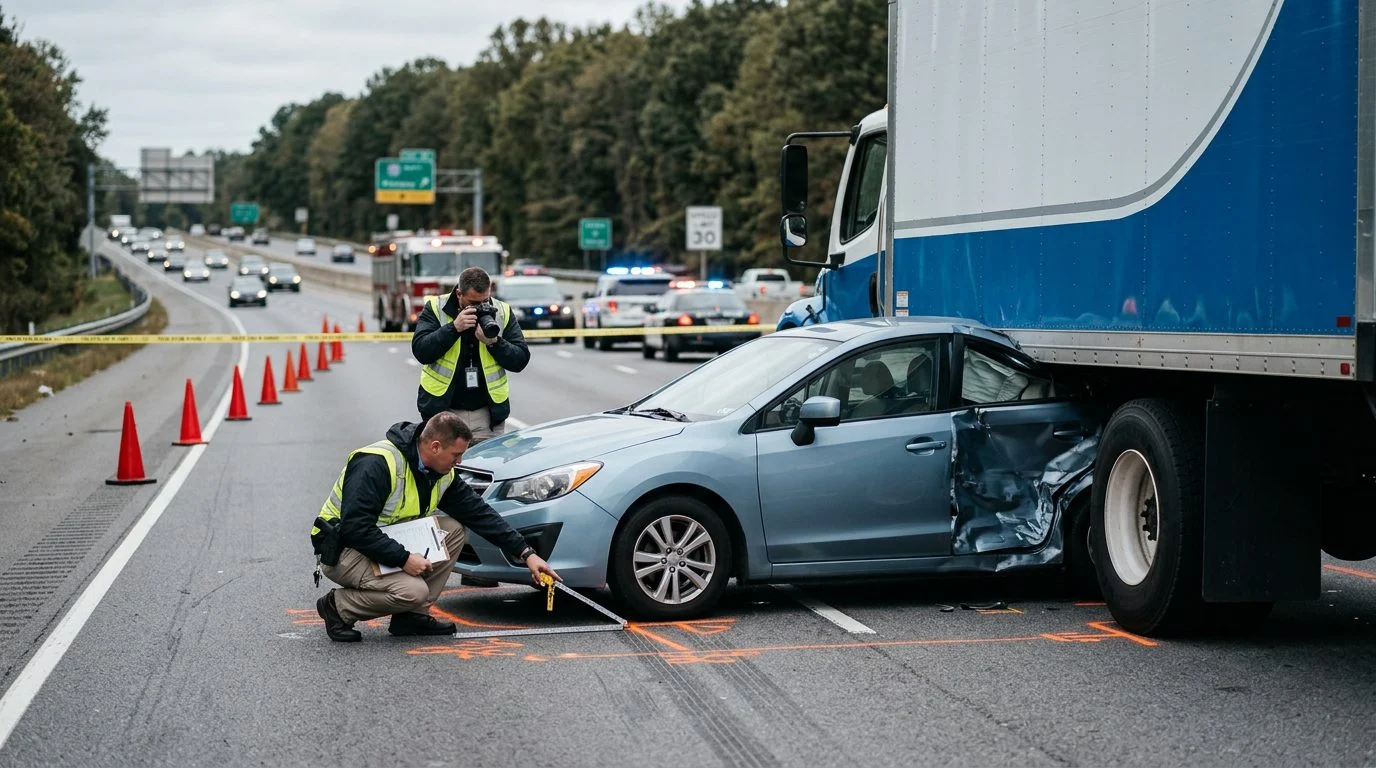
Frontal, side-impact and rollover crashes can load the cervical spine heavily. High-speed collisions tend to produce the most force. A loaded commercial truck can carry far more weight than a passenger car.
Seat belts and airbags lower risk, but they do not prevent every cervical injury. A spinal injury and a brain injury can happen in the same crash, and doctors may evaluate both together.
In truck crashes, more than one company or person may be involved.
Prognosis and Recovery: What the Medical Sources Describe
No medical source can predict one person’s recovery from a C5 spinal cord injury with certainty.
A prognosis is an estimate. It is based on how complete the injury is, early changes in nerve function and the person’s overall health.
Whether any function returns depends on the facts of each injury. Many people keep working on recovery for months, and rehabilitation can be a long process. Progress may come in stages, and it may slow or pause.
Doctors and therapists usually set goals in stages: first stabilizing the injury, then building strength, then building daily skills.
Outcome estimates are not promises. A person who seems to progress well early may still face setbacks. A person with a slower start may still regain some function. Families often ask what to expect, and the most accurate answer comes from the treatment team that knows the imaging and exam results.
Daily Life, Rehabilitation and Support
Daily life after a C5 spinal cord injury usually involves a team of therapists and frequent medical follow-up.
Rehabilitation often includes physical therapy to build strength and mobility, occupational therapy for self-care and hand use, breathing support when needed, bowel and bladder management, and skin care to prevent pressure sores.
Adaptive equipment can include power wheelchairs, hand aids that help grip objects, and home changes such as ramps and accessible bathrooms. Needs change over time as strength and health shift, so equipment and home plans may need updates.
Emotional recovery matters too. Many people struggle with depression or with adjusting to a new body and routine. Counseling and support groups are often available through treatment teams.
Keeping a written log of appointments, therapies, equipment and missed work helps the medical team and any later legal review.
Not sure what your next step is?
Talk it through with Correll Law Firm — we can walk you through how a situation like yours is usually handled and what your options are.

Legal Questions to Understand After a Virginia Crash
After a serious crash, the first legal questions usually involve reporting, deadlines and who may be responsible.
Virginia requires a driver involved in a crash with injury or death to stop and report it to police immediately (Va. Code §§ 46.2-371, 46.2-894).
Virginia generally allows two years from the date of injury to file a personal injury lawsuit (Va. Code § 8.01-243(A)); the clock runs from the date of injury, not the date of discovery, with narrow exceptions.
Some claims carry shorter notice requirements. For negligence claims against a county, city or town, a written statement of the nature of the claim, including the time and place at which the injury is alleged to have occurred, must be filed with the locality’s attorney or with its chief executive or mayor within six months after the cause of action accrues (Va. Code § 15.2-209). Under that statute, a missing notice does not bar the claim if the locality’s attorney, chief executive or mayor, or its insurer, had actual knowledge of the claim within that six-month period, and the claimant bears the burden of proving the notice was filed.
A serious spinal cord injury may be handled as a catastrophic injury claim. The firm handles catastrophic injuries, car accidents, truck accidents, commercial vehicle accidents and wrongful death. The firm’s offices are in Winchester and Harrisonburg, and it serves people throughout the Shenandoah Valley, Richmond and Henrico County.
Is a C5 injury the same as quadriplegia?
Not always. A C5 injury can cause quadriplegia, and how much function remains varies with whether the injury is complete or incomplete.
Can a neck injury from a crash be a spinal cord injury?
Yes. A neck injury can damage the spinal cord itself, not only the bones or ligaments around it.