

Car Accidents | Virginia
Closed Head Injury After a Car Accident: A Virginia Guide
Published November 4, 2026
A closed head injury after a car accident is a brain injury in which the skull stays intact. The brain is hurt by a hard impact or a sudden snap of the head, even though nothing breaks through the skull. These injuries are common in crashes, and they are easy to miss. This guide explains how closed and open head injuries differ, how a crash causes each, and which symptoms need prompt medical attention.
What Is a Closed Head Injury?
A closed head injury is a brain injury that happens without a break through the skull. The brain sits inside the skull, surrounded by fluid. When the head stops suddenly or takes a hit, the brain can strike the inside of the skull. That can cause bruising, swelling, or bleeding inside the skull.
A concussion is one common type of closed head injury. Many people assume a head injury must leave a visible wound. That is not true. The outside of the head can look unmarked while the brain is hurt. Imaging and a medical exam are often needed to see what is happening inside.
Not sure what your next step is?
Talk it through with Correll Law Firm — we can walk you through how a situation like yours is usually handled and what your options are.
What Is an Open Head Injury?
An open head injury is one where the skull is broken or an object pierces the scalp and skull. The brain is exposed to the outside. These injuries are usually visible at the scene. There may be deep bleeding, a visible wound, or a fracture that can be seen.
Glass or metal from a crash can cause an open injury. Anyone with an open head injury needs emergency care right away. For an overview of the different kinds of brain injury, read the firm’s guide to traumatic brain injury types.
How Each Type Happens in a Car Accident
Closed injuries often happen when the head hits a steering wheel, a window, or an airbag. They also happen when a sudden stop snaps the head forward and back. Rear-end impacts are a common cause because the head can whip without any direct strike.
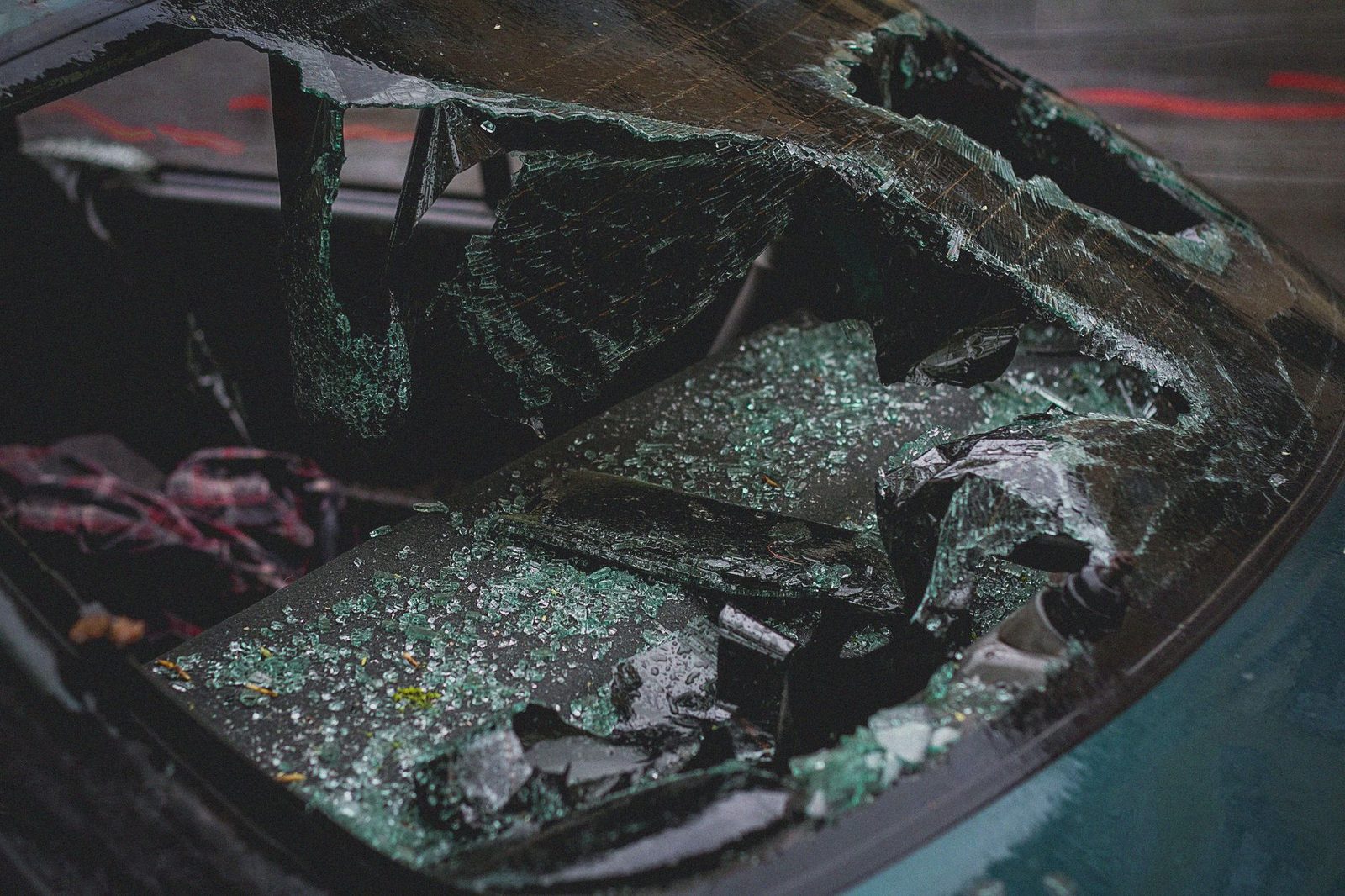
Open injuries usually happen when glass, metal, or other debris breaks through the skull. They can also happen when a person is thrown into a hard object with force.
The way the head moved helps a medical provider decide what to check. It does not tell anyone how severe the injury is. A closed injury can be serious even when the impact felt mild.
Symptoms That Can Follow Either Type of Head Injury
Headache, dizziness, nausea, and confusion are common after either type of head injury. Blurred vision, sensitivity to light or noise, and trouble concentrating can also appear. The Mayo Clinic’s concussion guidance describes these signs and when emergency care is needed.
Get emergency care right away for repeated vomiting, a headache that keeps getting worse, or unequal pupils. The same goes for weakness or numbness, slurred speech, a seizure, loss of consciousness, or a person who becomes harder to wake.
Mood and thinking changes matter too. Anxiety, irritability, low mood, memory trouble, and trouble focusing can appear days or weeks after a crash. Symptoms can overlap between closed and open injuries. A list like this does not replace a medical evaluation.
Why Closed Head Injuries Are Often Missed at First
Closed head injuries are often missed early because the person may feel fine after the crash. Adrenaline and shock can hide pain and confusion for hours. Some people also blame early symptoms on stress from the crash.
Delayed symptoms are common. A headache can start hours or days later. Sleep changes and fatigue can show up after the first few days.
Some injuries do not show on the first scan. A normal scan does not rule out every problem. Report any new symptom to a medical provider, even if it seems small. Rest and over-the-counter pain relievers are not a way to judge a head injury.
How Medical Providers Evaluate a Head Injury
A medical provider checks a head injury with a neurological exam, a review of the crash, and a review of symptoms. The exam looks at memory, balance, vision, speech, and reflexes. Imaging such as a CT scan or MRI is used when it is needed.
Some providers use a standard scale to describe how alert a person is. That result helps classify how serious the injury may be. The provider’s findings guide diagnosis and treatment decisions.
Medical records document the evaluation over time. Keep copies of visit notes and follow-up plans. They show how symptoms changed from one appointment to the next.
Not sure what your next step is?
Talk it through with Correll Law Firm — we can walk you through how a situation like yours is usually handled and what your options are.
Recovery Time and Long-Term Effects
Recovery from a head injury varies widely. It depends on the injury, the person’s health, and the treatment received. Many people with concussions improve over weeks to months.
Severe brain injuries can cause lasting changes in memory, movement, speech, mood, or independence. A coma is a prolonged state of unconsciousness. For more detail, see coma after a car accident.
Brain injuries can affect work, school, and family life. A written log of symptoms, good days, bad days, and missed activities gives doctors clearer information. It also helps families spot changes early.
Children, Older Adults, and Family Caregivers
Children often cannot describe symptoms well, so caregivers need to watch closely. Changes in sleep, eating, or behavior can be the first clue. Read more about child head injuries after a car accident in Virginia.
Family caregivers play a large role. They track symptoms, go to appointments, and notice shifts in mood. The guide on family caregivers and brain injury covers this work in more detail.
Older adults, and people on blood thinners, may have different warning signs. They should be checked promptly after a crash, even when symptoms seem mild.

Virginia Rules to Know After a Crash With a Head Injury
Virginia requires a driver involved in a crash with injury or death to stop and report it to police immediately (Va. Code §§ 46.2-371, 46.2-894). The statutes are Va. Code § 46.2-371 and Va. Code § 46.2-894.
Virginia generally allows two years from the date of injury to file a personal injury lawsuit (Va. Code § 8.01-243(A)); the clock runs from the date of injury, not the date of discovery, with narrow exceptions. The timing rule appears in Va. Code § 8.01-243 and Va. Code § 8.01-230.
Some claims carry notice requirements that run out sooner. A brain injury that leaves a person incapacitated can change how that time is counted under Va. Code § 8.01-229. Timing depends on the facts of each case.
Is a closed head injury always a concussion?
No. A concussion is one common closed head injury. Closed injuries can also involve bleeding or swelling inside the skull.
Can a normal CT scan rule out a brain injury?
Not always. Some injuries do not show on early scans, so ongoing symptoms still need medical follow-up.
Can mood changes follow a head injury from a crash?
Yes. Anxiety, irritability, and low mood can follow a head injury, sometimes days or weeks later.