
Car Accidents | Virginia
When Your Child Hits Their Head in a Car Accident
A plain-language guide for Virginia parents on what to do first, what symptoms to watch for, and how to protect your child's recovery.
Published November 4, 2026
A child can be hurt in a car accident without any sign of a broken bone or open wound. A head injury is one of the hardest injuries for parents to spot. This guide covers child head injury car accident Virginia questions, from the first hours at the scene to the state’s filing deadlines. The main point is simple: get medical care after any blow to the head, even if your child seems fine.
Why a Child’s Head Injury After a Crash Needs Prompt Attention
A head injury can damage the brain even when the skull is not broken and the head shows no cut. A hard jolt or blow can bruise or tear brain tissue inside the skull. Doctors describe these injuries as brain injuries after car and truck crashes, and the same risks apply to children.
Children are harder to assess than adults. A young child may not describe a headache, dizziness or blurry vision clearly. Some toddlers cannot tell you what hurts at all. An older child may say “I’m fine” because they are scared or want to leave the scene.
That is why any child who hit their head should be checked by a medical professional. Feeling fine at the scene does not rule out an injury. The firm handles car accident and truck accident cases, but this page focuses on what parents can watch for at home and in the clinic.
If your child was hurt in a crash, the firm is glad to talk with you about what your family is facing and whether a claim may apply. Talk it through with Correll Law Firm — we can walk you through how a situation like yours is usually handled and what your options are.
What to Do at the Scene and in the First Hours
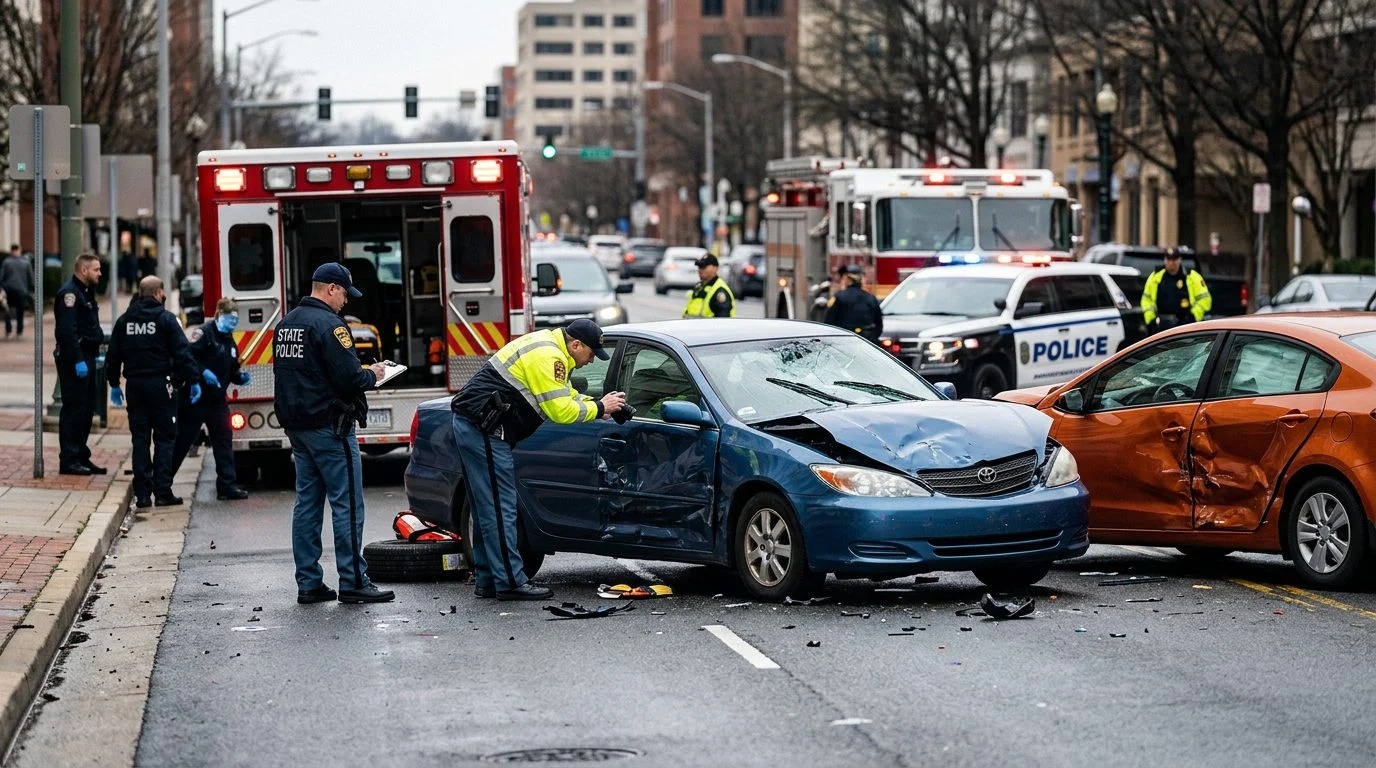
Call 911 and tell responders about any head strike, lost consciousness or confusion, even if your child seems fine. Say when the head was hit and whether your child vomited, went quiet or seemed dazed. Those details help the medical team.
Virginia requires a driver involved in a crash with injury or death to stop and report it to police immediately (Va. Code §§ 46.2-371, 46.2-894). The duty to stop and help is also set out in Va. Code § 46.2-894, which covers taking an injured person to a hospital when treatment is needed or requested.
At the hospital, tell staff exactly how your child was hurt, what your child said or did, and anything you noticed at the scene.
Warning Signs Parents Should Watch For
Seek emergency care right away if your child has repeated vomiting, a seizure, or trouble waking up. These signs need urgent medical attention, and parents should not wait to see if they fade.
Other warning signs that call for prompt medical care include:
- Confusion or speech that does not make sense
- Slurred speech
- Pupils of unequal size
- Weakness or numbness in an arm or leg
- A headache that keeps getting worse
- Unusual drowsiness or being hard to wake
Tell the medical team right away about any change in behavior. When in doubt, emergency care is the safer choice, even if the signs seem mild.
How Symptoms Can Change or Appear Later
Some head injury symptoms appear hours or days after a crash, not just at the scene. A child who looked fine in the emergency department may still need follow-up care.
Watch for changes at home. Sleep changes, irritability, mood shifts, trouble concentrating, slipping grades and unusual tiredness after school are common examples. These changes are easy to blame on a bad week, so write them down.
Keep a daily log with dates and times. Note what changed, how long it lasted and what seemed to help. A written log gives the child’s doctors a clearer picture of recovery over time. When a doctor orders formal testing, neuropsychological testing after brain injury can measure attention, memory and learning.
Medical Follow-Up, Testing and Recovery
The treating doctors decide which tests a child needs and how often the child should return. Parents should ask what the next step is and when to come back.
Follow-up may include pediatric or neurology visits, imaging the doctors order, and repeat checkups. Recovery timelines vary widely. They depend on the injury, the child’s age and the child’s medical history, so no single timeline fits every child.
Severe injuries can look very different. If a child remains unconscious after a crash, the coma after a car accident page explains what that condition involves and what families often face.
Keep copies of medical records, discharge papers and visit summaries in one folder. That makes later appointments and school requests easier to handle.
Supporting a Child and the Family at Home and School
A written plan from the child’s doctor and the school works better than guesses. Early recovery often means rest, a gradual return to activities and less screen time. Bright lights and loud rooms can also be hard on a healing brain.
The child’s doctor should set the plan. Parents can adjust daily routines as the doctor advises, and they should report any new problems promptly.
At school, a parent may need to ask about a gradual return, a lighter workload or extra time on tests. Written medical notes help the school understand what the child needs.
Siblings and the parent who handles daily care also feel the strain. Support-focused information is available in family caregiver support after a brain injury.
Not sure what your next step is?
Talk it through with Correll Law Firm — we can walk you through how a situation like yours is usually handled and what your options are.
Virginia Deadlines and Fault Questions Families Often Ask
Virginia generally allows two years from the date of injury to file a personal injury lawsuit (Va. Code § 8.01-243(A)); the clock runs from the date of injury, not the date of discovery, with narrow exceptions. The statute is at Va. Code § 8.01-243.
Some claims carry notice requirements that run out sooner. For example, Va. Code § 15.2-209 bars a negligence claim against a county, city or town unless a written statement of the claim, including the time and place of injury, has been filed no later than six months after the cause of action accrued. Not providing that statement does not bar the claim when the locality’s attorney, chief executive, or mayor, or any insurer or entity providing coverage or indemnification of the claim, had actual knowledge of the claim, including the nature of the claim and the time and place the injury is alleged to have occurred, within that period. If the claimant was under a disability when the cause of action accrued, the tolling provisions of § 8.01-229 apply.
Families also ask about fault. Virginia follows contributory negligence: if you are found even partly at fault, you may be barred from recovering, with limited exceptions. Talk to a lawyer about your facts.
Keep the crash report number, photos, witness names, medical records and a written timeline of your child’s symptoms. Those records can matter later.
If a Child Dies From a Head Injury in a Crash
A Virginia wrongful death action is filed by the decedent’s personal representative within two years of the death (Va. Code §§ 8.01-50(C), 8.01-244(B)), on behalf of the family members the statute protects. The filing rules are in Va. Code § 8.01-50 and Va. Code § 8.01-244.
Losing a child is devastating. The rules here are stated as the law reads, so families facing this question have clear facts.
Wrongful death actions under § 8.01-50 are brought by the decedent’s personal representative. Actions for fetal death are brought by and in the name of the natural mother; if she dies or is or becomes a person under a disability, they may be initiated or maintained by the administrator of her estate, her guardian, or her personal representative qualified to bring such action. Va. Code § 8.01-53 sets out who shares, starting with a surviving spouse and the children of the deceased.
The damages are listed under Va. Code § 8.01-52. Virginia wrongful death damages cover the family’s sorrow, mental anguish and loss of the decedent’s companionship, guidance and care; lost income and services; medical expenses from the injury; funeral expenses; and, for willful or wanton conduct, punitive damages (Va. Code § 8.01-52).

Frequently Asked Questions
What should a parent do first after a child head injury car accident in Virginia?
Call 911 and get your child medically checked, even if they seem fine. Tell the medical team exactly how the head was hit.
Can a child’s head injury symptoms show up days later?
Yes. Some symptoms can appear hours or days after a crash, so keep watching for changes and write them down.
Is there a deadline for a child’s head injury claim in Virginia?
The deadline depends on the facts of your case, and some claims have shorter notice rules. Ask about your child’s situation early.
How can parents help a child return to school?
Ask the child’s doctor for a written plan and share it with the school. Written notes help the school understand the child’s needs.