
Car Accidents | Traumatic Brain Injury | Winchester and Harrisonburg, Virginia
When a Child Is Hurt in a Car Accident, a Brain Injury May Not Show Right Away
Correll Law Firm focuses on families in the Shenandoah Valley, Richmond and Henrico County who are caring for a child after a serious head injury in a crash.
Published November 23, 2026
A child hurt in a car or truck crash can have a brain injury even when the child seems fine. The key point for parents is simple: get any head injury checked by a doctor, because symptoms can show up hours or days later.
After a car accident in Virginia, a child’s brain injury can raise hard questions for the family, and the first days are often the most confusing. It explains warning signs, medical follow-up, school needs and the basic rules for claims. The information is general. The child’s doctors make the medical decisions.
What a Traumatic Brain Injury Means for a Child in a Crash
A traumatic brain injury is damage to the brain caused by an outside force, such as a blow or a sudden jolt to the head. Virginia’s Brain Injury Services page says motor vehicle accidents can cause this kind of injury. It describes brain injury as damage or change in brain function caused by an external force. A doctor makes the diagnosis.
In a crash, a child’s head can hit a window, a seat or the inside of the vehicle. The brain can also move inside the skull during a sudden stop. Either can cause an injury with no visible cut or bruise.
A child’s injury can range from a mild concussion to a severe brain injury. Medical staff judge how serious it is. How the child looked at the scene does not show how serious the injury is. Parents often know their child best, so a parent’s report of changes matters to the doctor.
If your child was hurt in a crash, you don't have to sort out these questions alone. Correll Law Firm offers a free case evaluation to talk through what may apply to your family. Talk it through with Correll Law Firm — we can walk you through how a situation like yours is usually handled and what your options are.
Warning Signs Parents Should Watch For, Including Symptoms That Appear Later
Common signs include headache, confusion, unusual irritability, trouble sleeping and sensitivity to light or noise. Some children also have trouble concentrating or show a drop in school work. Mood changes can appear too.
Symptoms do not always show up right away. The Virginia Department of Health says concussion or brain injury symptoms can be delayed for hours or days after a car accident.
Seek emergency care right away if a child has any of these signs:
- Worsening headache
- Repeated vomiting
- Neurological changes or abnormal behavior
- Unequal pupils
- Increasing drowsiness or a child who is hard to wake
- Loss of consciousness
Keep a dated symptom log. Write down what you see, when it started and what makes it better or worse. Bring the log to the child’s doctors.
Medical Evaluation, Records and Follow-Up Care
A child with a possible brain injury should be checked by a doctor. The treating doctors decide which tests are needed.
A pediatric evaluation may include a physical and neurological exam, thinking and memory checks, and imaging when the doctor thinks it is needed. The doctor may also refer the child to other providers.
Follow-up visits matter. Recovery is often tracked over time. A child may see more than one provider, such as a primary doctor, a neurologist or a therapist.
Keep every discharge summary, bill, prescription list and appointment note. These records help the child’s care. They may also matter later if a claim is made. Ask for copies at each visit.
Medical decisions belong to the child’s treating doctors, not to the family or the firm.
School, Recovery and Long-Term Needs
A child may need extra help at school after a brain injury, even if the child looked fine after the crash. Changes often show up in attention, memory, processing speed and emotional control. A child may take longer to finish homework, forget lessons or become upset more easily.
Share these changes with the child’s doctors and the school. If learning problems appear, ask the school in writing to evaluate the child.
Recovery timelines vary by child and by injury. No one can say in advance how long changes will last.
Parents often track changes over months and years. A child’s needs may also change as the child grows, so school plans may need updates.
How Virginia Claim Rules Work for a Child Hurt in a Crash
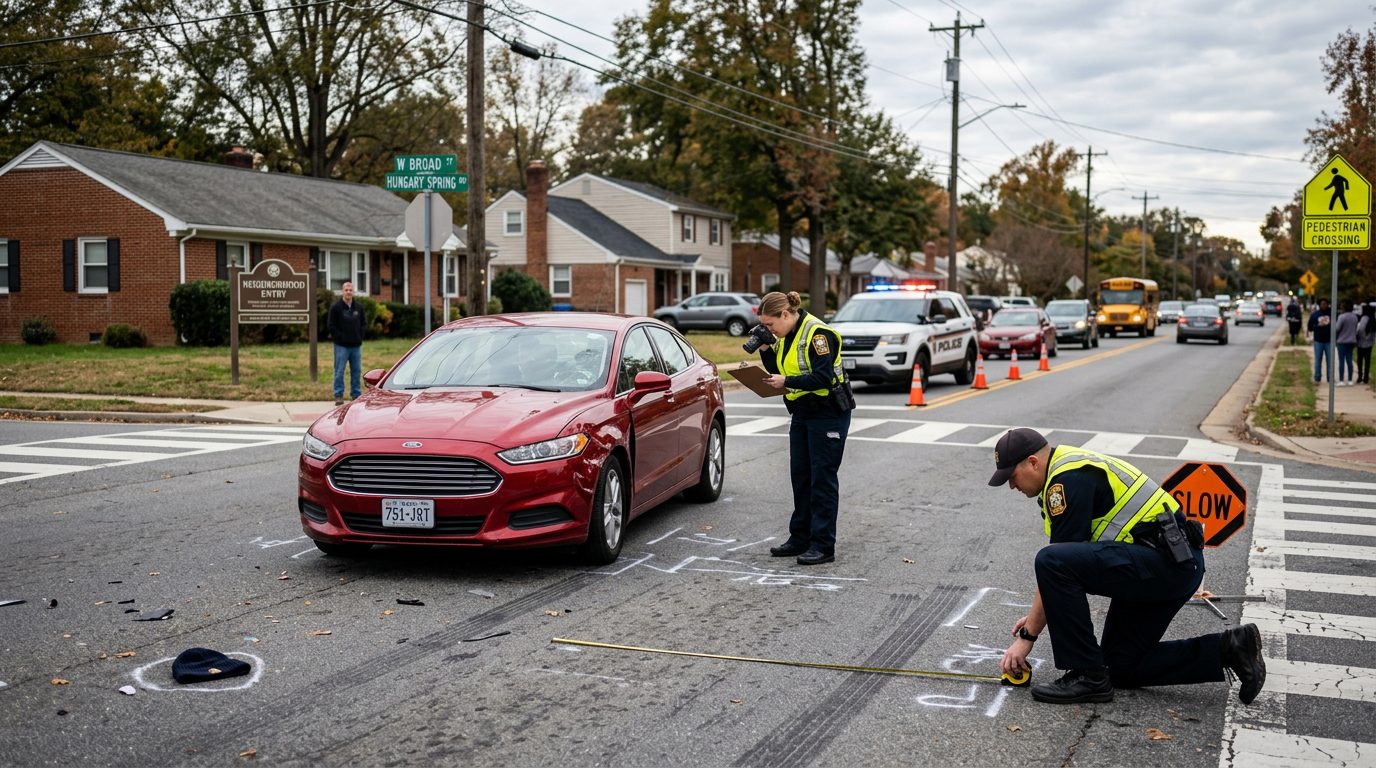
Virginia requires a driver involved in a crash with injury or death to stop and report it to police immediately (Va. Code §§ 46.2-371, 46.2-894). The two-year period below is the deadline to file a lawsuit, not to report a crash.
Shared fault can change a claim. Virginia follows contributory negligence: if you are found even partly at fault, you may be barred from recovering, with limited exceptions. Talk to a lawyer about your facts.
Virginia generally allows two years from the date of injury to file a personal injury lawsuit (Va. Code § 8.01-243(A)); the clock runs from the date of injury, not the date of discovery, with narrow exceptions.
Some claims carry notice requirements that run out sooner.
The at-fault party may be a driver, a commercial vehicle operator or a company.
When a Crash Causes a Child’s Death
A crash that causes a child’s death can lead to a Virginia wrongful death action. A death caused by a wrongful act can allow an action for damages even though the injured person has died (Va. Code § 8.01-50).
Under Va. Code § 8.01-50, every such action shall be brought by the personal representative of the deceased within two years after the death of the injured person, under the time limits in § 8.01-244.
Family members do not file the action. The statute sets an order for who shares in an award, starting with the surviving spouse and children of the deceased (Va. Code § 8.01-53).
Parents facing this loss may find it helpful to write down names, dates and medical records as they go.
Not sure what your next step is?
Talk it through with Correll Law Firm — we can walk you through how a situation like yours is usually handled and what your options are.
How Correll Law Firm Handles These Cases
Correll Law Firm handles car accidents, truck accidents, commercial vehicle accidents, catastrophic injuries, traumatic brain injury, spinal cord injury and wrongful death. The firm focuses on cases where a crash has caused serious harm.
The firm is based in Winchester, Virginia, and has an office in Harrisonburg. It serves people from the Shenandoah Valley to Richmond and Henrico County.
In a brain injury matter, the firm’s work can include gathering medical records, documenting the crash and keeping parents informed about the case.
Frequently Asked Questions
Can school problems be a sign of a brain injury?
They can be. Share school changes with the child’s doctor, who can look into what may be causing them.
Should a parent wait to see if symptoms fade?
No. Symptoms that get worse need emergency evaluation right away, and any new sign is worth raising with the child’s doctor.
Do truck crashes raise different issues for a child?
Truck and commercial vehicle crashes can involve more parties and more records than a car crash. Correll Law Firm handles both truck accidents and commercial vehicle accidents.
Related practice areas
- Traumatic Brain Injury from Car and Truck Accidents
- Wrongful Death After a Brain Injury From a Crash
- Brain Injury in an I-64 Henrico County Crash: Key Questions