
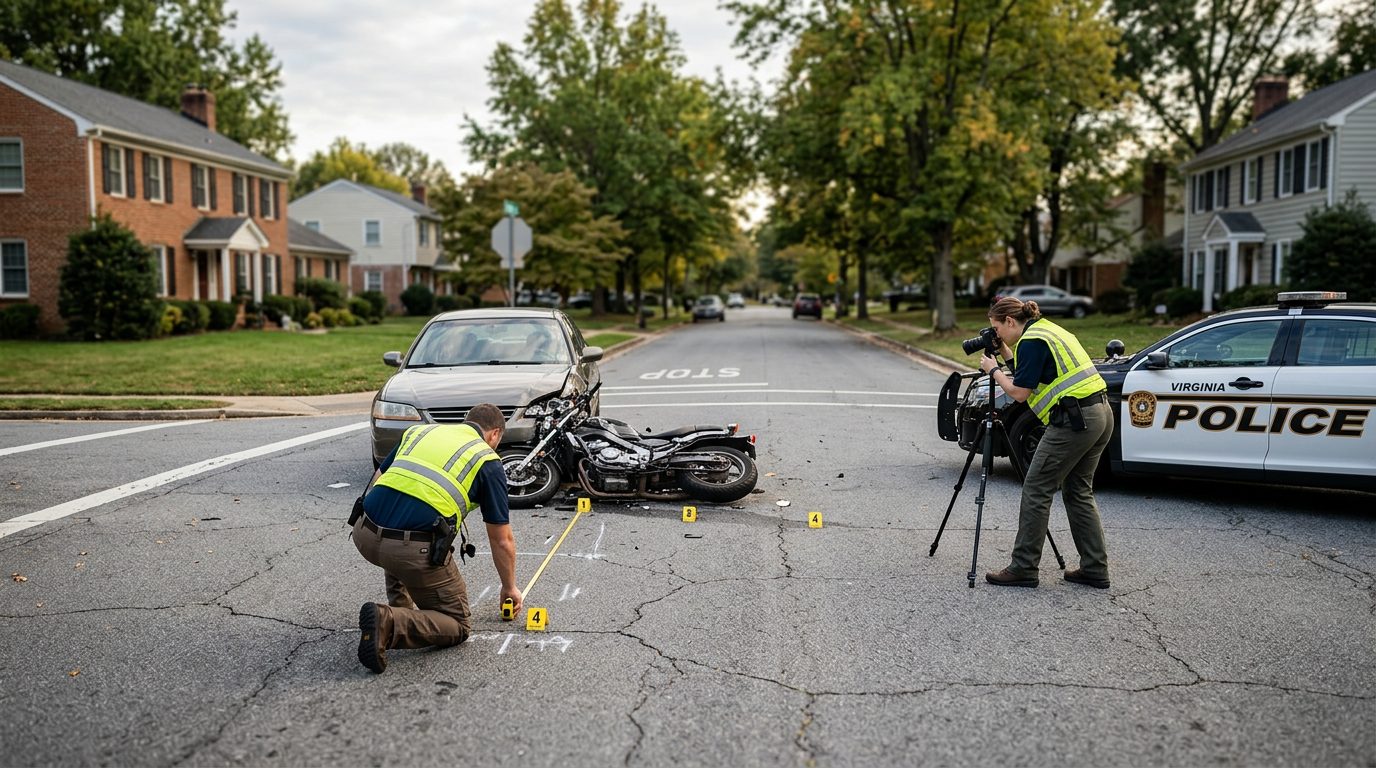
Motorcycle Crash Brain Injury · Virginia
Motorcycle Crash Brain Injury Lawyer in Virginia
Correll Law Firm represents riders and families after serious motorcycle crashes that cause traumatic brain injury, from Winchester and Harrisonburg across the Shenandoah Valley, Front Royal, Richmond and Henrico County.
Published November 3, 2026
For riders and families looking into a motorcycle crash brain injury lawyer Virginia has to offer, the first question is usually how the claim works. In short, a claim seeks compensation from the at-fault party for a head injury caused by the crash. This page explains that process under Virginia law, the evidence that matters, and the deadlines to keep in mind.
Who This Page Is For and What a Motorcycle Brain Injury Claim Involves
A motorcycle crash brain injury claim seeks damages from the driver or other party whose negligence caused a head injury in a crash.
This page is for an injured rider, a passenger, or the family of a rider who was seriously hurt or killed in a Virginia motorcycle crash. The at-fault driver is often the target, but other parties may share responsibility.
Motorcycle crashes can involve the same at-fault drivers and commercial vehicles seen in car and truck cases. The firm handles car accidents, truck accidents, commercial vehicle accidents, catastrophic injuries, traumatic brain injury, spinal cord injury and wrongful death.
Not sure what your next step is?
Talk it through with Correll Law Firm — we can walk you through how a situation like yours is usually handled and what your options are.

How Brain Injuries From Motorcycle Crashes Are Identified
A brain injury must be diagnosed by a doctor, according to the Virginia brain injury resource. The Administration for Community Living notes that automobile crashes can cause traumatic brain injury.
Common types include concussion, contusion (bruising of the brain), skull fracture, bleeding around the brain, and diffuse axonal injury (widespread damage to nerve fibers).
Symptoms can appear hours or days after a crash. Headaches, confusion, memory problems, sleep changes, mood changes and sensitivity to light or noise are common. Some people assume they are fine, then notice changes at home or at work.
Follow-up care matters. Recommended tests, imaging and visits with other doctors help show the injury, and outside medical professionals interpret those results. Imaging results can take time to interpret. Medical records link the crash to the injury, and a complete record of symptoms and treatment supports a claim.
Crash Reporting and the First Steps After a Motorcycle Crash
The first steps after a crash are reporting it, getting medical care and keeping records.
Virginia requires a driver involved in a crash with injury or death to stop and report it to police immediately (Va. Code §§ 46.2-371, 46.2-894). The two-year lawsuit period discussed below is separate from this reporting duty.
Useful evidence includes:
- The police report number and the name of the responding agency
- Photos of the scene, the motorcycle, the gear and any road conditions
- Names and addresses of witnesses
- The name of any commercial carrier or vehicle involved
- Every medical record, bill and treatment note
Keep a written journal of symptoms, missed work and daily limits. Memory of brain injury symptoms can change over time, so notes made close to the crash help.
Be careful about recorded statements to insurance companies before the full extent of an injury is known. This is practical guidance, not a legal requirement.
What a Virginia Claim Can Involve for a Rider or a Family
A rider’s claim focuses on the injury’s effects, while a family’s claim after a death follows Virginia’s wrongful death rules.
For an injured rider, the firm reviews medical bills, records, work information and future care needs. Brain injury recovery can be gradual, so long-term effects often need careful, ongoing documentation. Catastrophic injury claims can also involve help with daily living.
A Virginia wrongful death action is filed by the decedent’s personal representative within two years of the death (Va. Code §§ 8.01-50(C), 8.01-244(B)), on behalf of the family members the statute protects.
Under Va. Code § 8.01-50, the action is brought by and in the name of the personal representative of the deceased person, so family members file only if they hold that role. Under Va. Code § 8.01-53, the damages go to statutory beneficiaries, beginning with a surviving spouse and children.
Virginia wrongful death damages cover the family’s sorrow, mental anguish and loss of the decedent’s companionship, guidance and care; lost income and services; medical expenses from the injury; funeral expenses; and, for willful or wanton conduct, punitive damages (Va. Code § 8.01-52).
Virginia allows punitive damages for actual malice, or for willful or wanton conduct or recklessness showing a conscious disregard for the safety of others, capped at $350,000 (Va. Code § 8.01-38.1).
How the Claim Process Typically Unfolds
A typical claim moves from review to documentation, then to negotiation, and sometimes to a lawsuit.
- Initial review of the crash facts, the injury records, and everyone involved, including any commercial carrier.
- Investigation of the police report, scene and vehicle evidence, and medical records, with input from outside professionals such as accident reconstruction professionals where the facts call for it.
- Medical documentation over time, since the full picture of a brain injury may take months to form.
- Demand and negotiation with insurers. A lawsuit may follow if a fair resolution is not reached.
- Resolution by settlement or trial, with timing that depends on the facts of the claim.
When a commercial truck or carrier is involved, the claim can reach more than one party.
Deadlines to Keep in Mind After a Motorcycle Crash
Deadlines start early in a Virginia injury claim, so it helps to know them now.
Virginia generally allows two years from the date of injury to file a personal injury lawsuit (Va. Code § 8.01-243(A)); the clock runs from the date of injury, not the date of discovery, with narrow exceptions.
Some claims carry notice requirements that run out sooner. A written statement of a claim for negligence against a county, city or town must be filed within six months after the cause of action accrued, though failure to file it does not bar the claim if the attorney, chief executive, or mayor of the locality, or any insurer or entity providing coverage or indemnification of the claim, had actual knowledge of the claim within that same six months (Va. Code § 15.2-209).
Under § 8.01-50, every such action shall be brought within the time limits specified in § 8.01-244. In a personal injury or wrongful death action, if a criminal prosecution arising out of the same facts is commenced, the time that prosecution is pending is not counted toward the filing period. Afterward, the civil action may be brought within the remaining period of the statute or within one year, whichever is longer, as provided in Va. Code § 8.01-229(K).
Not sure what your next step is?
Talk it through with Correll Law Firm — we can walk you through how a situation like yours is usually handled and what your options are.
Why Riders and Families Work With the Firm on These Claims
The firm handles serious injury and wrongful death claims arising from car and commercial truck crashes.
The firm focuses on the medical and documentation side of brain injury claims, where records and symptom history shape how an injury is shown.
The firm has a Winchester office and a Harrisonburg office. It serves riders and families across the Shenandoah Valley, and in Richmond and Henrico County.
When you speak with the firm, expect questions about the crash, your medical care, your work and your daily life. Those answers help the firm understand what the claim involves.
Frequently Asked Questions
Here are short answers to common questions.
Can I still bring a claim if I was partly at fault?
Virginia follows contributory negligence: if you are found even partly at fault, you may be barred from recovering, with limited exceptions. Talk to a lawyer about your facts.
Do brain injury symptoms have to show up right away?
Not always. Symptoms can appear hours or days later, and steady medical follow-up builds the record.
Can a family bring a claim after a rider dies?
Virginia law allows a wrongful death action. The decedent’s personal representative files it, and family members share in any recovery.
What if a commercial truck was involved?
Commercial truck crashes can involve additional parties and records, including carriers and brokers. The firm handles truck and commercial vehicle accidents.
How long do I have to file?
Virginia generally allows two years after the cause of action accrues for personal injury and fraud claims, unless this section or another statute provides otherwise (Va. Code § 8.01-243); property injury claims have five years, and this section sets longer periods for certain sexual abuse claims. Under § 8.01-243, personal injury actions must be brought within two years after the cause of action accrues, unless this section or another statute provides otherwise; this section does not set a wrongful death period running from death.