
Car and Truck Accidents | Winchester, Harrisonburg and Richmond
What to Expect After a Serious Injury Accident in Virginia
A plain-language guide from Correll Law Firm to the steps that often follow a serious crash, from medical care to records, insurance contacts and possible next steps.
Published November 2, 2026
After a serious injury crash in Virginia, the first steps are medical care, reporting the crash and keeping records. Later stages include insurance contacts, filing deadlines and, in some cases, a lawsuit. This guide walks through each stage in order, so you can see what to expect after a serious injury accident in Virginia.
What Counts as a Serious Injury After a Crash
A serious injury is one that causes lasting harm to the body, the mind or daily life. Traumatic brain injury and spinal cord injury are common examples, and both can follow car and truck crashes. Other catastrophic injuries, such as severe fractures that need long rehabilitation, belong in this group too.
Symptoms may not show up for days, weeks or longer. A person who felt fine at the scene may later notice headaches, memory trouble, dizziness, numbness or weakness. That delay is why the early stages matter. For more background, read the firm’s guide on traumatic brain injury after car and truck accidents.
If you or someone you love was seriously hurt in a crash, you may have a claim, and the firm is glad to talk through your situation with you. Talk it through with Correll Law Firm — we can walk you through how a situation like yours is usually handled and what your options are.

The First Hours: Safety and Medical Care
Get a medical evaluation as soon as possible, even if you feel you can walk or talk. Some brain and spinal injuries are not obvious at first. Bleeding or swelling inside the skull can build over time. Nerve damage in the neck or back can hide behind pain that seems minor.
Warning signs include confusion, repeated vomiting, slurred speech, trouble with balance, and new numbness or weakness in the arms or legs. Anyone with these signs should get emergency care right away.
Tell the medical team about every symptom, even small ones. Ask for copies of discharge papers and imaging reports. Those first records become a central part of how the injury is documented later, because they show what was found and when.
Reporting the Crash to Police
Virginia requires a driver involved in a crash with injury or death to stop and report it to police immediately (Va. Code §§ 46.2-371, 46.2-894).
Every crash has its own facts, and the facts of a particular crash, wherever it happens in Virginia, shape what applies.
Keep the police report number and the names of responding officers. Reporting a crash and filing a lawsuit are separate steps.
Documenting the Crash and Your Losses
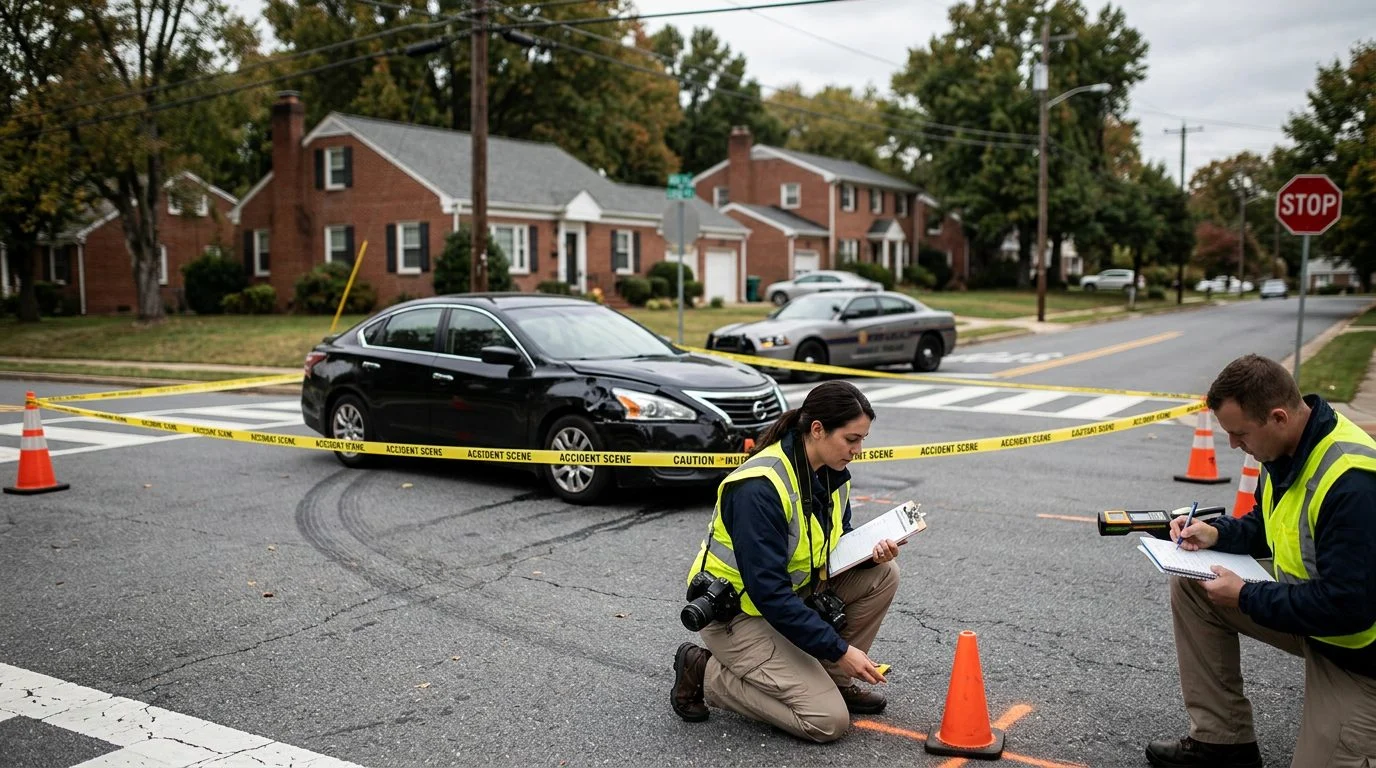
Early documentation shows how the crash happened and how the injury changes daily life. Useful items include photos of the vehicles, the road and visible injuries. Also gather witness names, the other driver’s insurance and registration details, and any dashcam or nearby video.
Keep a daily journal. Note symptoms, pain levels, missed work, canceled plans, appointments and tasks you can no longer do. Details fade quickly, and a written record can show how an injury affects everyday life.
Truck crashes add another layer. Federal rules require motor carriers to make drivers record their duty status and to keep those records for at least six months from the date of receipt (49 C.F.R. § 395.8). Periodic vehicle inspection reports must be kept for fourteen months (49 C.F.R. § 396.21). Because these retention periods are limited, earlier requests for records are better.
Dealing With Insurance Companies
An insurance adjuster may contact you soon after a crash. Think carefully before giving a recorded statement or signing a release. Early statements can be used later. A release signed before the injury is understood can affect choices you make later.
An insurer reviews a claim to assess its own position. You decide whether and how to speak with an insurer. You may wish to discuss those contacts with a lawyer before you go further.
Some uninsured or underinsured motorist claims have a notice step. Before making a demand under Va. Code § 8.01-66.1, a claimant must give the insurer 45 days’ notice. That notice must include enough information for the insurer to assess liability and damages.
Fault, Filing Deadlines and Notice Rules
Two rules shape most serious injury claims in Virginia: how fault is shared and how long a person has to file. Virginia follows contributory negligence: if you are found even partly at fault, you may be barred from recovering, with limited exceptions. Talk to a lawyer about your facts.
Virginia generally allows two years from the date of injury to file a personal injury lawsuit (Va. Code § 8.01-243(A)); the clock runs from the date of injury, not the date of discovery, with narrow exceptions.
Some claims carry notice requirements that run out sooner.
A Virginia wrongful death action is filed by the decedent’s personal representative within two years of the death (Va. Code §§ 8.01-50(C), 8.01-244(B)), on behalf of the family members the statute protects.
Not sure what your next step is?
Talk it through with Correll Law Firm — we can walk you through how a situation like yours is usually handled and what your options are.
Medical Recovery and the Long View
Recovery from a serious brain or spinal cord injury often takes months and can involve several kinds of care. Follow-up visits, therapy and rehabilitation may continue for a long time. Needs can change as new symptoms appear or old ones settle.
Some effects, such as memory changes, fatigue or mood changes, may become clearer only with time. Because of this, a claim often cannot be fully understood until the medical picture is clearer. Timing depends on the facts of each case.
No one can say in advance how any one person’s recovery will go. Keep a record of appointments, referrals and medications. Those records show what care was needed and when.
How a Serious Injury Claim Usually Moves Forward
A serious injury claim usually moves through records, insurance negotiation and, if needed, a lawsuit. The early stages focus on gathering medical records, bills, crash documents and proof of lost income. The claim is then presented to the insurer, and negotiation may follow.
If the claim does not resolve, a lawsuit can be filed in court. Discovery, where each side gathers evidence, comes next. Some claims never reach a courtroom, and each stage depends on the facts and the parties involved.
Truck crashes can involve more than one responsible party, such as a driver, a carrier or another company.
Knowing these stages can help injured people and families plan for the weeks and months ahead.

Frequently Asked Questions
What should I expect after a serious injury accident in Virginia?
Expect a medical evaluation first, then crash reporting, record gathering, insurance contacts and, in some cases, a lawsuit. Each stage depends on the facts.
How long do I have to file a personal injury lawsuit in Virginia?