
Truck Accidents | Virginia
When a Defective Truck Part Turns a Drive Into a Crash
Correll Law Firm represents people seriously hurt in commercial truck crashes, including cases where equipment failure may have played a role. The firm's Winchester and Harrisonburg offices serve the Shenandoah Valley, and the firm also works with people in Front Royal, Richmond and Henrico County.
Published November 3, 2026
A truck crash can be caused by a failed part, not only by the driver. When brakes, tires, steering or trailer equipment fail, the injured person may have a claim against more than the driver. This guide is for anyone hurt in a Virginia crash caused by a defective truck part who wants to understand the basics first. It explains how these cases differ, what evidence matters early and what a claim may cover in Virginia.
When a Truck Part Failure, Not the Driver, May Have Caused the Crash
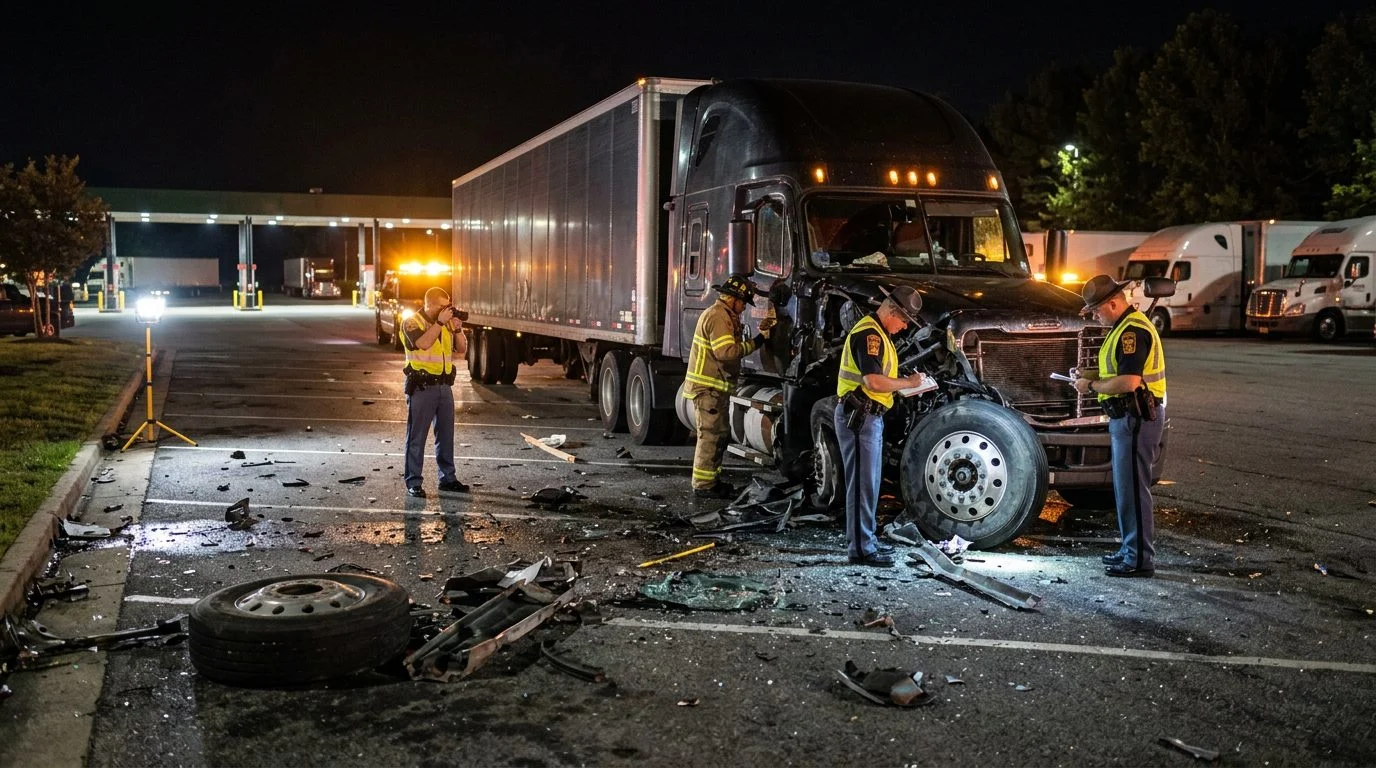
A defective truck part crash is one where a mechanical or equipment failure helped cause the collision or the injury. Injured drivers and passengers, pedestrians, other motorists and families in wrongful death cases may all face these questions. A crash can involve both driver conduct and equipment failure, and the facts decide how the claim is framed.
Some defects are hard to see at the scene. They may appear only in inspection records, repair logs or the wreckage itself.
Correll Law Firm focuses on car accidents, truck and commercial vehicle accidents, catastrophic injuries and wrongful death cases. Its offices are in Winchester and Harrisonburg.
If a failed brake, tire or steering part may have caused your truck crash, you may have a claim worth reviewing with the firm. Talk it through with Correll Law Firm — we can walk you through how a situation like yours is usually handled and what your options are.

Brakes, Tires, Steering and Other Equipment That Can Fail
Brakes, tires, steering parts and trailer couplings are common subjects of these claims. Federal rules set safety standards for several of these parts.
- An air-braked truck may not operate with drum linings thinner than 6.4 mm (1/4 inch) or worn to the wear indicator if the lining is so marked, or with disc pads thinner than 3.2 mm (1/8 inch), on non-steering axles (49 C.F.R. § 393.47). Pulling, fading or weak stops can be warning signs.
- Front tires on a bus, truck or truck tractor need at least 4/32 of an inch of tread depth, measured in a major tread groove, and other tires need at least 2/32 of an inch (49 C.F.R. § 393.75).
- Steering and suspension. Federal rules require steering, suspension and axle parts to stay in “safe and proper operating condition at all times” (49 C.F.R. § 396.3). Worn tie rods, ball joints or steering gear can affect control.
- Couplings and trailers. Hitches, kingpins, trailer lights and cargo tie-downs can fail. A failure can lead to loss of control or a shifting load.
A failed part after a crash does not prove the cause by itself. Inspection and repair history often help show what happened.
Who May Be Responsible When Equipment Fails
More than one party can be involved when a truck part fails. The facts decide who may be responsible.
- The motor carrier that operated and maintained the truck.
- A repair shop or technician that inspected, serviced or repaired the failed part.
- The maker or seller of a defective part, where the facts support that claim.
- The driver, where the driver’s own conduct contributed.
That matters because the party with the most visible role is not always the only party in a claim. The carrier’s maintenance records often become central for this reason.
Evidence That Matters Early in a Truck Part Claim
Parts can be repaired or discarded soon after a crash, so evidence often needs protecting early.
- The failed part and the truck. Ask that the truck and the broken component be kept, not repaired or thrown out without notice.
- Federal rules require motor carriers, except private motor carriers of passengers (nonbusiness), to keep records for each motor vehicle they control for 30 consecutive days. Those records are kept where the truck is housed or maintained for 1 year, and for 6 months after the truck leaves the carrier’s control (49 C.F.R. § 396.3).
- Driver logs, dispatch and trip papers. These can show the truck’s condition and route on the day of the crash.
- Photos, dash camera video and witness names. Gather them soon, while they are still available.
- Electronic copies. Federal rules allow records to be kept with any technology that accurately reflects all the information and stays readable (49 C.F.R. § 379.7).
Virginia requires a driver involved in a crash with injury or death to stop and report it to police immediately (Va. Code §§ 46.2-371, 46.2-894). That reporting duty is separate from the deadline to file a lawsuit.
What a Defective Truck Part Claim Can Cover
A defective truck part claim can seek compensation for the injured person’s losses, or for a family’s losses after a fatal crash. Each claim depends on its own facts.
- Injury claims. These can cover medical bills, lost income and the effect of injuries on daily life. Catastrophic harms such as traumatic brain injury and spinal cord injury can be long-lasting and change work, care needs and family life.
- Wrongful death claims. Virginia wrongful death damages cover the family’s sorrow, mental anguish and loss of the decedent’s companionship, guidance and care; lost income and services; medical expenses from the injury; funeral expenses; and, for willful or wanton conduct, punitive damages.
How a Defective Truck Part Case Typically Proceeds
A defective truck parts accident lawyer Virginia claim often moves through four stages, though each one depends on the facts.
- Initial review. The crash facts, injuries and available records are reviewed first.
- Preservation and investigation. Requests go out to keep the truck and part, and the maintenance history and responsible parties are examined.
- Claim review. The injured person or family reviews the claim’s options, including any notice requirements that may apply.
- Negotiation or litigation. Claims are negotiated with insurers or other parties, and a lawsuit is prepared if needed.
Timing matters. Virginia generally allows two years from the date of injury to file a personal injury lawsuit (Va. Code § 8.01-243(A)); the clock runs from the date of injury, not the date of discovery, with narrow exceptions. Some claims carry notice requirements that run out sooner.
A Virginia wrongful death action is filed by the decedent’s personal representative within two years of the death (Va. Code §§ 8.01-50(C), 8.01-244(B)), on behalf of the family members the statute protects.
Not sure what your next step is?
Talk it through with Correll Law Firm — we can walk you through how a situation like yours is usually handled and what your options are.
Frequently Asked Questions About Defective Truck Part Crashes
These short answers cover common questions about equipment failure claims in Virginia.
Can a truck part failure matter if the other driver seems at fault?
Yes. Equipment failure and driver conduct can both matter, and the facts decide how a claim is framed.
What if I am partly at fault?
Virginia follows contributory negligence: if you are found even partly at fault, you may be barred from recovering, with limited exceptions. Talk to a lawyer about your facts.
Should I keep the damaged truck or parts?
Keeping the truck and the failed parts can be important, so it helps to ask about preservation early.
How long do I have to file?
The two-year rule for injury lawsuits is covered in the timeline section. Some claims carry notice requirements that run out sooner.

What to Know After a Truck Part Crash
Correll Law Firm is based in Winchester, with an office in Harrisonburg.
- It handles car accidents, truck and commercial vehicle accidents, catastrophic injuries, traumatic brain injury, spinal cord injury and wrongful death cases.
- It serves people across the Shenandoah Valley, Richmond and Henrico County.
- Its focus includes truck and commercial vehicle crashes where equipment failure may be part of the story.
Collecting the crash report number, photos, medical bills and repair receipts early can help a defective truck parts accident lawyer Virginia review the facts more quickly.