
Truck Accidents | Virginia
Truck Accident Evidence: Why Early Steps Help Protect the Record
Trucking companies keep logs, data and maintenance files that can disappear over time. Here is what to know about preserving that evidence after a crash in Virginia.
Published October 28, 2026
Truck accident evidence preservation Virginia is mostly about knowing which records exist, who holds them and how fast they can change. Many of the most useful records after a truck crash sit with the trucking company or its insurer, not with the injured person. Correll Law Firm represents people hurt in truck crashes across the Shenandoah Valley, Richmond and Henrico County. This page walks through the main types of evidence and why each one matters.
Why Evidence Matters More After a Truck Crash
Truck crashes usually leave more records than car crashes, and many of those records are controlled by the trucking company. A commercial truck is a regulated vehicle. The driver, the carrier and the equipment each create paperwork and data. Driver logs, maintenance files, electronic data and company messages can all help show what happened in the hours before a crash.
Some of that information can be overwritten, repaired, sold for salvage or thrown away during normal business. No one has to act in bad faith for that to happen. A routine repair schedule or a standard records purge can be enough.
That is why the question of what to ask for comes early. The sections below group the evidence by type. For each item, you’ll see what it shows and how quickly it can change.
Not sure what your next step is?
Talk it through with Correll Law Firm — we can walk you through how a situation like yours is usually handled and what your options are.

Start With the Police Crash Report
The police crash report is usually the first official record of a truck crash. Virginia requires a driver involved in a crash with injury or death to stop and report it to police immediately (Va. Code §§ 46.2-371, 46.2-894). The two-year period discussed later is the deadline to file a lawsuit, not the deadline to report a crash (Va. Code § 8.01-243).
A driver in that situation must also give identifying information and reasonable help to anyone hurt. That detail matters when you review the report later, because it shows what the driver was required to do at the scene.
A typical report records the parties and vehicles, road and weather conditions, a diagram of the scene, any citations and the names of witnesses. Those details give investigators and lawyers a starting map of the crash.
A report can also contain errors or leave out key facts. Compare it with photos, statements and company records before you treat it as the full story.
Electronic Data From the Truck
Electronic data can show speed, braking and driving time before a crash. It sits with the carrier, though, and it can be lost if no one asks for it in time. Start with the truck’s own systems. An event data recorder (EDR) may store information from just before a crash, such as speed, braking and throttle. The NTSB has commented on how much precrash data these recorders capture and where those limits lie.
Electronic logging devices (ELDs) record driving hours and duty status. Federal rules say a motor carrier must not alter or erase, or permit or require alteration or erasure of, the original hours-of-service information, the source data behind it, or information contained in any ELD that uses the original information and HOS source data. See 49 C.F.R. § 395.30.
GPS and telematics records add location history, routing and dispatch timing. Those records can show whether the route and schedule matched the logs.
Ask for this data by name and in writing. Specific requests leave less room for a partial answer. List the data types and the date range around the crash.
Driver and Trucking Company Records
The driver’s qualification file and trip records are core company documents, and federal rules set how long some of them must be kept. A motor carrier keeps each driver’s qualification file while the driver works there and for three years afterward, except that certain records listed in paragraph (d) may be removed three years after they were executed (49 C.F.R. § 391.51). That file usually includes the driver’s application, licensing history, road test records, medical certificate and annual driving record reviews.
Trip and hours records are time-sensitive. Carriers must keep records of duty status and supporting documents for at least six months from the date of receipt (49 C.F.R. § 395.8). Dispatch messages, bills of lading and load documents can show what was hauled, where and when.
Maintenance, inspection and repair records show the brake and tire history of the tractor and trailer. Safety policies, training materials and prior incident reports involving the same driver or equipment can show what the company knew.
After certain crashes, federal rules also require drug and alcohol testing. Under 49 C.F.R. § 382.303, the employer must record the reasons if an alcohol test isn’t given within two hours. It must stop trying after eight hours. Those short windows explain why early requests matter. Cell phone and company messaging records for the crash window are worth requesting too.
Physical Evidence at the Scene and on the Vehicles
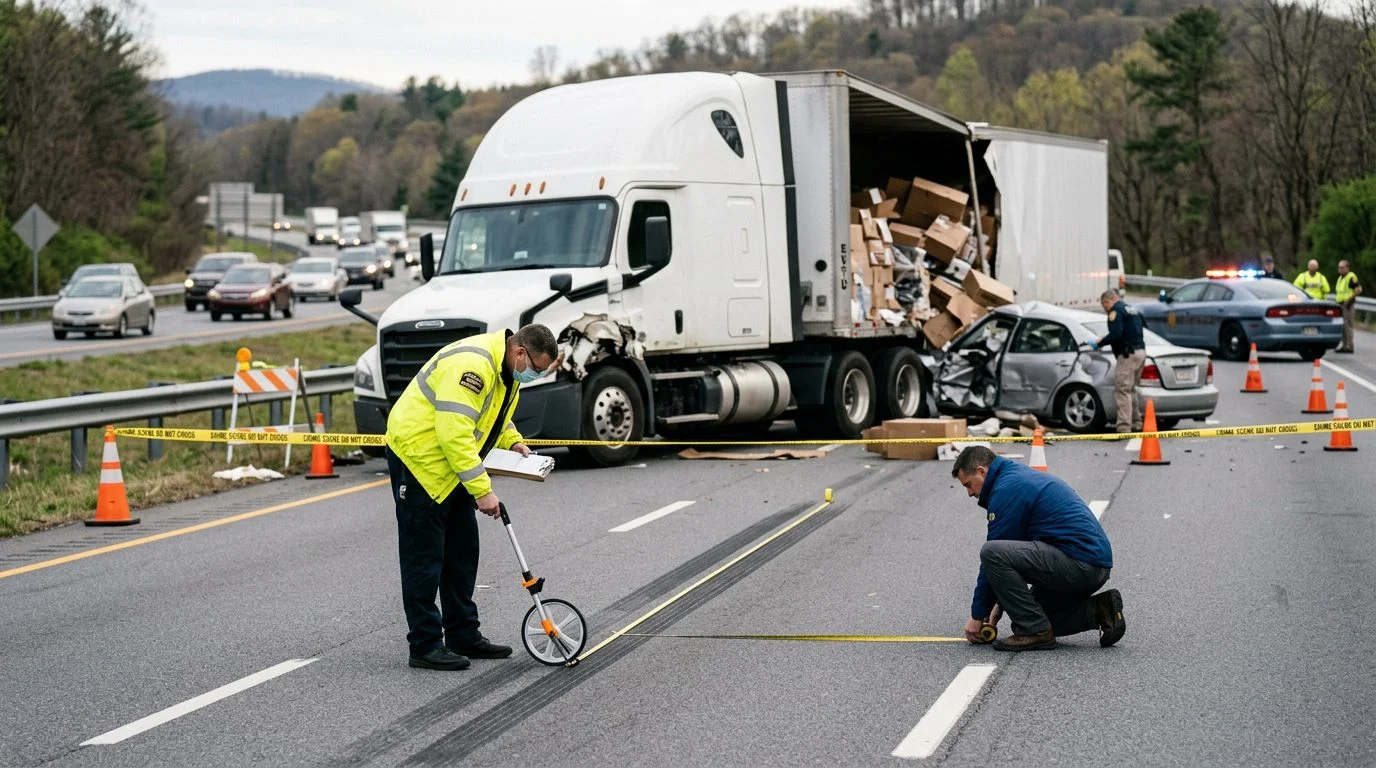
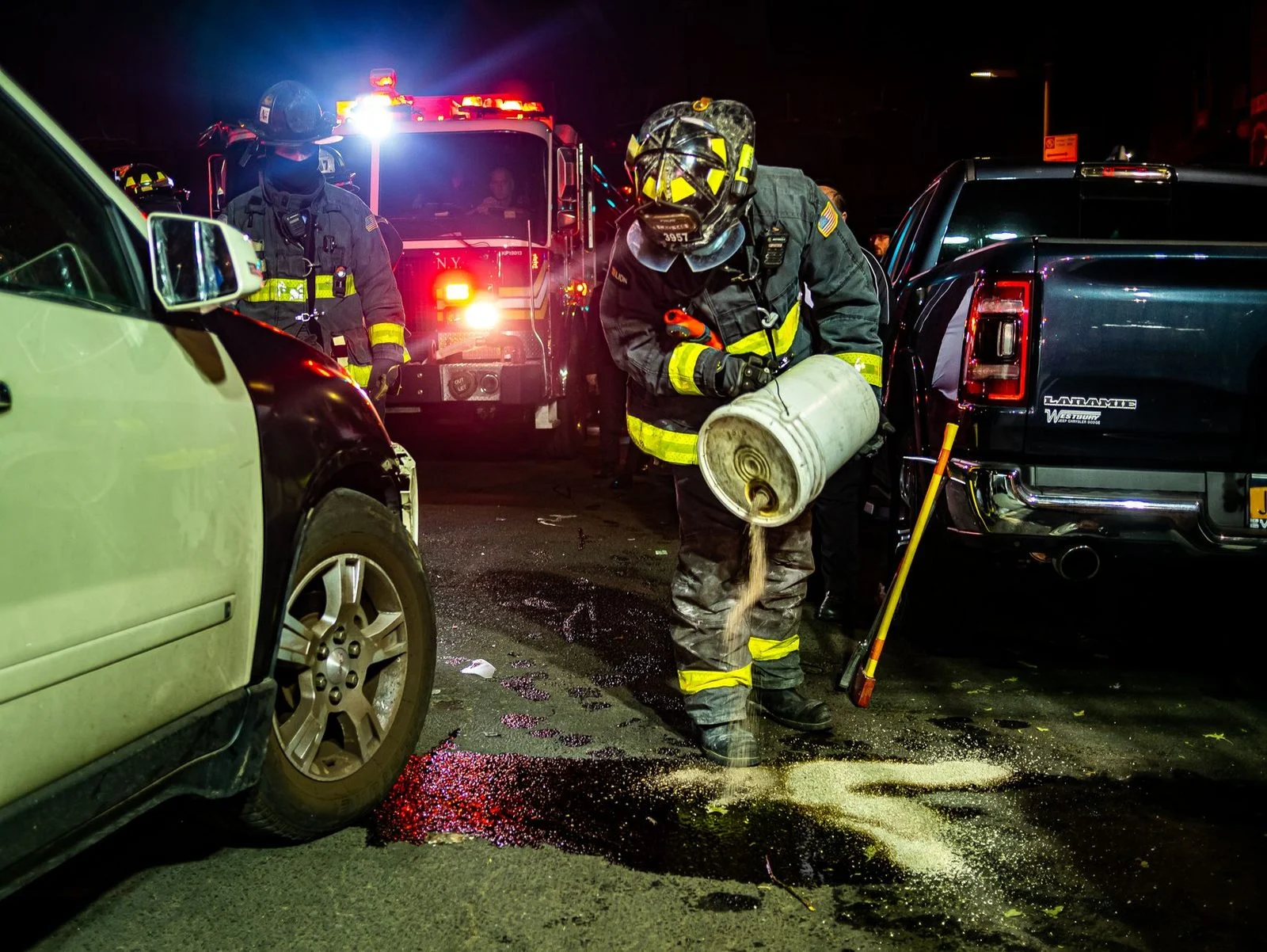
Physical evidence includes the roadway, the vehicles and the cargo. Much of it can change once cleanup or repairs begin. Scene evidence includes photos and video of the roadway, skid marks, debris, lane markings, signs and traffic controls. Take these as early as you safely can, because weather, traffic and cleanup change a scene quickly.
Damaged vehicles matter just as much. Ask that the truck, trailer and cargo securement be inspected before they are repaired or sent to salvage. Once a vehicle is repaired, some damage patterns that show how the crash happened may no longer be visible.
The rest positions of the vehicles and the pattern of debris can help show the sequence of events. Accident reconstruction professionals may review physical and electronic evidence together. Their findings depend on the facts of each crash, and no single item tells the full story.
Witness Information, Photos and Your Own Records
Witness names and contact details are easiest to collect at the scene. Write down the names of other drivers, passengers and bystanders who saw the crash or its aftermath. Ask about nearby traffic cameras and business surveillance too. Many systems record over old footage on a set cycle, so requests should go out quickly. Other drivers may have dashcam footage they can keep or delete on their own, so ask early.
Your own records matter as well. Keep photos of your injuries and your vehicle, medical records and bills, and records of work you missed. A dated journal of symptoms and daily limits can show how the injury affected your life.
Keep copies of every message you send or receive from an insurer or the trucking company. Read any written statement or release before you sign it. Ask whether a statement is being recorded.
Not sure what your next step is?
Talk it through with Correll Law Firm — we can walk you through how a situation like yours is usually handled and what your options are.
Preservation Letters and Why Timing Matters
A preservation letter, sometimes called a spoliation letter, is a written notice asking the trucking company and its insurer to keep specific records and items. The letter usually lists categories that match the checklist above: electronic data, driver files, trip records, maintenance files, testing records and the truck itself.
A letter does not control what the carrier or insurer does with its files. Whether evidence still exists depends on their response, their retention practices and what was discarded before the letter arrived. A letter sent early gives the carrier clear notice of what to keep.
Timing matters because some federal minimums are short. Truck accident evidence preservation Virginia depends on acting before routine schedules remove what you need.
Protecting Your Claim as the Evidence Is Gathered
Evidence matters because Virginia’s fault, deadline and damages rules depend on how the crash happened and who was hurt. After a crash, the other side often disputes who was at fault, and the facts of each case shape how that question is answered. Talk to a lawyer about your facts.
Virginia generally allows two years from the date of injury to file a personal injury lawsuit (Va. Code § 8.01-243(A)); the clock runs from the date of injury, not the date of discovery, with narrow exceptions. Some claims carry notice requirements that run out sooner.
For families of someone killed in a truck crash, the timeline works differently. A Virginia wrongful death action is filed by the decedent’s personal representative within two years of the death (Va. Code §§ 8.01-50(C), 8.01-244(B)), on behalf of the family members the statute protects.
Taken together, the evidence works like a timeline. The police report and scene photos capture the first hours. Electronic data and logs cover the days before the crash. Company records fill in the longer history. Acting early keeps more of that timeline available.
How soon should I start gathering evidence?
Start with photos and witness names at the scene, then send written requests as soon as you can. Early steps keep more of the record available.
What if the trucking company says records are gone?
Ask the company in writing what it kept, what it discarded and when. Written answers give you a clearer picture of what still exists.