
Truck Accident Injuries
Why Truck Accidents Cause Serious Injuries
The physics and weight of commercial vehicles make crashes with trucks far more dangerous than car-to-car collisions.
Published October 05, 2026
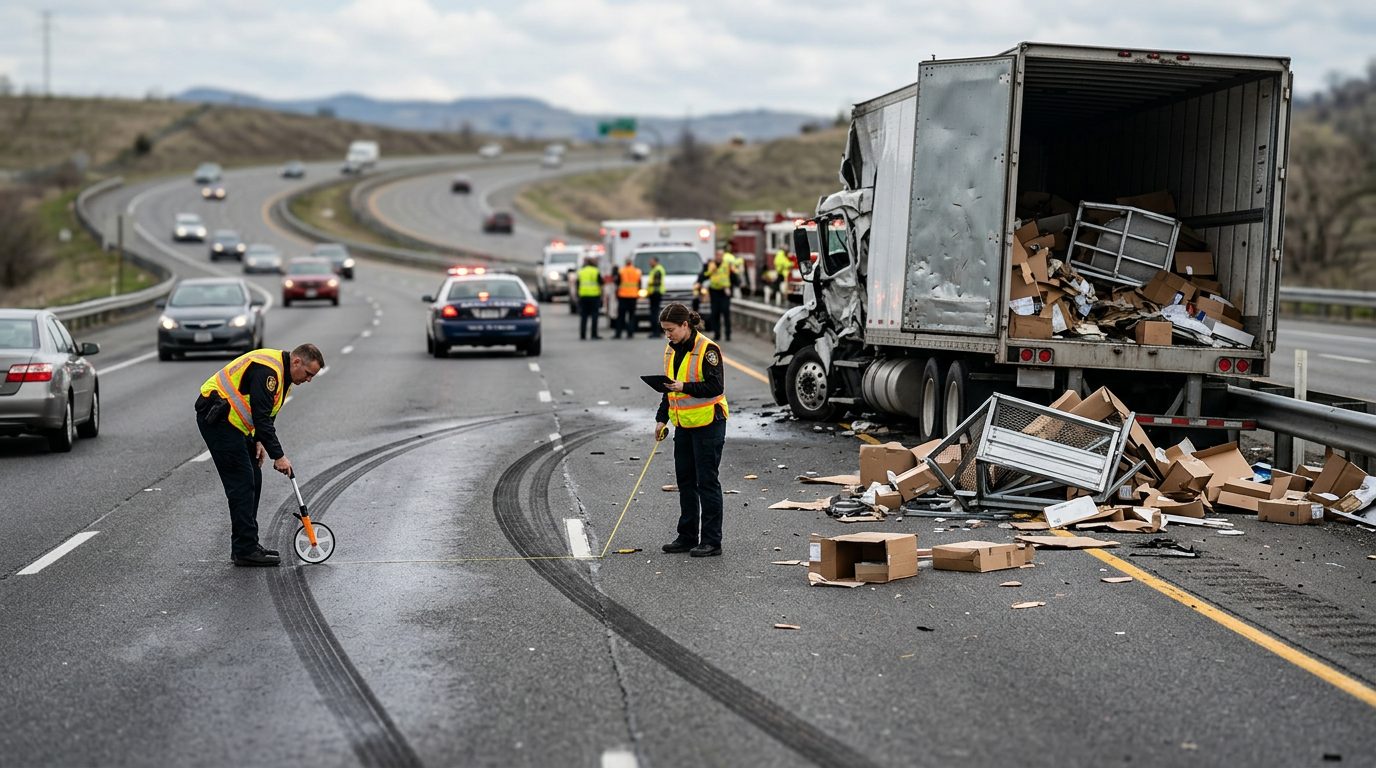
Truck accidents cause far more severe injuries than collisions between passenger vehicles because of one fundamental fact: physics. A fully loaded commercial truck weighs 20 to 30 times more than a typical car. When that mass collides with a vehicle at highway speed, the energy transfer is enormous—and the human body cannot absorb it without catastrophic damage.
Understanding why truck crashes are so devastating helps explain the injuries that result and why they often require immediate medical care and long-term recovery.
Why Truck Accidents Cause Severe Injuries
The severity of truck accident injuries comes down to mass, force, and the laws of physics that govern collisions.
Weight and energy transfer. Large trucks are defined as those with a gross vehicle weight rating over 10,000 pounds. Many commercial trucks weigh 80,000 pounds or more when fully loaded. A typical passenger car weighs 3,000 to 4,000 pounds. At highway speeds, the kinetic energy in a truck collision is enormous—the truck’s mass means it transfers far more energy to any vehicle it strikes. Occupants of smaller vehicles bear the brunt of this energy, leading to injuries that would be minor in a car-to-car crash but catastrophic in a truck collision.
Stopping distance. Fully loaded trucks require significantly more distance to stop than cars. This longer stopping distance means truck drivers have less time to react to hazards, increasing the likelihood of high-speed collisions and multi-vehicle pile-ups. When a truck cannot stop in time, the speed at impact is higher, and injuries are more severe.
Height mismatch and underride crashes. Truck cargo beds and trailers sit higher than car roofs. In an underride crash, a passenger vehicle slides beneath the truck’s trailer, often resulting in the vehicle’s roof being sheared off. These crashes cause crushing injuries, decapitation, and death. Underride crashes are among the most catastrophic truck accidents.
Blind spots. Large trucks have significant blind spots on all sides—directly in front, behind, and on both sides of the cab and trailer. A truck driver may not see a vehicle in an adjacent lane or in front of the truck. When a collision occurs in these “no-zone” areas, occupants have no warning and no time to brace for impact, leading to high-velocity side-impact or rear-impact collisions.
If a truck crash has left you or someone you care about seriously hurt, you may have questions about what happened and what comes next—reach out to Correll Law Firm for a free case evaluation. Talk it through with our team — the first case evaluation is free, confidential, and carries no obligation.
What Injuries Can You Get From Being Hit by a Truck?
Truck accident injuries range from common fractures to life-altering catastrophic injuries.
Traumatic brain injury (TBI). Impact, sudden deceleration, or objects striking the head can cause traumatic brain injury. Symptoms may not appear immediately. A mild TBI (concussion) can cause headache, dizziness, and confusion. Severe TBI can result in loss of consciousness, permanent cognitive impairment, and personality changes. Diffuse axonal injury, a form of severe brain injury, occurs when the brain shifts and rotates inside the skull, tearing nerve fibers. Recovery is often incomplete and may take months or years.
Spinal cord injury (SCI). Vehicle crashes are a leading cause of traumatic spinal cord injury in the United States. The force of a truck collision can compress or sever the spinal cord. Depending on the injury location and severity, a spinal cord injury may result in partial loss of function or complete paralysis below the injury site. About 54 people per million suffer a traumatic spinal cord injury each year in the United States—approximately 18,482 new cases annually.
Broken bones and fractures. The force of a truck collision often causes multiple fractures. Ribs, the pelvis, legs, and arms are commonly broken. Multiple fractures can lead to complications including fat embolism (a blood clot), shock, and internal bleeding.
Internal injuries. Crush injuries from the weight and force of impact can damage internal organs. Internal bleeding, punctured lungs, liver or spleen damage, and abdominal trauma are common in serious truck accidents. These injuries may not be immediately obvious but can be life-threatening.
Severe burns. In accidents involving fuel leaks or vehicle fires, occupants may suffer thermal burns. Burns require specialized medical care and often result in permanent scarring and disfigurement.
Neck, back, and soft-tissue injuries. Whiplash occurs when the head and neck are suddenly jerked backward and forward. Herniated discs, spinal fractures, and ligament tears are common. These injuries cause chronic pain and may require surgery and long-term physical therapy.
Jackknifes, Rollovers, and Cargo Shifts
Certain truck accident scenarios create additional hazards.
Jackknife crashes. When a truck brakes suddenly or loses traction, the trailer can swing out at an angle to the cab, forming a “V” or “L” shape. A jackknifed truck often traps or crushes vehicles in adjacent lanes. Other drivers may not see the jackknife until it is too late to avoid collision.
Rollovers. A truck can tip onto its side or roof if it takes a turn too fast, hits an object, or encounters adverse road conditions. A rolling truck can crush nearby vehicles and eject cargo across the roadway, creating hazards that cause secondary crashes.
Cargo spills. Unsecured or improperly loaded cargo can shift during braking or turns, striking other vehicles or creating road hazards. Spilled cargo may ignite or create toxic conditions.
It Comes Down to Physics: Mass, Force, and Energy
The reason truck accidents are so severe is straightforward: the physics of collision cannot be overcome by the human body.
A fully loaded commercial truck can weigh 80,000 pounds or more. At highway speeds, the kinetic energy in that mass is enormous. Even at lower speeds, the weight differential between a truck and a passenger vehicle means the occupants of the smaller vehicle absorb most of the collision’s energy. The human body—bone, muscle, and organs—cannot withstand that force without severe injury.
This is why truck accident injuries are often catastrophic. A collision that might cause minor injuries in a car-to-car crash can cause permanent disability or death in a truck crash.
When a Truck Accident Leaves You or a Loved One Seriously Hurt
Serious truck accident injuries often require immediate medical care, surgery, hospitalization, and long-term rehabilitation. Recovery may take months or years. Some injuries result in permanent disability.
If you or someone close to you has been injured in a truck crash, you may be facing medical bills, lost wages, and uncertainty about the future. If you are trying to understand what happened and whether you may have a claim, Correll Law Firm handles truck accident cases and catastrophic injury claims throughout the Shenandoah Valley, Richmond, and Henrico County. Reach out for a free case evaluation to discuss your situation.
FAQ
What is an underride crash?
An underride crash occurs when a passenger vehicle slides beneath a truck’s trailer, usually because the truck stops suddenly or the car cannot stop in time. The vehicle’s roof is often sheared off, causing severe crushing injuries or death.
How long do I have to file a lawsuit after a truck accident in Virginia?
In Virginia, a personal-injury lawsuit must generally be filed within two years after the injury accrues. Some claims carry notice requirements that may run out sooner. You should speak with a lawyer about your specific situation and any deadlines that may apply.
Can I recover damages if I was partly at fault for the accident?
Virginia follows contributory negligence: if you are found even partly at fault, you may be barred from recovering, with limited exceptions (Contributory negligence bars recovery in Virginia). Talk to a lawyer about your facts. You should talk to a lawyer about your facts and how Virginia’s fault rules may apply to your situation.
What should I do immediately after a serious truck accident?
Seek medical attention first. If you are able, call emergency services and report the accident to police. Gather information from witnesses and the truck driver if it is safe to do so. Take photos of the accident scene, vehicle damage, and road conditions. Do not admit fault or sign documents from the truck driver’s insurance company without legal advice. Keep all medical records and bills.
How much is my truck accident case worth?
The value of a truck accident case depends on many factors, including the nature and severity of your injuries, medical expenses, lost wages, and long-term care needs. No two cases are identical. A lawyer can review your specific situation and discuss what your claim may be worth.
Related practice areas
- Truck Accident Lawyer in Virginia | Correll Law Firm
- Delayed Brain Injury Symptoms: Years After Your Accident