
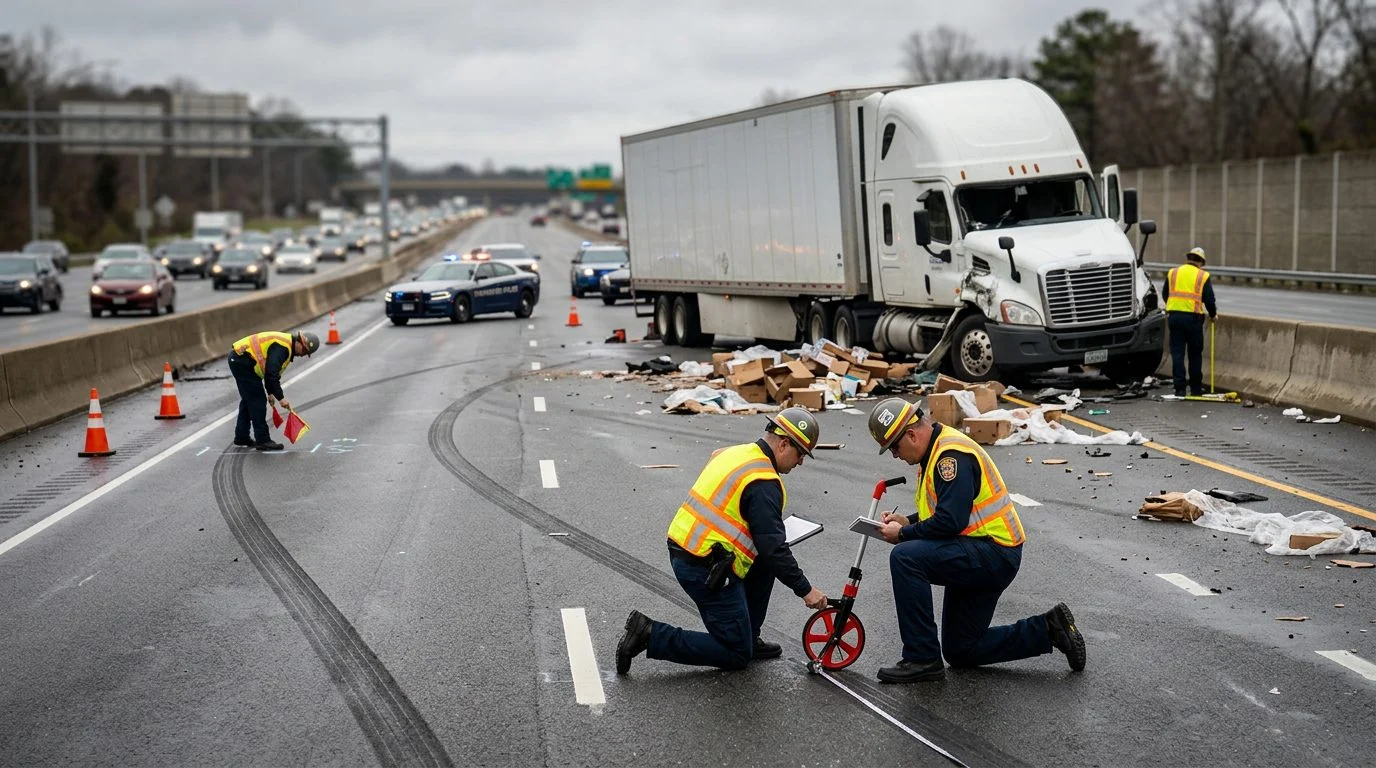
Truck Accidents | Henrico County, Virginia
Hurt in a Truck Crash in Henrico County? Start With a Clear Picture of Your Options
Correll Law Firm represents people injured in truck and commercial vehicle crashes in Henrico County and the Richmond area, from its Winchester and Harrisonburg location.
Published October 29, 2026
Truck Accidents Law Firm in Henrico County, Virginia
If a tractor-trailer or other commercial truck hurt you or someone you love in Henrico County, you likely have many questions. This page explains the basics in plain terms. Correll Law Firm is a truck accidents law firm that represents people seriously hurt in car and commercial truck crashes, and families in wrongful death cases. The firm serves clients from the Shenandoah Valley to Richmond and Henrico County. Below, you’ll find the duties after a crash, the evidence that matters, Virginia’s time limits and what families should know after a death.

Who This Page Is For and What the Firm Handles
This page is for people hurt in a crash with a truck or commercial vehicle, and for families who lost someone in one. A crash with a passenger car and a crash with a commercial vehicle can look alike at the roadside. The legal picture is often different. Commercial vehicles usually run for a business, so more parties can be involved. That may include the driver, the company that operates the truck, and others tied to the vehicle or its load.
The firm’s offices are in Winchester and Harrisonburg, and it has no office in Henrico County. Its work covers car and commercial truck crashes and wrongful death cases for people from the Shenandoah Valley to Richmond and Henrico County.
Crash Types and Injuries the Firm Handles
The firm handles truck and commercial vehicle collisions, catastrophic injuries and wrongful death claims. Common crash patterns include rear-end collisions, lane change crashes and intersection crashes. Each pattern raises its own questions about who had room to avoid the impact and what each driver could see.
Catastrophic injuries include traumatic brain injury and spinal cord injury. These injuries can require long-term medical care, rehabilitation and changes to daily life. Some symptoms of a brain injury can appear or change days after a crash, so early medical care creates an important record.
A heavy truck carries far more weight than a passenger car, and it needs much more distance to stop. That difference in size and momentum is one basic reason injuries from these crashes can be severe.
Evidence That Matters After a Truck Crash
The most useful evidence records what happened, who was involved and how the injuries developed. Virginia requires a driver involved in a crash with injury or death to stop and report it to police immediately (Va. Code §§ 46.2-371, 46.2-894). The two-year period is the deadline to file a lawsuit, not to report a crash (Va. Code § 8.01-243).
Useful evidence often includes:
- The police crash report and its report number
- Photos of the scene, the vehicles and the injuries
- Names and contact details for witnesses
- Medical records from the first treatment onward
- Commercial records, such as driver logs and maintenance files
Federal rules require motor carriers to make drivers record their duty status for each 24-hour period. No driver or motor carrier may make a false report about it (49 C.F.R. § 395.8).
Whether a carrier needs a USDOT number depends on how it operates. The Virginia DMV motor carrier page explains which vehicles and carriers need one.
Vehicle data, electronic logs and dispatch records can be overwritten or discarded over time. Acting early helps keep these records available.
Time Limits and How Partial Fault Is Treated
Virginia generally allows two years from the date of injury to file a personal injury lawsuit (Va. Code § 8.01-243(A)); the clock runs from the date of injury, not the date of discovery, with narrow exceptions.
Some claims carry notice requirements that run out sooner. A claim for negligence against a county, city or town needs a written statement, including the time and place of the injury, filed within six months after the claim accrued, unless the attorney, chief executive or mayor, or an insurer covering the claim, had actual knowledge of the claim within that period; if the claimant was under a disability when the claim accrued, the tolling provisions of Va. Code § 8.01-229 apply (Va. Code § 15.2-209). A crash involving a local government vehicle needs early attention for this reason.
Virginia follows contributory negligence: if you are found even partly at fault, you may be barred from recovering, with limited exceptions. Talk to a lawyer about your facts.
Fault is often decided on the crash facts. The police report, photos, witness statements and medical records all help show how the crash happened. Waiting can make these records harder to find.
Wrongful Death After a Commercial Truck Crash
A Virginia wrongful death action is filed by the decedent’s personal representative within two years of the death (Va. Code §§ 8.01-50(C), 8.01-244(B)), on behalf of the family members the statute protects.
They share in any recovery, and Va. Code § 8.01-53 sets out who receives a share. The class of beneficiaries is fixed when the verdict is entered if the jury makes the specification, or when the judgment is rendered if the court specifies the distribution, under Va. Code § 8.01-53.
Virginia wrongful death damages cover the family’s sorrow, mental anguish and loss of the decedent’s companionship, guidance and care; lost income and services; medical expenses from the injury; funeral expenses; and, for willful or wanton conduct, punitive damages (Va. Code § 8.01-52).
Virginia allows punitive damages for actual malice, or for willful or wanton conduct or recklessness showing a conscious disregard for the safety of others; under Va. Code § 8.01-38.1, the total amount awarded for punitive damages against all defendants may not exceed $350,000.
How a Truck Accident Case Typically Moves Forward
A typical case moves through intake, records, medical review, evaluation of the parties and insurance, and then negotiation or a lawsuit. Each step builds on the one before it.
- Intake. The firm gathers the basic facts of the crash, the injuries and the treatment so far.
- Records. The firm requests police reports and, where relevant, commercial vehicle records.
- Medical review. The injuries are documented from first treatment, including any long-term effects.
- Parties and insurance. The firm identifies who may be responsible and what coverage may apply on each side.
- Resolution. The case moves to negotiation or a lawsuit within the Virginia deadlines.
Timing depends on the facts of each case, and the deadlines described above still apply.
Serving Richmond-Area and Henrico County Residents
The firm has offices in Winchester and Harrisonburg and represents people from Richmond and Henrico County. It focuses on car accidents, truck accidents, commercial vehicle accidents, catastrophic injuries, traumatic brain injury, spinal cord injury and wrongful death.
The firm has support staff who help with records, scheduling and communication with clients. That help extends to clients who live outside Winchester and Harrisonburg.
Crashes often involve records held by several parties, so organized records help. The firm’s support staff work on those records as part of a case, whatever part of Virginia the client calls home.

Frequently Asked Questions About Truck Accident Cases in Henrico County
Does the firm handle truck crashes in Henrico County?
Yes. Correll Law Firm is a truck accidents law firm that represents people hurt in truck and commercial vehicle crashes in Henrico County and the Richmond area.
What if the truck driver came from another state?
Commercial vehicles often travel across state lines. That can change which parties and records are involved.
Can a family pursue a claim after a fatal truck crash?
Yes. The personal representative files the wrongful death action, and family members share in any recovery.
What should I do first after a truck crash?
Get medical care, report the crash to police as Virginia law requires, and keep records of treatment and expenses.