
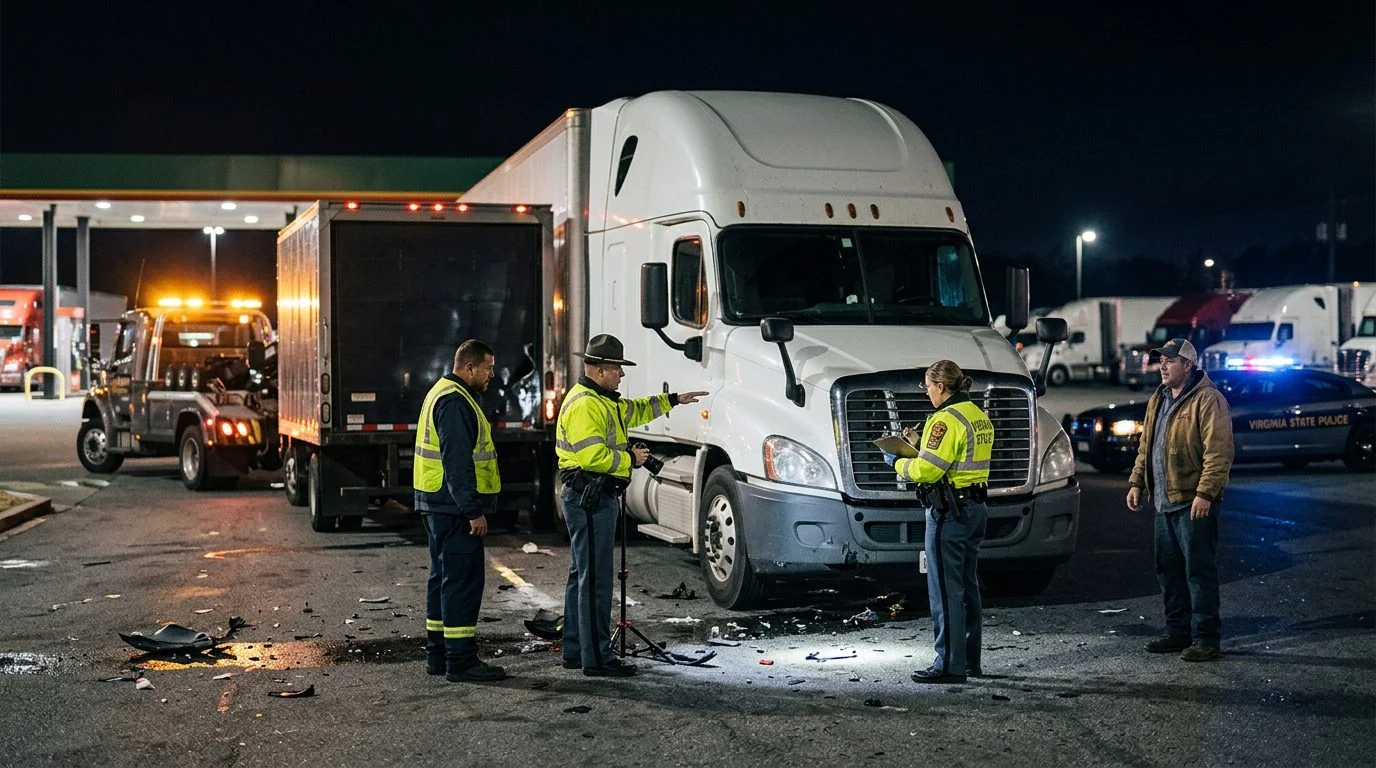
Truck Crashes | Winchester, Harrisonburg and the Shenandoah Valley
A Truck Driver Says the Crash Was Your Fault? Here Is What to Do Next
A driver's account is only one piece of the picture. Learn the practical steps that can help protect your side of the story after a truck crash.
Published October 28, 2026
If a truck driver says the crash was your fault, that is one account of what happened, not a final answer. In Virginia, fault is decided from the full record, and the steps you take early can shape what that record shows.
After a wreck, the truck driver may say you caused the crash. The question behind it is usually simple: what should I do now? This guide covers the steps that matter most, from reporting the crash to protecting proof.
What It Means When a Truck Driver Says the Crash Was Your Fault
A truck driver’s statement about fault is that driver’s version of events. It does not settle who caused the crash on its own.
Drivers often speak right after a crash, when they are shaken and hurt. They may not have had time to think through what happened. Their words can be sincere and still incomplete.
Truck crashes also involve more parties than the two drivers. There is the driver, the company that operates the truck, and the insurers for each side. Each may tell its own version of events. A crash on Interstate 81 near Winchester or Harrisonburg, or on a road in Henrico County, can involve a commercial truck and several insurers at once. For a broader look at truck claims, read the truck accident claims guide.
Talk it through with Correll Law Firm — we can walk you through how a situation like yours is usually handled and what your options are.
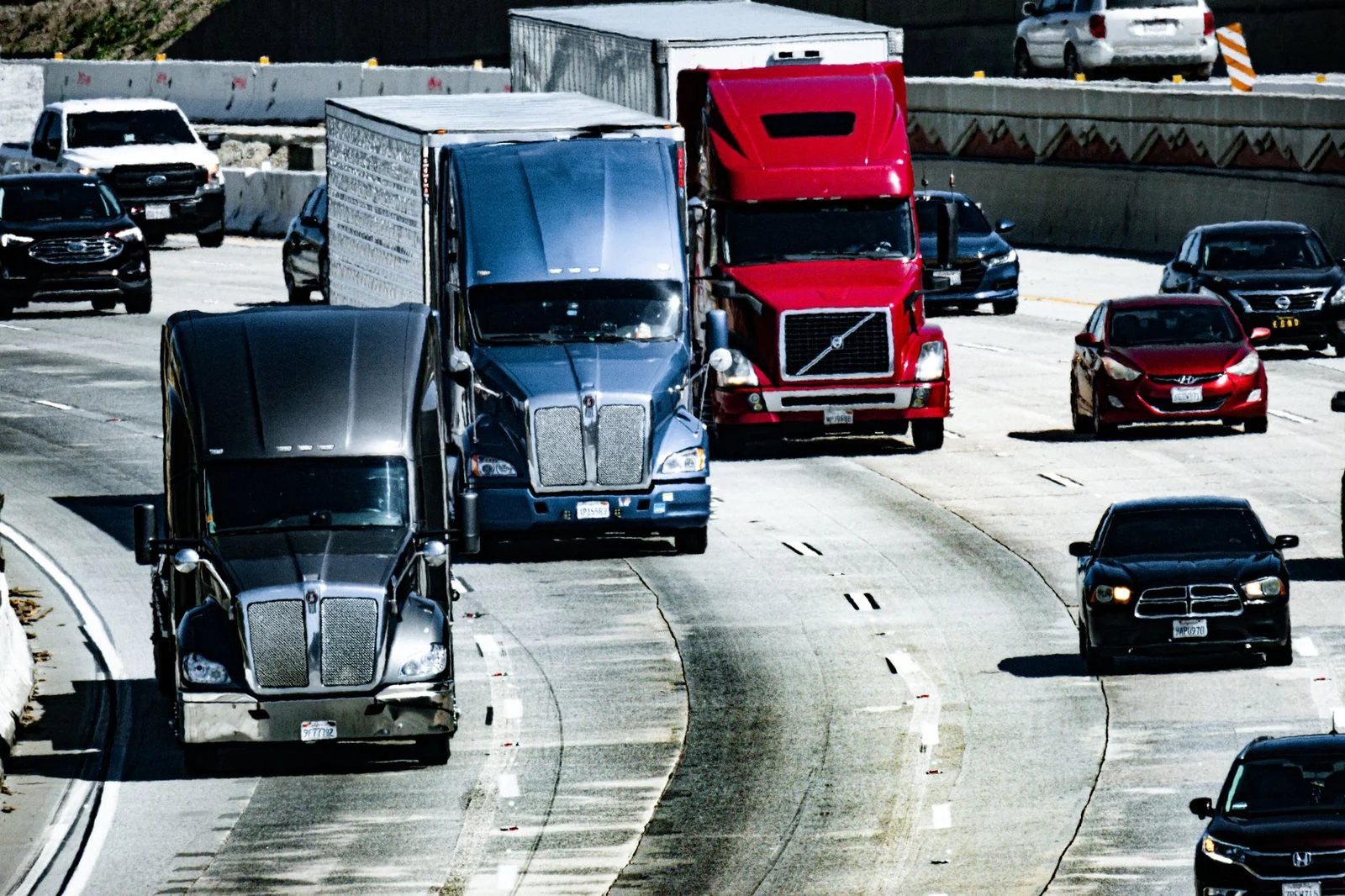
Why a Driver’s Account Is Not the Only Evidence
Fault is usually shown by several sources working together. No single person’s word has to carry the whole question.
Physical evidence often tells much of the story. Skid marks, the final rest position of each vehicle, debris, and the pattern of damage can show where contact happened and how each vehicle was moving. Traffic signals, signs, and lane markings show what each driver had to follow.
Witness statements and the police report add more. Witnesses may have seen a lane change, a signal, or the speed of a vehicle. The officer’s report records what was observed at the scene, but it is not the last word on fault.
Trucks also create records. Federal rules require motor carriers to keep driver records of duty status and supporting documents for not less than six months from receipt, and they bar false reports about duty status (49 C.F.R. § 395.8). Because the carrier controls these records, early preservation matters.
How Virginia’s Partial-Fault Rule Affects a Dispute
A driver who blames you may be trying to move all of the fault onto you. That claim can carry high stakes.
Virginia follows contributory negligence: if you are found even partly at fault, you may be barred from recovering, with limited exceptions. Talk to a lawyer about your facts.
That means even a small share of blame placed on you can matter a great deal.
That is why the seconds before impact matter so much. Who had the green light? Who changed lanes? Who braked, and who was watching the road? These questions often decide the dispute. Write down what you remember while the details are fresh.
Report the Crash and Get It on Record
Virginia requires a driver involved in a crash with injury or death to stop and report it to police immediately (Va. Code §§ 46.2-371, 46.2-894).
It also requires reasonable help for anyone who is hurt (Va. Code § 46.2-894).
A police report creates an early record of the crash, the parties, and the scene. That record can matter when two drivers tell different stories. If no officer came to the scene, report the crash as soon as you can and note which agency you contacted.
Get medical attention for any injury, even one that seems minor at first. Keep records of every visit, test, and prescription. Early treatment records also document what happened after the crash.
Evidence to Preserve When Fault Is Disputed
The best evidence is usually what you gather early, before the scene clears and the vehicles are moved or repaired.
Take photos of both vehicles, the roadway, the lighting, and any traffic signs or signals near the crash. Take wide shots and close-ups of the damage. Write down the names and contact details of any witnesses while they are still nearby. If a dashcam or phone recorded anything, save the original file.
Try not to repair or scrap your vehicle until its damage has been documented. Damage patterns can help show how the crash happened, so the vehicle itself is evidence.
Keep a simple written timeline while your memory is fresh. Note the time, the weather, which lane each vehicle was in, and what you saw and heard. Keep copies of letters, medical records, and claim numbers in one folder.
For a full checklist, see evidence to preserve after a truck crash.
Dealing With the Trucking Company’s Insurance Adjuster
An adjuster for the trucking company works for the insurer. The adjuster’s statement is the insurer’s position, not a legal finding of fault.
The adjuster may call soon after the crash. The adjuster may describe the crash as your fault, sometimes before you know all the facts yourself. Stay polite, but stay careful about what you say.
Write down the adjuster’s name, company, and claim number. Before you give a recorded statement or sign any papers, ask what they are for and take time to read them. Words said in a hurry can be quoted back later.
Keep your own log of each call, with the date, the time, and what was said. A written log can help you remember details accurately later.
You may wish to get legal advice before you agree to anything. For more on these calls, read the guide to a trucking company’s adjuster.
Not sure what your next step is?
Talk it through with Correll Law Firm — we can walk you through how a situation like yours is usually handled and what your options are.
How Insurance Coverage Fits Into a Truck Crash Claim
Federal rules say a motor carrier may not operate a motor vehicle until it has the minimum required financial responsibility in effect. Those policies must stay in effect until they are properly ended (49 C.F.R. § 387.7).
The amount of coverage and how a policy responds can shape how a claim is handled. The insurance requirements guide explains the coverage rules in more detail.
Fault can involve more than one party.
A driver’s blame does not, by itself, decide which policy applies or how it responds. Those questions depend on the records and the facts of the crash.

Deadlines to Keep in Mind
Virginia generally allows two years from the date of injury to file a personal injury lawsuit (Va. Code § 8.01-243(A)); the clock runs from the date of injury, not the date of discovery, with narrow exceptions. Under Va. Code § 8.01-243, unless otherwise provided in that section or by other statute, every action for personal injuries, whatever the theory of recovery, must be brought within two years after the cause of action accrues.
Some claims carry notice requirements that run out sooner, so don’t assume the two-year period covers every step. The two-year period is generally the deadline to file a lawsuit for personal injuries or for damages resulting from fraud, unless otherwise provided in this section or by other statute, not to report a crash (Va. Code § 8.01-243).
Does a truck driver’s word decide who caused the crash?
No. A driver’s account is one piece of evidence. Fault is looked at through the scene, the damage, the records and the witnesses.
How long do I have to sue after a truck crash in Virginia?
Generally two years from the date of injury (Va. Code § 8.01-243).