
Catastrophic Injuries
Types of Spinal Cord Injuries from Truck Accidents
Commercial truck collisions can cause severe spinal cord damage. Learn how these injuries occur and what you need to know.
Published October 05, 2026
A spinal cord injury from a truck accident is one of the most serious injuries a person can sustain. The force and weight of a commercial truck create conditions for severe trauma to the spine and the delicate nerve tissue it protects. Understanding the different types of spinal cord injuries—and how they occur—can help you make sense of what happened and what comes next.
How Truck Accidents Cause Spinal Cord Injuries
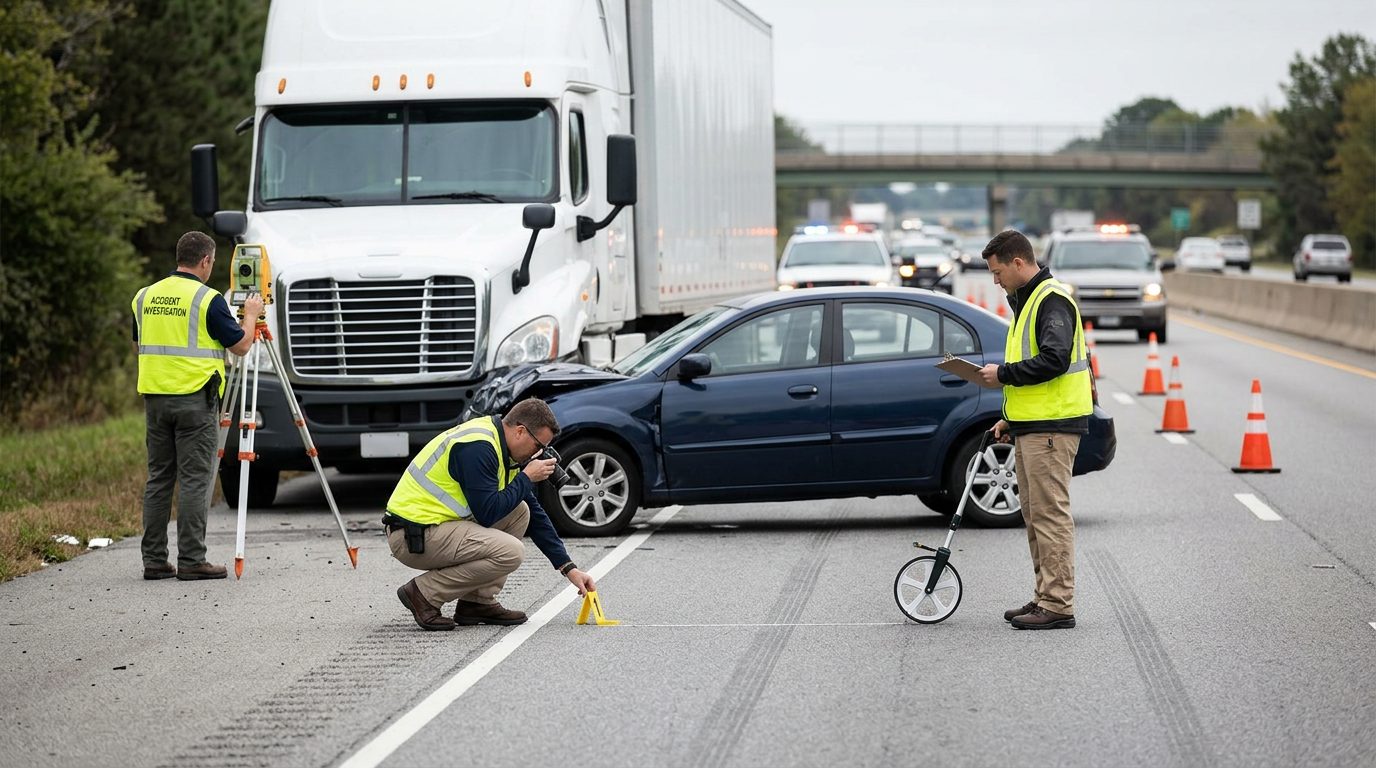
Truck accidents cause spinal cord injuries through several mechanisms. The extreme impact of a multi-ton vehicle traveling at highway speed can fracture vertebrae, rupture discs, or dislocate the spine. Rollover crashes, sudden deceleration, and crushing forces all pose serious risks to the spinal column and the cord inside it.
The spinal cord is a bundle of nerves protected by bone (vertebrae) and three layers of tissue, surrounded by cerebrospinal fluid that cushions it against shock. When a truck accident delivers blunt force, the vertebrae may break, shift, or collapse. Bone fragments, disc material, or swelling can compress the spinal cord itself. In rare cases, a penetrating object pierces the spine and damages the cord tissue directly.
Spinal injuries from truck accidents tend to be more severe than those from car accidents because of the weight differential. A fully loaded commercial truck can weigh 80,000 pounds or more, compared to a passenger vehicle at 3,000–4,000 pounds. That mass multiplied by speed creates forces that cause catastrophic damage.
It’s important to understand the difference between a spinal column injury and a spinal cord injury. A spinal column injury involves the bones and ligaments of the spine. A spinal cord injury involves damage to the nerve tissue itself. Both can occur in the same accident, but only a spinal cord injury results in loss of function below the injury level.
If you or a family member sustained a spinal cord injury in a truck accident, understanding what happened and your options matters—reach out to discuss your situation. Talk it through with our team — the first case evaluation is free, confidential, and carries no obligation.
Complete vs. Incomplete Spinal Cord Injuries
A complete spinal cord injury means the spinal cord is fully severed or the damage is so severe that no nerve signals pass below the injury level. A person with a complete injury loses all sensation and muscle function below the point of damage.
An incomplete spinal cord injury means some nerve function remains below the injury level. The spinal cord is not fully severed, and some signals still travel through. A person with an incomplete injury may retain partial sensation, partial movement, or both. The amount of function that remains varies widely and cannot always be predicted immediately after the injury.
The distinction matters enormously for recovery and long-term outcomes. Incomplete injuries generally offer more potential for rehabilitation and regaining function than complete injuries. However, recovery is slow and unpredictable. Some people regain significant function over months or years; others reach a plateau. Doctors assess severity through imaging (MRI, CT scan) and neurological testing to determine whether an injury is complete or incomplete.
Cervical Spine Injuries (C1–C8)
The cervical spine is the neck region of the spine, made up of seven vertebrae labeled C1 through C7. (Some anatomists include an eighth cervical nerve, C8, which arises from the lowest cervical segment.)
Cervical spinal nerves control signals to the back of the head, neck, shoulders, arms, hands, and—critically—the diaphragm, the muscle that controls breathing. Any injury to the C1–C4 segments can affect breathing because these nerves control the diaphragm. Injury at C5 or below may preserve some breathing function but affect arm and hand movement.
Cervical injuries are among the most serious spinal cord injuries. Damage at the C1–C4 level can result in tetraplegia (also called quadriplegia), which means loss of function in all four limbs and the trunk. A person with a high cervical injury may require a ventilator to breathe and assistance with all activities of daily living.
Lower cervical injuries (C5–C7) may allow some arm and hand function, but legs remain paralyzed. Even so, the loss of fine motor control in the hands and the inability to walk represent profound changes to independence and quality of life.
Thoracic Spine Injuries (T1–T12)
The thoracic spine is the mid-back region, consisting of 12 vertebrae labeled T1 through T12. Thoracic spinal nerves control signals to the chest muscles, some back muscles, and many internal organ systems.
An injury to the thoracic spine typically results in paraplegia—loss of function in the legs and lower trunk. The arms and hands usually retain full function. A person with a thoracic spinal cord injury may use a wheelchair but can often drive an adapted vehicle and perform many upper-body tasks independently.
Thoracic injuries can also affect breathing if they occur at the upper thoracic levels (T1–T6), because these nerves help control the chest wall muscles used in respiration. Organ function—including bowel, bladder, and sexual function—is also affected.
Lumbar and Sacral Spine Injuries (L1–S5)
The lumbar spine is the lower back, consisting of five vertebrae labeled L1 through L5. The sacral spine is at the base of the spine, with five fused vertebrae labeled S1 through S5.
Lumbar and sacral spinal nerves control signals to the lower abdomen, buttocks, external genital organs, thighs, lower legs, and feet. They also control bowel and bladder function.
An injury at the L1 level or below typically results in paraplegia affecting the legs, but the trunk and arms remain functional. Lower-level injuries (L3–L5 or sacral) may preserve more leg function than higher lumbar injuries, though outcomes vary. Some people with lower lumbar or sacral injuries retain the ability to walk with assistive devices or bracing.
Bowel and bladder control is often lost or severely impaired with lumbar and sacral injuries. Sexual dysfunction is common. However, because the arms and upper body remain unaffected, people with lower spinal cord injuries often achieve greater independence in daily activities and employment than those with higher injuries.
Fractured Vertebrae
The force of a truck accident can fracture one or more vertebral bodies—the solid bone blocks that stack to form the spine. A compression fracture occurs when a vertebra is crushed and collapses. A burst fracture occurs when the vertebra shatters, and bone fragments can press into the spinal canal where the cord sits.
Fractured vertebrae don’t always damage the spinal cord directly. However, bone fragments, swelling, or misalignment can compress the cord and cause injury. Some fractures are treated with bracing and rest; others require surgery to remove bone fragments, realign the spine, or stabilize it with rods and screws.
The severity of a fracture-related spinal cord injury depends on how much the cord is compressed and whether the damage is complete or incomplete. Imaging and neurological assessment determine the best treatment approach.
Not sure what your next step is?
Talk it through with our team — the first case evaluation is free, confidential, and carries no obligation.
Herniated Discs
Between each pair of vertebrae sits an intervertebral disc—a shock-absorbing structure with a tough outer ring and a gel-like center. The force of a truck accident can rupture the outer ring, allowing the inner material to bulge or leak into the spinal canal.
A herniated disc can press on nerve roots (the branches of the spinal cord that exit between vertebrae) or, in severe cases, directly compress the spinal cord itself. If the herniation is large and centrally located, it may cause spinal cord compression and nerve damage.
Some disc herniations cause acute pain and loss of function immediately after the accident. Others develop or worsen over days or weeks as swelling increases. Treatment ranges from rest, physical therapy, and anti-inflammatory medication to surgery to remove the disc material and relieve pressure on the nerve.
Dislocations and Ligament Injuries
Truck accident forces can dislocate vertebrae—pushing them out of alignment. Ligaments that normally hold the spine stable can tear or rupture. A dislocated vertebra may pinch or sever the spinal cord.
Dislocations are often unstable, meaning the spine cannot support itself without external bracing or surgery. A person with a vertebral dislocation may require immediate surgery to realign and stabilize the spine. Without treatment, ongoing instability can lead to re-injury and progressive nerve damage.
Ligament injuries alone may not immediately damage the spinal cord, but they can cause chronic pain and instability, increasing the risk of future injury.
How Serious Is a Spinal Cord Injury?
Spinal cord injuries are among the most life-altering injuries a person can sustain. The immediate effects include paralysis, loss of sensation, and loss of function below the injury level. But the long-term effects are profound and lifelong.
People with spinal cord injuries often experience chronic pain, bowel and bladder dysfunction, sexual dysfunction, and difficulty regulating body temperature. Respiratory complications, blood clots, pressure ulcers, and infections are common secondary effects. The psychological and emotional impact—grief, depression, anxiety—is also significant.
The lifetime costs of a spinal cord injury are staggering. Average first-year expenses range from $472,190 to $1,446,827, depending on severity. Each subsequent year costs $57,353 to $251,246. Over a lifetime, a person injured at age 25 may face total costs ranging from $2,144,693 to $6,419,617 (in 2025 dollars). These figures cover medical care, rehabilitation, adaptive equipment, home modifications, attendant care, and lost earning capacity.
Early diagnosis and emergency treatment are critical. Spinal cord injuries require immediate stabilization, imaging, and often emergency surgery to prevent further damage and maximize the potential for recovery.
What Happens After a Spinal Cord Injury Diagnosis
After a truck accident, a spinal cord injury is typically diagnosed through imaging (MRI or CT scan) and neurological examination. If the injury is unstable or causing cord compression, emergency surgery may be needed to realign the spine, remove bone fragments, or relieve pressure.
Acute care focuses on stabilization, preventing infection, and managing pain and swelling. Once the person is medically stable, rehabilitation begins. Physical therapy, occupational therapy, and rehabilitation medicine specialists work to maximize function and teach adaptive techniques.
Long-term care involves ongoing medical appointments with specialists, mental health support, peer support groups, and management of secondary complications like infections and pressure ulcers. Many people require home modifications, adaptive equipment (wheelchairs, braces, communication devices), and attendant care for activities of daily living.
Recovery is slow and highly individual. Some people regain significant function over months or years; others reach a plateau within weeks. Realistic expectations and access to quality rehabilitation are essential.
Understanding Your Legal Options
A spinal cord injury from a truck accident may entitle you to compensation. After a truck crash, more than one party may have played a role in what happened, such as the driver, their employer, or the trucking company, and sorting out who was involved often takes a close look at the facts.
Damages in a spinal cord injury case can include medical expenses (past and future), lost wages, lost earning capacity, pain and suffering, and costs for adaptive equipment and home modifications. Because spinal cord injuries are catastrophic, damages are often substantial.
Virginia law generally requires a personal-injury lawsuit to be filed within two years after the cause of action accrues, with exceptions. Some claims carry notice requirements that run out sooner, so you may wish to talk with a lawyer about the facts of your situation.
Investigating a truck accident and building a strong claim requires gathering police reports, medical records, witness statements, and often expert analysis of the accident scene and the truck’s maintenance and operation. An attorney can help you understand what happened, identify all responsible parties, and pursue compensation.
If you or a family member sustained a spinal cord injury in a truck accident, understanding what happened and your options matters—reach out to discuss your situation.