
Car Accidents | Virginia
Understanding Your Chances in a Virginia Car Accident Lawsuit
No one can promise how a lawsuit will end. The facts of your crash, your injuries and your evidence shape what a claim looks like, and this guide explains what to think through.
Where the firm works
Virginia
Serving the Shenandoah Valley, Richmond and Henrico County
Published October 20, 2026
No lawyer can responsibly give a set percentage for the chances of winning a car accident lawsuit before reviewing the facts. Outcomes turn on who caused the crash, how well the injuries are documented, how the insurer responds, and when the claim is filed. This page explains those factors in plain language for people hurt in Virginia.
Short answer: why the outcome turns on the facts
The outcome of a car accident claim depends on the facts of the crash and the injuries. Four factors shape almost every claim: who caused the crash, how well the injury is documented, how the insurer responds, and when the claim is filed. Any percentage would be a guess, and a guess can give a reader a false picture of what is possible.
Two crashes can look alike and still lead to very different paths. One may have a clear police report, witness statements, and steady medical care. Another may have disputed fault and a long gap in treatment. Only a review of the specific file can show which path a claim may take.
General information can explain the issues. It cannot predict whether a particular claim will succeed. For a broader overview of the firm’s car and truck work, see the truck accident lawyer overview.
Not sure what your next step is?
Talk it through with Correll Law Firm — we can walk you through how a situation like yours is usually handled and what your options are.
What winning can mean in a car accident claim
A claim can end in several ways, and winning can look different in each one. It may resolve through talks with the insurer, through a settlement reached during a lawsuit, or through a trial decided by a judge or jury.
Many people with injury claims never reach a courtroom. Each path has its own steps, timing, and uncertainty. A negotiated settlement can come sooner, while a trial takes longer and carries its own risks for both sides. Because the paths differ, a reader should ask what they want from the claim and what each step would require. Insurers, defendants, and courts each see the claim differently, and a reader should expect that. Clear goals and a clear record of the injuries make each step easier to plan.
The firm handles car and truck crash claims from Winchester and Harrisonburg. It also serves people in Richmond and Henrico County, as well as across the Shenandoah Valley.
Proving who caused the crash
Fault is usually the first question in a car accident claim. Proof of fault often comes from the scene and from the people who saw it.
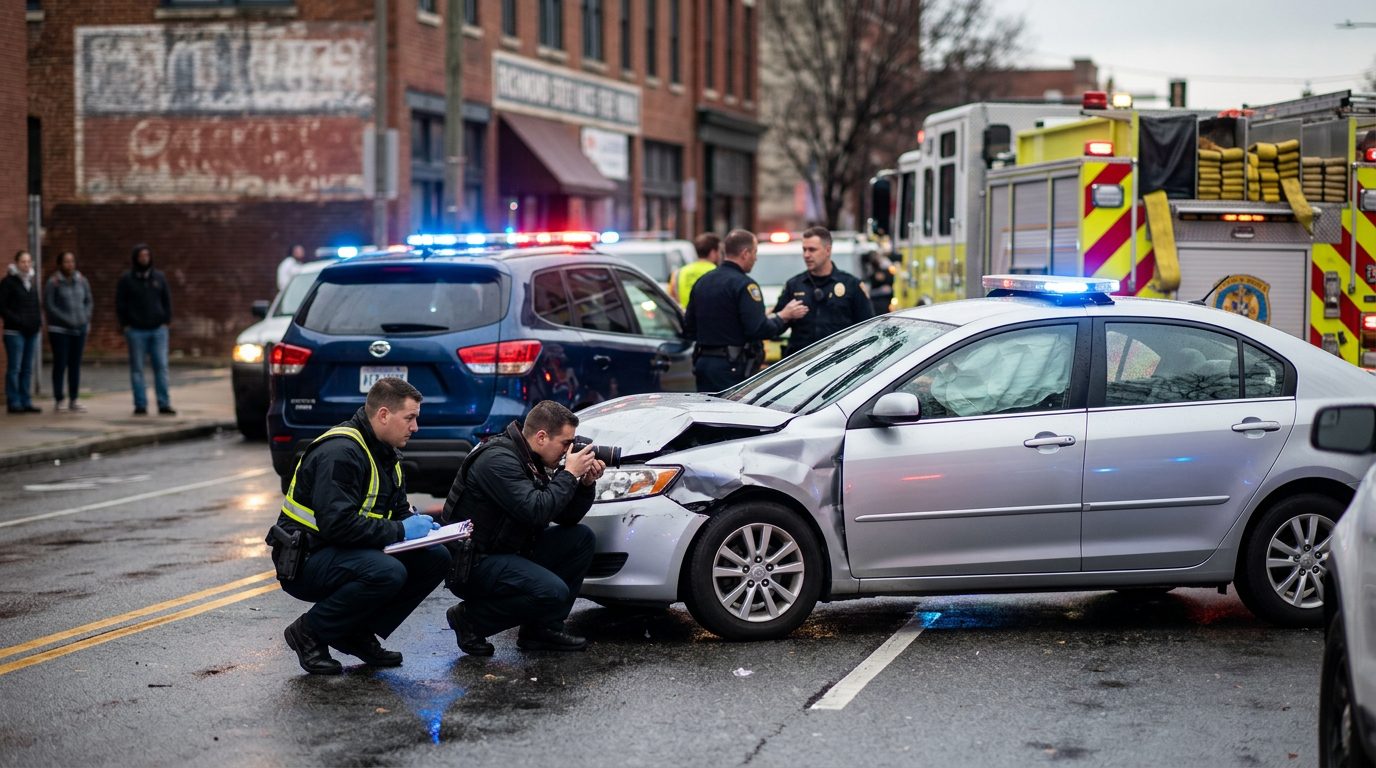
Useful evidence includes the police crash report, photographs of the scene and vehicle damage, witness names and statements, and any traffic camera or dash camera footage. Some video is recorded over quickly, so early requests matter. Photos taken the same day can show where vehicles stopped and how they were damaged.
Virginia requires a driver involved in a crash with injury or death to stop and report it to police immediately (Va. Code §§ 46.2-371, 46.2-894). The two-year period is the deadline to file a lawsuit, not to report a crash. The state statute on stopping at a crash sets out the driver’s duty.
Photos and names are easy to lose. A hurt person may not be able to collect them, so a friend or family member may help. Written notes made soon after the crash also help keep details straight.
When you may be partly at fault
Insurers and defendants often argue that the injured person contributed to the crash. That argument can change the outcome, so it deserves early attention.
Virginia follows contributory negligence: if you are found even partly at fault, you may be barred from recovering, with limited exceptions (Contributory negligence bars recovery in Virginia). Talk to a lawyer about your facts.
Partial-fault arguments often rest on small details. The other side may say a driver was distracted, was speeding, or changed lanes without warning. Physical evidence, witness accounts, and vehicle positions can help test those claims. Two drivers may each tell a different story about the same light or lane change, and the evidence decides which account holds up. Consistency matters too. A story that shifts over time gives the other side more to question.
Proving your injuries and their link to the crash
Injury proof usually rests on medical records that connect the injury to the crash. Those records start at the scene or emergency room and continue through each follow-up visit. Consistent treatment builds a clear timeline.
Insurers often question gaps in care, missed appointments, and delays before treatment started. Keeping every bill, referral, and prescription helps explain the care. A short note about why a visit was missed can also help.
Pre-existing conditions are another common issue. The other side may argue that an old back problem, not the crash, caused the pain. A treating doctor can sometimes explain how the crash affected a prior condition. Medical opinions can help connect the injury to the crash, but only when the records support them.
Symptoms can change over time, so a daily journal helps. Write down pain levels, missed work, tasks that have become hard, and sleep problems. Keep entries dated and factual. The journal supports the medical records and shows how the injury affects daily life.
How insurers respond and how claims are resolved
Insurers often ask for a recorded statement early. They may also make a first offer before the injuries are fully known. Keeping a written record of every conversation helps.
An insurer’s offer reflects the company’s own view of the claim. The Bureau’s complaint page explains how insurance concerns are handled.
A claim can resolve through negotiation or move into a lawsuit. The path turns on the evidence, the injuries, and each side’s willingness to resolve the dispute. Written records help on either path, including a journal of pain, missed work, and daily limits.
Readers in Richmond and Henrico County may find the Richmond truck crash questions page useful as they weigh their options.
Not sure what your next step is?
Talk it through with Correll Law Firm — we can walk you through how a situation like yours is usually handled and what your options are.
Deadlines that can end a claim early
Deadlines can end a claim before the facts are ever argued. Virginia generally allows two years from the date of injury to file a personal injury lawsuit (Va. Code § 8.01-243(A)); the clock runs from the date of injury, not the date of discovery, with narrow exceptions.
The text of Va. Code § 8.01-243 sets out the general rule.
Waiting for an insurer to finish its review can use up time a reader cannot get back. Gathering records early keeps a claim moving. Deadlines can run while medical care continues, so tracking dates from the start helps.
Readers in the Shenandoah Valley can read more about the firm’s truck accident work in the Valley.

Crashes involving commercial trucks and willful conduct
Crashes with commercial vehicles often involve more parties, such as the driver, the motor carrier, and other companies. They also involve more records.
Driver logs and maintenance files are often central to a truck crash claim. The federal duty-status rules at 49 C.F.R. § 395.8 and the inspection and maintenance rules at 49 C.F.R. § 396.3 show what those records cover. For more on truck crash proof, read the semi-truck crash page.
Some crashes involve conduct beyond ordinary carelessness. Virginia allows punitive damages for actual malice, or for willful or wanton conduct or recklessness showing a conscious disregard for the safety of others, capped at $350,000 (Va. Code § 8.01-38.1). The punitive damages statute sets a $350,000 cap on the total punitive damages awarded against all defendants found liable, and the trier of fact determines the amount.
In short, the chances of winning a car accident lawsuit turn on the facts, the evidence, and the timing. General information cannot predict whether a particular claim will succeed, but knowing these issues helps a reader ask better questions.
Quick answers to common questions
What are the chances of winning a car accident lawsuit?
No one can give a reliable percentage without reviewing the crash, the injuries, and the evidence.
Are truck crash claims harder to prove?
They can involve more parties and records, so proof may take more steps.
Is a police report the only proof of fault?
No. Witness accounts, photos, and video can matter too.