
Truck Accidents | Virginia
A Semi Truck Hit Your Car? Here Is What to Know Next
A clear, plain-language guide to the first steps after a crash with a commercial truck, the injuries that often follow, and how a family may be affected in a wrongful death case.
Where the firm works
Virginia
Serving the Shenandoah Valley, Richmond and Henrico County
Published October 27, 2026
What happens if a semi truck hits your car? Usually, a series of steps follows: safety at the scene, medical care, a police report, contact with insurers and, in some cases, a legal claim. This guide walks through those steps in the order they tend to happen in Virginia. For people who were hurt, the first days can feel overwhelming, so knowing the order helps. It is general information, not advice about any one crash.
Why a Semi Truck Crash Is Different From a Typical Car Crash
A semi truck crash is different mainly because the truck weighs far more than a passenger car. That weight means much of the impact force moves into the smaller vehicle and the people inside it.
The damage to your car does not show how hurt you may be. Injuries can be serious even when the crash felt moderate, and some injuries are not obvious at first.
A truck crash also tends to involve more parties. The driver, the trucking company and each side’s insurer may all become part of the picture. That is one reason the aftermath is often more complex than a crash between two cars. For an overview of how these claims work, read the firm’s truck accident claims overview.
Many people in a truck crash deal with time off work, appointments, vehicle repairs and insurance calls all at once. Planning for that load early makes the next weeks easier to manage.
If a semi truck hit you or someone you love, you may wish to talk with Correll Law Firm about your facts, and you do not have to sort out the next steps alone. Talk it through with Correll Law Firm — we can walk you through how a situation like yours is usually handled and what your options are.

The First Minutes: Safety, 911, and Staying at the Scene
Your first job is safety. Check on everyone in both vehicles, move out of traffic if you can, and turn on your hazard lights. Then call 911 for medical help and a police response.
If you cannot move the car safely, stay buckled in unless staying inside is more dangerous than leaving. If you are hurt and cannot move, ask a passenger or bystander to call 911 for you.
Virginia requires a driver involved in a crash with injury or death to stop and report it to police immediately (Va. Code §§ 46.2-371, 46.2-894). Va. Code § 46.2-371 requires the driver to immediately give notice of the accident to a law-enforcement officer, and Va. Code § 46.2-894 separately requires the driver to render reasonable assistance to any person injured. You can read the full text at Va. Code § 46.2-894.
Stay at the scene until police arrive. Share your name, address, driver’s license number and vehicle registration number with the other driver or police. Keep the roadside conversation to basic facts, and avoid debating who caused the crash.
Getting Medical Attention, Even If You Feel Fine
Get a medical evaluation after a semi truck crash, even if you feel fine. Adrenaline can hide pain for a while, and some injuries show few signs at first.
Seek prompt care for headache, dizziness, confusion, neck or back pain, numbness or tingling, or trouble breathing. Head and spine injuries can be serious, and they are not always easy to spot on your own. If symptoms change or get worse, go back for another evaluation.
Tell each provider how the crash happened, and ask that it be written in your records. Keep a written log of symptoms, appointments and treatment as they happen. A clear record helps your doctors and helps explain how the crash affected you.
Ask your provider to explain the tests you received and the results. Keep copies of discharge papers and imaging reports in one folder.
The firm handles catastrophic injury matters, including traumatic brain injury and spinal cord injury cases.
The Police Report and What Officers Document
The police report is an official record of the crash. It is often one of the first documents that describes what happened on the road.
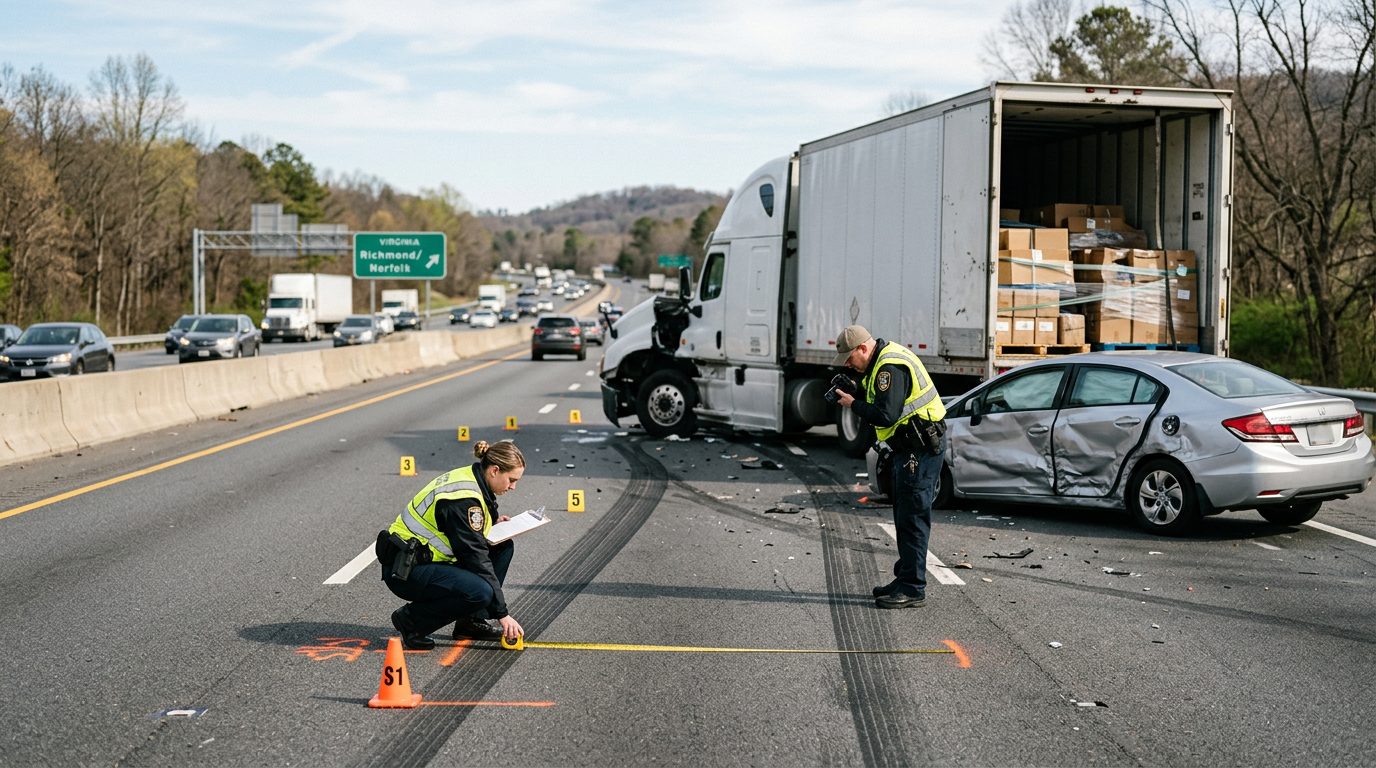
A crash report usually records the location, the vehicles, the drivers and passengers, any witnesses, visible damage, and the officer’s observations. The officer’s report does not decide fault on its own. It can still be important evidence, and it sits alongside the other facts of the crash.
At the scene, write down the officer’s name, badge number and the report number. Note which agency responded, whether State Police or local police. Those details make the report easier to find later.
If no officer came to the scene, ask which agency handled the crash and write down its name. Keep your own notes alongside the report, because your memory of the crash is also evidence.
What to Document at the Scene and Afterward
Take photos and notes at the scene, because details fade quickly. Photograph both vehicles from several angles, the damage, the road, the weather and any skid marks or debris.
Capture the truck’s license plate and any company name, unit number or USDOT number shown on the cab or trailer. The Virginia DMV USDOT requirements page explains which motor carriers need a USDOT number.
Also collect the other driver’s name, insurance details and contact details for any witnesses. Photograph your injuries as they change, and photograph the car before repairs begin.
Start a written timeline with symptoms, missed work, medical visits and conversations about the crash. Dates written close to the event are easier to rely on later. If you missed work, ask your employer for written confirmation of the dates.
Dealing With the Trucking Company’s Insurer
The truck company’s insurer may contact you soon after the crash, often before anyone knows the full extent of your injuries. Adjusters work for the insurance company, not for you.
Answering basic questions is different from giving a recorded statement or signing a release. A release is a document that may limit what you can seek later, so read it closely before you sign anything.
If an adjuster asks for a recorded statement, you may wish to ask for time to review your notes first.
You may wish to understand your injuries and the facts before you talk with an insurer about the claim. Whether to accept or reject any offer depends on the facts of your situation.
Keep a copy of every letter. Note the date, and the name of each adjuster you speak with.
Not sure what your next step is?
Talk it through with Correll Law Firm — we can walk you through how a situation like yours is usually handled and what your options are.
Who May Be Responsible and How Fault Is Judged
Responsibility can fall on the truck driver, the trucking company or another party, depending on how the crash happened.
Investigators and courts look at the driver’s conduct, the vehicle’s condition, road and weather conditions, and the evidence the crash left behind. Photos, the police report, witness statements and the truck’s records can all matter. Trucks often generate more paperwork than cars, such as trip and maintenance records.
Virginia follows contributory negligence: if you are found even partly at fault, you may be barred from recovering, with limited exceptions. Talk to a lawyer about your facts.
Because more than one party may share responsibility, the questions can get complicated quickly. Early photos and witness names matter because scenes change fast.
How Long You Have to File a Claim in Virginia
Virginia generally allows two years from the date of injury to file a personal injury lawsuit (Va. Code § 8.01-243(A)); the clock runs from the date of injury, not the date of discovery, with narrow exceptions.
The statute’s text is at Va. Code § 8.01-243.
Waiting for medical records or an insurer’s answer does not change the start date under Va. Code § 8.01-230.
Afterward, the civil action may be brought within the remaining period of the statute or within one year, whichever is longer, under Va. Code § 8.01-229.
Mark the date of the crash on your calendar as the start of that period.

When a Semi Crash Causes a Death
When a semi crash causes a death, the family’s legal path runs through Virginia’s wrongful death law. Families often face this while grieving, and the deadline does not wait for that.
A Virginia wrongful death action is filed by the decedent’s personal representative within two years of the death (Va. Code §§ 8.01-50(C), 8.01-244(B)), on behalf of the family members the statute protects. The filing rule is in Va. Code § 8.01-244.
Virginia wrongful death damages cover the family’s sorrow, mental anguish and loss of the decedent’s companionship, guidance and care; lost income and services; medical expenses from the injury; funeral expenses; and, for willful or wanton conduct, punitive damages (Va. Code § 8.01-52).
Who shares in any award is set out in Va. Code § 8.01-53. Keep the death certificate, the police report and the medical records together in one place.
Frequently Asked Questions
What should I do first after a semi truck hits my car?
Check everyone for injuries, move to safety if you can, and call 911 for medical help and police.
Do family members file a wrongful death claim themselves?
No. The decedent’s personal representative files the action, and family members share in any recovery.
Can the trucking company be responsible if its driver caused the crash?
Some claims may reach beyond the driver, depending on the facts of the crash.
Should I keep records if I was only bruised?
Yes. Minor injuries can change over time, and a simple record shows what happened and when.