
Car Accidents | Virginia
Temporary Paralysis After a Car Accident: What to Know and When to Get Help
Temporary paralysis after a crash can be frightening. Here is how it happens, which signs need emergency care, and how the firm can help you understand your options in Virginia.
Published October 22, 2026
Temporary paralysis after car accident injuries means a person loses the ability to move part of the body for a limited time. Some movement may return. A crash can cause it, and it always calls for prompt medical care. This guide explains how it happens, which signs need emergency help, and how Virginia’s deadlines apply.
What Temporary Paralysis Means After a Crash
Paralysis is the loss of the ability to move part of the body. Temporary paralysis means that loss lasts for a limited time, and movement may come back. Some people also lose feeling in the same area. Others have weakness rather than complete loss.
The affected area can be one arm, one leg, one side of the body, or the legs and trunk. It can also involve all four limbs. The pattern depends on where the nervous system was hurt.
How much movement returns, and how fast, varies from person to person. It depends on the cause, the location of the injury, and how soon the person gets care.
A short-term loss of movement should not be read as a forecast of how the injury will end. Early symptoms can improve, stay the same, or change over time. For the wider picture, read the firm’s serious crash injury guide.
Not sure what your next step is?
Talk it through with Correll Law Firm — we can walk you through how a situation like yours is usually handled and what your options are.

Can You Be Temporarily Paralyzed in a Car Accident?
Yes. A crash can cause temporary paralysis when the brain, spinal cord or nerves are bruised, swollen, stretched or pressed on. The body moves hard and fast in a collision. The head, neck and back can twist or strike something. Nerve tissue can be hurt even when no bone is broken.
Some symptoms appear right away. Others build later, as swelling or bleeding develops. That is why a person who feels fine at the scene should still be checked. A medical exam can find problems that are not yet obvious.
Whether a particular injury causes temporary or lasting paralysis depends on the facts. Only a medical team can make that determination.
Signs of Paralysis That Need Emergency Care
Get emergency medical care right away if a person has any of these signs after a crash:
- Trouble moving an arm or leg, or a leg that gives way
- Weakness, numbness or tingling on one side of the body
- Loss of bladder or bowel control
- Trouble breathing, or slurred or confused speech
- Severe neck or back pain, or pain that spreads into an arm or leg
- Confusion, drowsiness or loss of consciousness
Do not wait to see whether the signs fade. A person who cannot move should not be moved by bystanders unless staying where they are puts them in danger, such as fire or moving traffic.
People often ask how to know if someone is paralyzed. The answer is a medical exam, not a roadside test. Emergency staff can check strength, feeling and reflexes in ways a bystander cannot.
A hurt person may not notice every symptom at the scene. A family member who sees these signs should speak up and tell the responders.
Brain and Spinal Injuries That Can Cause Temporary Paralysis
Two kinds of injury link most closely to paralysis after a crash: traumatic brain injury and spinal cord injury.
A traumatic brain injury happens when a sudden blow or jolt damages the brain. The effects depend on where the injury is and how severe it is. Movement, speech, balance and feeling can all change. Some of those changes ease over time, and some do not.
The spinal cord carries signals between the brain and the body. A crash can fracture the bones of the spine or damage the cord itself. Injuries to the neck are called cervical injuries. When the cord is hurt, movement or feeling below the injury can change.
Many people ask about the C7 vertebra. C7 is a bone at the base of the neck. Whether a C7 fracture affects movement depends on whether the spinal cord or nerves are also involved. The bone injury alone does not tell the full story.
The firm represents people hurt in crashes that cause catastrophic brain and spinal cord injuries. Your own medical team remains the source for your own diagnosis.
Why Medical Follow-Up and Records Matter
Follow-up care builds the medical record that shows how an injury changes over time. That record is what a medical team relies on.
Follow-up can include visits with a primary doctor, imaging, physical therapy, and referrals to other doctors. Each visit adds details to the record. Some people also see a chiropractor, as explained in chiropractic care after a car accident. Which care fits depends on the treating doctor’s advice.
Keep discharge papers, test results, and appointment notes in one folder. Start a written log of symptoms and daily limits. Write the date with each entry. Note any day you cannot work, drive, lift or care for children. A log is not medical advice, but it helps a doctor see change over time.
Follow your doctor’s instructions about activity and therapy. Gaps in care can make it harder to explain the injury later.
Reporting the Crash to Police in Virginia
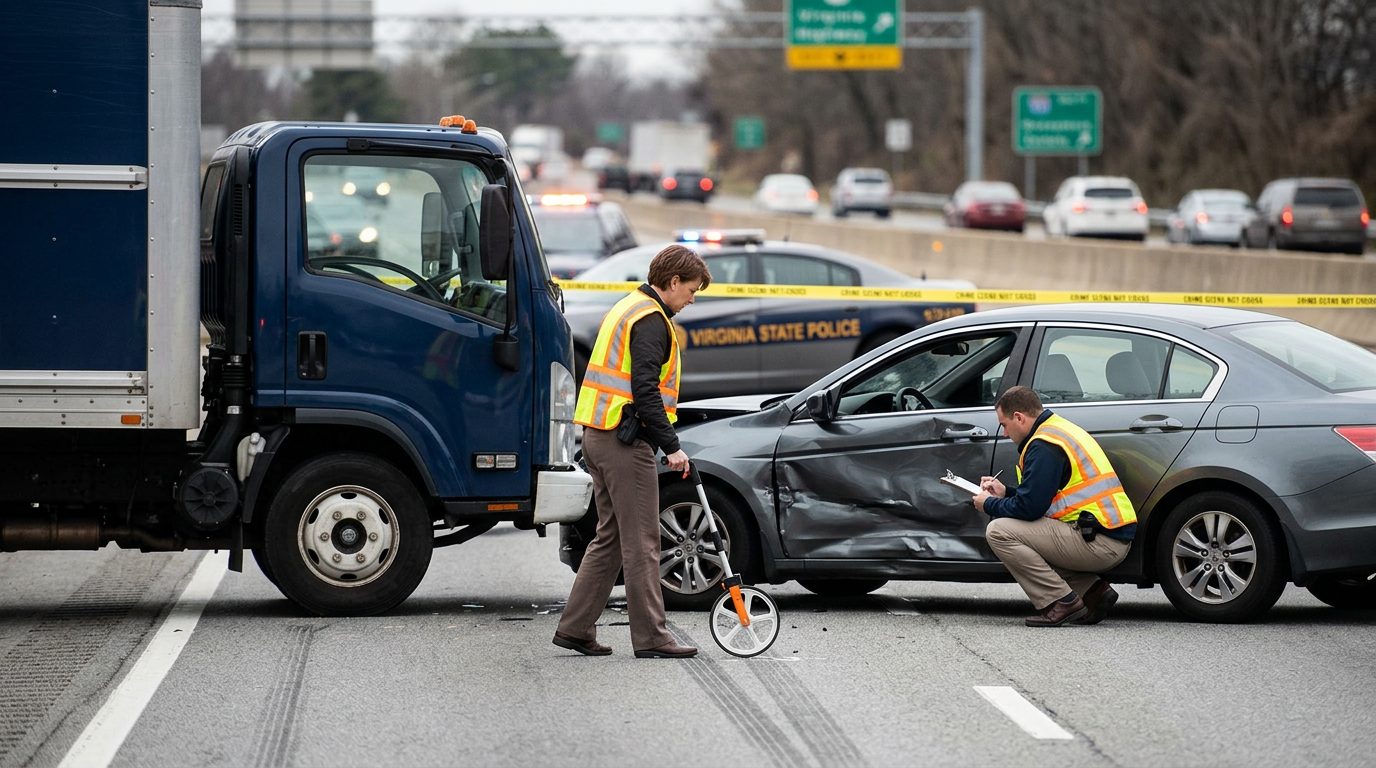
Virginia requires a driver involved in a crash with injury or death to stop and report it to police immediately (Va. Code §§ 46.2-371, § 46.2-894).
A police report can record the scene, the vehicles and the people involved. Ask the investigating agency how to get a copy of any report it prepares. Keep the other driver’s name, insurance details and plate number. Write down the names of any witnesses too.
Memory fades, so the notes you write soon after the crash often matter most. Record the date, the time, the location and what you saw and felt.
When a commercial truck is involved, federal drug and alcohol testing rules may apply to the driver. The Federal Motor Carrier Safety Administration explains when those tests are required.
Not sure what your next step is?
Talk it through with Correll Law Firm — we can walk you through how a situation like yours is usually handled and what your options are.
How Virginia’s Filing Deadline Applies
Virginia generally allows two years from the date of injury to file a personal injury lawsuit (Va. Code § 8.01-243(A)); the clock runs from the date of injury, not the date of discovery, with narrow exceptions.
When a crash causes death, Virginia’s wrongful death rules apply.
Dates matter in any filing. Keep a dated list of the crash details, your medical visits and any letters from insurers.
Where the Firm Serves Clients After a Crash
The firm represents people hurt in car and commercial truck crashes. It also represents people with catastrophic brain and spinal cord injuries, and families in wrongful death cases.
The firm has offices in Winchester and Harrisonburg. It serves clients across the Shenandoah Valley. It also serves people in Richmond and Henrico County.
The firm focuses on crash injuries that change how a person moves, works and cares for family. Readers in the Richmond area can learn more on the firm’s Richmond page.