
Car Accidents | Shenandoah Valley and Richmond
Hit From Behind? Understanding Fault in Virginia Rear-End Crashes
Plain-language answers to common questions about rear-end collisions, the evidence that helps show what happened, and how Correll Law Firm helps injured drivers and passengers across Virginia.
Published October 22, 2026
Who is usually at fault if a car hits the back of you? In many rear-end crashes, the driver who did the hitting is the first one to face questions about fault. Still, no single rule settles every case. This page explains the facts that often point to the following driver, the facts that can shift some responsibility to the driver in front, and the Virginia rules on partial fault, reporting and time limits.
Why people assume the driver who was hit from behind is always to blame
No, being hit from behind does not make a driver automatically at fault. Many people assume the car that struck the rear of another car is always responsible. That view does not match how crashes actually happen. Asking who is usually at fault if a car hits the back of you makes sense after a scare like that.
The position of two cars after a crash does not prove those parts by itself. Who is at fault depends on how the crash unfolded.
The sections ahead cover the facts that usually matter. They are not a formula, and they do not predict how any one claim will turn out. The firm’s offices are in Winchester and Harrisonburg, and it represents people across the Shenandoah Valley, as well as in Richmond and Henrico County. For a broader overview, see the firm’s guide to car crash claims.
If you were hit from behind and are unsure who may be responsible, you may have a claim, and the firm is glad to talk through your facts. Talk it through with Correll Law Firm — we can walk you through how a situation like yours is usually handled and what your options are.
Facts that usually point to the driver who hit from behind
Several facts often point to the driver who hit from behind. Each one is a question the evidence may answer, not an automatic rule.
Following too closely. A driver who cannot stop safely when the car ahead slows may be found to have followed too closely. Photos or dashcam video may show the gap between the cars when braking began.
Driving too fast for conditions. Wet pavement, ice and heavy traffic all lengthen the distance needed to stop. Skid marks, weather reports and vehicle data can show whether the speed fit the road.
Distraction. Phone use, eating, or adjusting controls at the moment of impact can explain why a driver did not see the car ahead slow. Phone records and witness statements may show what the driver was doing.
Impairment. Alcohol, drugs or fatigue can slow a driver’s reaction. Police observations, test results and the driver’s own account can show whether impairment played a role.
Facts that can shift some responsibility to the driver in front
Each rear-end crash turns on its own facts. A few facts often point that way.
A sudden stop with no traffic reason. Stopping in a travel lane without warning, when nothing blocks the road ahead, can put the following driver at risk. Witness statements and dashcam video often show whether a reason for the stop existed.
Brake lights that did not work. If the rear brake lights were out or hard to see, that can matter. A vehicle inspection or witness statements may show what the driver behind could see.
A sudden lane change or merge. A car that cuts in front of another with too little room to stop can shift part of the responsibility to the driver who changed lanes.
Backing up or pulling out. A driver who reverses into traffic, or pulls from a driveway or parking space into the path of another car, may bear responsibility for that crash.
Some drivers say a sudden emergency forced their braking. The facts of the crash decide whether that doctrine fits.
How the evidence shows what happened
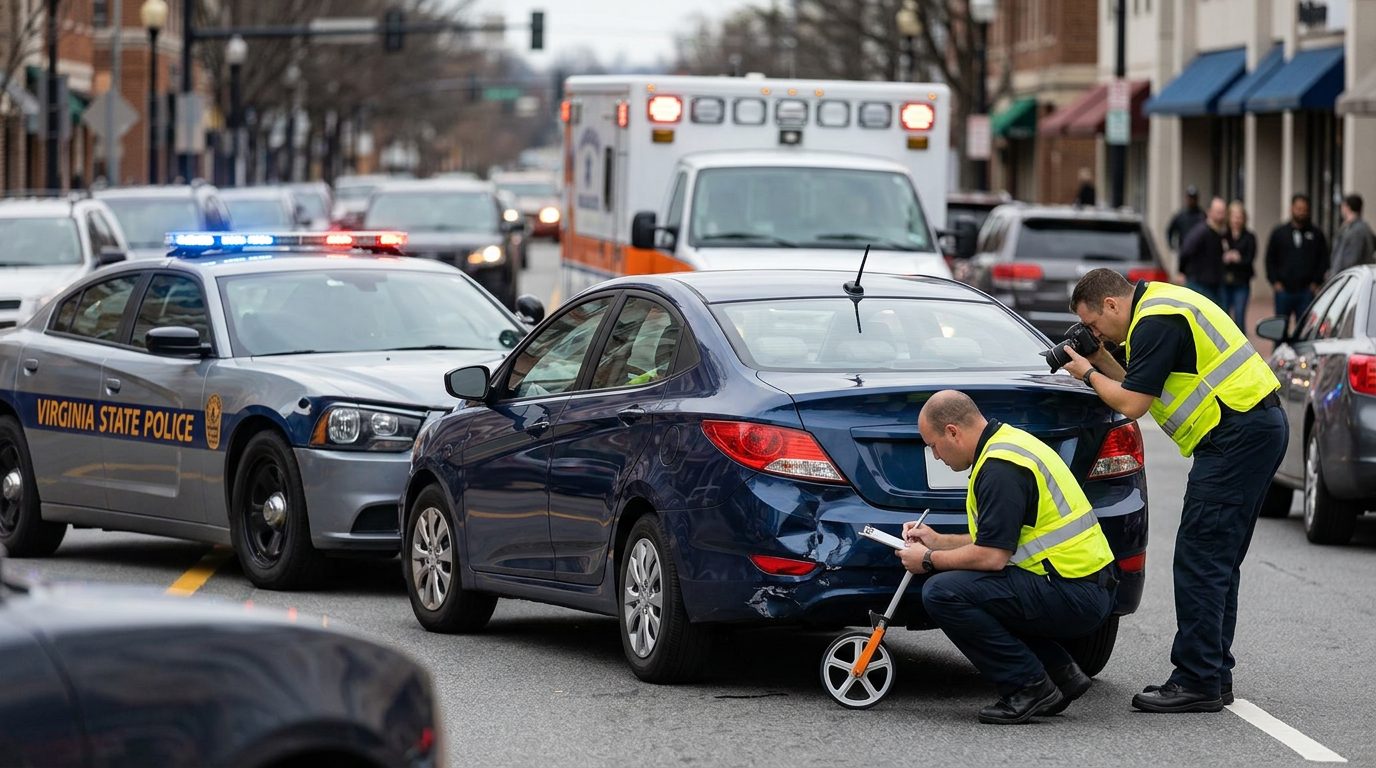
The evidence that shows who did what usually comes from the scene and the first days after the crash. Police reports record the location, the direction each vehicle was traveling, and the lanes each car used.
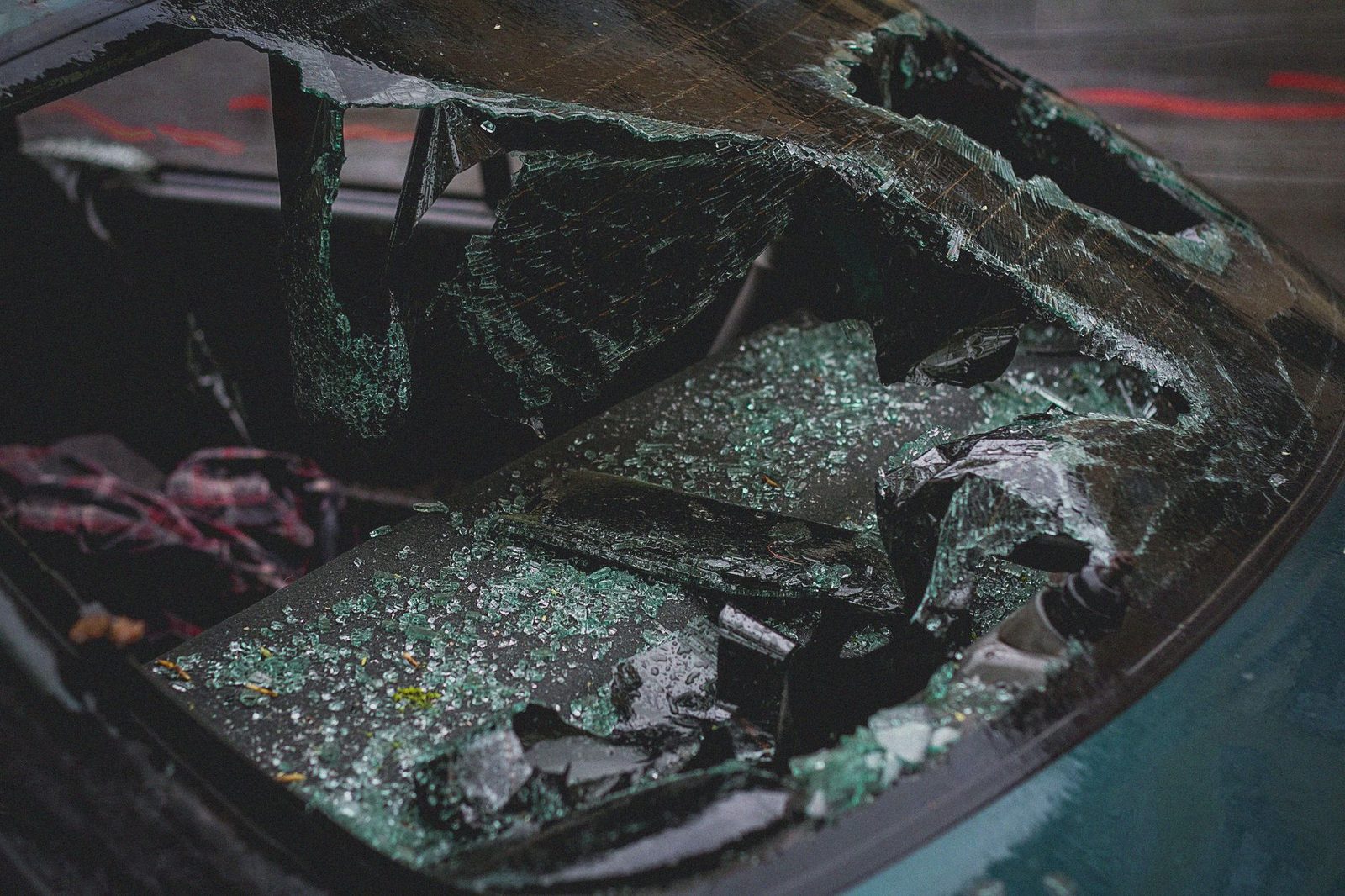
Photos from the scene, dashcam footage and nearby surveillance video can show where the cars stopped and whether brake lights or signals were working. Witness statements taken soon after the crash matter because memories fade. Vehicle damage patterns can show the angle of impact and where each car came to rest. Medical records can tie injuries to the impact.
Saving evidence early can help keep the sequence of events clear. Keep photos of both cars and any dashcam file. Write down the names of witnesses while they are still easy to reach. Some systems overwrite old footage, so early requests matter.
Partial fault, reporting duties and time limits in Virginia
Partial fault is one of the most important rules to know after a rear-end crash. Virginia follows contributory negligence: if you are found even partly at fault, you may be barred from recovering, with limited exceptions (Contributory negligence bars recovery in Virginia; Harvey B. Hazelwood v. Lawyer Garage, LLC (2024)). Talk to a lawyer about your facts. Talk to a lawyer about your facts.
Virginia requires a driver involved in a crash with injury or death to stop and report it to police immediately (Va. Code §§ 46.2-371, 46.2-894). The two-year period below is the deadline to file a lawsuit, not to report a crash (Va. Code § 8.01-243).
Virginia generally allows two years from the date of injury to file a personal injury lawsuit (Va. Code § 8.01-243(A)); the clock runs from the date of injury, not the date of discovery, with narrow exceptions. Some claims are governed by other statutes instead, which can set shorter notice requirements, so the two-year period applies only unless otherwise provided by other statute.
For a general look at timing, see how long a car accident claim takes in Virginia.
When a rear-end crash is fatal, and when a spinal injury is involved
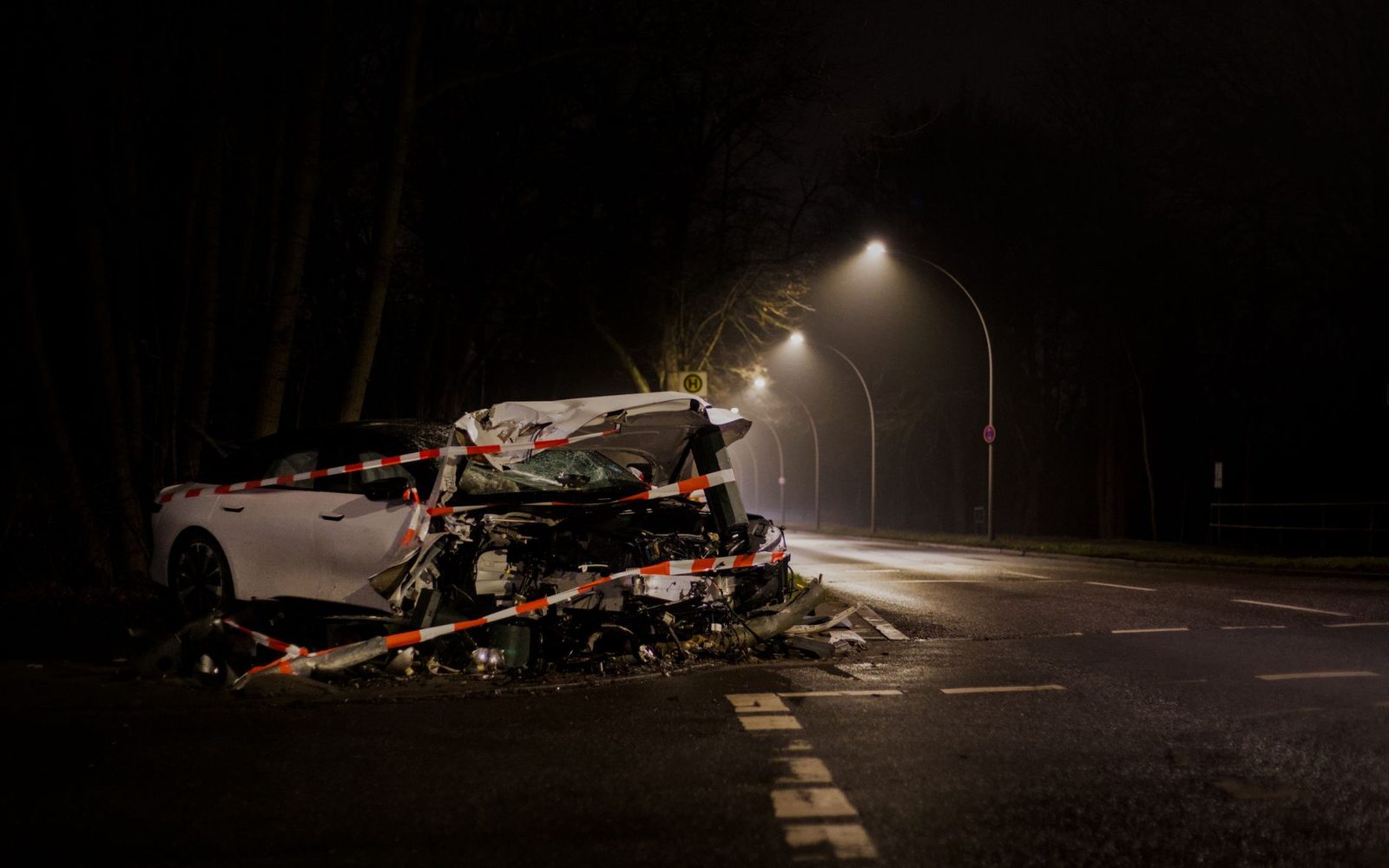
A rear-end crash that causes a death raises the same fault questions, but a different type of claim applies. A Virginia wrongful death action is filed by the decedent’s personal representative within two years of the death (Va. Code §§ 8.01-50(C), 8.01-244(B)), on behalf of the family members the statute protects.
Family members do not file the case; it is brought by and in the name of the personal representative of the deceased person, except that actions for fetal death are brought by and in the name of the natural mother, or, if she dies or is under a disability as defined in § 8.01-2, by the administrator of her estate, her guardian, or her personal representative qualified to bring such action. They share in the recovery, which is distributed to specified beneficiaries, such as the surviving spouse and children of the deceased, under Va. Code § 8.01-53, not to all family members. Va. Code § 8.01-53(A) sets out who receives a wrongful death award and in what order. The surviving spouse, children of the deceased, and children of any deceased child of the deceased come first. Under clause (i) of Va. Code § 8.01-53(A), when children of the deceased or children of any deceased child of the deceased survive, the decedent’s parents are included as beneficiaries only if, within 12 months prior to the decedent’s death, they regularly received support or regularly received services from the decedent for necessaries, including living expenses, food, shelter, health care expenses, or in-home assistance or care; under clause (iii), if the decedent has left both surviving spouse and parent or parents, but no child or grandchild, the award is distributed to the surviving spouse and such parent or parents. However, a parent whose parental rights and responsibilities were terminated by a court or through a permanent entrustment agreement with a child welfare agency cannot be a beneficiary. If there is no surviving spouse, children of the deceased, or children of any deceased child of the deceased, the award goes to the parents, brothers and sisters of the deceased, and to any other relative who is primarily dependent on the decedent for support or services and is also a member of the same household as the decedent, but a parent whose parental rights and responsibilities were terminated by a court or through a permanent entrustment agreement with a child welfare agency cannot be a beneficiary.
Rear-end impacts can also cause neck, back and spinal injuries, and some are severe. Read more about spinal cord injuries in car crashes. The fault questions and evidence described above apply in these cases too. The question of who is usually at fault if a car hits the back of you comes down to the facts.
Can the driver in front be at fault in a rear-end accident?
Yes. A sudden stop with no traffic reason or an unsafe lane change may be relevant to who caused the crash.
What evidence helps show who caused a rear-end crash?
Police reports, photos, dashcam video and witness statements are common starting points. Collecting them early helps keep the sequence of events clear.