
Virginia Car Accident Guide
After a Crash in Virginia: Clear Steps and Your Options
Plain-language guidance for drivers and families in the Shenandoah Valley, Richmond and Henrico County after a serious crash.
Published October 21, 2026
Car Accidents Law Firm Richmond: Virginia Crash Guide
Correll Law Firm handles car accident injury claims for people in Richmond and Henrico County. The firm’s offices are in Winchester and Harrisonburg, and it serves clients from the Shenandoah Valley to Richmond and Henrico County.
If a crash in Richmond or Henrico County left you hurt, you may have a claim worth reviewing, and the firm can talk through your facts with you. Talk it through with Correll Law Firm — we can walk you through how a situation like yours is usually handled and what your options are.

What Car Accident Claims at Correll Law Firm Cover
The firm handles personal injury claims for people hurt in car crashes. That includes drivers, passengers and family members who lose a loved one in a crash.
Common crash types include:
- Rear-end collisions, when one vehicle hits the back of another.
- Intersection crashes at traffic lights and stop signs.
- Left-turn collisions, often when a driver turns across oncoming traffic.
- Lane-change and sideswipe crashes on highways and multi-lane roads.
- Head-on collisions.
Some crashes involve a commercial driver. Those cases can involve more parties, and the firm’s truck and commercial vehicle matters follow the same basic facts-first review.
What to Do First After a Crash in Richmond or Henrico County
The first steps are to stop, get medical care and record what happened. Virginia requires a driver involved in a crash with injury or death to stop and report it to police immediately (Va. Code §§ 46.2-371, 46.2-894). The two-year period discussed below is the deadline to file a lawsuit, not the deadline to report a crash.
Get medical attention for any injury, even when symptoms seem mild or show up days later. Keep every appointment, bill and record. Useful documentation includes:
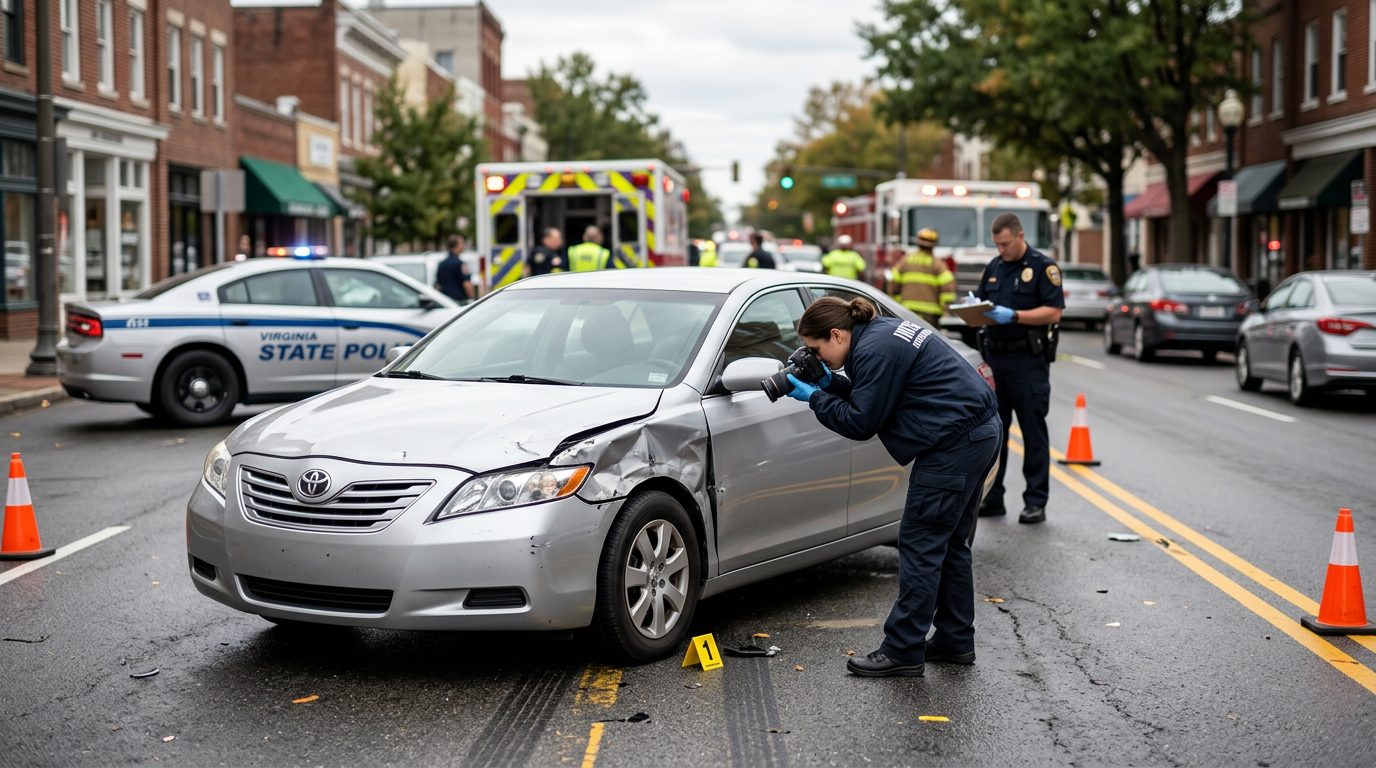
- Photos of both vehicles, the scene and road conditions
- The police report number and the officer’s name
- Names and details of any witnesses
- Insurance information for every driver involved
- A written log of symptoms, appointments and missed work
How Fault and Filing Deadlines Work in Virginia Car Accident Claims
Fault and deadlines shape most Virginia car accident claims. Fault depends on how each crash happened, so no two cases look the same. Speed is one fact that matters. The Insurance Institute for Highway Safety says speeding increases crash risk and the severity of resulting injuries (IIHS speed research).
Virginia follows contributory negligence: if you are found even partly at fault, you may be barred from recovering, with limited exceptions (Contributory negligence bars recovery in Virginia). Talk to a lawyer about your facts.
Virginia generally allows two years from the date of injury to file a personal injury lawsuit (Va. Code § 8.01-243(A)); the clock runs from the date of injury, not the date of discovery, with narrow exceptions.
Some claims carry notice requirements that run out sooner.
What Happens in a Free Case Evaluation
The steps below show how it works. Each step depends on the facts of your crash.
- You share the basics. That means when and where the crash happened, who was involved and what injuries you have.
- The firm reviews what you bring. This includes the crash details and any medical and insurance information you have at that point.
- A lawyer discusses the questions the facts raise. That may include the deadlines covered above and whether your crash fits the firm’s practice areas.
- You decide what to do next. You may wish to speak with a lawyer about your facts before you take any step.
What a Car Accident Claim May Involve
A car accident claim may involve the crash report, medical records and bills, wage records, vehicle damage records and insurance letters. Insurers may dispute who was at fault or how serious an injury is, so these records matter.
Virginia law provides that a release or covenant not to sue, given in good faith to one of multiple persons liable for the same injury to a person or property or the same wrongful death, shall not discharge any other person from liability for that injury, property damage or wrongful death unless its terms so provide; any amount recovered against the other person or persons is reduced by the amount stipulated by the release or covenant, or by the consideration paid for it, whichever is greater (Va. Code § 8.01-35.1). A release signed with one party does not automatically end a claim against another.
This can matter in multi-vehicle crashes.
Results depend on the facts, the evidence and the law. No one can predict how a particular claim will end.
Not sure what your next step is?
Talk it through with Correll Law Firm — we can walk you through how a situation like yours is usually handled and what your options are.
Serving Richmond and Henrico County Drivers
Correll Law Firm is a personal injury firm with offices in Winchester and Harrisonburg. For drivers in Richmond and Henrico County, the firm handles car accident claims with a focus on serious injuries, working from its offices in Winchester and Harrisonburg.
The firm handles:
- Car accidents and truck accidents
- Commercial vehicle accidents
- Catastrophic injuries, including traumatic brain injury and spinal cord injury
- Wrongful death
The firm handles car accidents, truck accidents, and other serious injury matters for people in these areas. If your crash involved a large truck or commercial vehicle, those cases fall within the firm’s scope too.

Frequently Asked Questions: Car Accidents Law Firm Richmond
Does Virginia require me to report a crash if no one is badly hurt?
Virginia’s reporting duty applies to crashes that cause injury or death (Va. Code § 46.2-371).
Does the two-year lawsuit rule apply to wrongful death?
A Virginia wrongful death action is filed by the decedent’s personal representative within two years of the death (Va. Code §§ 8.01-50(C), 8.01-244(B)), on behalf of the family members the statute protects.
What if the other driver’s insurer asks for a recorded statement?
You may wish to speak with a lawyer before giving a recorded statement. The answer depends on the facts of your crash.