
Car Accident Claims | Virginia
Shared Blame in a Virginia Car Crash? Here's How the Rule Works
A plain-language guide to how Virginia's contributory negligence rule can affect a car claim, for drivers across the Shenandoah Valley, Richmond and Henrico County.
Published November 19, 2026
How Contributory Negligence Affects Hampton, VA Car Claims
If you were hurt in a car crash and may share some of the blame, you may wonder if your claim is over. In Virginia, even a small share of fault can decide the outcome. Here is how the rule works and what it means for a claim.
Not sure what your next step is?
Talk it through with Correll Law Firm — we can walk you through how a situation like yours is usually handled and what your options are.
How Virginia’s Contributory Negligence Rule Affects Car Accident Claims
Virginia follows contributory negligence: if you are found even partly at fault, you may be barred from recovering, with limited exceptions. Talk to a lawyer about your facts.
Many people assume a small share of blame only lowers what they can recover. Under this rule, that assumption can be wrong, because partial fault can end the claim entirely. How the rule plays out depends on the facts of each crash.
What Contributory Negligence Means After a Virginia Car Crash
The question is whether the injured person’s own conduct contributed to the crash.
Picture a driver who was texting and drifted over the center line at an intersection. That driver’s inattention could be a proximate cause of the crash, even if the other driver also made a mistake. This is only an illustration.
Not wearing a seat belt is different. Under Va. Code § 46.2-1094, a seat belt violation is not negligence and cannot be used to reduce damages.
How Fault Is Argued in a Virginia Car Accident Claim
Fault is argued with evidence about what each driver did in the seconds before the crash. Virginia requires a driver involved in a crash with injury or death to stop and report it to police immediately (Va. Code §§ 46.2-371, 46.2-894). The two-year period discussed below is the deadline to file a lawsuit, not the deadline to report a crash (Va. Code § 8.01-243).
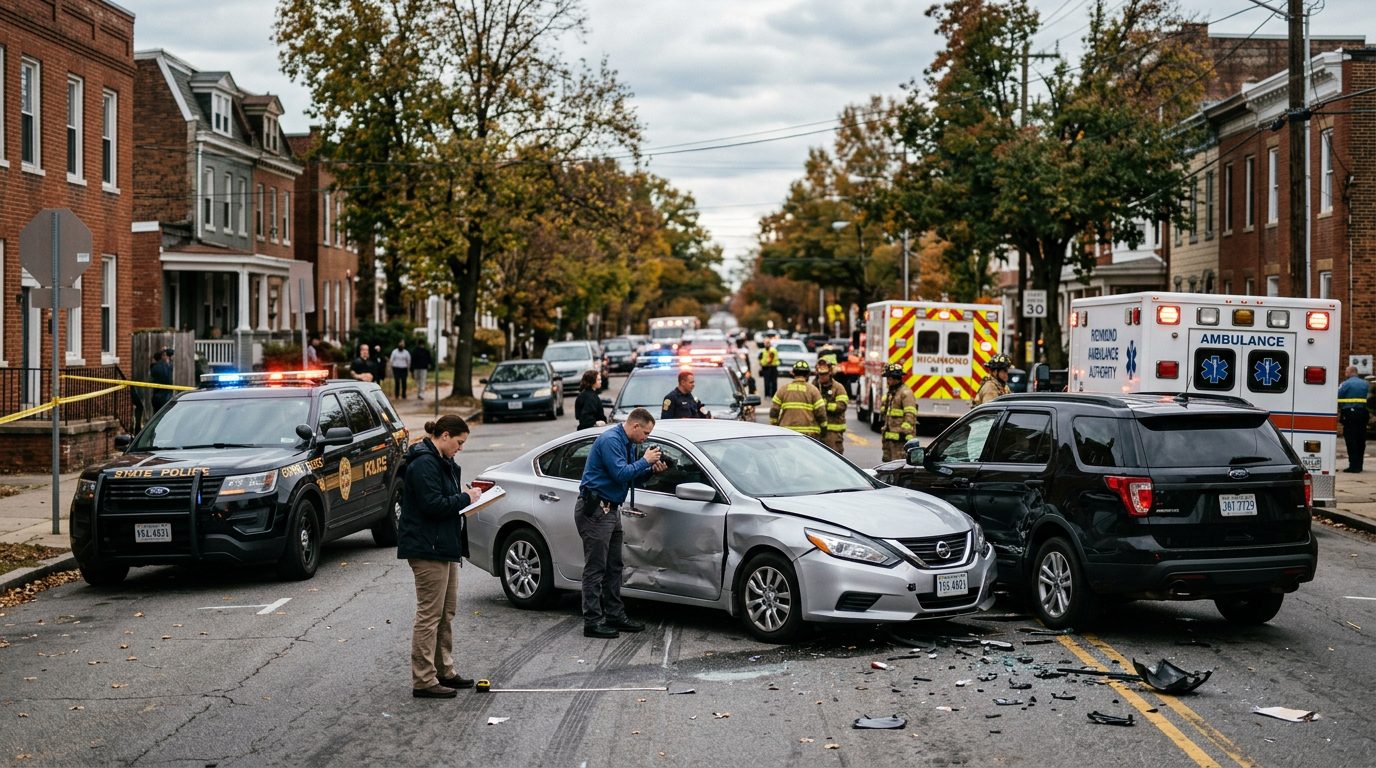
Useful evidence often includes the police report, photographs of the scene and vehicles, witness statements, and details about traffic signals and road conditions. A police report is useful, but it does not decide fault on its own. Each item can show what each driver could see and do.
The other side may argue that the injured driver contributed to the crash. A driver may also claim a sudden emergency.
Why Timing and Documentation Matter When Fault Is Disputed
Timing and records matter because a fault dispute turns on what the evidence shows. Virginia generally allows two years from the date of injury to file a personal injury lawsuit (Va. Code § 8.01-243(A)); the clock runs from the date of injury, not the date of discovery, with narrow exceptions.
Some claims carry notice requirements that run out sooner. Va. Code § 8.01-195.6 reads: “Every claim cognizable against the Commonwealth or a transportation district shall be forever barred unless the claimant or his agent, attorney or representative has filed a written statement of the nature of the claim, which includes the time and place at which the injury is alleged to have occurred and the agency or agencies alleged to be liable, within one year after such cause of action accrued.” Va. Code § 8.01-195.6 reads: “Failure to provide such statement shall not bar a claim against the Commonwealth or a transportation district, provided that (i) for claims against the Commonwealth, the Division of Risk Management or any insurer or entity providing coverage or indemnification of the claim or the Attorney General or (ii) for claims against a transportation district, the chairman of the commission of the transportation district, had actual knowledge of the claim, which includes the nature of the claim, the time and place at which the injury is alleged to have occurred, and the agency or agencies alleged to be liable, within one year after such cause of action accrued.”
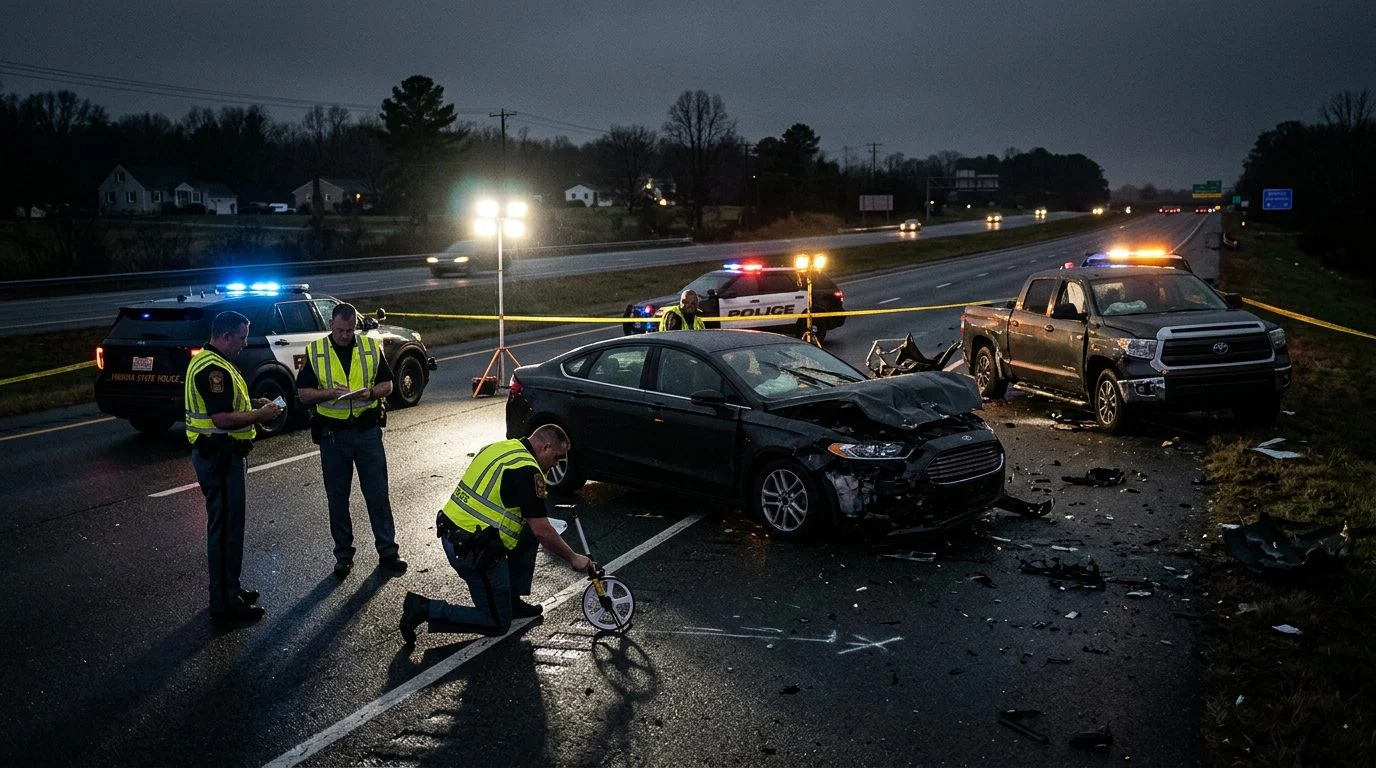
Records help show the sequence of events. Photographs taken soon after a crash often show vehicle positions, skid marks and debris better than later memories. Keep medical records, repair estimates, photographs, phone records and notes about the scene. Vehicles are often repaired or sold, and photos and damage records can be lost. Acting early helps keep that evidence available. Those items can show what happened first and who had time to react.
How Fault Questions Affect Injured Drivers and Passengers
A fault dispute can shape how a claim is evaluated and negotiated. Passengers may face different questions than drivers. A passenger who did nothing to contribute to the crash is in a different position from a driver who was distracted.
Property-damage liability insurance addresses damage an at-fault driver causes to others’ vehicles or property, according to the Insurance Institute for Highway Safety. The Virginia Bureau of Insurance says it cannot represent a claimant in litigation or determine the monetary value of a car accident claim.
The firm’s offices are in Winchester and Harrisonburg. It serves people in Richmond, Henrico County and the Shenandoah Valley. For broader background, see car accident claims. You may wish to talk with a lawyer about how this rule applies to your own crash.