
Virginia Truck Accident Guide
Can You Sue a Truck Driver? What You Need to Know
After a commercial truck crash in Virginia, you may have the right to hold the driver and trucking company accountable. Learn who can be sued and what happens next.
Published October 04, 2026
Yes, you can sue a truck driver in Virginia if their negligence or wrongdoing caused your injuries. But the legal landscape is broader than the driver alone—and understanding who else might be liable can make a real difference in what you recover.
Yes, you can sue a truck driver
A truck driver can be held liable for injuries caused by negligence or wrongdoing. Negligence means the driver failed to exercise reasonable care—speeding, distracted driving, fatigue, ignoring loading safety, or violating federal or state safety rules all count.
In truck accident cases, negligence often involves:
- Speeding or unsafe speed for conditions – a leading cause of serious crashes
- Distracted driving – texting, eating, or adjusting equipment
- Fatigue or drowsy driving – violating hours-of-service rules
- Improper braking or lane changes – losing control of a heavy vehicle
- Failure to inspect the vehicle – missing brake or tire failures
- Ignoring load security – allowing cargo to shift or fall
Virginia follows contributory negligence: if you are found even partly at fault, you may be barred from recovering, with limited exceptions (Contributory negligence bars recovery in Virginia). Talk to a lawyer about your facts. The specific facts of your accident—what the driver did, what you did, road conditions, and witness accounts—all matter. A lawsuit names the driver as a defendant and seeks compensation for medical bills, lost wages, pain and suffering, and other damages.
If a truck crash has left you or someone you care for seriously hurt, you may have a claim against the driver, the company, or both—and the sooner you reach out, the better we can preserve the evidence that matters. Talk it through with our team — the first case evaluation is free, confidential, and carries no obligation.

Why the trucking company often matters more
Most truck drivers are employees of a trucking company. Under a legal doctrine called vicarious liability, companies can be held liable for their employees’ negligence—even if the company itself didn’t act wrongly. The company is responsible for what its driver does on the job.
But there’s more. A trucking company may also be directly liable if it:
- Failed to hire safely or check a driver’s history
- Didn’t train the driver properly on safety or vehicle operation
- Failed to maintain the truck (brakes, tires, lights)
- Didn’t enforce safety rules or hours-of-service limits
- Knowingly allowed an unsafe driver to operate
Here’s the practical reality: trucking companies generally carry commercial insurance policies. Individual truck drivers rarely do. If you’re seriously hurt, the company’s insurance is where compensation typically comes from. That’s why both the driver and the company are usually named as defendants in truck accident lawsuits.
Can truck drivers be sued personally?
Yes, but recovery from a driver’s personal assets is often limited. A driver’s personal auto insurance or the company’s commercial policy is usually the source of compensation. Some drivers carry their own liability coverage; most don’t.
An attorney can investigate the insurance landscape after your accident—determining what policies exist, what coverage applies, and which defendants and insurers are realistic sources of recovery. This investigation is crucial because it shapes your strategy and your options.
Other parties who might be liable
The driver and company aren’t always the only ones responsible. Depending on what caused the crash, you may have claims against:
- The truck or parts manufacturer – if a mechanical failure (brake defect, tire blowout, steering failure) caused the accident
- The cargo loader or shipper – if improper loading, inadequate securing, or overloading contributed to the crash
- A third party – another driver whose actions caused the collision, or someone who created a road hazard
- Government agencies or private contractors – responsible for road maintenance, in limited circumstances
Identifying all liable parties expands the potential sources of compensation and strengthens your claim.
How long you have to file a lawsuit
In Virginia, the general filing deadline for a personal injury claim is two years from when the cause of action accrues, under Va. Code § 8.01-243. Some claims carry notice requirements that run out sooner than two years.
Waiting too long can result in losing your right to sue entirely. If you’ve been seriously injured in a truck accident, early consultation is important. An attorney can determine the exact deadline for your specific situation and ensure your claim is filed in time.
Fault and your ability to recover
Whether you can recover if you were partly at fault depends on the specific facts and how Virginia law applies to your situation.
You should discuss your own role in the accident with a lawyer who can review the details. An attorney can help you understand how Virginia law applies to what happened and whether you have a viable claim.
Not sure what your next step is?
Talk it through with our team — the first case evaluation is free, confidential, and carries no obligation.
What happens next: from investigation to resolution
After a truck accident, an attorney will investigate thoroughly. This includes gathering:
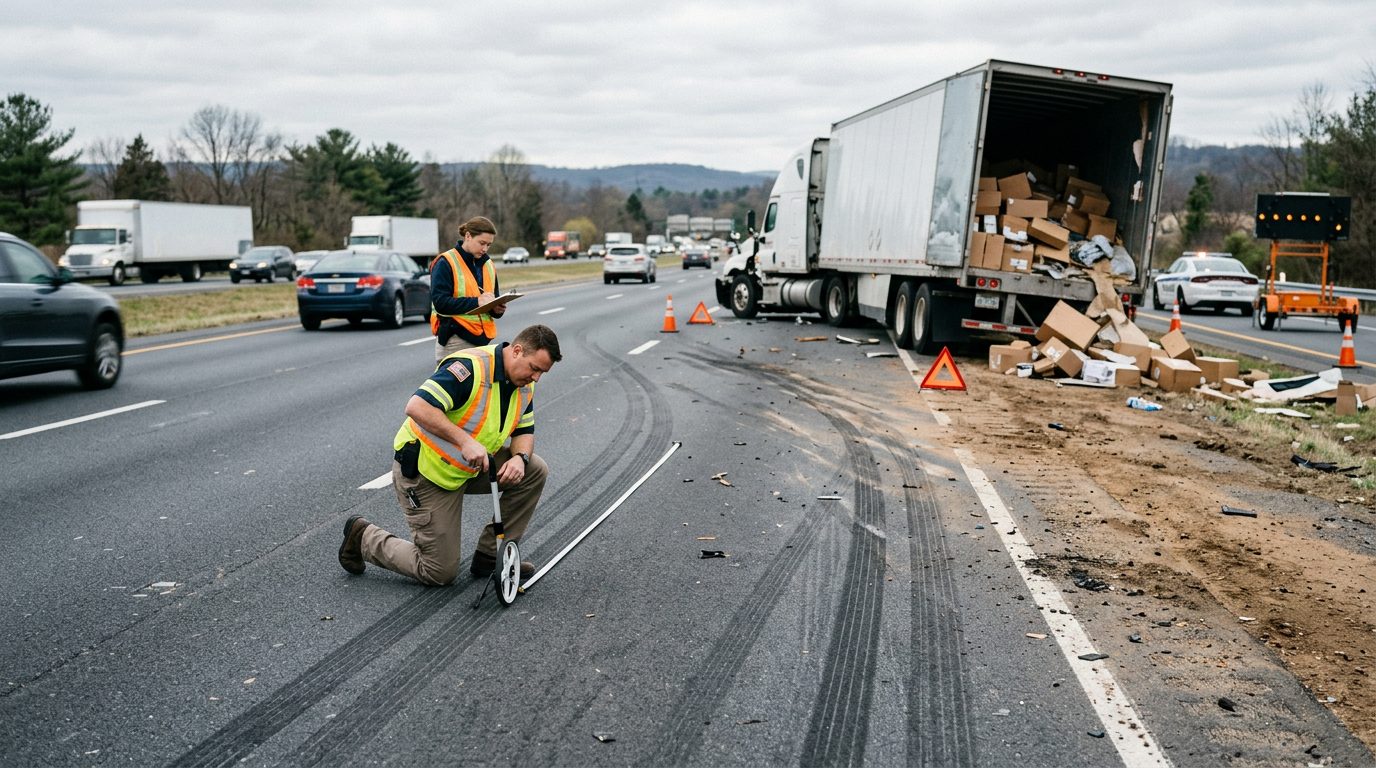
- Police reports and accident scene photos
- Witness statements and contact information
- Vehicle data and black-box recordings
- Truck driver logs and maintenance records
- Insurance policy information
- Medical records documenting your injuries
The investigation determines who was negligent and who can be held liable. Most truck accident cases are resolved through insurance claims or settlement negotiations. Some proceed to trial. Your attorney handles all communication with insurers and defendants on your behalf, protecting your interests while you focus on recovery.
Why talking to a lawyer early matters
Evidence can disappear or fade quickly after a truck accident. Witness memories weaken over time. Video footage gets recorded over. Truck data—including electronic logging devices and black-box information—is sometimes overwritten within days or weeks.
An early investigation preserves critical evidence. A lawyer can also advise you on protecting your claim while you recover, ensuring nothing you say or do undermines your case. Acting early can help protect the strength of your claim.

Frequently Asked Questions
Can I sue both the truck driver and the trucking company?
Yes. In most cases, both are named as defendants because the company is often liable for the driver’s negligence, and may also be directly liable for its own failures in hiring, keeping, or entrusting a truck to an unsafe driver, or in maintenance.
What if the truck driver was an independent contractor, not an employee?
The analysis changes. An independent contractor’s employer may not be vicariously liable, but you can still sue the contractor directly. An attorney can determine the driver’s status and who can be held liable.
How much time do I have to file a wrongful death claim if someone was killed?
In Virginia, the deadline for a wrongful-death action is two years from the date of death. Early consultation is critical to protect your family’s rights.
Do I have to go through insurance first?
No. You can file a lawsuit directly. However, most cases begin with an insurance claim, and many are resolved without trial. Your attorney will advise you on the approach that fits your situation.
Related practice areas
- Catastrophic Injury Lawyer in Virginia | Correll Law Firm