
Catastrophic Injuries | Harrisonburg, Virginia
Catastrophic Injuries in Harrisonburg: What to Know
Plain-language guidance for people and families living with serious, lasting injuries after a crash, from the Shenandoah Valley to Richmond and Henrico County.
Where the firm works
Winchester
Firm office
Harrisonburg
Firm office
Virginia
Clients statewide
Published October 21, 2026
Catastrophic injuries in Harrisonburg are injuries that permanently change how a person works, lives on their own, or handles daily tasks. Crashes on local roads and Interstate 81 can cause them, and the harm often lasts far beyond the first days in the hospital. This guide explains what the term means, why timing matters, and what to know early after a serious crash.
What Qualifies as a Catastrophic Injury?
A catastrophic injury permanently affects a person’s ability to work, live independently, or take part in everyday activities. The word that matters most is “permanent.” Many crash injuries are serious but improve with time and treatment. A catastrophic injury leaves lasting limits.
Common types include traumatic brain injury, spinal cord injury, severe burns, amputation, permanent paralysis, and loss of sight or hearing. Some people have more than one of these at once, such as a brain injury along with broken bones.
The label matters for legal claims because it changes the proof needed. Doctors must explain how the injury may affect the person over time, not only how it was treated on the day of the crash.
Not sure what your next step is?
Talk it through with Correll Law Firm — we can walk you through how a situation like yours is usually handled and what your options are.

Examples of Catastrophic Injuries
Brain injuries, spinal cord injuries, severe orthopedic injuries, and organ damage are the most common examples. Each one can cause harm that lasts for years or for life.
A traumatic brain injury can involve diffuse axonal injury (widespread damage to nerve fibers), contusions (bruising of brain tissue), or penetrating wounds. These injuries can affect thinking, memory, personality, and movement. Symptoms may include headaches, memory gaps, or sudden changes in mood. Some of these effects are hard for others to see.
A spinal cord injury can cause complete or incomplete paralysis, loss of feeling, or permanent limits on mobility. Where the injury sits on the spine affects which body functions are lost. An incomplete injury leaves some function, but it can still change daily life.
Severe orthopedic injuries include multiple fractures, crush injuries, and amputations. Organ damage can involve internal bleeding or organ failure that needs lifelong care.
These injuries need careful medical documentation from the start. The full picture often takes time to show.
Why Catastrophic Injuries Require Urgent Action
Acting early protects both your health and your legal options. Evidence can disappear, and legal clocks keep running.
Virginia generally allows two years from the date of injury to file a personal injury lawsuit (Va. Code § 8.01-243(A)); the clock runs from the date of injury, not the date of discovery, with narrow exceptions. Va. Code § 8.01-243(A) provides that, unless otherwise provided in that section or by other statute, every action for personal injuries, whatever the theory of recovery, shall be brought within two years after the cause of action accrues (Va. Code § 8.01-243).
Some claims carry notice requirements that run out sooner. Waiting until the full injury is clear can leave less time than people expect.
Evidence is time-sensitive. Scene photos, witness names, vehicle data, and early medical records can be lost or changed. Records made close to the crash show what the injury looked like at the start, and that early picture can matter later.
What Is the Hardest Injury to Prove?
Traumatic brain injury is often the hardest to prove, because its symptoms can be hidden, change over time, and be disputed. Insurers and other parties may question whether the crash caused the injury and how serious it is.
Brain injuries may not show clearly on a basic scan. Proof usually comes from several sources: imaging such as MRI or PET scans, neuropsychological testing, and notes from doctors and therapists over time. Family members can also describe changes they notice in daily life.
That definition matters when a claim turns on what caused a brain injury.
Spinal cord injuries often show more clearly on imaging.
The firm handles traumatic brain injury and spinal cord injury cases. Building a clear, evidence-based account takes organized medical records and time.
Catastrophic Injuries from Car and Truck Accidents in Harrisonburg
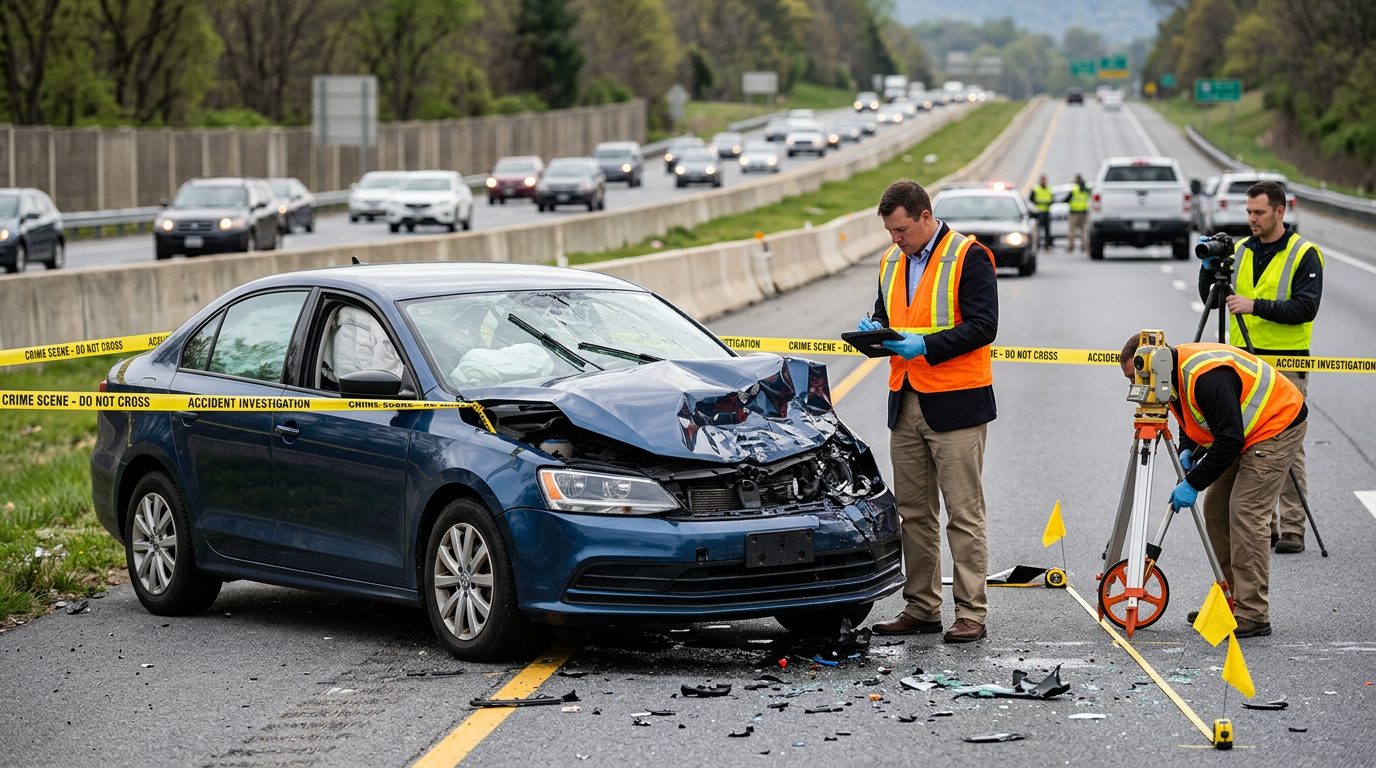
Crashes on Interstate 81 and nearby roads can cause catastrophic injuries, especially when a large commercial truck is involved. Interstate 81 runs through the Harrisonburg area, where passenger cars and heavy trucks share the same lanes.
A loaded truck weighs far more than a passenger car. The force in a collision can be much greater, which raises the risk of serious harm.
Federal rules add a layer of evidence after some truck crashes. If a required post-accident alcohol test is not given within two hours of the accident, the employer must keep a record of why it was not given promptly (49 C.F.R. § 382.303). Records like these can matter as evidence in the days after a crash.
Virginia requires a driver involved in a crash with injury or death to stop and report it to police immediately (Va. Code §§ 46.2-371, 46.2-894). The same statute requires the driver to give reasonable help to an injured person (Va. Code § 46.2-894). The two-year period is the deadline to file a lawsuit, not to report a crash.
In a truck crash, more than one company or person may be involved.
How Correll Law Firm Helps Harrisonburg Residents with Catastrophic Injuries
The firm handles car accidents, truck accidents, commercial vehicle accidents, catastrophic injuries, traumatic brain injury, spinal cord injury, and wrongful death. For people in Harrisonburg, the firm has an office in the city.
Early work on a claim often includes preserving scene evidence and gathering witness statements. The firm may also request medical records and coordinate with medical providers. This helps document how severe an injury is and what it may mean for the future.
Handling communication with insurance companies lets the injured person focus on recovery. If settlement talks do not resolve a claim, the case may need to move toward a lawsuit.
Not sure what your next step is?
Talk it through with Correll Law Firm — we can walk you through how a situation like yours is usually handled and what your options are.
Understanding Your Legal Rights and Timeline
Virginia’s rules on fault, lost income, and wrongful death shape how a claim is built. Learning them early helps you understand your options.
Virginia follows contributory negligence: if you are found even partly at fault, you may be barred from recovering, with limited exceptions (Contributory negligence bars recovery in Virginia). Talk to a lawyer about your facts.
An insurance claim and a lawsuit are different processes. They can overlap, but the rules and timing are not the same.
Provable lost income is not reduced because the injured person was reimbursed from another source. That fact also cannot be admitted into evidence (Va. Code § 8.01-35).
If a crash causes a death, a different timeline applies. A Virginia wrongful death action is filed by the decedent’s personal representative within two years of the death (Va. Code §§ 8.01-50(C), 8.01-244(B)), on behalf of the family members the statute protects. The timing rule is in Va. Code § 8.01-244. Family members do not file; they share in the recovery.
Why Local Representation Matters
Local representation helps most when meetings, records, and follow-up visits are easy to manage close to home. The firm’s Winchester and Harrisonburg offices are located in those two cities.
For someone recovering from a brain or spinal cord injury, an in-person meeting nearby can cut down on travel during a hard time. Family members who help with rides, care, or paperwork can often join those meetings too.
Many records in these cases come from the area where the crash happened. The Virginia DMV keeps official records of reportable crashes, and a police crash report can be requested through DMV (Virginia DMV crash report requests).
The firm also represents people from Richmond and Henrico County, as well as communities across the Shenandoah Valley.
Next Steps After a Serious Crash
The first steps after a serious crash are getting medical care, keeping records, and avoiding rushed statements. Get medical attention even when symptoms seem mild. Some brain injury symptoms, such as headaches, confusion, or memory trouble, can appear days later.
Write down symptoms, missed work, and daily limits as they happen. Keep photos, witness names, and the crash report number. A common mistake is giving a recorded statement to an insurer before understanding the full injury. Another is posting about the crash or your activities online, where an insurer may see it.
Catastrophic injuries in Harrisonburg need organized records from the start.
Is a traumatic brain injury a catastrophic injury?
It can be. A brain injury that causes lasting changes to thinking, memory, behavior, or movement can fit the description used above.
Can a spinal cord injury be catastrophic without full paralysis?
Yes. An incomplete spinal cord injury can still cause permanent loss of feeling, strength, or mobility that changes daily life.
Related practice areas
- Catastrophic Injury Lawyer in Virginia | Correll Law Firm
- Catastrophic Injuries in Shenandoah Valley
- Wrongful Death in Virginia: A Family Guide