
When a Car Crash Takes a Loved One, Families Need Clear Answers
Published October 28, 2026
A Virginia wrongful death claim lets a family seek damages when someone dies because of the wrongful act, neglect or default of any person, corporation, ship or vessel, where the act would have entitled the injured person to sue had death not ensued; the action is brought by and in the name of the decedent’s personal representative. Families who ask about a wrongful death car accident Front Royal often want answers quickly. The questions come fast: who can file, what can be recovered, and how much time is allowed. This guide answers them in plain language, with the Virginia law behind each answer.
What a Virginia Wrongful Death Claim Is and Who Brings It
A wrongful death claim is a lawsuit over a death that another party’s conduct caused. Va. Code § 8.01-50 makes a person or company liable for a death caused by conduct that would have allowed the injured person to sue had they lived.
A Virginia wrongful death action is filed by the decedent’s personal representative within two years of the death (Va. Code §§ 8.01-50(C), 8.01-244(B)), on behalf of the family members the statute protects.
The suit is brought by and in the name of the personal representative of the deceased person, not by family members as beneficiaries. They share in what is recovered. Va. Code § 8.01-53 lists the beneficiaries in order, starting with a surviving spouse and the children of the deceased. The statute also covers parents, siblings and some other relatives in specific situations.
If the person had started an injury claim before dying, that claim and a wrongful death claim are different. Each one needs its own review of the facts.
If your family is facing a fatal crash, you don't have to work through these questions alone, and the firm is ready to talk through the facts of your situation. Talk it through with Correll Law Firm — we can walk you through how a situation like yours is usually handled and what your options are.

What a Wrongful Death Claim Can Cover
The damages in a Virginia wrongful death claim focus on the family’s losses. Virginia wrongful death damages cover the family’s sorrow, mental anguish and loss of the decedent’s companionship, guidance and care; lost income and services; medical expenses from the injury; funeral expenses; and, for willful or wanton conduct, punitive damages (Va. Code § 8.01-52).
Good records help a family show these losses:
- Income and services: pay stubs, tax returns and records of help the person gave at home.
- Medical expenses: bills from the ambulance, hospital and treatment tied to the injury.
- Funeral expenses: receipts from the funeral home and burial or cremation costs.
- Sorrow and companionship: letters, photos and statements from people who knew the person well.
The amount in any case depends on the facts.
Deadlines: Filing Time Limits in Virginia
The main deadline for a wrongful death lawsuit is two years from the death (Va. Code § 8.01-244). That period comes from statute, and it runs from the death.
For general personal injury claims, Virginia generally allows two years from the date of injury to file a personal injury lawsuit (Va. Code § 8.01-243(A)); the clock runs from the date of injury, not the date of discovery, with narrow exceptions.
That general rule covers personal injury claims. The wrongful death period comes from the statute cited above. Some claims may have shorter deadlines, so families should not assume the full period applies to every claim.
The First Weeks After a Fatal Crash Near Front Royal
Virginia requires a driver involved in a crash with injury or death to immediately give notice of it to a law-enforcement officer (Va. Code § 46.2-371); § 46.2-894 also requires the driver to stop as close to the scene as possible. The two-year period is the deadline to file a lawsuit, not to report a crash.
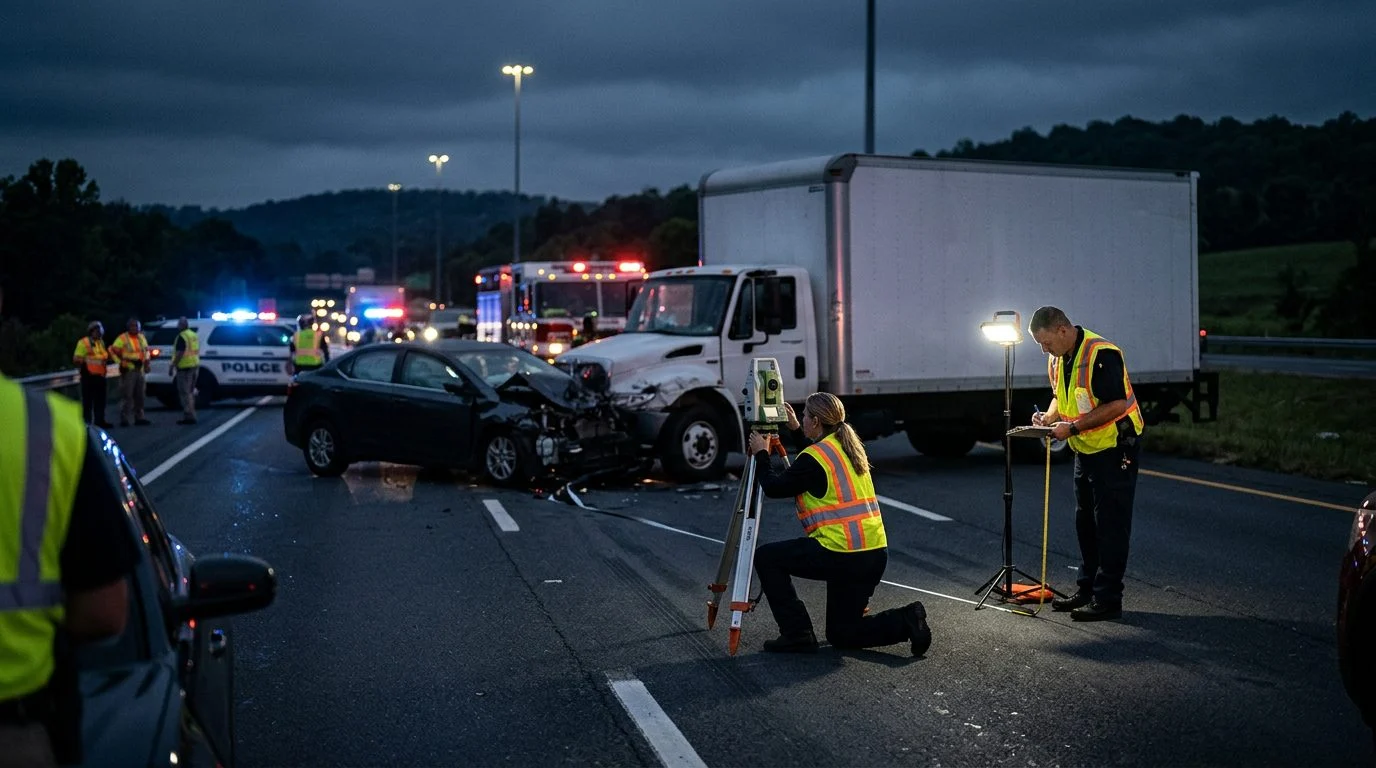
Early in any wrongful death car accident Front Royal case, a few records matter most. Police reports, scene photos, witness names and vehicle damage records can all help. Some records, such as vehicle repair files and vehicle data, may be changed or lost over time.
A crash involving a commercial truck or other commercial vehicle may also create driver logs, maintenance files and company safety policies. Those records can show how the vehicle was run and kept.
Insurance adjusters may ask a grieving family for a recorded statement soon after a death. Families may wish to understand the claim before giving one.
Fault, Insurance Limits and Punitive Damages
Fault and punitive damages are two rules that often shape a fatal crash claim. Virginia follows contributory negligence: if you are found even partly at fault, you may be barred from recovering, with limited exceptions. Talk to a lawyer about your facts.
Punitive damages are a separate question. Virginia allows punitive damages for actual malice, or for willful or wanton conduct or recklessness showing a conscious disregard for the safety of others, capped at $350,000 (Va. Code § 8.01-38.1). In motor vehicle injury or death cases, § 8.01-44.5 allows punitive damages for malice toward the plaintiff or for willful or wanton conduct showing a conscious disregard for the rights of others. Whether particular conduct meets that standard depends on the facts of each case.
In cases involving an impaired driver who unreasonably refused a blood alcohol test as required by § 18.2-268.2, Va. Code § 8.01-44.5 describes when evidence can show willful or wanton conduct.
Insurance policy limits can affect how much is collectible.
How a Wrongful Death Case Typically Moves
A wrongful death case usually moves through intake, investigation, claim presentation, negotiation or suit, and resolution.
- Intake: The family shares the crash facts, the death records and the names of people involved.
- Investigation: Police reports, medical records, scene evidence and vehicle data are gathered. Outside reconstruction professionals may be consulted, and their opinions may be used.
- Claim presentation: The parties and insurance coverage are identified, and the claim goes to the insurers.
- Negotiation or suit: If needed, a lawsuit is filed in the proper Virginia court before the deadline.
- Resolution: The case ends when the claim is settled or a court enters judgment.
A personal representative may settle the claim with court approval. If no suit has been filed, a circuit court’s consent is needed (Va. Code § 8.01-55).
Timelines vary with the facts, the number of parties and court schedules. No one can promise how long a case will take or how it will end.
Not sure what your next step is?
Talk it through with Correll Law Firm — we can walk you through how a situation like yours is usually handled and what your options are.
Working With Correll Law Firm From Winchester and Harrisonburg
Correll Law Firm handles car accidents, truck accidents, commercial vehicle accidents, catastrophic injuries, traumatic brain injury, spinal cord injury and wrongful death. The firm has offices in Winchester and Harrisonburg.
The firm serves families from the Front Royal area, the Shenandoah Valley, and Richmond and Henrico County. Its work centers on serious injury and death cases arising from crashes.

Frequently Asked Questions
Who can file a wrongful death car accident Front Royal claim in Virginia?
Does the two-year period start on the day of the crash?
For wrongful death, the two years run from the death. For a general personal injury claim, the clock runs from the date of injury, with narrow exceptions.
What if a commercial truck was involved?
More parties and records may be involved, so the claim can be more complex.
Can a family still have a claim if the person was partly at fault?
The partial fault rule stated above applies to this question. Each crash’s facts decide how that rule applies.