
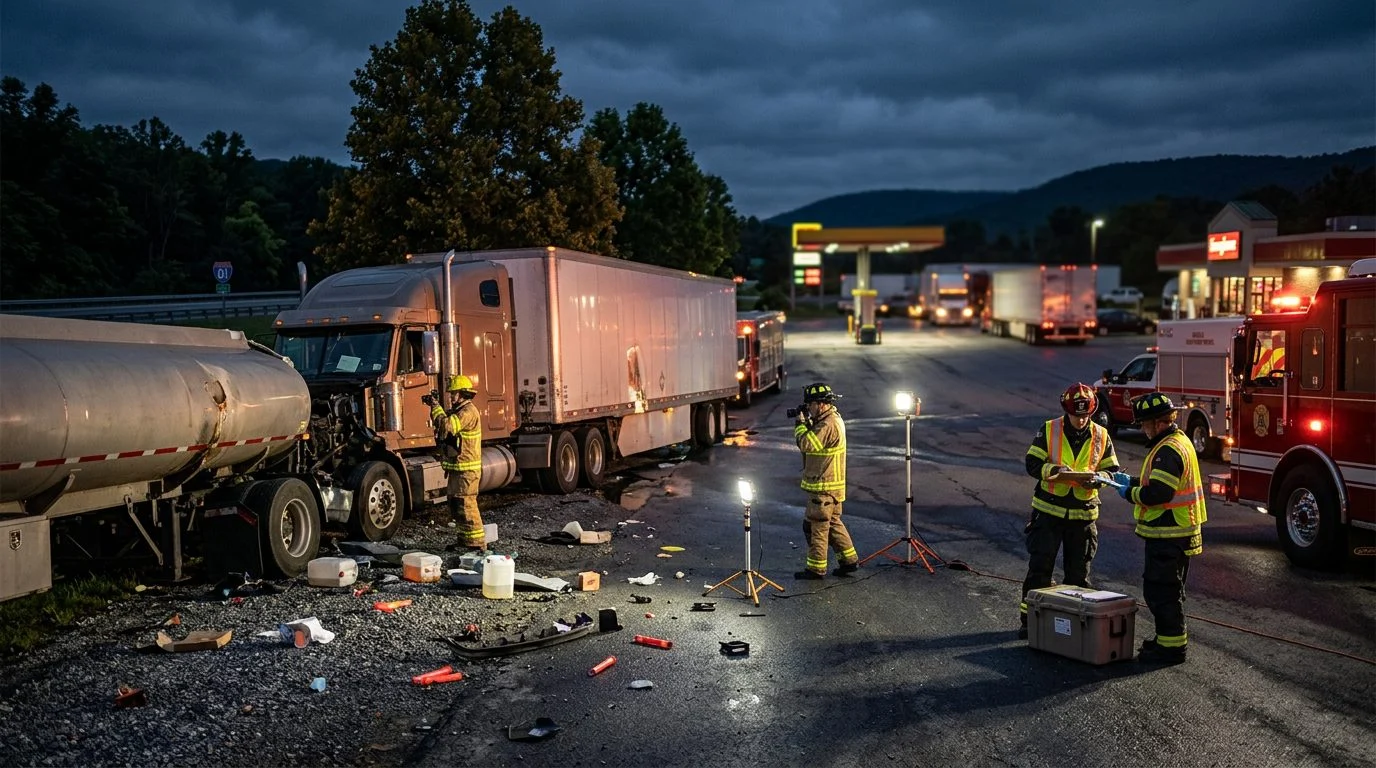
Truck Accidents | Virginia
After a Hazmat Truck Crash, Your Health Comes First
Fire, fumes and chemical exposure can make a crash harder to understand. The firm represents injured people and families from its Winchester and Harrisonburg offices, serving the Shenandoah Valley, Front Royal, Richmond and Henrico County.
Published November 22, 2026
If a truck carrying fuel or chemicals crashed near you, the scene can feel frightening and confusing. The short answer is that a hazmat truck crash adds fire, fumes and chemical exposure to the injuries the impact causes. Knowing what to watch for can help you protect your health and the records you may need later.
This guide covers scene dangers, the Virginia reporting duty, possible injuries, who may share responsibility and the time limits that apply. The facts of each crash decide how these rules apply to it.
What Makes a Hazardous Materials Truck Crash Different
A hazardous materials crash involves cargo that can harm people, property or the environment if it leaks, spills or burns. “Hazmat” is the everyday short form. Fuel, industrial chemicals and compressed gases are common examples. Tanker trucks, box trucks and other commercial vehicles can carry them.
The type of cargo, the container and the amount on board all shape the scene. A leaking fuel tank creates different risks than a damaged box of packaged chemicals. Responders often need to know what is on the truck before they approach, so the cargo changes how the response unfolds.
The cargo also adds to the harm. Fuel can ignite. Some chemicals cause breathing trouble, burns or eye injuries. Federal law sets financial responsibility rules for carriers that transport hazardous material by motor vehicle, as described in 49 U.S.C. § 31139. Commercial vehicle accidents, a broader category of commercial crashes, are also among the matters the firm handles.
If a truck carrying chemicals or fuel left you or someone you love hurt, you do not have to sort out the questions alone, and the firm is ready to talk. Talk it through with Correll Law Firm — we can walk you through how a situation like yours is usually handled and what your options are.

Immediate Dangers at the Scene
The biggest scene dangers are leaking product, fumes, fire and blocked roads. Crews may close lanes on busy routes such as Interstate 81 in the Shenandoah Valley while they work. Drivers and passengers can be stuck near the wreck for a while.
Follow instructions from emergency responders. If they tell you to move away from the spill, do it. Do not walk back into the area to collect belongings. Stay out of any vapor cloud, and do not touch spilled liquid. An injured person may not be able to judge the air around them, so ask for help early.
Some exposures cause symptoms that show up later. Coughing, headache, dizziness, skin irritation or eye pain can appear hours or days after the event. Tell the medical provider about the crash and the cargo, if you know it. Even when injuries seem minor, a medical evaluation after the scene matters.
Reporting the Crash in Virginia
Virginia requires a driver involved in a crash with injury or death to stop and report it to police immediately (Va. Code §§ 46.2-371, 46.2-894). The statute’s text is at Va. Code § 46.2-371. Under Va. Code § 46.2-371, a willful failure to give that notice to a law-enforcement officer is a Class 4 misdemeanor, while Va. Code § 46.2-894 sets its own, separate penalty for a driver who does not stop and report: a Class 5 felony if the accident results in injury to or the death of any person, or more than $1000 of damage to property, and a Class 1 misdemeanor if the accident results in damage of $1000 or less to property.
The two-year period discussed below applies to filing a lawsuit, not to reporting a crash.
If you are able, record what you can see. Write down the carrier’s name and any vehicle markings. Note whether placards are visible. These diamond-shaped signs show the hazard class of the load. Record the names of responding agencies, the officers’ badge numbers if given, and the time and location. Photos of the scene and the vehicles help later.
Injuries That Hazmat Crashes Can Cause
Hazmat crashes can cause the same serious injuries as other large-truck crashes, plus harm from the cargo itself. A major impact can cause traumatic brain injury or spinal cord injury. The firm handles claims involving both. Chemical exposure can add breathing injuries, skin and eye injuries and burns.
Some injuries are not obvious at first. Some develop over days, even when the first hours seem calm. Symptoms that seem minor on the first day can change, so keep an open line with your medical team about any new changes.
Timing matters for records. Medical notes that describe symptoms, when they started and what the injured person was exposed to give a fuller picture later. Keep every appointment and every written discharge instruction. Keep a simple written log of symptoms, missed work and daily limits. Dates written at the time are easier to trust than dates remembered months later.
Who May Be Responsible After a Hazmat Crash
More than one party can share responsibility, depending on the facts. The driver, the motor carrier that employs or uses the driver, the shipper or loader of the cargo, and a maintenance provider could each play a role in a crash.
Federal rules create paper trails. The carrier must repair listed defects likely to affect safe operation before the vehicle runs again. The carrier keeps those reports for three months from the date prepared, as set out in 49 C.F.R. § 396.11. Carriers also track driver duty status under 49 C.F.R. § 395.8.
These records can show what was on board, when the driver worked and whether the truck was inspected. Some records are kept only for a limited time, so early attention helps.
Time Limits and Fault in Virginia Claims
Virginia generally allows two years from the date of injury to file a personal injury lawsuit (Va. Code § 8.01-243(A)); the clock runs from the date of injury, not the date of discovery, with narrow exceptions. The statute is at Va. Code § 8.01-243. Some claims carry notice requirements that run out sooner, so waiting for the two-year mark can be a mistake.
Virginia follows contributory negligence: if you are found even partly at fault, you may be barred from recovering, with limited exceptions. Talk to a lawyer about your facts.
A person may wish to speak with a lawyer about the timing of their own claim.
Not sure what your next step is?
Talk it through with Correll Law Firm — we can walk you through how a situation like yours is usually handled and what your options are.
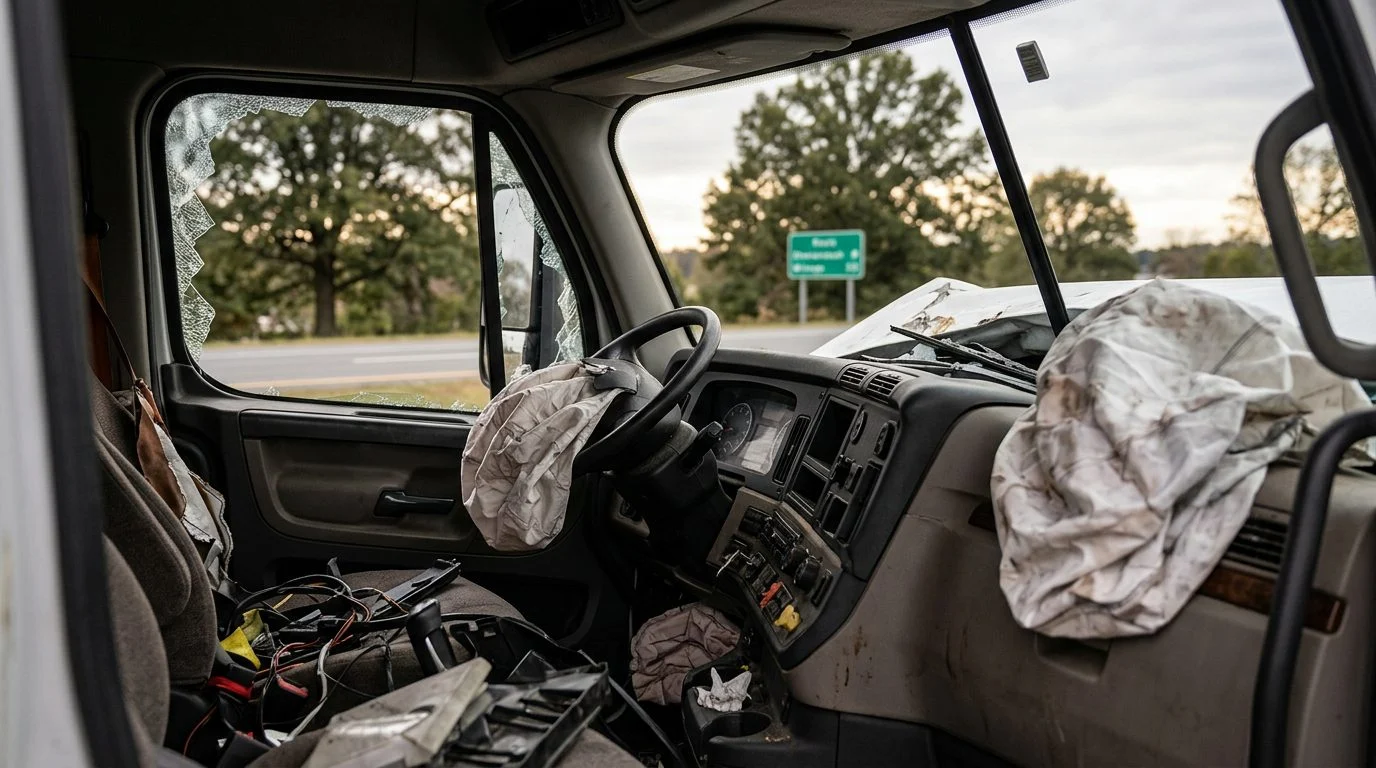
When a Hazmat Truck Crash Causes a Death
A Virginia wrongful death action is filed by the decedent’s personal representative within two years of the death (Va. Code §§ 8.01-50(C), 8.01-244(B)), on behalf of the family members the statute protects. The timing rule is in Va. Code § 8.01-244, and the filing rule is in Va. Code § 8.01-50.
Virginia wrongful death damages cover the family’s sorrow, mental anguish and loss of the decedent’s companionship, guidance and care; lost income and services; medical expenses from the injury; funeral expenses; and, for willful or wanton conduct, punitive damages (Va. Code § 8.01-52). The damages list appears in Va. Code § 8.01-52.
The statute also sets who shares in any recovery, through a defined group of beneficiaries under Va. Code § 8.01-53.
Families commonly gather the death certificate, medical records from the injury, funeral bills, pay records, the police report and the carrier’s inspection and duty-status records.
Write down the dates of the crash, the hospital stays and the death as they happen. Keep original records and save texts or emails from the scene. Organized dates and documents now help whoever reviews the claim later.