
Truck Accidents | Shenandoah Valley
Truck Crash on I-81: The Steps That Matter Most
Heavy trucks, fast traffic and long miles on I-81 can turn an ordinary trip into a serious injury. Here is what to know after a crash, from the Shenandoah Valley to Richmond and Henrico County.
Published October 30, 2026
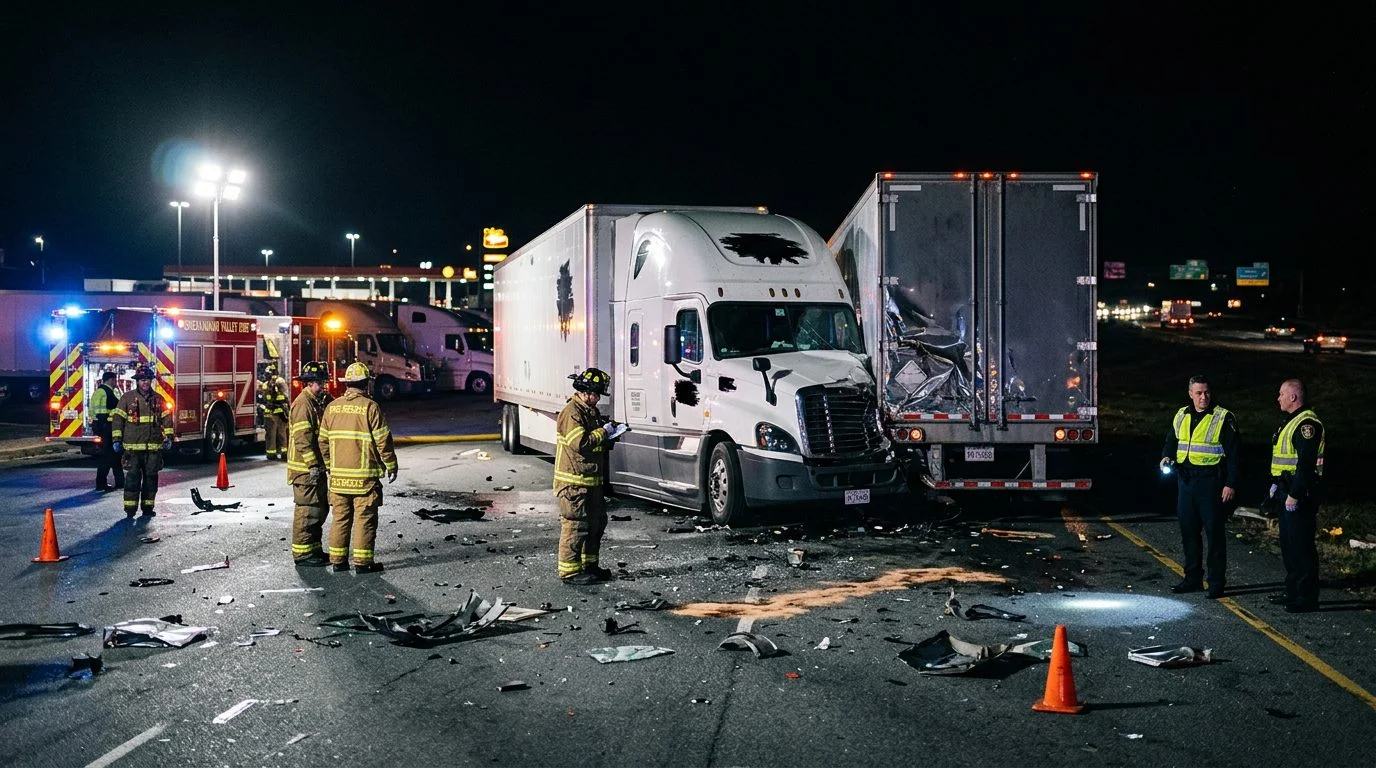
A truck crash on I-81 Shenandoah Valley drivers share can cause serious harm. The short answer: after a crash with a commercial vehicle, stay safe, report the crash to police, document the scene and get medical care right away. This guide explains each step in plain language. Correll Law Firm handles truck crash and other serious injury cases.
Why Commercial Traffic on I-81 Raises the Stakes
Interstate 81 is a major north-south route through the Shenandoah Valley. It carries passenger cars and heavy trucks through Winchester and Harrisonburg, and many people use it every day for work and travel.
Cars and trucks move at very different speeds and weights. Trucks often need more room to slow, merge and pass. When that space closes, even a brief lapse can lead to a serious crash.
Lane changes, sudden slowdowns and merging traffic are common settings for serious harm. A heavy vehicle can turn a small driving mistake into a major impact. Weather and heavy traffic can make these conditions harder for everyone on the road.
Some injuries from heavy-vehicle crashes are catastrophic, including traumatic brain injury and spinal cord injury. The firm’s truck accident page covers how these cases are handled.
If a crash on I-81 left you or someone you love hurt, you may have a claim, and the firm is glad to talk through your facts with you. Talk it through with Correll Law Firm — we can walk you through how a situation like yours is usually handled and what your options are.

How a Crash With a Commercial Vehicle Differs From a Car Crash
A crash with a commercial vehicle often involves more parties, more records and more federal rules than a crash between two cars.
A loaded truck can weigh many times as much as a passenger car. That extra weight changes the force of an impact and how far the truck needs to stop.
More than one party may be connected to a truck. The driver, the motor carrier that operates it, a leasing company that owns it, or a company that loaded its cargo may each play a role. Sorting out who did what can take time.
Federal rules also apply. A driver of a property-carrying commercial vehicle may not drive without first taking 10 consecutive hours off duty (49 C.F.R. § 395.3). Carriers must require drivers to record their duty status, and no driver or carrier may make a false report about it (49 C.F.R. § 395.8). These records can become part of the picture after a crash.
What to Document at the Scene
Documenting the scene early helps preserve facts that can fade. Take photos and notes when it is safe to do so.
Photograph the position of each vehicle, the damage to every vehicle, skid marks, debris, lane markings, and the weather and lighting. Wide shots show the road, and close-ups show the damage.
Write down the names and contact information of witnesses. Note where each person was standing or driving, since a witness’s view can shape what they remember.
Record the police report number and the responding agency as soon as you have them. Keep a copy of the report with your other papers.
Finally, write a short account of what happened while your memory is fresh. Keep it private and share it only with people who need it, such as your medical providers.
Reporting the Crash to Police
Yes, Virginia law requires a driver to stop and report a crash that causes injury or death.
Virginia requires a driver involved in a crash with injury or death to stop and report it to police immediately (Va. Code §§ 46.2-371, 46.2-894).
The full statute is at Va. Code § 46.2-894. It also requires the driver to help an injured person get medical care when treatment is apparent or requested. If injuries prevent reporting at the scene, the report must be made as soon as reasonably possible.
A police report number helps anyone find the report later. Keep it with your other notes.
First Medical Steps After a Serious Crash
Get a medical evaluation as soon as possible after a crash, even if you feel you can walk away.
A medical evaluation can find problems that are not obvious at the scene. Prompt care protects your health and starts a record of your condition from the beginning.
Seek emergency care right away if you notice a severe headache, confusion, numbness or weakness in the arms or legs, trouble with balance, or difficulty breathing. These signs need immediate attention.
Keep every medical record, bill, referral and work note. Write down new symptoms as they appear, with the date and what you were doing. A simple symptom log helps your providers track changes over time.
Follow the advice of your treating providers, and ask them about anything you do not understand. Their guidance is the right starting point for questions about your own health.

Time Limits and Who Can Bring a Claim
For many Virginia injury cases, the filing deadline is generally two years.
Virginia generally allows two years from the date of injury to file a personal injury lawsuit (Va. Code § 8.01-243(A)); the clock runs from the date of injury, not the date of discovery, with narrow exceptions.
The statute is at Va. Code § 8.01-243.
When a crash causes a death, a separate rule applies.
A Virginia wrongful death action is filed by the decedent’s personal representative within two years of the death (Va. Code §§ 8.01-50(C), 8.01-244(B)), on behalf of the family members the statute protects.
The deadline appears in Va. Code § 8.01-244.
Some claims carry notice requirements that run out sooner. Whether any of these time limits applies to you depends on the facts of your situation.
Is a police report the same as a lawsuit?
No. A police report is made right after the crash. A lawsuit is a court filing with its own deadline.
What if symptoms appear days later?
Tell your medical providers about every symptom, even one that shows up later. Note the date you first noticed it.