
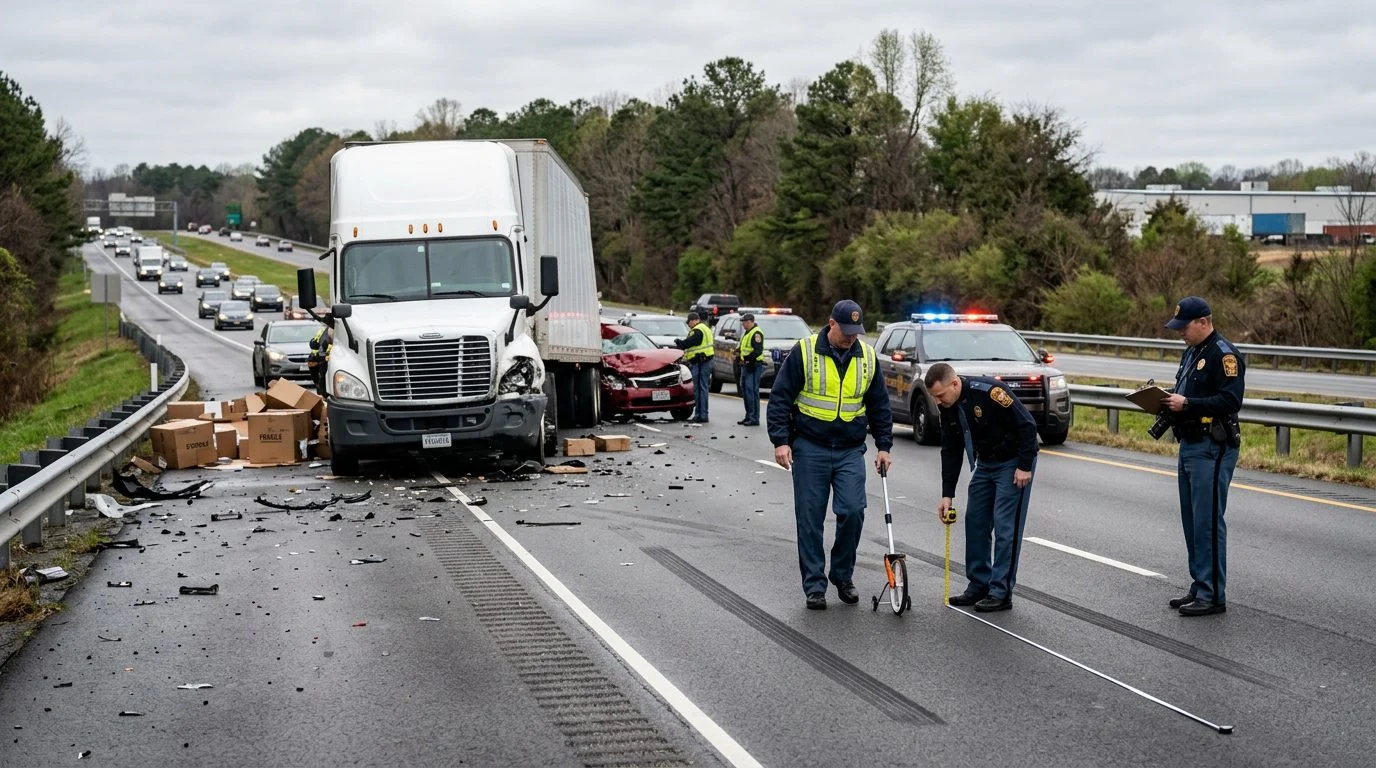
Virginia truck accidents
A CDL Shows a License, Not Who Caused the Crash
Truck crash cases turn on the details of what happened on the road, the records behind the truck and the injuries that followed.
Published November 17, 2026
After a crash with a big truck, many people wonder whether the driver’s license decides who was to blame. Whether a commercial truck driver was at fault depends on what happened in the crash itself, not on the license the driver holds. The sections below explain how Virginia looks at it.
The short answer: a CDL does not decide fault
A CDL does not decide fault. It only shows the driver met licensing requirements for operating a commercial vehicle. Fault asks a different question: did a driver fail to use reasonable care, and did that failure help cause the crash?
Each element is checked against the facts of the crash, not the license.
Two drivers with valid CDLs can end up in very different positions after similar crashes. That is why the license is one fact among many, and not the answer. It may seem surprising, but it follows from how negligence works.
Not sure what your next step is?
Talk it through with Correll Law Firm — we can walk you through how a situation like yours is usually handled and what your options are.
What a CDL does and does not show
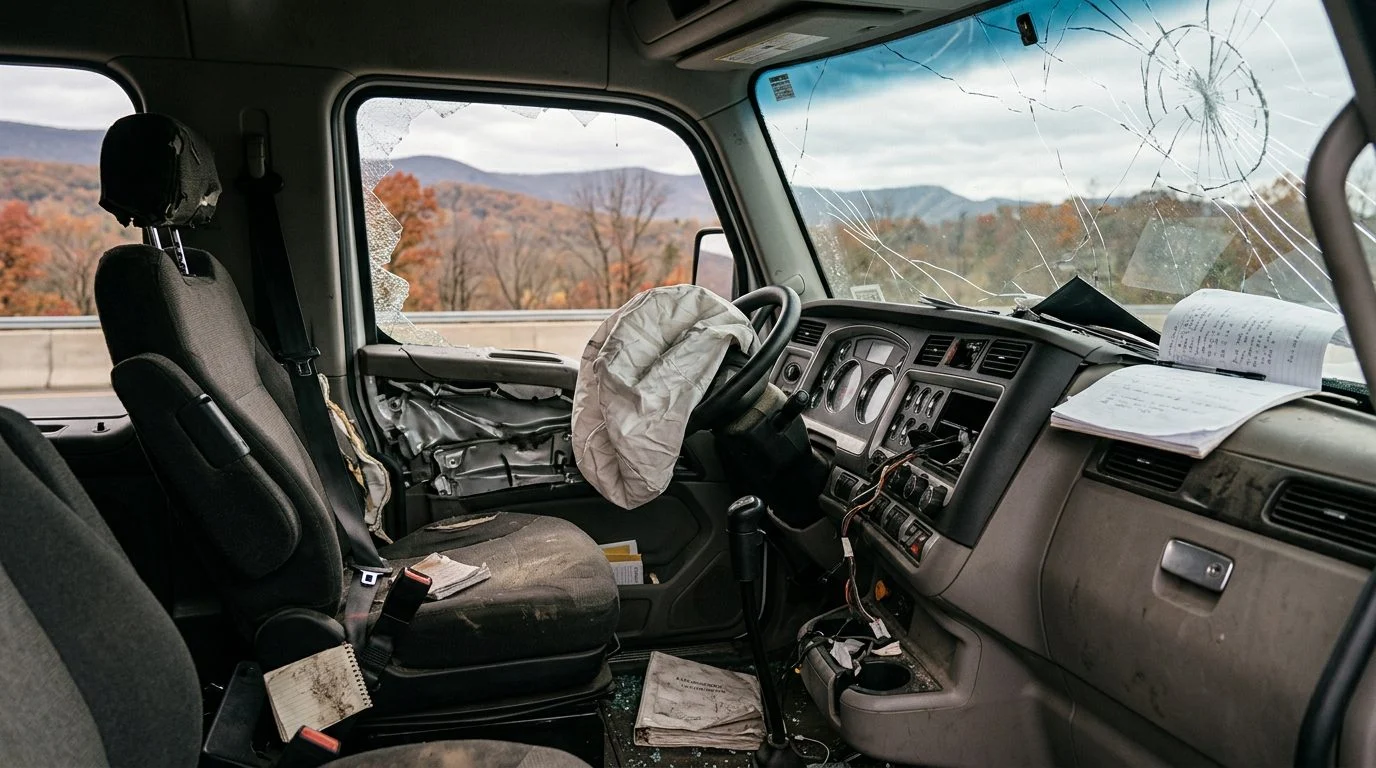
A CDL shows the driver passed the requirements to operate a commercial vehicle. It does not show how the driver acted on the day of the crash, how fast the truck was moving, or whether the driver was distracted. The question is what the driver did, not what card the driver carries.
Picture two trucks in the same lane of Interstate 81 traffic, both driven by people with valid CDLs. One driver followed too closely and braked late. The other kept a safe gap and had working brakes. The licenses match, but the fault picture does not.
Fatigue is another issue a license cannot show. Federal rules bar a commercial driver from operating while alertness is so impaired, through fatigue, illness or any other cause, that it is unsafe to continue (49 CFR § 392.3).
The evidence that shapes who is at fault
The strongest evidence usually comes from the crash scene and from records that trucking companies are required to keep.
Police reports, photographs, witness statements and vehicle damage patterns are common starting points. Investigators often compare those with data from the truck and from phone records.
Driving time is limited by federal rules. A driver of a property-carrying commercial motor vehicle may not drive after a period of 14 consecutive hours after coming on duty following 10 consecutive hours off duty, and may drive a total of 11 hours in that period (49 CFR § 395.3).
Maintenance records can show whether the truck met federal standards. Federal rules require carriers, except private motor carriers of passengers (nonbusiness), to keep inspection and repair records under 49 CFR § 396.3.
Phone use can matter as well. Texting while driving is barred for commercial drivers, and hand-held phone use is barred while driving. Each rule has a narrow emergency exception.
Rear-end crashes and other common crash patterns
No single rule decides a rear-end crash, so each one is examined on its own facts.
Some people assume the truck is always to blame when a car hits it from behind. That assumption skips the questions that matter. Investigators look at following distance, how quickly the truck slowed, whether traffic ahead stopped suddenly, and whether the brakes worked.
Braking standards for trucks, including stopping distance from 20 miles per hour, appear in 49 CFR § 393.52. Those answers come from the scene and the records, not from a rule of thumb.
Lane changes, merges, turns and backing movements raise a similar question: what could each driver see and do before impact? Mirrors, blind spots and turn signals can matter as much as the final movement.
Can a truck driver get in trouble after a crash?
Yes, a driver can face consequences, but a traffic citation is not the same as a final ruling on civil fault.
Reporting comes first. Virginia requires a driver involved in a crash with injury or death to stop and report it to police immediately (Va. Code §§ 46.2-371, 46.2-894).
A citation may follow, depending on what the investigating officer finds. A citation is separate from a civil claim, which turns on fault and causation. Evidence from the crash and the records is what helps sort those questions out.
When more than one party may share responsibility
Yes, more than one party can share responsibility for a truck crash.
A truck crash can involve more than the person behind the wheel. The company that operates the truck, a maintenance provider or another motorist may each have a part in what happened. Which parties are involved depends on the ownership, maintenance and dispatch facts of the crash.
Questions about how a company hired and kept its driver can also arise, and they are separate from the driver’s license.
Not sure what your next step is?
Talk it through with Correll Law Firm — we can walk you through how a situation like yours is usually handled and what your options are.
How partial fault is handled in Virginia
Partial fault can affect whether a claim moves forward, so Virginia’s rule deserves a close look. The rule is applied to the facts of the crash, not to the driver’s license.
Virginia follows contributory negligence: if you are found even partly at fault, you may be barred from recovering, with limited exceptions. Talk to a lawyer about your facts.
Fault in this sense ties back to causation.
How long a claim has to be filed
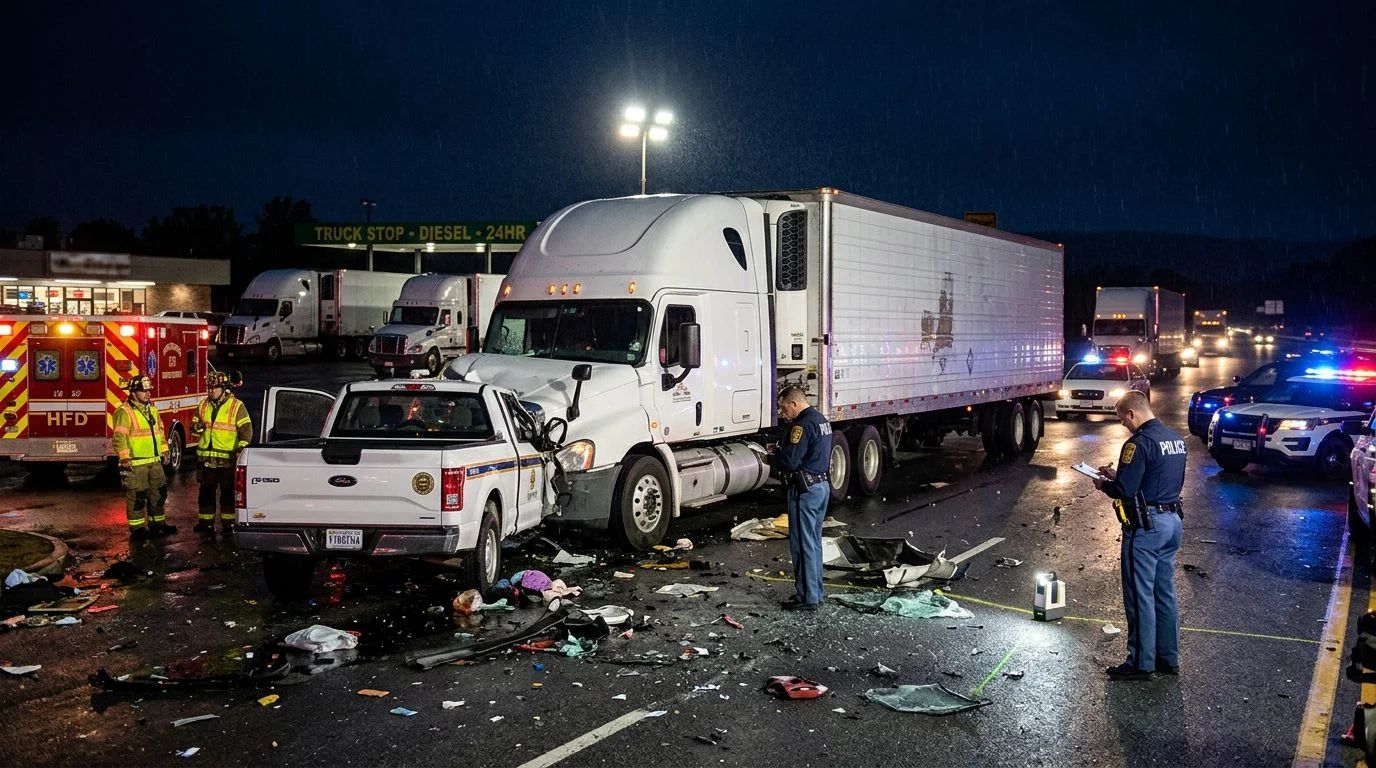
A filing deadline is separate from the duty to report a crash, and the two run on different clocks.
Virginia generally allows two years from the date of injury to file a personal injury lawsuit (Va. Code § 8.01-243(A)); the clock runs from the date of injury, not the date of discovery, with narrow exceptions. The two-year period is the deadline to file a lawsuit, not to report a crash (Va. Code § 8.01-243).
The filing rule is in Va. Code § 8.01-243.
Does a CDL mean the truck driver caused the crash?
No. A CDL shows licensing status, and fault depends on what happened in that specific crash.
Can a truck driver get in trouble for a crash?
Yes, a driver may face a traffic citation based on what the officer finds. A citation does not decide civil fault.