
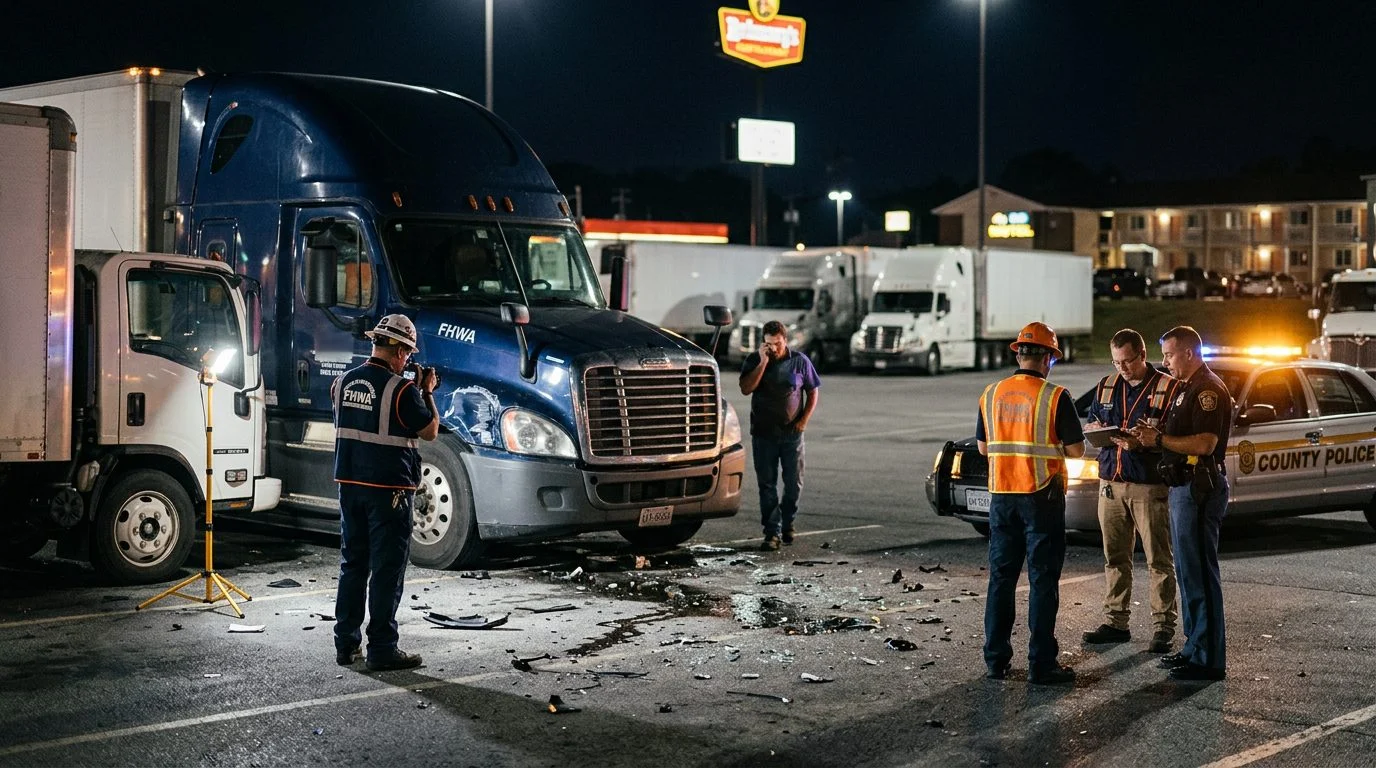
Truck Accidents | Virginia
When a Truck Driver Is on the Phone at the Time of a Crash
How phone records, vehicle data and crash reports can help piece together what happened on the road, and why those records matter so early.
Published November 17, 2026
If a truck driver was on the phone when a crash happened in Virginia, the first question is how anyone could know. The answer usually comes from records, not from one single piece of proof.
Carrier phone logs, electronic logs, vehicle data, dash camera video, police reports and company files can each show part of what happened. This guide explains what each record holds, how it fits with the others, and where its limits are.
Why Phone Use at the Time of a Truck Crash Matters
Investigators and injured people ask about phone use because it bears on attention. A driver who looks at a screen is not watching the road, the mirrors or traffic ahead.
Federal rules limit phone use for drivers of commercial motor vehicles, which are large trucks used in commerce. Under 49 C.F.R. § 392.82, no driver may use a hand-held mobile telephone while driving a commercial motor vehicle, except when necessary to communicate with law enforcement officials or other emergency services. 49 C.F.R. § 392.80 bars texting while driving, except when necessary to communicate with law enforcement officials or other emergency services.
A truck halted in a lane of traffic may still be covered.
Phone use is only one possible distraction. A crash can have more than one contributing cause, such as fatigue, weather, road work or the other vehicle’s movements. Each claim turns on its own facts, so phone records are evidence to weigh alongside everything else. For an injured person or a family, that weighing can shape how the crash is understood.
Not sure what your next step is?
Talk it through with Correll Law Firm — we can walk you through how a situation like yours is usually handled and what your options are.
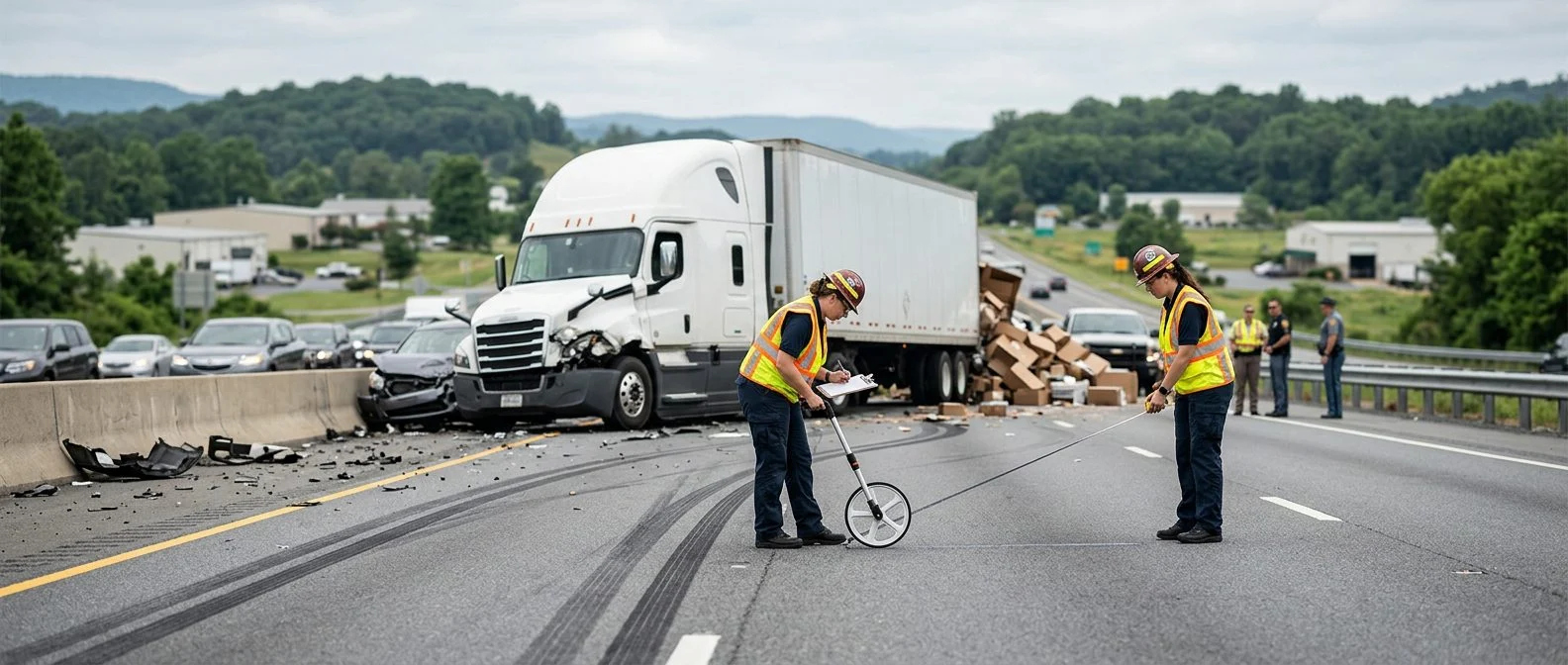
Cell Phone Carrier Records: Calls, Texts and Data Sessions
Carrier records show when a phone was used, which number it contacted and how long the activity lasted.
Call and text logs usually list a time stamp, the number contacted and the length of a call. Data sessions can show that a phone was connected to the internet at a given time. They usually do not reveal which app was open or what was on the screen.
Message content is kept differently than logs, and it may not be available at all. That is why a log entry is often the starting point rather than the whole answer.
Timing is what makes these entries useful. A text sent a few seconds before a crash tells a different story than one sent an hour earlier. Each entry should be placed against the crash time.
Who holds the account also matters. The phone may be listed under a trucking company rather than the driver’s own name. That affects which records exist and who controls them, so the account holder should be identified early.
Matching Phone Timestamps to the Time of the Crash
Matching a phone record to a crash means lining up every clock, then placing each event on one shared timeline. When a truck driver is on the phone when a crash happened, a gap of a few seconds can change what the timeline shows.
Clocks often disagree. A carrier’s time stamp, a vehicle’s onboard clock, a dash camera’s time and the time written on a police report may not match exactly. Some sources may round times, and some may record a different time zone.
A timeline should mark each phone event as before, during or after the crash. It should also note where each time came from. Build it from the carrier records, the vehicle data and the video, then check each source against the others.
When the sources disagree, the timeline should say so openly. Choosing the version that fits best weakens the evidence. An unexplained gap is a question to answer, not a reason to drop the record.
Electronic Logs, Vehicle Data and Dash Camera Footage
Electronic logs, vehicle data and dash camera video show where the truck was and how it was moving. They help place phone activity in context.
Carriers must keep records of duty status for each driver. 49 C.F.R. § 395.8 generally requires an electronic logging device (ELD), with manual records allowed only in limited cases. The record shows shipping document number(s) or the shipper’s name and commodity, and the driver certifies that the entries are true and correct.
Engine and event data recorders may store speed, braking and throttle information for moments before a crash. That data shows how the truck was operated. It does not show who was holding the phone.
Dash camera footage may show the driver’s hands, head position or a lit screen. Camera angle, lighting and field of view vary, so video is one source among several. It is most useful when checked against the phone records and the logs.
Police Reports, Witnesses and the Crash Report Duty
A police report can record what officers saw, what drivers said, whether a citation was written and who witnessed the crash. It is an early record that does not come from either side.
Virginia requires a driver involved in a crash with injury or death to stop and report it to police immediately (Va. Code §§ 46.2-371, 46.2-894). The two-year period is the deadline to file a lawsuit, not to report a crash (Va. Code § 8.01-243).
If a report mentions phone use, ask what the officer actually saw and how that observation was written down. A report’s notes may differ from later statements, so compare them with the other records.
Names and contact details of witnesses, gathered early, can matter. Memories fade, and people move or stop answering messages. A witness who saw the driver’s hands at the wheel may be the only person who can say so.
Trucking Company Records: Dispatch, Messages and Driver Files
Trucking companies may hold dispatch messages, phone policies, training records and driver qualification files. These files can show what the company allowed and what it taught drivers.
Under 49 C.F.R. § 390.11, a motor carrier must require drivers to observe the duties and prohibitions placed on them. A written phone policy, and training on it, can therefore be part of the picture.
Company-issued phones may keep their own logs, separate from a driver’s personal phone. Both sources should be checked, because one may hold entries the other lacks.
A driver may also give a recorded statement to the company’s insurer. The firm’s guide on that process is at /resources/commercial-vehicle-accidents-virginia-guide/trucking-company-recorded-statement/ for readers who want to understand it.
Not sure what your next step is?
Talk it through with Correll Law Firm — we can walk you through how a situation like yours is usually handled and what your options are.
Why Early Preservation of Records Matters
Phone and vehicle records can be overwritten or discarded, so asking for them early matters. Federal rules let carriers keep records by any technology that accurately reflects the information and stays accessible for later reference (49 C.F.R. § 379.7). A digital copy counts only if it stays complete and readable.
Virginia generally allows two years from the date of injury to file a personal injury lawsuit (Va. Code § 8.01-243(A)); the clock runs from the date of injury, not the date of discovery, with narrow exceptions.
The timing of record requests should be reviewed against the facts of the case.
Injured people can also keep their own notes of symptoms, medical visits and missed work. The firm’s guide on that practice is at /resources/commercial-vehicle-accidents-virginia-guide/symptom-journal-after-truck-crash/.
What Phone Records Can and Cannot Prove
Phone records show activity near the time of a crash. They do not show what the driver was looking at or how the crash unfolded.
Other factors can matter as much. Road conditions, the other vehicle’s movements and a construction zone can all shape the analysis. The firm’s page on construction zone crashes covers that context.
Virginia follows contributory negligence: if you are found even partly at fault, you may be barred from recovering, with limited exceptions. Talk to a lawyer about your facts.
Records can also be incomplete, which is one more reason to check them against each other. The answer depends on the facts of each crash and on which records are available.
Damages Where a Driver’s Conduct Was Willful or Wanton
Virginia allows punitive damages for actual malice, or for willful or wanton conduct or recklessness showing a conscious disregard for the safety of others, capped at $350,000 (Va. Code § 8.01-38.1). Ordinary carelessness alone does not meet that standard.
A jury must find that the conduct met this standard.
Records showing repeated, deliberate phone use while driving may be part of the evidence a court considers on that question. The timeline built from those records is what makes the pattern visible.
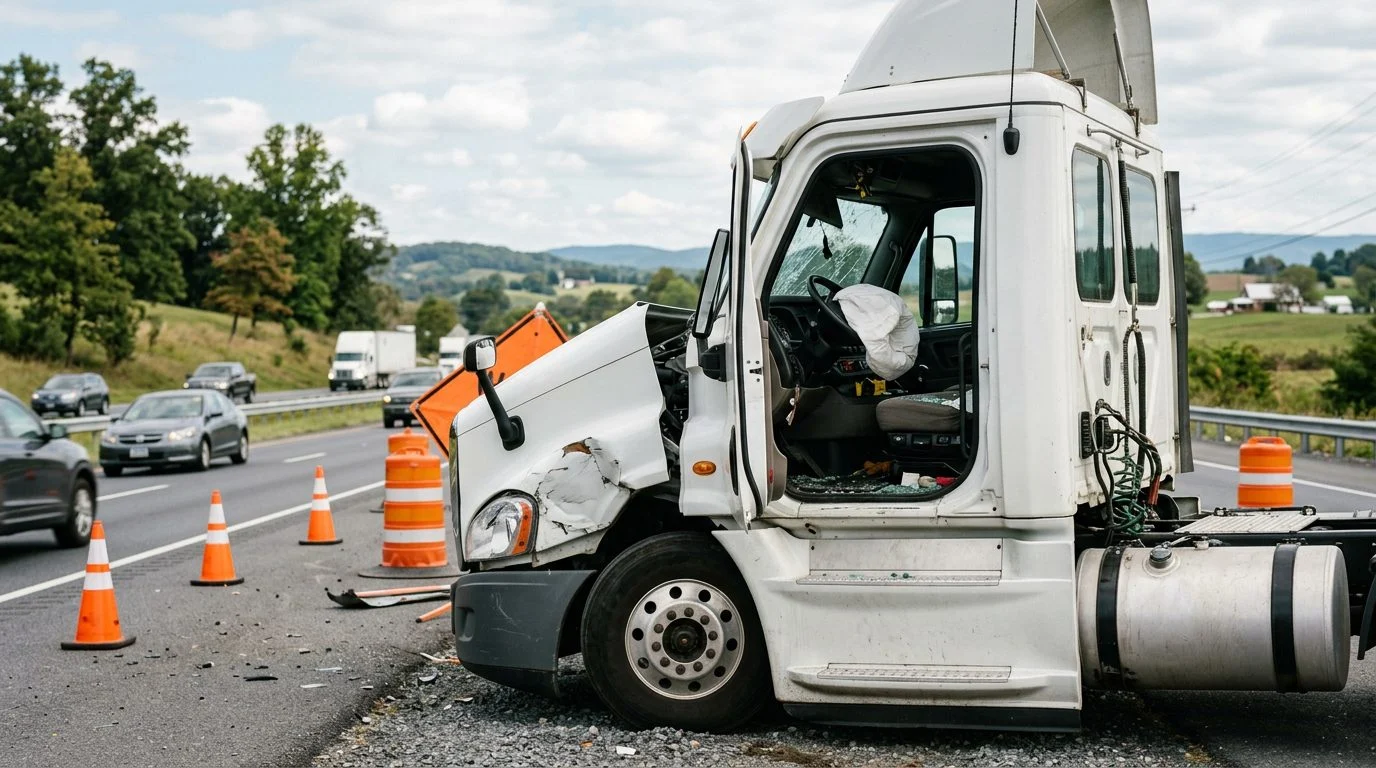
Wrongful Death Cases Involving a Truck Driver’s Phone Use
Families of someone killed in a crash involving a truck driver on the phone look to Virginia’s wrongful death law.
A Virginia wrongful death action is filed by the decedent’s personal representative within two years of the death (Va. Code §§ 8.01-50(C), 8.01-244(B)), on behalf of the family members the statute protects.
Virginia wrongful death damages cover the family’s sorrow, mental anguish and loss of the decedent’s companionship, guidance and care; lost income and services; medical expenses from the injury; funeral expenses; and, for willful or wanton conduct, punitive damages (Va. Code § 8.01-52).
Family members do not file the action themselves. They share in any recovery. The phone and vehicle records described above apply the same way in these cases.
Frequently asked questions
Can a dash camera prove a truck driver was on the phone?
Not by itself. Video works best when it is checked against phone logs, vehicle data and police records.
Can punitive damages apply when phone use is the main issue?
Not automatically. A jury must find that the conduct was willful or wanton, or showed a conscious disregard for others’ safety.