
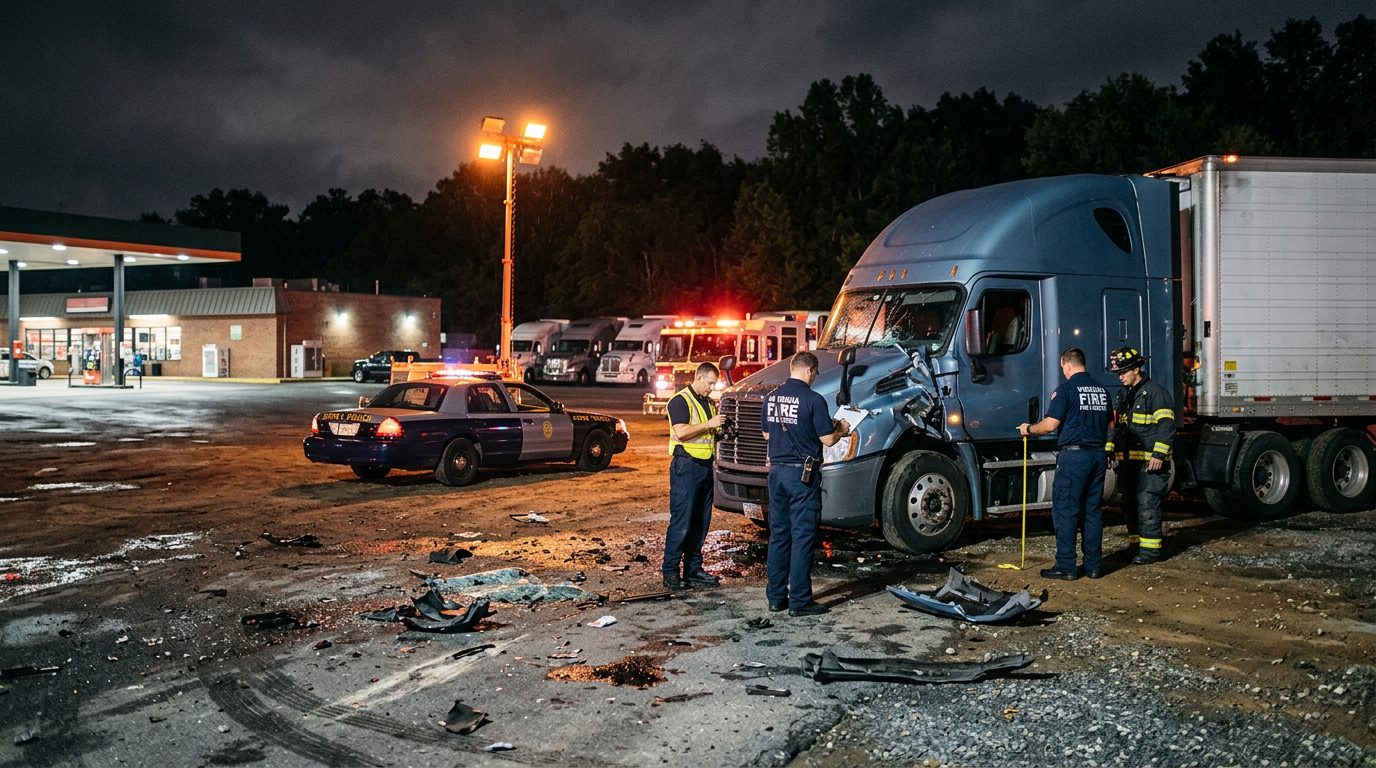
Truck Accidents | Virginia
When a Tired Truck Driver Causes a Crash
Fatigue can be hard to see after a collision, but driver schedules, vehicle records and the crash itself often reveal how it played a role.
Published November 17, 2026
When a tired truck driver is involved in a crash in Virginia, fatigue becomes one of the first questions to ask. Fatigue is one factor investigators examine, alongside speed, weather, impairment and equipment. Federal rules limit how long commercial drivers may work and drive, and the driver’s records can show whether those limits were followed.
Why Driver Fatigue Matters in Truck Crashes
A tired driver may not respond to traffic as quickly as a rested one would. Fatigue can slow reaction time, weaken attention and cloud judgment. A worn-out driver may brake late, drift within a lane or miss a slowing car ahead. Federal safety rules say no driver may operate a commercial motor vehicle, and no motor carrier may require or permit one to, when fatigue, illness, or any other cause makes the driver’s ability or alertness so impaired, or so likely to become impaired, as to make it unsafe to begin or continue operating it, 49 C.F.R. § 392.3, except that in a grave emergency where compliance would increase the hazard, the driver may continue to operate the commercial motor vehicle to the nearest place at which that hazard is removed. Fatigue is still only one possible factor. A crash review also looks at speed, road and weather conditions, impairment, mechanical problems and distraction, and weighs them together. The firm’s overview of commercial vehicle crashes in Virginia is in the commercial vehicle accidents guide.
If a tired truck driver's crash left you or someone you love hurt, you may have a claim, and the firm is glad to talk through what happened. Talk it through with Correll Law Firm — we can walk you through how a situation like yours is usually handled and what your options are.
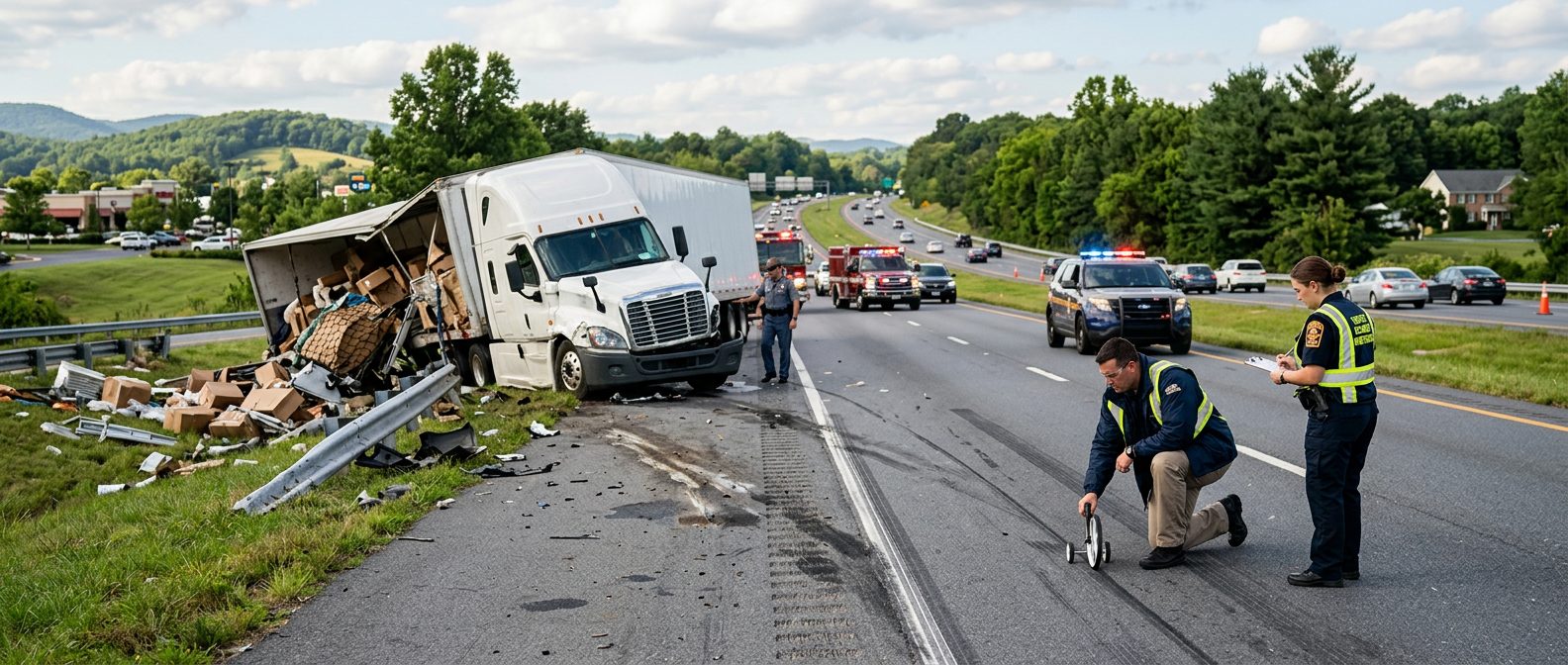
How Hours and Rest Rules Come Into a Crash Review
Commercial drivers work under federal rules that limit driving time and require rest. The rules restrict driving after a stretch of time off duty, cap total driving within a work period, and require a break after long periods of driving. They also set limits across several days. The driving and duty limits appear in 49 C.F.R. § 395.3, and the FMCSA hours-of-service regulations explain the wider framework.
After a crash, investigators and attorneys often ask whether the driver’s schedule, trip length and rest breaks followed those rules. They may ask when the driver last had a full break, how long the trip had run, and whether the load was due on a tight deadline. A possible rule violation is one question to examine. It does not, by itself, establish who caused a crash. The question is how any violation connects to what happened on the road.
What Electronic Logging Device Records Can Show
An electronic logging device is equipment in the truck that tracks a driver’s hours and status.
Drivers also keep a record of duty status for each 24-hour period, as described in 49 C.F.R. § 395.8. Carriers must keep supporting documents such as bills of lading, dispatch records and expense receipts, 49 C.F.R. § 395.11. Dispatch messages, fuel receipts and trip paperwork can help build a timeline. Asking for these records early keeps the evidence clear. The electronic logging device guide covers how this data is gathered and reviewed.
Signs of Fatigue in Crash Evidence
Fatigue usually leaves clues rather than one clear sign. Investigators may look for no braking before impact, a truck drifting out of its lane, or a truck striking a vehicle that had stopped or was slowing. A crash on a straight, familiar road in the middle of a long trip can also raise questions.
These clues are weighed alongside other evidence. No single sign proves fatigue. Witness statements can help fill in the timeline, since a witness may describe how the truck moved before impact. The driver’s own statements about how long they had been driving also matter. Those statements can be compared with logs and receipts to test whether the timeline holds together.
Fatigue, Highways, and Work Zones
Long highway runs, night driving and tight delivery schedules can combine to raise the risk of driver fatigue. Long stretches with little change can lull a driver. Night driving adds strain. A schedule that demands quick delivery can push a driver to keep going when rest is needed.
Work zones add their own pressure. Lane shifts, narrower space and slowed traffic leave less time to react, and a driver who is not fully alert has less margin for error. Interstate 81 runs through the Shenandoah Valley near Winchester and Harrisonburg, so these questions come up on local roads as well as in distant crashes. The work zone truck crash guide explains how these crashes are reviewed.
Reporting the Crash and Early Steps in Virginia
Virginia requires a driver involved in a crash with injury or death to stop and report it to police immediately (Va. Code §§ 46.2-371, 46.2-894). The two-year period discussed below is the deadline to file a personal injury lawsuit: under Va. Code § 8.01-243, every action for personal injuries must be brought within two years after the cause of action accrues, unless this section or another statute provides otherwise. It is separate from the duty to report a crash.
Virginia law also requires the driver to stop as close to the scene as possible without blocking traffic, and to help anyone who is hurt, under Va. Code § 46.2-894. If you are able, keep a written record of the date, the location, your injuries, medical visits and the names of witnesses. Take photos of the scene, the vehicles and the damage. Those notes often help later when memories fade.
Not sure what your next step is?
Talk it through with Correll Law Firm — we can walk you through how a situation like yours is usually handled and what your options are.
Injuries That May Show Up Later
Some injuries from a truck crash do not show symptoms until hours or days later. Pain can be slow to appear after a hard impact. Neck, back and head injuries may feel minor at first, then grow worse. A person who hit their head may feel fine at the scene and later notice headaches, confusion or dizziness.
Medical providers can only treat what they know about, so report every symptom, even small ones. Keep records of every visit, test and treatment recommendation, including any referral. The spinal injury symptoms guide lists symptoms that can appear after a crash.

Time Limits and Fault Rules in Virginia Claims
Virginia generally allows two years from the date of injury to file a personal injury lawsuit (Va. Code § 8.01-243(A)); the clock runs from the date of injury, not the date of discovery, with narrow exceptions. Some claims carry shorter notice requirements. A negligence claim against a county, city or town requires a written statement of the nature of the claim, including the time and place of injury, filed within six months after the cause of action accrues, with limited exceptions, under Va. Code § 15.2-209. Va. Code § 15.2-209 reads: “Failure to provide such statement shall not bar a claim against any county, city, or town, provided that the attorney, chief executive, or mayor of such locality, or any insurer or entity providing coverage or indemnification of the claim, had actual knowledge of the claim, which includes the nature of the claim and the time and place at which the injury is alleged to have occurred, within six months after such cause of action accrued.”
Fault rules matter as well. Virginia follows contributory negligence: if you are found even partly at fault, you may be barred from recovering, with limited exceptions. Talk to a lawyer about your facts.
Where a crash has caused a death, the rules differ. A Virginia wrongful death action is filed by the decedent’s personal representative within two years of the death (Va. Code §§ 8.01-50(C), 8.01-244(B)), on behalf of the family members the statute protects. Family members do not file the case themselves: the decedent’s personal representative files it, except that an action for fetal death is brought by and in the name of the natural mother or, if she dies or is under a disability, by the administrator of her estate, her guardian, or her personal representative qualified to bring such action. They share in the recovery.
Does a log violation prove a driver caused the crash?
No. A possible violation is one question to examine. Investigators weigh it with the rest of the evidence before reaching any conclusion about cause.
Can a tired driver cause a crash without speeding?
Fatigue is a separate question from speed. A driver who is worn out may react late even while driving within the speed limit.