
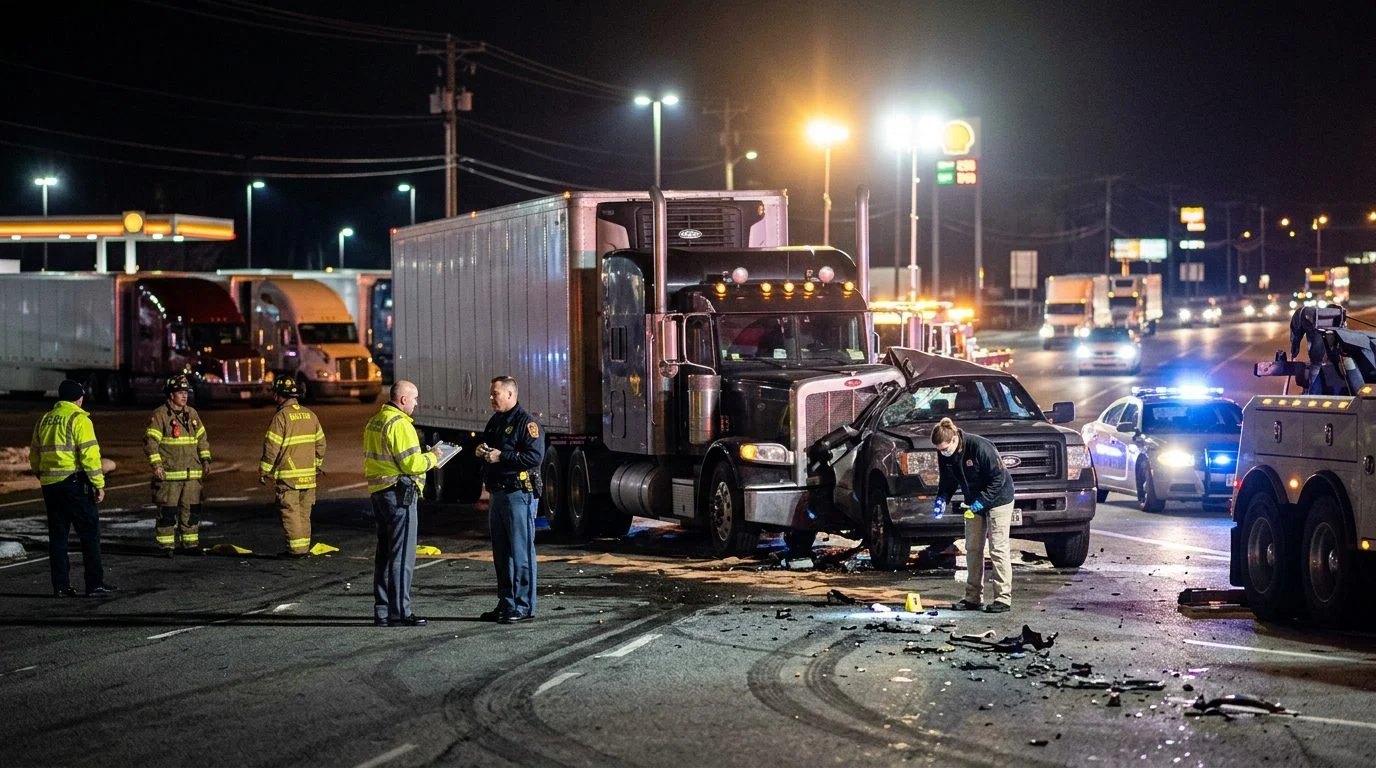
Wrongful Death | Truck Accidents | Virginia
Losing a Loved One in a Truck Crash: What Families Gather First
A plain-language guide for families in the Shenandoah Valley, Richmond and Henrico County who are facing the records and questions that follow a fatal collision.
Published November 22, 2026
Losing a family member in a truck crash is painful, and the paperwork can feel like too much at once. Knowing what to gather after a family member dies in a truck crash can make the next weeks easier to manage.
Families can gather six kinds of records: the crash report, death and medical records, details about the truck and driver, scene photos and witness contacts, funeral and income records, and insurance papers. This guide explains what each one is and why it matters. It covers general types of records, not how any specific claim will turn out.
What Families Often Face in the Days After a Truck Crash Death
In the days after a truck crash death, families often handle notifications, funeral plans and questions from police and insurers, all while grieving. Decisions come quickly, and small details can slip away.
That is why it helps to start a simple record early. You do not need to review every item right away. Knowing what exists, and where it is kept, makes later steps easier to handle.
Truck crashes can involve more parties than a typical car crash. A commercial truck may be driven by one person, owned by a company and insured by another company. Each one may hold records that matter. Families may not learn about all of them at first, so writing down names and contact details early is useful.
Every crash has its own facts. The records below are the ones families commonly collect, and they do not predict how a claim will turn out.
If your family is facing this loss, you do not have to sort through these records alone, and the firm is glad to talk with you about your situation. Talk it through with Correll Law Firm — we can walk you through how a situation like yours is usually handled and what your options are.

Collect the Crash Report and Police Records
The investigating agency usually prepares a crash report, and the family can ask that agency how to request a copy. The report often lists the date, the location, the vehicles involved and the people who were hurt.
Virginia requires a driver involved in a crash with injury or death to stop and report it to police immediately (Va. Code §§ 46.2-371, 46.2-894). Those are reporting duties. They are not the deadline for filing a lawsuit, which comes later in this guide.
Along with the report, write down the incident or case number. Note the names of the responding officers and any citations that were issued. Keep any citation paperwork in the same folder as the report, so the full police record stays together.
Gather Death, Hospital and Medical Examiner Records
Certified copies of the death certificate are often the first document families need. Banks, insurers and courts frequently ask for a certified version, so ordering several copies at once can save time later.
Hospital and emergency transport records show the timeline. They also show the medical care the person received at the scene and afterward. Ask each provider for a complete copy of the records, including the transport report.
When a death is referred to a medical examiner or coroner, that office may issue a report. Families can ask the office handling the case which records are available to them. Keep every letter and notice from that office together with the other medical papers.
These records document the medical side of the loss. They also give the family a clear, dated account of what happened to the person after the crash.
Document the Truck, the Carrier and the Driver
Write down the truck’s make, model and license plate as soon as possible. Also note any company name or number painted on the cab or trailer, since those details can point to the company that operated the truck.
Many commercial trucks display a USDOT number. That number can help identify the motor carrier, which is the company responsible for operating the truck. Record the number exactly as it appears.
Note the driver’s name, the employer named on any paperwork and what the driver said at the scene. Write these details down while they are fresh, and include the time and place.
Federal rules require a motor carrier to keep records of duty status and supporting documents for at least 6 months from the date of receipt (49 C.F.R. § 395.8).
Keep Scene Photos, Witness Contacts and Personal Notes
Photos and video from family members, friends or bystanders can show the roadway, the weather, where the vehicles came to rest and the damage. Take them as soon as it is safe to do so, and keep the original files.
Record the names and contact information of any witnesses while the information is available. People move, change phone numbers and forget details, so an early list helps.
Write a dated timeline of what the family was told by police, hospital staff and others, and when they said it. Memory fades quickly, and a written timeline shows exactly what was said.
Save texts, voicemails and emails about the crash in their original form. Forwarding a message or taking a screenshot can drop details such as the time stamp and the sender’s full information.
Track Funeral, Medical and Income Records
Virginia wrongful death damages cover the family’s sorrow, mental anguish and loss of the decedent’s companionship, guidance and care; lost income and services; medical expenses from the injury; funeral expenses; and, for willful or wanton conduct, punitive damages (Va. Code § 8.01-52).
Receipts and invoices for funeral and burial services document the funeral expenses. Keep bills and statements from medical care, and keep proof of what the family paid out of pocket.
For lost income and household help, gather the decedent’s pay stubs, tax returns and employment letters. Records showing regular work or the care the person gave at home also belong in this group.
Keep copies rather than originals wherever you can. Store the originals in a safe place, and use the copies for everyday review and sharing.
Not sure what your next step is?
Talk it through with Correll Law Firm — we can walk you through how a situation like yours is usually handled and what your options are.
Organize Insurance Papers and Communications
Collect the decedent’s auto, health and life insurance policies. Include any information about the other vehicle that was shared at the scene, such as the insurer’s name and claim number.
Insurance companies may contact family members early. Write down the caller’s name, the date, the company and what was said. Keep statements short, and be careful about discussing how the crash happened or who was at fault.
Virginia follows contributory negligence: if you are found even partly at fault, you may be barred from recovering, with limited exceptions. Talk to a lawyer about your facts.
Keep every letter, claim number and written offer in one folder. That way the full record stays in one place for review.
Understand Who Files a Wrongful Death Claim and by When
A Virginia wrongful death action is filed by the decedent’s personal representative within two years of the death (Va. Code §§ 8.01-50(C), 8.01-244(B)), on behalf of the family members the statute protects.
Family members generally do not file the action themselves.
Virginia generally allows two years from the date of injury to file a personal injury lawsuit (Va. Code § 8.01-243(A)); the clock runs from the date of injury, not the date of discovery, with narrow exceptions.
Because of that, the records above are worth gathering early and keeping together.

Keeping the Records Organized Over Time
Use one folder with subfolders for crash, medical, funeral, financial, insurance and communications. A simple structure makes it easy to find any item when someone asks for it.
Keep a running index with the date you requested each item, the date it arrived and what is still pending. The index shows gaps before they become problems.
Records can take time to arrive. Add new items as they come in, and note where each one came from.
What should a family gather first?
Start with the crash report number, the death certificate and any hospital or transport records. Those give the basic timeline and identifying details.
Can family members get a copy of the crash report?
Ask the agency that investigated the crash how to request a copy. The agency can explain its process.
What is a USDOT number?
A USDOT number identifies a motor carrier registered for interstate operations. It often appears on the side of commercial trucks.
Related practice areas
- Commercial Vehicle Accidents in Virginia
- Hazmat Truck Crash in Virginia: What the Injured Should Know