
Truck Accidents | Virginia
When a Tired Driver Shares the Road: Fatigue and Hours-of-Service Truck Crashes
How driving-hour limits, electronic logs and crash evidence can matter for families in the Shenandoah Valley, Richmond and Henrico County.
Published November 28, 2026
A tired truck driver can cause a crash that a rested driver would have avoided. Fatigue slows reactions and weakens judgment, and that can turn an ordinary stretch of highway into a serious wreck.
Proving truck driver fatigue usually takes several facts working together, not one clear record. Trucking records that track those hours can show whether the limits were followed. This guide explains how that evidence works in Virginia and which deadlines may apply.
Why Driver Fatigue Matters in Truck Crashes
Fatigue makes it harder for a driver to do the basic jobs of driving. A tired driver may react more slowly, drift within a lane, miss a traffic signal or misjudge how far back to stay behind the vehicle ahead.
Many of these effects are hard to see. A worn-out driver may look alert from the outside while the ability to react has already dropped. That is why fatigue often shows up in the details rather than in an obvious sign.
Fatigue is also one factor among many in a crash. Speed, weather, road design, the other driver’s actions and the truck’s condition can all matter. The facts of each crash decide which factors count most, so fatigue has to be weighed alongside everything else.
The rest of this page covers the federal rules, the records that may show compliance, the clues in crash evidence, and the deadlines that may apply.
Not sure what your next step is?
Talk it through with Correll Law Firm — we can walk you through how a situation like yours is usually handled and what your options are.

Federal Hours-of-Service Rules for Property-Carrying Drivers
Under 49 CFR § 395.3, a driver may not drive until taking 10 consecutive hours off duty. A driver may not drive after 14 consecutive hours following that rest period.
Driving also stops after more than 8 hours of driving time without a consecutive 30-minute break. Certain short-haul drivers have exceptions to the break rule.
Weekly limits apply too. A driver may not drive after 60 hours on duty in 7 consecutive days, or after 70 hours in 8 consecutive days, depending on whether the carrier runs trucks every day of the week.
Under 49 CFR § 395.3, a driver may not drive without first taking 10 consecutive hours off duty; the bar on driving while fatigue makes it unsafe is in 49 CFR § 392.3. The FMCSA hours-of-service regulations describe how these rules apply to commercial drivers and the carriers that must follow them.
These limits set a federal floor. Following them does not prove a driver was rested. Read the regulation text for the specific type of operation, because the rules can differ.
How Logs and Electronic Logging Devices Record Driving Time
Carriers that operate commercial motor vehicles must record driver duty status. Under 49 CFR § 395.8, those carriers must install and require drivers to use an electronic logging device (ELD). The same section bars any driver or carrier from making a false report about duty status.
Other records can be compared against the logs. Under 49 CFR § 395.11, a carrier must keep supporting documents such as dispatch and trip records, expense receipts for on-duty time not spent driving, and electronic messages. Those documents must be linked to the driver’s duty status record.
Here is a limit people often miss. A carrier need not keep more than eight supporting documents for a driver’s 24-hour period, but a carrier that requires a driver to complete a paper record of duty status must also maintain toll receipts for any period when the driver kept paper records of duty status. It keeps the earliest and latest time entries among them. Some timing details from a long day may not be kept.
When logs, receipts, dispatch messages and fuel stops line up, they build a clearer timeline. When they conflict, the conflict itself deserves a close look. Records can be incomplete or disputed, so they are usually reviewed side by side.
Signs of Fatigue in the Crash Evidence
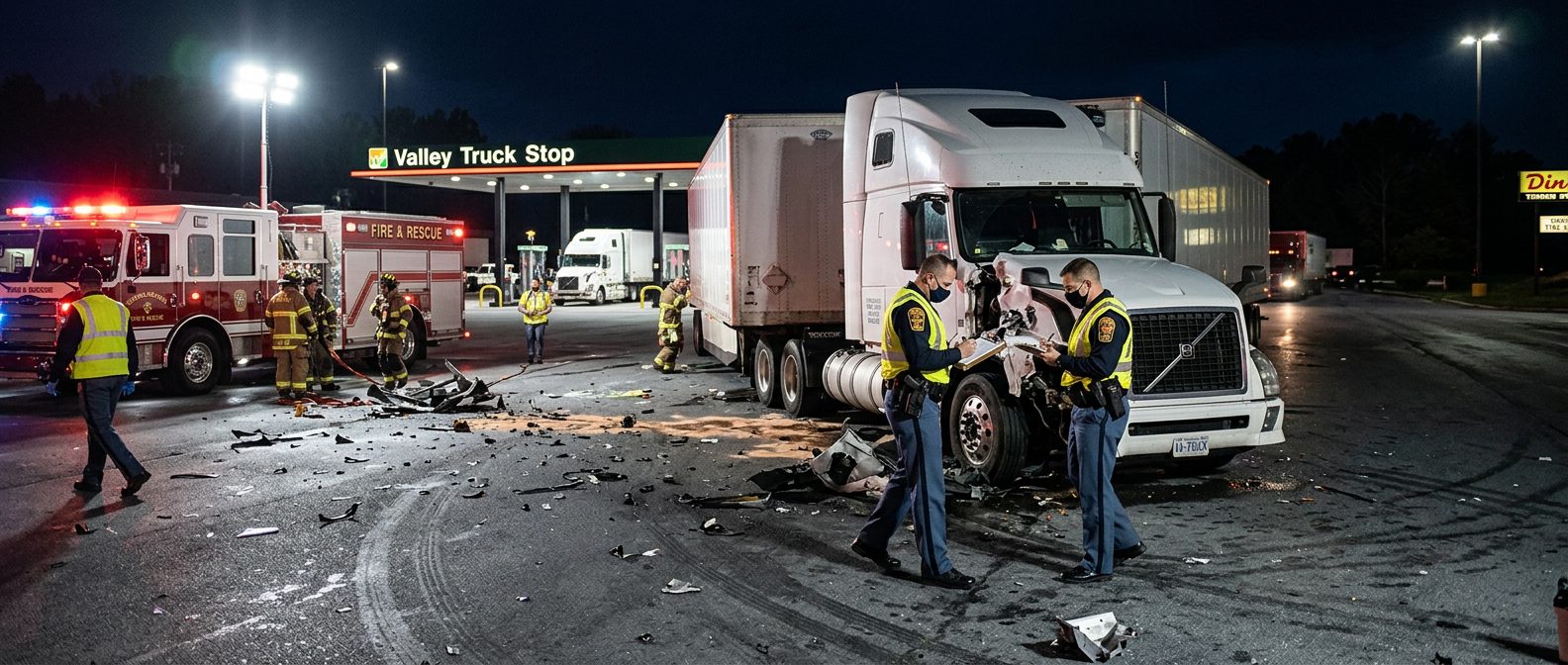
Fatigue shows up in clues at the scene and on the roadway. A truck may drift out of its lane without any braking. The crash may happen late in a long shift or in the early morning hours. There may be little or no braking before impact.
The driver may later say he or she had very little sleep. Investigators may look at recent sleep and schedule, medical conditions that affect alertness, and medications the driver took. What matters depends on the facts, and no single clue settles the question.
Who Else May Be Involved in a Fatigue-Related Crash
A trucking company, a dispatcher, a shipper or a freight broker may each hold records about schedules, deadlines or assigned routes. Those schedules can shape how long a driver was on duty. A tight delivery deadline or a last-minute route change may explain why a driver kept going.
Equipment matters too. Maintenance records and the vehicle itself can be relevant to the investigation.
Which parties share responsibility depends on the facts and on how the companies are related.
When Conduct May Go Beyond Ordinary Negligence
Virginia has a specific standard for punitive damages, and it is more demanding than ordinary carelessness.
Virginia allows punitive damages for actual malice, or for willful or wanton conduct or recklessness showing a conscious disregard for the safety of others, capped at $350,000 (Va. Code § 8.01-38.1).
Not sure what your next step is?
Talk it through with Correll Law Firm — we can walk you through how a situation like yours is usually handled and what your options are.
Reporting the Crash and Preserving Evidence
Virginia requires a driver involved in a crash with injury or death to stop and report it to police immediately (Va. Code § 46.2-371; Va. Code § 46.2-894). A willful failure to report is a separate offense under the first statute.
The two-year period covered below is the deadline to file a lawsuit (Va. Code § 8.01-243). It is not the deadline to report a crash.
Evidence can disappear quickly, so a few practical steps help. Photos of the scene, the truck and the vehicles are useful. Contact details for witnesses matter, and so does the police report number.
A written timeline of the trip, made while memory is fresh, can help line up the driver’s hours with the records later. Medical records are part of the evidence too. Keeping appointment notes and discharge papers in one place makes them easier to review.
Deadlines That May Apply After a Fatigue-Related Crash
Virginia generally allows two years from the date of injury to file a personal injury lawsuit (Va. Code § 8.01-243(A)); the clock runs from the date of injury, not the date of discovery, with narrow exceptions.
Some claims carry notice requirements that can run out sooner. No single date fits every claim.
When a crash causes a death, the rule is different. A Virginia wrongful death action is filed by the decedent’s personal representative within two years of the death (Va. Code §§ 8.01-50(C), 8.01-244(B)), on behalf of the family members the statute protects.

Fatigue and Winter Driving on Shenandoah Valley Roads
Winter weather can add to the risks of driving tired on Shenandoah Valley highways. Long hours, night driving and cold, wet or icy roads can combine in one trip.
A worn-down driver may have less room to correct for slick pavement or a sudden slowdown ahead. The clues described above still apply, and the timing of the trip often matters.
The firm is based in Winchester and has an office in Harrisonburg. It represents people hurt in car and truck crashes and families in wrongful death cases, from the Shenandoah Valley to Richmond and Henrico County.
Frequently asked questions
What is an electronic logging device?
It is a device that records a driver’s duty status. Federal rules require carriers operating commercial motor vehicles to use one, although the rules allow manual duty-status records instead of an ELD in the cases listed in 49 CFR § 395.8(a)(1)(ii).
Is fatigue alone enough to prove a crash claim?
Usually not. Fatigue is typically shown by several facts together, such as records, crash clues and the driver’s schedule.