
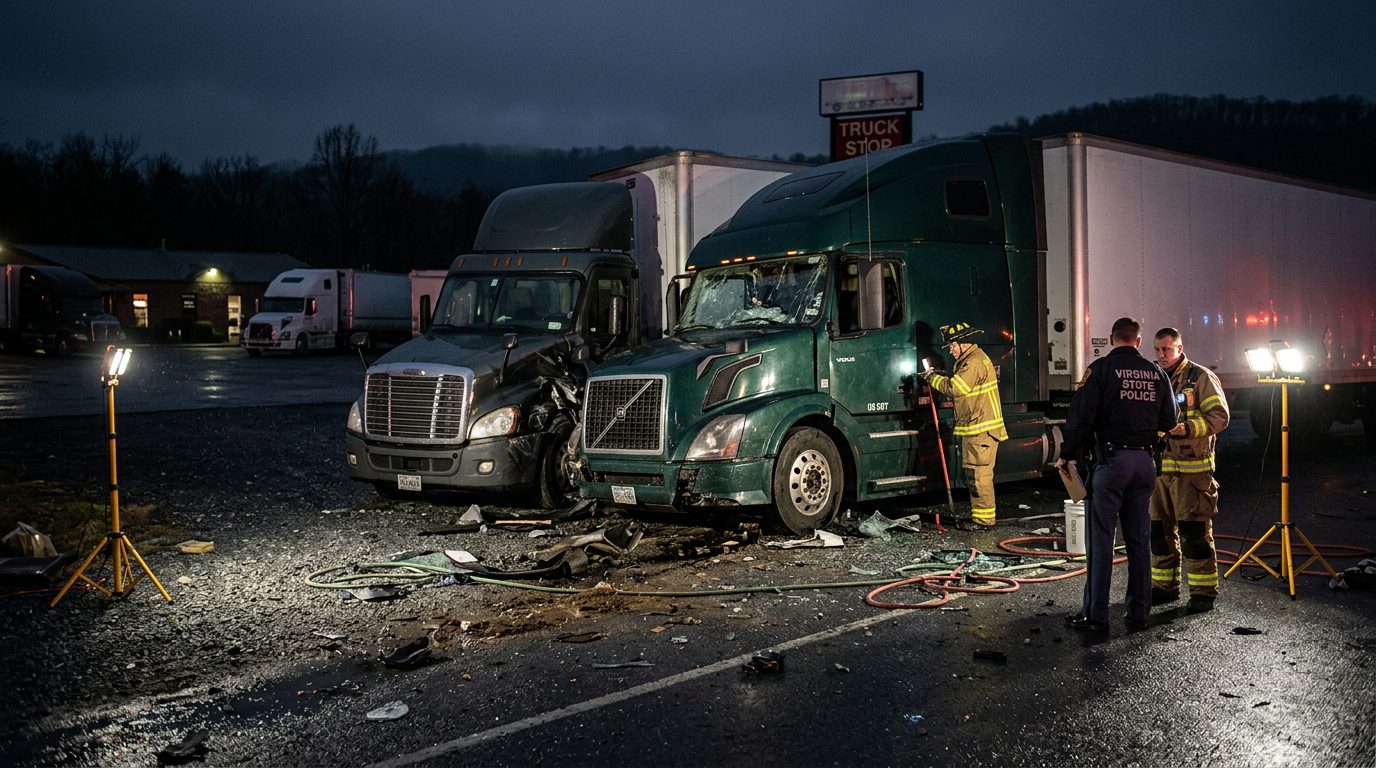
Truck Accidents | Winchester and Harrisonburg, Virginia
Can You Get a Truck Driver's Logbook After a Virginia Crash?
A driver's logbook can help show what happened on the road before a crash. Here is how these records work and why it helps to think about them early.
Published November 16, 2026
After a truck crash, many people want to know whether they can get the driver’s logbook. Yes, a truck driver logbook can often be requested, but the request usually goes to the trucking company, not the police.
The crash report and evidence from the scene are the places to start, and the logbook usually comes later in the process. This guide explains each source in plain terms, along with the timing and insurer issues that come up early. If you are a family member of someone killed in a truck crash, the questions are similar, though the filing rules differ.
What a Truck Driver’s Logbook Is
A truck driver’s logbook is a record of how a commercial driver spent each part of the day. It shows time spent driving, time on duty but not driving, and time resting. Federal rules require carriers, except a private motor carrier of passengers (nonbusiness), to have each driver record this duty status for every 24-hour period (49 C.F.R. § 395.8).
Many drivers record this information on an electronic logging device, or ELD. An ELD records driving time electronically, which is why the term appears in crash investigations.
The logbook is only one kind of record. Bills of lading, dispatch records, trip records and expense receipts can also show where a driver was and when. Federal rules require carriers to keep many of these supporting documents to verify on-duty time (49 C.F.R. § 395.11).
If a truck crash left you or someone you love hurt, you do not have to sort out the records alone, and the firm is glad to talk through your situation. Talk it through with Correll Law Firm — we can walk you through how a situation like yours is usually handled and what your options are.
Why Driver Hours and Logs Can Matter After a Truck Crash
Driver hours can matter because fatigue affects how a driver reacts on the road. Federal rules bar a carrier from requiring or allowing a driver to operate when fatigue, illness or another cause makes that unsafe, except in a case of grave emergency where the hazard to occupants of the commercial motor vehicle or other users of the highway would be increased by compliance with this section, the driver may continue to operate the commercial motor vehicle to the nearest place at which that hazard is removed (49 C.F.R. § 392.3).
Federal limits also cap driving and on-duty time. A driver of a property-carrying commercial motor vehicle generally may not drive after 14 consecutive hours after coming on duty, following 10 consecutive hours off duty, with limited exceptions (49 C.F.R. § 395.3).
A log shows what was recorded for those hours. Whether it helps a particular claim depends on the facts of that crash. Hours are one question among many in a truck crash. Speed, road conditions and vehicle condition can matter too, and the logs do not answer those questions.
Start With the Crash Report
The crash report is the first official record of the crash, and it is the first document to request. Virginia requires a driver involved in a crash with injury or death to stop and report it to police immediately (Va. Code §§ 46.2-371, 46.2-894).
That reporting duty is separate from the deadline to file a lawsuit, which comes later in this guide. If a driver is too badly hurt to report, the law requires the report as soon as reasonably possible (Va. Code § 46.2-894).
A typical report lists driver and passenger information, vehicle information, crash information and general information about the scene. Read it closely and note any errors in names, plates or locations.
Obtaining Copies of Virginia Traffic Accident Reports
Ask the law enforcement agency that investigated the crash for a copy of its report. Have the date, the location and the names of everyone involved ready, since these details help staff find the right file. If the report lists a different agency than you expected, ask that agency whether it can locate the file.
A report may record commercial vehicle details, such as the carrier name and vehicle identification, if the officer wrote them down. Not every report contains every detail, so read the copy you receive instead of assuming what it says.
The report may also note other information the officer collected, such as witness names, photographs and statements taken at the scene. Keep the copy with your other records, and write down the date you requested it.
What You Can Gather at the Scene and Afterward
Some of the most useful details come from the scene itself and the days right after. Gather them only when it is safe to do so.
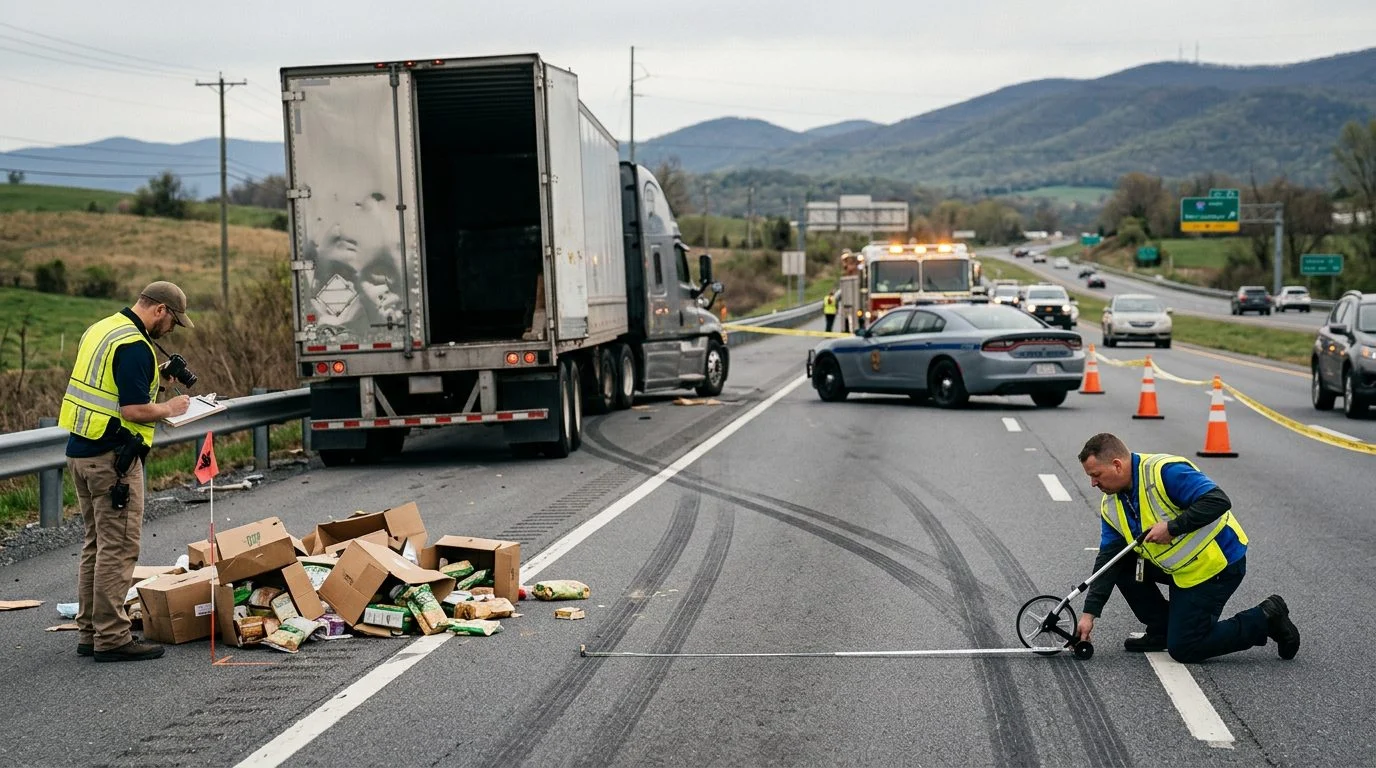
Write down or photograph the truck’s company name, unit number, license plate and any DOT numbers visible on the truck. Photograph the vehicles, the roadway, skid marks and visible damage, before the vehicles are moved if possible.
Record each witness’s name and contact details, along with what that person said they saw. Write it down while the memory is fresh. Keep damaged property, such as a phone or vehicle parts, in a safe place rather than discarding it.
Get medical care promptly. Keep every medical record, bill and appointment note, since these support the injury side of any claim.
Requesting the Trucking Company’s Driver Records
A driver’s logs and related records are generally held by the trucking company or carrier, not by police. Getting them usually happens through the insurance claim or a lawsuit. What is available varies with each crash and the stage the claim has reached.
Timing matters. Federal rules set minimum retention periods for carrier records, and after those periods a company may destroy them, though this does not excuse compliance with any other government’s longer retention requirements (49 C.F.R. § 379.3). A carrier also need not keep more than eight supporting documents for one driver’s 24-hour period, but if it has more than eight, it must keep the documents with the earliest and latest time indications, and if the driver kept paper records of duty status, it must also keep toll receipts for that period (49 C.F.R. § 395.11).
A request made early and in writing is easier to track than one made only by phone. You may wish to ask a lawyer which records to request and how to word the request, so it covers the right time period and sources.
Not sure what your next step is?
Talk it through with Correll Law Firm — we can walk you through how a situation like yours is usually handled and what your options are.
Talking With Insurers About the Crash
The trucking company’s insurer may contact you early, sometimes before you know which records exist. Ask for the adjuster’s name, the claim number and the company they represent, and write each one down.
A request for a recorded statement is something you may wish to think through before agreeing to it. Keep copies of every letter, and check each one for errors in dates or facts. Note the date, time and summary of each phone call.
Correll Law Firm handles truck crash matters for people from the Shenandoah Valley to Richmond and Henrico County.
Time Limits to Keep in Mind
The lawsuit deadline is one of the first time limits to know. Virginia generally allows two years from the date of injury to file a personal injury lawsuit (Va. Code § 8.01-243(A)); the clock runs from the date of injury, not the date of discovery, with narrow exceptions.
Some claims carry notice requirements that run out sooner than the lawsuit deadline. You may wish to find out which ones apply to your situation.
Wrongful death claims follow a different rule. A Virginia wrongful death action is filed by the decedent’s personal representative within two years of the death (Va. Code §§ 8.01-50(C), 8.01-244(B)), on behalf of the family members the statute protects.
Keeping Your Own Records Organized
Keeping your records in one place makes the claim easier to follow. Use one folder, paper or digital, for the crash report, photographs, medical records, bills, lost-work notes and insurer letters.
Start a dated timeline of the crash and the days after it while details are still clear. Note what you saw, who you spoke with, what care you received and when. Add to it as new information comes in.
Keep original documents intact and make copies for your timeline. That way, the originals stay as they were received.
Frequently Asked Questions
Who holds a truck driver logbook?
The trucking company or carrier generally holds it, not the police. Police keep the crash report.
How long do trucking companies keep these records?
Federal rules set minimum retention periods, and records may be destroyed after those periods (49 C.F.R. § 379.3). That is one reason to ask early.
A carrier may not alter or erase, or permit or require alteration or erasure of, the original hours-of-service information (49 C.F.R. § 395.30).