
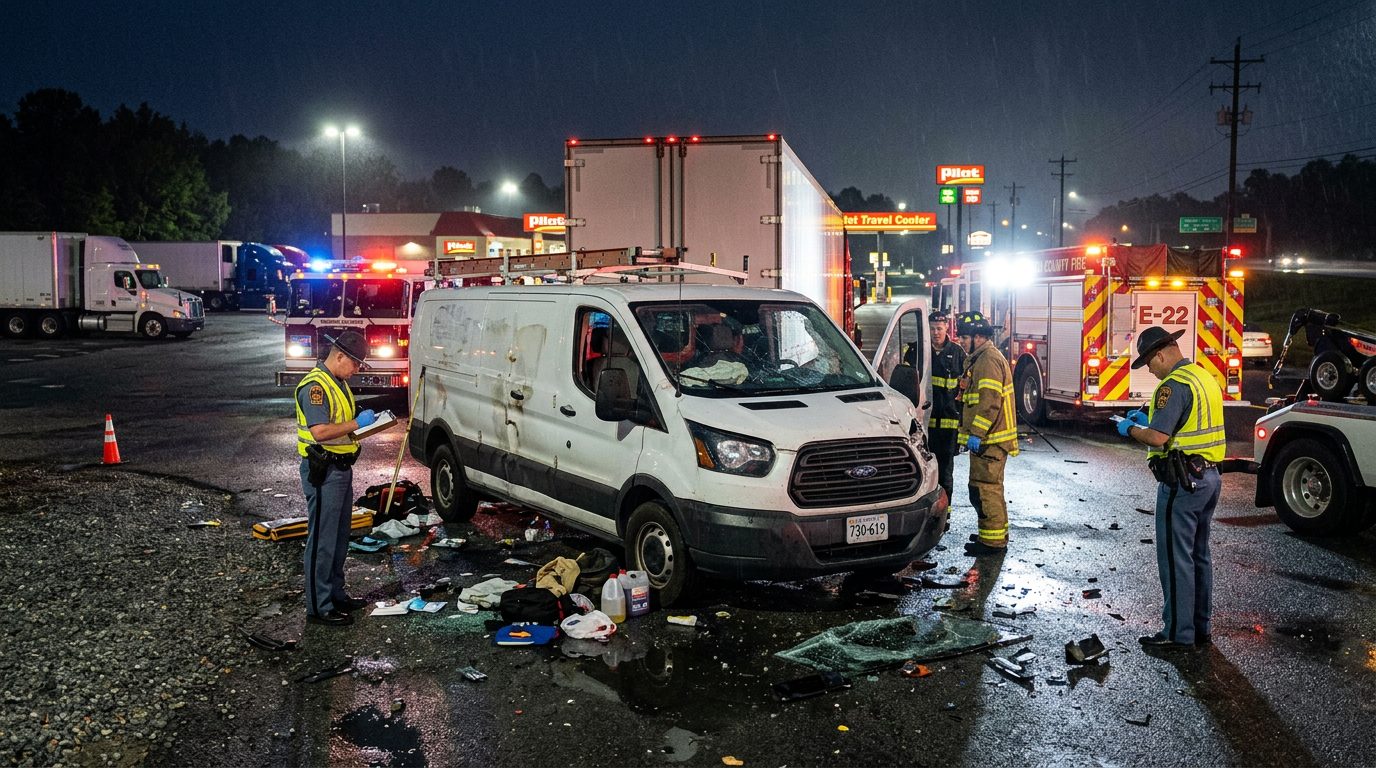
Work van crashes in Virginia
A Work Van Crash May Involve More Than One Party
Who else might be connected to the crash, what each party may have to do with the vehicle, and why the list of names matters early on.
Published November 16, 2026
When a company van crashes and a worker is hurt, the key questions are whether they can bring a claim and who else might be responsible.
This guide explains in plain terms how Virginia law approaches both questions. It also covers the Virginia rules on crash reporting, deadlines and fault that come up most often.
Is a worker injured in a work van crash eligible to file a third-party injury claim in Virginia if they are also receiving workers’ compensation benefits?
It may be possible, depending on the facts.
Workers’ compensation is one system. A third-party claim is a different question. It asks whether someone outside the employer was negligent and whether that negligence caused the crash.
Several facts decide whether the claim can move forward. These include who caused the crash, who owned or controlled the van, and whether a defect or poor maintenance played a part. The company’s name on the van does not settle the question alone.
Correll Law Firm serves clients from its Winchester and Harrisonburg locations. It represents people from the Shenandoah Valley to Richmond and Henrico County. For the broader picture, read the firm’s guide to commercial vehicle accidents in Virginia.
If a work van crash left you hurt, the firm may be able to talk with you about who else may be responsible for what happened. Talk it through with Correll Law Firm — we can walk you through how a situation like yours is usually handled and what your options are.
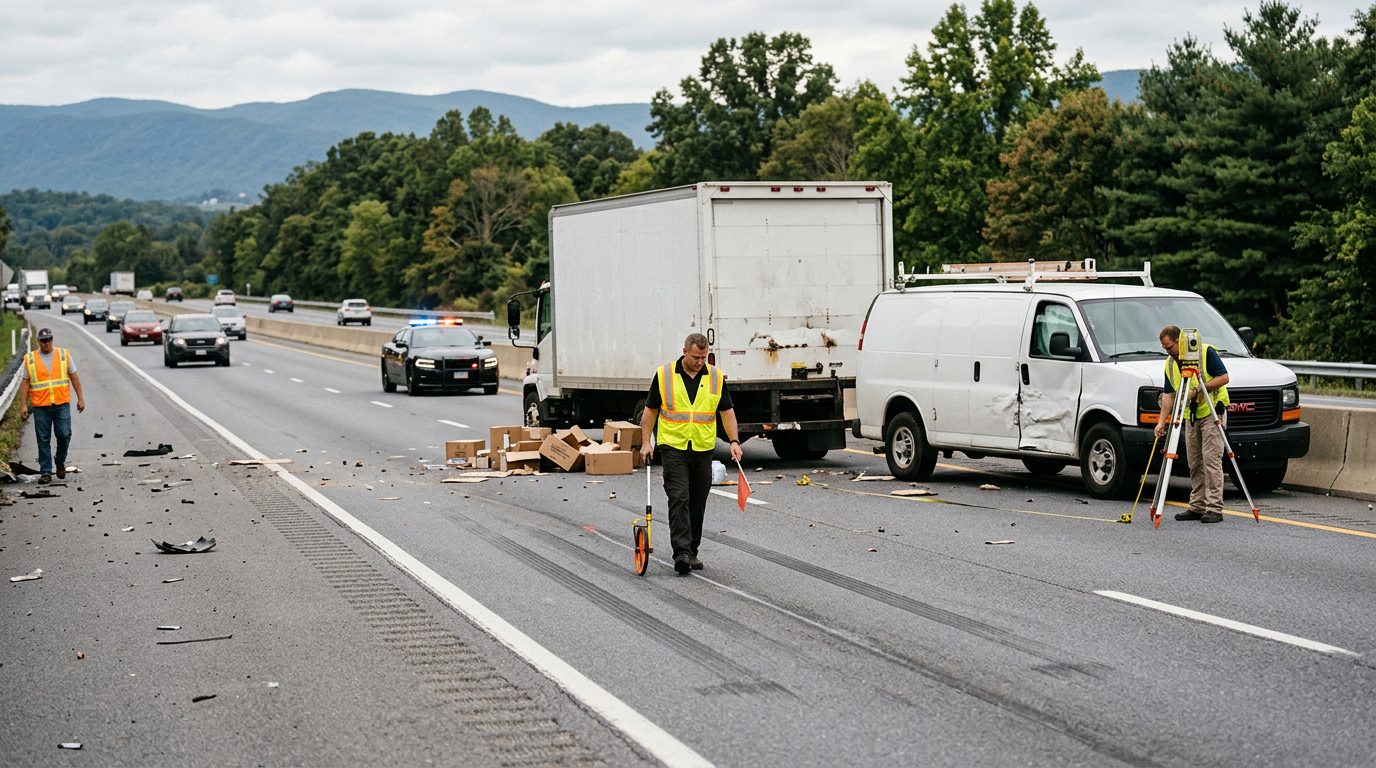
What is a third party negligence claim?
A driver who runs a red light or looks at a phone instead of the road may be negligent.
For example, imagine a driver who pulls out of a parking lot without checking traffic and hits a company van. A worker riding in the van is hurt. That driver may be a third party, because the driver’s carelessness may have caused the crash.
It stands apart from the benefits the worker gets through workers’ compensation.
Who can be a third party when a work van crashes?
Several kinds of parties may be responsible, depending on how the crash happened. Another driver is one example, but not the only one.
- Another driver whose carelessness caused or added to the crash.
- A maker of a part, when a defect in the van or its equipment caused or worsened the crash, such as a brake part that failed because of a manufacturing flaw.
- A business that maintained, repaired or loaded the van, if its work created the hazard. For example, a repair shop that returned a van with a known brake problem may be a possible third party.
The facts of each crash decide.
Insurance is a separate question from legal responsibility. Which insurer responds depends on the policies and the facts. The work van’s own driver may or may not be the right party to name. That depends on the crash and on what the driver was doing at the time.
How does vicarious liability apply to a company van crash?
Vicarious liability is the general idea that a business may be held responsible for a worker’s carelessness while the worker acts on the business’s behalf.
Consider a delivery route. If an employee driving the company van on a delivery causes a crash through carelessness, the business may face a claim for that carelessness. If the same employee is on a personal errand, the answer may be different.
Whether vicarious liability applies depends on the relationship between the driver and the business. It also depends on what the driver was doing at the time. Who directed the work and who controlled the vehicle often matter.
The proof depends on the particular crash. Records of the trip, the driver’s assignment and the vehicle’s use can all bear on the question.
How long after an accident must it be reported?
Immediately. Virginia requires a driver involved in a crash with injury or death to stop and report it to police immediately (Va. Code §§ 46.2-371, 46.2-894).
Under § 46.2-894, a driver involved in an accident in which someone is killed or injured, or in which attended property is damaged, must also stop as close to the scene as possible without obstructing traffic. The driver must give identifying details and render reasonable assistance to anyone hurt.
Good records help later. Keep the crash report number, medical records, and notes from doctors about work restrictions. Write down the names of any witnesses while the details are fresh.
Can you claim personal injury after 3 years?
Usually not.
Virginia generally allows two years from the date of injury to file a personal injury lawsuit (Va. Code § 8.01-243(A)); the clock runs from the date of injury, not the date of discovery, with narrow exceptions.
Under Va. Code § 8.01-243, unless otherwise provided in this section or by other statute, every action for personal injuries, whatever the theory of recovery, shall be brought within two years after the cause of action accrues. The start date rule appears in § 8.01-230.
Some claims carry shorter notice requirements. A claim for negligence against a county, city or town requires a written statement within six months after the cause of action accrues, though failure to provide it does not bar the claim if the locality’s attorney, chief executive, or mayor (or its insurer) had actual knowledge of the claim within that period (Va. Code § 15.2-209). That can matter when a work van belongs to a local government. Evidence also fades over time, so timing matters.
Not sure what your next step is?
Talk it through with Correll Law Firm — we can walk you through how a situation like yours is usually handled and what your options are.
What if the injured worker is partly at fault?
Partial fault can block recovery in Virginia. Virginia follows contributory negligence: if you are found even partly at fault, you may be barred from recovering, with limited exceptions. Talk to a lawyer about your facts.
How the crash unfolded matters most. Speed, signals, lane position and what each driver could see often decide who was at fault.
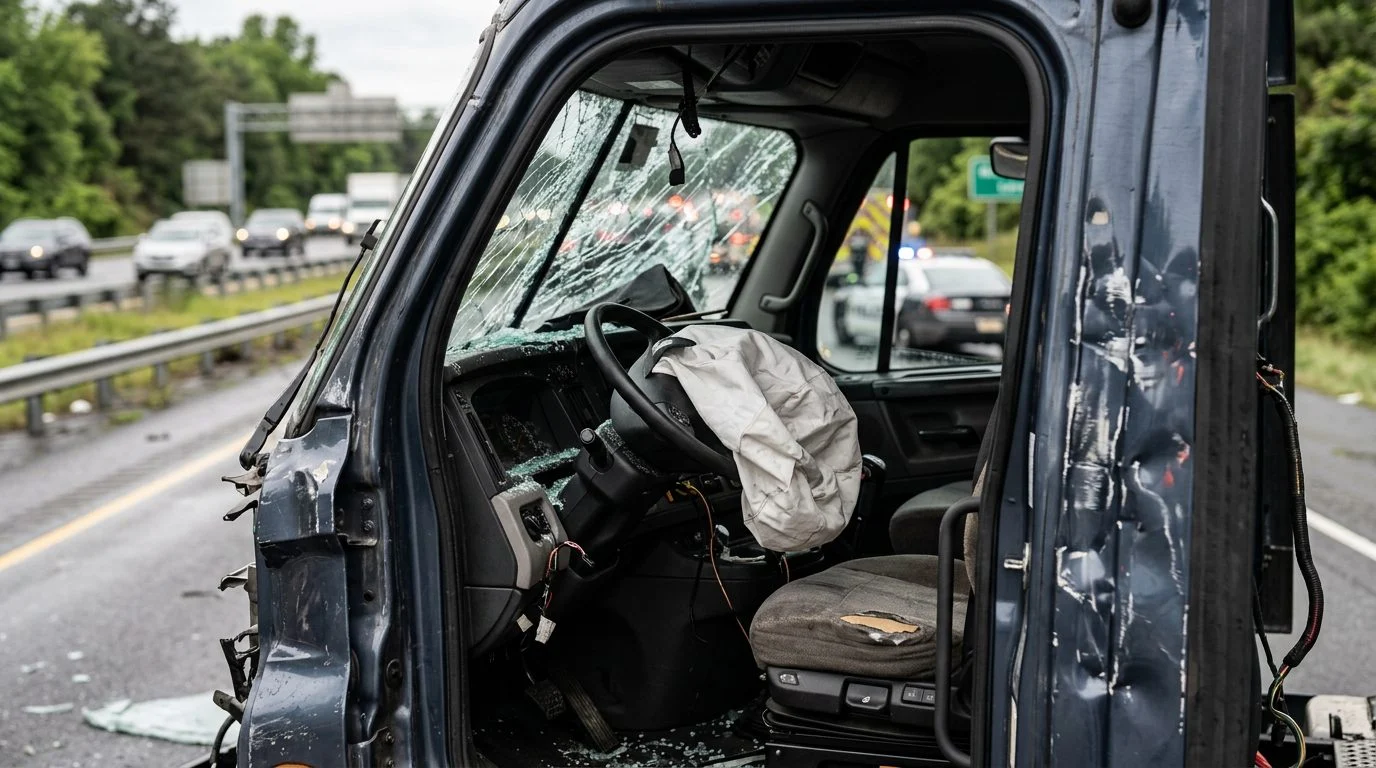
What if a worker dies in a work van crash?
A wrongful death claim is brought by the decedent’s personal representative, not by family members directly, except that an action for fetal death is brought by and in the name of the natural mother, or, if she dies or becomes a person under a disability, by the administrator of her estate, her guardian, or her personal representative qualified to bring such action. A Virginia wrongful death action is filed by the decedent’s personal representative within two years of the death (Va. Code §§ 8.01-50(C), 8.01-244(B)), on behalf of the family members the statute protects.
Family members do not file the action. The action is brought by the personal representative within two years after the death (Va. Code § 8.01-244), and family members share in any recovery as set by other statute. Who shares is set by statute, starting with the surviving spouse and children of the deceased (Va. Code § 8.01-53).
Virginia wrongful death damages cover the family’s sorrow, mental anguish and loss of the decedent’s companionship, guidance and care; lost income and services; medical expenses from the injury; funeral expenses; and, for willful or wanton conduct, punitive damages (Va. Code § 8.01-52).
Virginia allows punitive damages for actual malice, or for willful or wanton conduct or recklessness showing a conscious disregard for the safety of others, capped at $350,000 (Va. Code § 8.01-38.1).
Frequently asked questions
Does a work van crash always lead to a third-party claim in Virginia?
No. Whether a third-party claim exists depends on who caused the crash and what the facts show.
Can family members file a wrongful death claim on their own?
Generally no. The decedent’s personal representative files the action, and family members share in any recovery.