
Commercial Truck Wrongful Death | Henrico County
When a Commercial Truck Crash Takes a Family Member
Correll Law Firm helps Henrico County and Richmond families understand a wrongful death claim after a commercial truck crash. The firm has offices in Winchester and Harrisonburg.
Published November 2, 2026
When a death follows a crash with a commercial truck, the family’s questions often come fast. Families in Henrico County and the wider Richmond area face this situation, and the questions are usually the same: who can bring a claim, what it covers, and what to do first. This guide answers those questions in plain language. Interstate 95 runs through Henrico County and carries heavy truck traffic, so these crashes are a real concern there.
Who Can Bring a Wrongful Death Claim After a Commercial Truck Crash?
The decedent’s personal representative brings the wrongful death claim, not the family, except that actions for fetal death under subsection B are brought by and in the name of the natural mother. Wrongful death means a person died because of another party’s wrongful act, neglect or default. It is different from a claim for injuries the person suffered before dying.
A Virginia wrongful death action is filed by the decedent’s personal representative within two years of the death (Va. Code §§ 8.01-50(C), 8.01-244(B)), on behalf of the family members the statute protects.
They share in any recovery. Under Va. Code § 8.01-53, the statute sets an order for who shares. It starts with a surviving spouse and children.
A truck crash can involve more than one party. The driver, the company that employs or dispatches the driver, and others may each have a role. Which parties are involved depends on the facts of the crash.
If someone you love died in a truck crash, you do not have to sort out these questions alone, and the firm is glad to talk through your family's situation. Talk it through with Correll Law Firm — we can walk you through how a situation like yours is usually handled and what your options are.

What Can a Wrongful Death Claim Include?
Virginia wrongful death damages cover the family’s sorrow, mental anguish and loss of the decedent’s companionship, guidance and care; lost income and services; medical expenses from the injury; funeral expenses; and, for willful or wanton conduct, punitive damages (Va. Code § 8.01-52).
The person’s own pain before death belongs to a different type of action. That claim is covered under Va. Code § 8.01-25.
Punitive damages work differently. Virginia allows punitive damages for willful or wanton conduct, or such recklessness as evinces a conscious disregard for the safety of others (Va. Code § 8.01-52), and the total is capped at $350,000 (Va. Code § 8.01-38.1). The jury must find that the conduct met this standard.
Facts such as a driver ignoring known fatigue or a carrier ignoring its own safety rules can matter to this question. Whether those facts meet the standard depends on the evidence.
What Should Families Do First After a Fatal Truck Crash?
The first steps are making sure the crash was reported and keeping evidence that can disappear. Virginia requires a driver involved in a crash with injury or death to stop and report it to police immediately (Va. Code §§ 46.2-371, 46.2-894). That reporting duty is separate from the deadline to file a lawsuit.
Useful evidence often includes:
- The police crash report and its report number.
- Photos of the scene, the vehicles and the road, taken as soon as possible.
- Names and contact details of any witnesses.
- The company name and any identification numbers printed on the truck.
- Any statements the driver or other parties made at the scene.
Trucking companies must keep driver duty-status records for a limited time. Under 49 CFR § 395.8, those records are kept for not less than 6 months from the date of receipt. That short window is one reason early requests matter.
Keep a separate file for bills, funeral receipts, pay records for the person who died, and a short list of help the person gave the family, such as childcare or household work.
How Does the Firm Handle a Wrongful Death Truck Case?
The firm’s offices are in Winchester and Harrisonburg. It represents families from the Shenandoah Valley to Richmond and Henrico County.
The firm handles car accidents, truck accidents, commercial vehicle accidents, catastrophic injuries, traumatic brain injury, spinal cord injury and wrongful death. In a typical truck death matter, the work moves through a few general stages:
- Review of the crash facts and the documents the family has.
- Investigation and requests for records and other evidence.
- Communication with insurers and other parties.
- Negotiation or a lawsuit, depending on the facts.
Timelines vary. The number of parties, the records involved and the facts of the crash all affect how long each stage takes. The firm’s support staff help with office work and keep documents organized.
What Are the Filing Deadlines in a Virginia Truck Death Case?
A wrongful death action must be brought by the personal representative within two years after the death (Va. Code § 8.01-244). That timing runs from the death, not from the crash date.
Claims for injuries a person suffered before dying follow a different rule. Virginia generally allows two years from the date of injury to file a personal injury lawsuit (Va. Code § 8.01-243(A)); the clock runs from the date of injury, not the date of discovery, with narrow exceptions.
Some claims carry notice requirements that run out sooner. Under subsection A of Va. Code § 8.01-243, unless otherwise provided in that section or by other statute, every action for personal injuries, whatever the theory of recovery, shall be brought within two years after the cause of action accrues.
Why Do Commercial Truck Crash Cases Need Detailed Investigation?
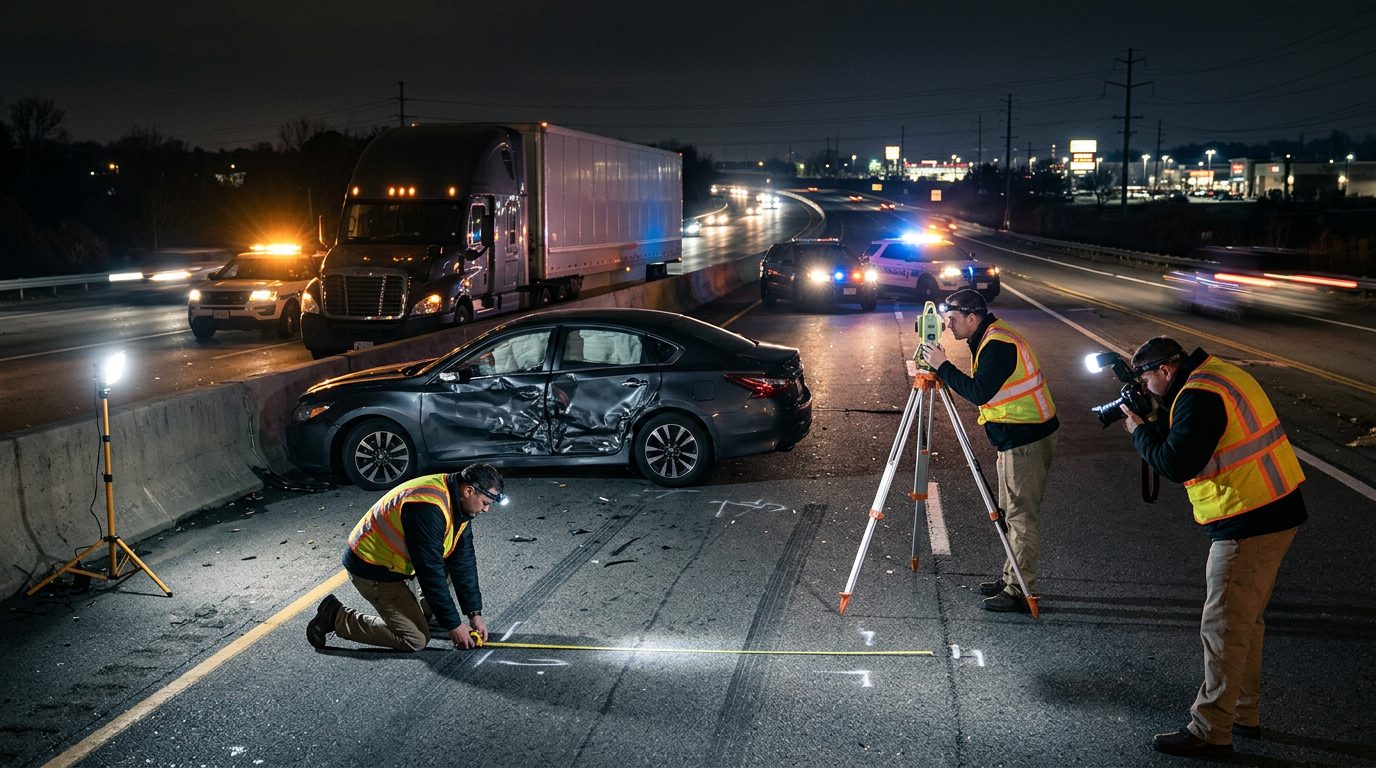
Truck crash cases often depend on records the carrier keeps, not only on the scene. Trucks differ from passenger vehicles in size, weight and stopping distance, so reconstructing how the crash happened can be central to the claim.
Investigators commonly review:
- Driver logs and hours-of-service records.
- Electronic logging device data, where the truck has one.
- Maintenance and inspection files.
- Driver qualification files.
- Cargo and load documentation.
Federal rules limit how long property-carrying drivers can drive. Under 49 CFR § 395.3, the limits include 11 hours of driving within a 14-hour window. The Federal Motor Carrier Safety Administration publishes the federal rules on required rest and breaks.
Video from businesses near Interstate 95 or local Henrico roads may be overwritten over time. Early requests give that footage a better chance of being preserved.
Not sure what your next step is?
Talk it through with Correll Law Firm — we can walk you through how a situation like yours is usually handled and what your options are.

Common Questions Families Ask About These Claims
Most questions come down to who files, what can be recovered and when to act.
Family members share in any recovery.
Does a traffic citation decide the claim?
No. A citation is one piece of information. The facts of each crash decide the claim.
Can a family pursue more than one party?
Possibly.
Does a wrongful death claim include the person’s own pain?
No. That belongs to a separate survival claim.
What should a family do first?
Make sure the crash was reported, keep photos and witness details, and gather bills and records of the family’s losses.