
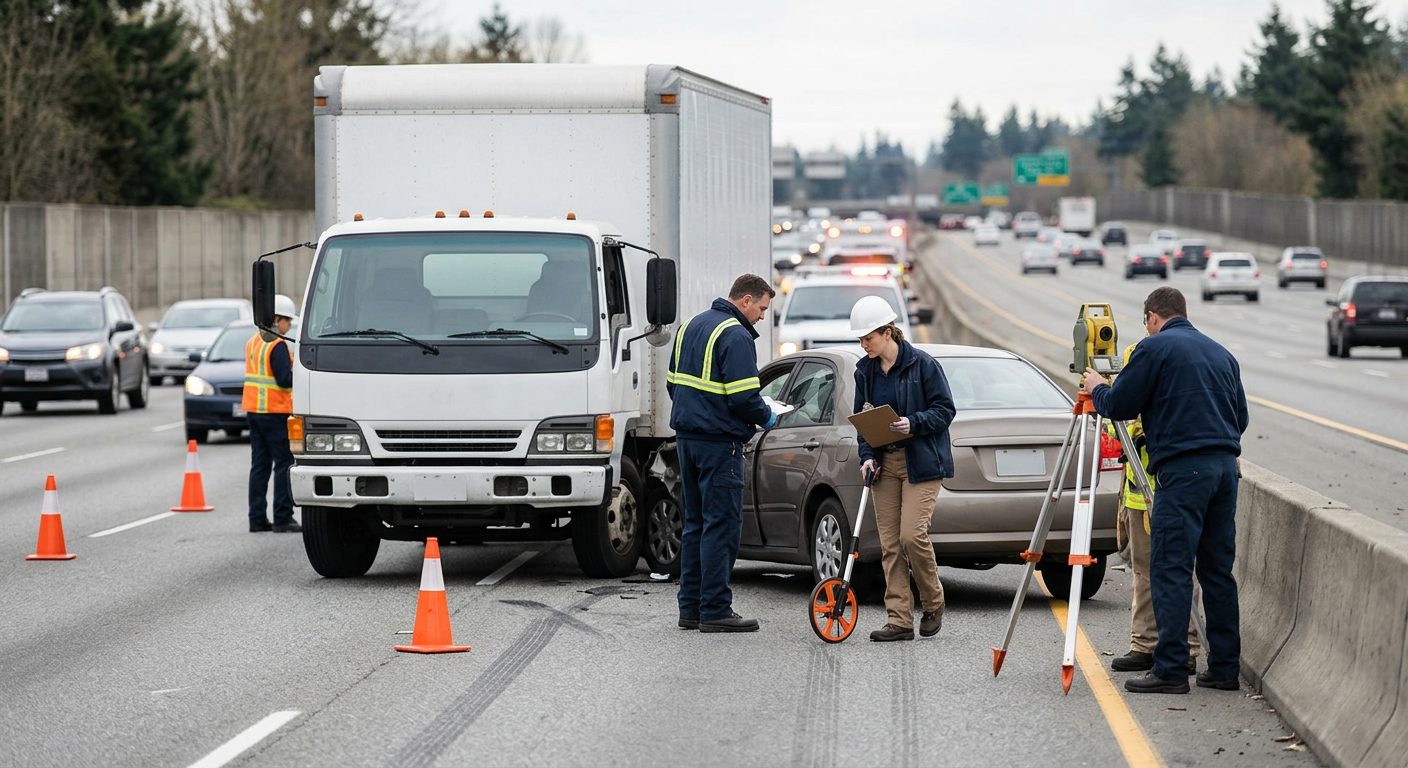
Spinal Cord Injury
What to Do After Spinal Cord Injury: Recovery Steps
A practical guide to immediate care, rehabilitation, and moving forward—plus how Correll Law Firm can help protect your rights.
Published October 02, 2026
What to Do After Spinal Cord Injury: Recovery Steps and Next Moves
A spinal cord injury diagnosis is overwhelming. Your body has suffered a serious trauma, and suddenly you’re facing medical decisions, rehabilitation, financial uncertainty, and life changes you didn’t expect. This guide walks you through what typically happens in the days and weeks after diagnosis—and what you need to know if your injury resulted from an accident.

Not sure what your next step is?
Talk it through with our team — the first case evaluation is free, confidential, and carries no obligation.
What Happens Immediately After a Spinal Cord Injury Diagnosis
In the first hours after a spinal cord injury, emergency doctors focus on preventing further damage and assessing what you’re dealing with.
You’ll receive imaging tests—usually a CT scan or MRI—to show exactly where and how severe the injury is. A trauma team or neurology specialist will explain whether your injury is complete (no nerve signals cross the injury site) or incomplete (some signals still get through). They’ll also tell you the level of the injury—cervical (neck), thoracic (mid-back), lumbar (lower back), or sacral (base of spine)—because that determines which parts of your body are affected.
You’ll be admitted to a hospital or, ideally, a specialized spinal cord injury center. These centers have teams trained specifically in spinal cord recovery and can coordinate your care better than a general hospital. Your family will be notified, and a social worker or counselor will begin talking with you about what comes next.
The First Days and Weeks: Medical Stabilization
Once you’re stabilized, the medical team’s job is to prevent complications and begin laying the groundwork for recovery.
Your spine will be immobilized—sometimes with a rigid collar, brace, or traction—to prevent any movement that could cause more damage. You’ll receive medications to reduce swelling and manage pain. Doctors will monitor you closely for blood clots, respiratory problems, and infections, all common complications in the first weeks.
Because spinal cord injuries affect nerve signals, your body may not send the usual signals for bladder and bowel function. You may need a catheter (a tube to drain urine) and help managing bowel movements. The medical team will also focus on nutrition, wound care, and preventing pressure sores.
During this time, you’ll meet your core team: a neurologist or physiatrist (a doctor focusing on rehabilitation medicine), nurses, physical therapists, occupational therapists, and social workers. They’ll begin assessing your abilities and planning your rehabilitation.
What Is the Typical Recovery Timeline for a Spinal Cord Injury?
Recovery from spinal cord injury doesn’t follow a simple timeline, but there are patterns.
If the injury causes little or no nerve cell death, a person can make an almost complete recovery. Recovery is highly individual—it depends on how complete your injury is, where it is on your spine, your age, your overall health, and how much rehabilitation you can access.
Incomplete injuries generally have better recovery potential than complete injuries. That doesn’t mean you’ll walk again—recovery is more complex than that—but it means your nervous system may regain some function.
Recovery isn’t always smooth. You might see rapid improvement, then plateau for weeks, then improve again. This is normal. Your brain and spinal cord are rewiring themselves, and that takes time.
Can You Ever Fully Recover from a Spinal Cord Injury?
Full neurological recovery—where the spinal cord heals completely and all nerve signals return—is rare. But functional recovery is real and achievable for many people.
Functional recovery means regaining the ability to do meaningful activities, even if the underlying nerve damage doesn’t fully heal. You might use a wheelchair, braces, or assistive devices. You might need help with some tasks. But you can still work, go to school, spend time with family, and live independently or semi-independently.
Research continues to advance. New therapies, robotic devices, and medications are expanding what’s possible. Many people with spinal cord injuries return to work, pursue education, have families, and build lives they find meaningful.
Your outcome depends on your specific injury, your age and health, and your access to good rehabilitation. This is why having a strong medical team early matters so much.
Rehabilitation and Therapy: The Core of Recovery
Rehabilitation isn’t something that happens to you—it’s something you do, often intensively, for months.
Physical therapy rebuilds your strength and mobility. You’ll work on moving the parts of your body you can control, building endurance, and learning to use assistive devices safely. Occupational therapy teaches you how to do daily tasks—eating, dressing, bathing, cooking—in ways that work with your new abilities. If your injury affects speech or swallowing, a speech therapist will help.
You’ll also work with a psychologist or counselor. Spinal cord injury is a major life change, and depression, anxiety, and grief are common and treatable. Many rehabilitation centers also offer peer support—connecting you with others who’ve had similar injuries.
If you worked before your injury, vocational rehabilitation can help you explore return-to-work options, retraining, or new career paths. Intensive rehabilitation typically lasts weeks to months, but therapy often continues for years as you adapt and rebuild.
Have questions about what happened?
Ask our team directly. The first conversation is free, confidential, and there is no obligation to continue.
Can You Still Walk After a Spinal Cord Injury?
Whether you can walk depends on your injury level and whether it’s complete or incomplete.
Some people regain walking ability, especially with incomplete injuries lower on the spine. Others use wheelchairs, walkers, braces, or canes for mobility. Emerging technologies—robotic exoskeletons and advanced physical therapy—are helping some people walk who couldn’t before, though these aren’t yet widely available.
The realistic goal for most people is functional mobility: the ability to get where you need to go safely and independently, whether that’s walking, using a wheelchair, or a combination of methods.
Practical and Financial Decisions After Diagnosis
Beyond medical care, you’ll face major practical decisions quickly.
Your home may need modifications: ramps, accessible bathrooms, a bedroom on the main floor, grab bars. You’ll need assistive equipment—a wheelchair, hospital bed, lift, shower chair. Your vehicle may need hand controls or a lift. All of this costs money.
You’ll need to navigate insurance, medical bills, and disability benefits. If you can’t work, you may qualify for Social Security Disability Insurance (SSDI) or other programs. A social worker or case manager can help, but it’s complex and takes time.
Long-term care planning is important too. If you need ongoing help with daily tasks, you’ll need to arrange and pay for that support. These are big decisions, and you don’t have to make them alone.
If Your Spinal Cord Injury Resulted from an Accident
If a car crash, truck accident, or another person’s negligence caused your spinal cord injury, you have legal rights.
Start by documenting everything: take photos of the accident scene and vehicle damage, get contact information from witnesses, and keep copies of all medical records and bills. Report the accident to police if it involved a vehicle. Notify the at-fault driver’s insurance company, but don’t accept a quick settlement without understanding the full extent of your injury and costs.
In Virginia, you generally have two years from the date of injury to file a lawsuit for damages. That deadline has exceptions, and some claims carry notice requirements that run out sooner, so it is important to act promptly. But you don’t need to rush into a settlement. A lawyer can help you understand what your claim is worth, negotiate with insurance companies, and protect your rights.
Virginia follows contributory negligence: if you are found even partly at fault, you may be barred from recovering, with limited exceptions. Talk to a lawyer about your facts. This is a strict rule, and it matters. A lawyer familiar with Virginia law can evaluate whether this applies to your case.
Building Your Support Team
You’ll need more than doctors. A strong support team includes:
- Spinal cord injury specialists and a rehabilitation center with experience in spinal cord recovery
- Your primary care doctor and other specialists as needed
- Mental health professionals to address emotional and psychological needs
- Social workers and case managers to help navigate benefits, equipment, and long-term planning
- Family and peer support—people who understand what you’re going through
- Legal counsel, especially if your injury resulted from someone else’s negligence or a crash
Each person on your team plays a role in your recovery and your future.

Want to know where you stand?
Tell us what happened and our team will walk you through the options available to you, at no cost.
Frequently Asked Questions
What’s the difference between complete and incomplete spinal cord injuries?
A complete injury means no nerve signals cross the injury site; an incomplete injury means some signals still get through, usually offering better recovery potential.
How long does spinal cord injury rehabilitation take?
Intensive rehabilitation typically lasts weeks to months, but therapy and adaptation often continue for years as you rebuild function and independence.
Will I need to stay in a rehabilitation center?
Many people do spend time in a specialized rehabilitation facility after hospital discharge, but some transition to outpatient therapy. Your medical team will recommend what’s best for your injury and situation.
What if I can’t afford all these costs?
Insurance, Medicaid, Medicare, disability benefits, and charitable organizations all play a role. A social worker or case manager can help you access available resources.
Should I talk to a lawyer about my accident?
If your spinal cord injury came from a crash or someone else’s negligence, yes. Early legal guidance helps protect your rights and ensures you understand your options for compensation.
If you or a family member is navigating life after a spinal cord injury caused by a car, truck, or commercial vehicle accident in Virginia, you’re facing not just medical recovery but serious financial and legal questions. Correll Law Firm represents people with catastrophic spinal cord injuries across the Shenandoah Valley, Richmond, and Henrico County. We understand the medical complexity, the financial burden, and the urgency of your situation. Reach out for a free case evaluation to discuss what your injury may be worth and how we can help you pursue the compensation you need for your recovery and future care.
Immediate Steps After a Spinal Cord Injury
Seek Emergency Medical Care
Call 911 immediately. Spinal cord injuries require urgent evaluation and stabilization to prevent further damage. Do not move the injured person unless there is immediate danger.
Document the Scene and Incident
If possible, gather names and contact information from witnesses, take photos of the accident scene, and note details about what happened. This information becomes important later.
Report the Incident
File a report with police (if a vehicle crash) or the relevant authority. Keep copies of all official reports and medical records from day one.
Notify Your Insurance Provider
Report the incident to your insurance company, but limit what you say. Avoid admitting fault or signing anything without understanding it first.
The Rehabilitation and Recovery Process
Acute Hospital Care
The first phase focuses on stabilizing your spine, managing pain, and preventing complications. Medical teams assess the extent of nerve damage and begin early rehabilitation.
Inpatient Rehabilitation
Intensive therapy—physical, occupational, and psychological—typically lasts weeks to months. Goals include regaining mobility, independence, and coping skills suited to your injury level.
Ongoing Outpatient Therapy
Recovery continues long after leaving the hospital. Physical and occupational therapy help you adapt to daily life, manage pain, and maximize function.
Long-Term Adjustment and Support
Many people benefit from counseling, support groups, and adaptive equipment. Recovery is ongoing, and your needs may change over time.
Time Matters for Your Claim
Spinal cord injuries from car crashes or truck collisions may entitle you to compensation for medical care, lost income, and other damages, while for a workplace injury workers’ compensation is generally the exclusive remedy against the employer. Virginia law sets deadlines for filing a claim. The sooner you act, the sooner evidence can be preserved and your case can move forward.
Why Legal Help Matters After a Spinal Cord Injury
Protect Your Rights
Insurance companies and defendants have their own lawyers. You deserve someone focused on your interests and your recovery.
Handle the Paperwork
Claims involve medical records, accident reports, insurance forms, and legal filings. We manage the details so you can focus on healing.
Communicate with Insurers
We handle all contact with insurance companies and opposing parties, protecting you from statements that could harm your claim.
Understand Your Options
We explain what happened, what your claim may be worth, and whether settlement or trial makes sense for your situation.
What a Spinal Cord Injury Claim May Include
Medical Expenses
Emergency care, surgery, hospitalization, rehabilitation, therapy, medications, and ongoing medical needs—past and future.
Lost Wages and Earning Capacity
Income lost during recovery and, in many cases, reduced earning potential if the injury limits your ability to work.
Pain, Suffering, and Disability
Compensation for the physical and emotional toll of the injury and the changes it brings to your life.
Adaptive Equipment and Home Modifications
Wheelchairs, ramps, accessible vehicles, and home renovations needed to support your independence and safety.
You Don't Have to Navigate This Alone
Related practice areas
- Spinal Cord Injury Claims from Car and Truck Accidents in Virginia
- Spinal Cord Injury in Richmond