
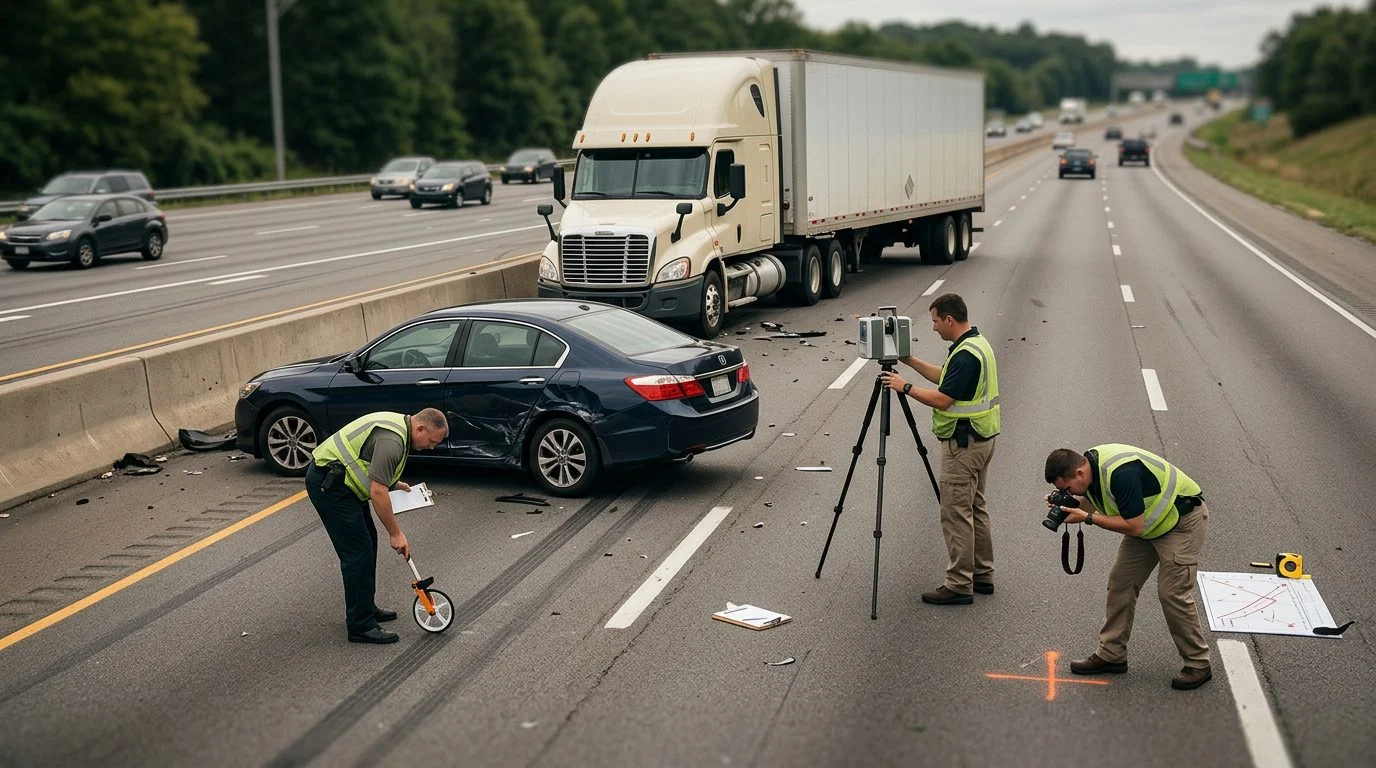
Spinal Cord Injury | Virginia
Living With an Incomplete C7 Spinal Cord Injury After a Crash
A plain-language guide for Virginia families facing a neck injury that may affect the arms, hands and body, and the questions that often follow.
Published November 9, 2026
A C7 spinal cord injury often shows up first as a few words on a hospital report: “C7,” and maybe “incomplete.” Those words describe two different things. C7 names where the injury sits in the neck, and incomplete means some signal still passes through the damaged area.
Reading the report carefully helps. This page explains both terms, how C7 compares with the C2, C5 and C6 levels, and the Virginia steps that may follow a crash.
Where C7 Sits in the Spinal Cord and Why the Level Matters
C7 is the seventh cervical vertebra, a bone near the base of the neck. The spinal cord runs through the vertebrae of the neck and back, and each level carries signals to and from different parts of the body. MedlinePlus explains how spinal cord injuries occur and how they affect movement and feeling below the injury.
A higher injury in the neck usually reaches more of the body than a lower one. The exact effect depends on the specific damage. A neurological exam and imaging help doctors describe that damage in detail.
Level tells you where the injury is. Completeness tells you how much signal gets through. You need both to make sense of a report.
If a crash left you or someone you love with a C7 injury, the firm is glad to talk through what you're facing and whether you may have a claim. Talk it through with Correll Law Firm — we can walk you through how a situation like yours is usually handled and what your options are.
Complete vs. Incomplete: What the Word “Incomplete” Means
An incomplete spinal cord injury means some signal still passes through the damaged area. A complete injury leaves no preserved movement or feeling below the injury level.
Doctors often describe incomplete injuries by the pattern they find on exam. They note which muscles move and what sensation is present. The Reeve Foundation fact sheet covers complete and incomplete injuries and the motor, sensory and autonomic effects that can follow.
These findings can change over time. A report captures one moment in the exam, not a fixed future. That is why the wording of a medical report deserves a careful read. No one can say in advance how any individual’s function will change.
Functions a C7 Injury Can Affect
A C7 injury is usually discussed in terms of the arms and hands. The C7 level commonly links to the triceps, which straighten the elbow, to wrist flexion, and to finger extension.
Hand use depends on several nerve levels working together. Grip and fine tasks, such as buttoning a shirt or holding a cup, can therefore be affected in different ways from one person to the next.
Depending on how much of the cord is damaged, trunk and chest muscles, bladder and bowel control, and leg function can also be involved. Daily life areas such as dressing, driving, work and personal care are where a treating team typically assesses function and plans next steps.
How C7 Differs From C2, C5 and C6 Injuries
A C2 injury sits much higher in the neck than C7. In general descriptions, a high injury like that can involve breathing support. A C5 injury more often involves the shoulder, elbow and biceps. A C6 injury more often involves wrist extension and some hand use.
In general descriptions, a lower neck injury tends to leave more arm and hand function than a higher one. The C7 level still commonly involves the triceps and finger movement, so its effects on the hands are real even when they differ from C6. The Reeve Foundation fact sheet gives a general overview of how the levels are described.
For the broader picture, see the spinal cord injury practice overview.
How Doctors Confirm the Level and Completeness
A neurological exam and imaging are the main ways doctors confirm the level and completeness of an injury. The exam tests movement, reflexes and feeling. The findings are recorded in the medical chart, as described in MedlinePlus.
MRI shows the spinal cord and surrounding soft tissue in detail. CT shows bone clearly. Together, the two help doctors describe where the damage is.
Ask the treating team to explain any terms you don’t understand. Write down questions after each visit, and note any change in movement or feeling over time.
Medical records are often needed when a crash injury is reviewed for a legal claim. They show the level, the completeness and how the injury has been tracked since the crash.
Crash Steps and Deadlines Virginia Readers Should Know
Virginia’s crash rules start at the scene. Virginia requires a driver involved in a crash with injury or death to stop and report it to police immediately (Va. Code §§ 46.2-371, 46.2-894). The reporting duty appears in Va. Code § 46.2-371.
The two-year period below is the deadline to file a lawsuit, not the deadline to report a crash (Va. Code § 8.01-243). Virginia generally allows two years from the date of injury to file a personal injury lawsuit (Va. Code § 8.01-243(A)); the clock runs from the date of injury, not the date of discovery, with narrow exceptions.
For example, a claim against a county, city or town needs a written statement of the claim filed within six months after the claim accrued, under Va. Code § 15.2-209. Va. Code § 15.2-209 reads: “Failure to provide such statement shall not bar a claim against any county, city, or town, provided that the attorney, chief executive, or mayor of such locality, or any insurer or entity providing coverage or indemnification of the claim, had actual knowledge of the claim, which includes the nature of the claim and the time and place at which the injury is alleged to have occurred, within six months after such cause of action accrued.” Va. Code § 15.2-209 reads: “Every claim cognizable against any county, city, or town for negligence shall be forever barred unless the claimant or his agent, attorney, or representative has filed a written statement of the nature of the claim, which includes the time and place at which the injury is alleged to have occurred, within six months after such cause of action accrued.” Timing deserves early attention, because the paperwork for these claims can be strict.
Not sure what your next step is?
Talk it through with Correll Law Firm — we can walk you through how a situation like yours is usually handled and what your options are.
How Fault Questions Affect a Crash Claim
Fault is often the first question after a crash, and it shapes what happens next. Virginia follows contributory negligence: if you are found even partly at fault, you may be barred from recovering, with limited exceptions. Talk to a lawyer about your facts.
Responsibility can also involve more than one person.
Crash evidence, such as police reports, witness information and vehicle damage, is commonly gathered to address who was at fault. A serious spinal cord injury can also raise questions about future medical needs and lost ability to work. A person may wish to review those questions with the medical records and the crash evidence.
Next Steps for a Reader Facing a C7 Diagnosis
Start by gathering the records you already have. Keep copies of the medical reports and the crash report. Keep a simple daily log of movement, feeling, pain and everyday tasks, and bring it to the treating team at each visit.
In short, the level says where the injury sits in the neck. Completeness says how much signal passes through the damaged area. The functions affected vary by person, and findings can change over time.
The firm has offices in Winchester and Harrisonburg and serves people in Richmond and Henrico County. Its spinal cord injury practice overview explains how it handles crash-related spinal cord injury matters.
Common Questions
Is an incomplete C7 injury the same as a complete one?
No. An incomplete injury lets some signal pass through the damaged area, while a complete injury leaves none below the injury level.
Does a C7 injury always affect the hands?
No. How much the arms and hands are affected depends on how much of the cord is damaged.