Spinal Cord Injury Lawyer
Spinal Cord Injury Lawyer in Virginia
If you or a loved one suffered a spinal cord injury in a car or truck accident, Correll Law Firm helps injured Virginians and their families pursue the compensation they need to move forward.
Published October 02, 2026
Spinal Cord Injury Lawyer Virginia: Car & Truck Accident Claims
A spinal cord injury from a motor vehicle crash can permanently change your life and your family’s future. When trauma damages the nerve fibers in your spinal cord, it can result in loss of strength, sensation, or function below the injury site. The medical, financial, and emotional consequences are profound.
Unlike spine fractures or disc herniations that may heal without nerve damage, a spinal cord injury involves direct trauma to nerve tissue itself. This makes it a catastrophic injury that demands focused legal representation and comprehensive financial recovery.
At Correll Law Firm, we represent people across Virginia who have suffered spinal cord injuries in car and truck accidents. We understand the complexity of these claims, the tactics insurance companies use to minimize compensation, and the lifetime costs of care that must be factored into any settlement or judgment.
Not sure what your next step is?
Talk it through with our team — the first case evaluation is free, confidential, and carries no obligation.

What Is a Spinal Cord Injury?
A spinal cord injury occurs when trauma—such as the violent impact of a motor vehicle crash—damages the nerve fibers that carry signals between your brain and the rest of your body. The spinal cord doesn’t have to be completely severed to cause permanent disability.
Compression, bruising, or tearing of nerve tissue can result in lasting loss of motor control, sensation, or both. Spinal cord injuries are classified as catastrophic injuries because they typically result in permanent, life-altering disability.
Unlike injuries that heal over weeks or months, a spinal cord injury usually requires lifelong medical management, ongoing rehabilitation, assistive technology, and home modifications. The financial impact extends across decades: medical expenses, lost earning capacity, and personal care costs can total hundreds of thousands of dollars over a lifetime.
Motor vehicle accidents are a leading cause of spinal cord injury in the United States. The sudden deceleration, impact force, and violent movement in a crash can fracture vertebrae, dislocate the spine, or compress nerve tissue in ways that healing cannot fully reverse.
How Car Accidents Cause Spinal Cord Injuries
Car accidents cause spinal cord injuries through sudden forces and violent movement during collision. When a vehicle strikes another vehicle or object, the impact generates deceleration forces that can exceed what the human spine can withstand.
Common accident scenarios that result in spinal cord injury include:
- Rear-end collisions: The sudden forward thrust can cause hyperextension of the neck and upper spine, damaging cervical nerve tissue.
- Head-on crashes: Direct frontal impact can cause forward flexion and compression of the spine, particularly in the cervical and thoracic regions.
- Rollover accidents: When a vehicle rolls, occupants are thrown violently, exposing the spine to extreme twisting and compression forces.
The severity of spinal cord injury depends on the speed of impact, the angle of collision, whether occupants were restrained, and vehicle structural integrity. While modern safety features like airbags and crumple zones reduce injury risk in many crashes, they cannot prevent spinal cord damage when forces are severe enough.
Spinal Cord Injuries from Commercial Truck Accidents
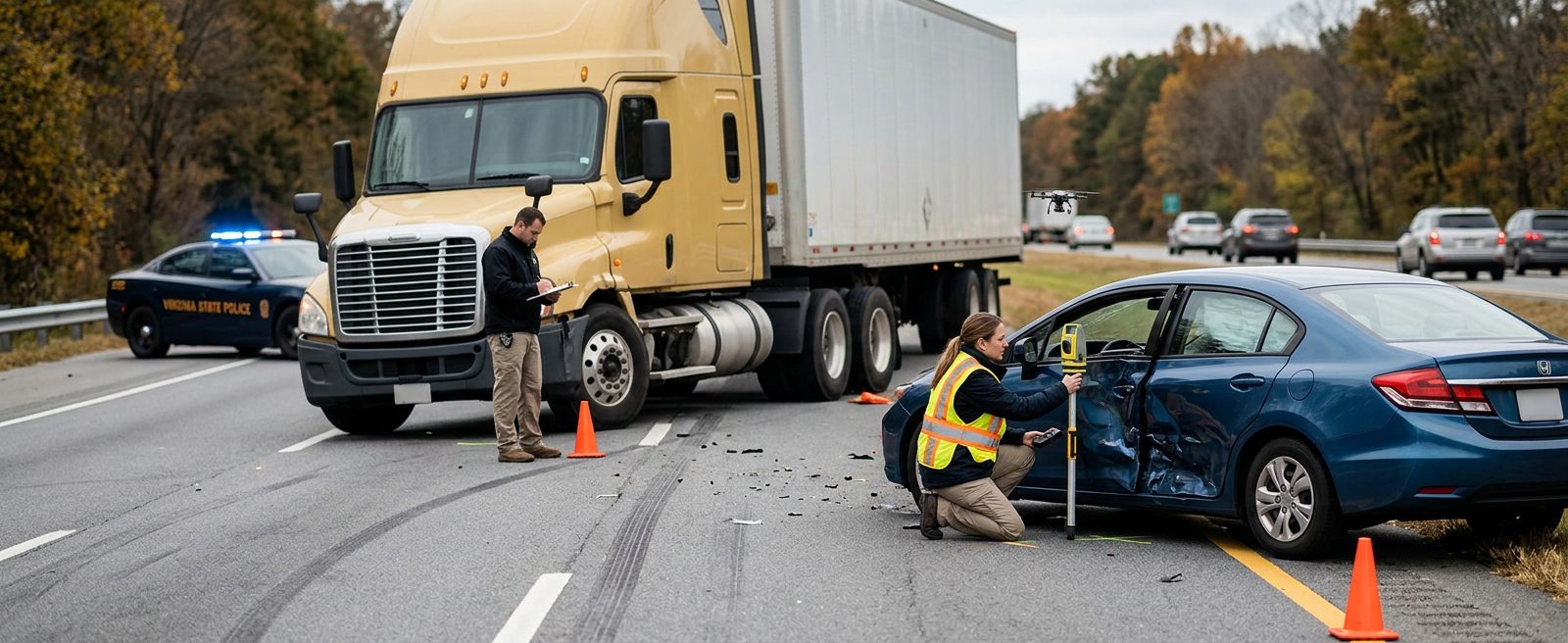
Commercial truck accidents carry a dramatically higher risk of catastrophic spinal cord injury than typical car-to-car collisions. The physics are unforgiving: a fully loaded semi-truck can weigh 80,000 pounds or more.
When traveling at highway speed, it generates impact forces that far exceed those in passenger vehicle crashes.
Why truck accidents cause more severe spinal cord injury:
- Weight and momentum: A large truck’s mass means greater force on impact, translating to more severe trauma to the spine and nervous system.
- Height differential: Underride accidents—where a passenger vehicle slides under a truck’s trailer—can cause catastrophic crushing injuries to the upper body and spine.
- Jackknife and rollover dynamics: When a truck jackknifes or rolls, the violent motion subjects occupants of a smaller vehicle to extreme forces from multiple directions.
- Liability complexity: Truck accidents often involve multiple defendants (the driver, the trucking company, the vehicle manufacturer, maintenance contractors). Determining liability requires careful investigation of federal trucking regulations, maintenance records, and driver logs.
Types and Severity of Spinal Cord Injuries
Spinal cord injuries are classified by completeness and by the level of the spine where injury occurs. Understanding these distinctions helps explain the functional impact and recovery potential.
Complete vs. Incomplete Injuries
A complete spinal cord injury results in total loss of motor and sensory function below the injury level. An incomplete injury preserves some nerve function, which may allow for greater recovery potential over time through rehabilitation and neuroplasticity (the brain’s ability to rewire neural pathways).
Tetraplegia (Quadriplegia) and Paraplegia
- Tetraplegia (also called quadriplegia) affects all four limbs and typically results from a cervical (neck) spine injury. Individuals with tetraplegia may lose the ability to walk, use their arms and hands, and control core muscles and breathing.
- Paraplegia affects the lower body and legs and typically results from thoracic (mid-back), lumbar (lower-back), or sacral (base of spine) injuries. Individuals with paraplegia usually retain upper-body and arm function but lose the ability to walk.
Levels of Injury
The spinal cord is divided into regions: cervical (neck), thoracic (mid-back), lumbar (lower-back), and sacral (base). The higher the injury on the spine, the more function is lost. A C4 (cervical level 4) injury is more severe than a T12 (thoracic level 12) injury because it affects more of the body.
Immediate Steps After a Spinal Cord Injury Accident
If you or a family member has been in a car or truck accident and suspect a spinal cord injury, the first priority is emergency medical response. Paramedics and emergency room physicians will immobilize the spine, perform imaging (X-rays, CT scans, MRI), and begin treatment to prevent further nerve damage.
Preserving evidence for a future claim:
- Request a copy of the accident report from local police.
- Obtain contact information from witnesses at the scene.
- Take photographs of vehicle damage, road conditions, and accident scene if safe to do so.
- Keep all medical records, imaging, and treatment notes.
- Document the names and credentials of all medical providers who evaluate or treat you.
- Preserve the vehicles involved; do not allow them to be scrapped or repaired until your attorney has reviewed them.
Early documentation and evidence preservation are critical. Insurance companies will investigate the accident quickly, and the details matter in establishing liability and injury severity.
Not sure what your next step is?
Talk it through with our team — the first case evaluation is free, confidential, and carries no obligation.
Damages and Compensation in Spinal Cord Injury Claims
Compensation in a spinal cord injury claim covers both economic damages (quantifiable financial losses) and non-economic damages (subjective harm).
Economic Damages:
- Acute medical care: Emergency room, surgery, hospitalization, imaging, and initial stabilization.
- Rehabilitation and therapy: Inpatient and outpatient physical therapy, occupational therapy, and specialized spinal cord injury rehabilitation programs.
- Ongoing medical treatment: Doctor visits, medications, imaging, and management of complications.
- Future medical and care costs: Often the largest component of damages. Lifetime costs for spinal cord injury care are substantial and vary by age at injury and severity. Individuals injured at younger ages face decades of medical care, assistive technology, and personal care attendants.
- Lost wages and earning capacity: Wages lost during recovery and the reduction in lifetime earning potential due to disability.
- Home and vehicle modifications: Wheelchair ramps, accessible bathrooms, modified vehicles, and assistive technology.
- Assistive devices and equipment: Wheelchairs, braces, communication devices, and adaptive equipment.
Non-Economic Damages for the Injured Person:
- Pain and suffering: The physical pain and emotional distress caused by the injury.
- Loss of enjoyment of life: The inability to participate in activities you once enjoyed.
Calculating these damages requires medical expert testimony about your condition and prognosis, economic analysis of lifetime care needs, and detailed documentation of your accident and injuries.
The Timeline of a Spinal Cord Injury Claim
A spinal cord injury claim typically progresses through several phases.
Investigation and Evidence Gathering (weeks to months)
Your attorney and investigators will obtain the accident report, interview witnesses, photograph the scene, and preserve evidence. For truck accidents, this includes obtaining the truck’s maintenance records, the driver’s logbooks, and the company’s safety practices.
Medical Evaluation and Expert Assessment (ongoing)
You’ll continue treatment with your medical team. Your attorney will coordinate with physicians to obtain medical records and arrange for independent medical evaluations if needed. Economic experts will begin calculating lifetime care costs and lost earning potential.
Demand and Negotiation (months)
Your attorney will prepare a demand letter detailing the accident, your injuries, medical treatment, and damages. This is sent to the at-fault driver’s insurance company. Insurance adjusters will evaluate the claim and make a counteroffer. Negotiation may take weeks or months.
Settlement or Litigation (months to years)
If settlement negotiations succeed, you’ll receive compensation and the case closes. If not, your attorney will file a lawsuit in Virginia court. Litigation involves discovery (exchange of documents and evidence), depositions (recorded interviews), and potentially a trial before a judge or jury.
Why You Need a Spinal Cord Injury Lawyer Virginia
Spinal cord injury claims are among the most complex personal injury cases. Insurance companies know this and often use delay tactics, challenge medical causation, or offer settlements far below what your case is worth.
An experienced spinal cord injury lawyer:
- Coordinates with medical experts to establish the connection between the accident and your injury.
- Hires economic experts to calculate lifetime care needs, lost earning capacity, and future medical costs.
- Investigates liability thoroughly, especially in truck accidents where multiple parties may be responsible.
- Understands insurance coverage limits and how to access underinsured motorist coverage if the at-fault driver’s policy is insufficient.
- Negotiates aggressively with insurance companies and is prepared to take your case to trial if necessary.
- Protects your family’s financial future by ensuring damages are calculated comprehensively and realistically.
Spinal Cord Injury Claims in Your Virginia Community
Correll Law Firm has offices in Winchester and Harrisonburg. We represent clients throughout the Shenandoah Valley, Richmond, and Henrico County.
Insurance and Spinal Cord Injury Claims
Understanding insurance coverage is essential in a spinal cord injury claim.
Liability Insurance: The at-fault driver’s liability insurance covers damages up to the policy limits. For policies effective on or after January 1, 2025, Virginia law requires a minimum of $50,000 in bodily injury liability coverage for one person, but this is often insufficient for a catastrophic spinal cord injury claim.
Underinsured Motorist Coverage: If the at-fault driver’s liability limits are exhausted, your own underinsured motorist (UIM) coverage may apply, allowing you to recover additional compensation.
Uninsured Motorist Coverage: If the at-fault driver has no insurance, your uninsured motorist (UM) coverage may provide recovery.
Commercial Trucking Insurance: Trucking companies are subject to federal financial responsibility requirements and often carry substantially higher liability limits than passenger vehicles because of the greater risk of catastrophic injury. Multiple defendants and insurance policies may apply in a truck accident.
Not sure what your next step is?
Talk it through with our team — the first case evaluation is free, confidential, and carries no obligation.
Recovery, Rehabilitation, and Legal Support
Recovery from a spinal cord injury is a lifelong process. Physical and occupational therapy help you regain function and adapt to your new abilities. Vocational rehabilitation and retraining may help you return to work in a modified capacity. Psychological counseling addresses the emotional impact of disability.
A comprehensive legal settlement or judgment supports this recovery by ensuring that funds are available for medical care, rehabilitation, assistive technology, home modifications, and personal care support you need. Your attorney works to maximize compensation so that your family’s financial security is protected.

Frequently Asked Questions
What is the difference between a complete and incomplete spinal cord injury?
A complete injury results in total loss of motor and sensory function below the injury level. An incomplete injury preserves some nerve function and may allow for greater recovery potential through rehabilitation.
Why do truck accidents cause more severe spinal cord injuries than car accidents?
Trucks weigh far more and generate greater impact forces. Underride accidents and rollover dynamics create extreme trauma that passenger vehicles cannot match.
Can I recover compensation if the at-fault driver has limited insurance?
Yes. Underinsured motorist coverage on your own policy may provide additional recovery if the at-fault driver’s liability limits are exhausted.
What should I do immediately after a crash if I suspect a spinal cord injury?
Call 911 for emergency medical response. Do not move the injured person. Preserve evidence at the scene if safe to do so. Contact a spinal cord injury attorney as soon as you are able.
How long does a spinal cord injury claim take to resolve?
Claims typically take several months to years depending on the complexity of liability, the severity of injuries, and whether settlement is reached or litigation is necessary.
How is filing deadline determined for a spinal cord injury claim?
In Virginia, the filing deadline is generally two years from when the cause of action accrues, with exceptions. Some claims carry notice requirements that run out sooner. You may wish to discuss your specific situation with a lawyer.
Related practice areas
- Spinal Cord Injury Settlements: What Factors Matter in Your Case?
- Spinal Cord Injury in Richmond
- Spinal Cord Injury in Henrico County
- Spinal Cord Injury in Winchester
- Spinal Cord Injury in Front Royal
- Spinal Cord Injury in Harrisonburg
- Spinal Cord Injury in Shenandoah Valley
- Spinal Cord Injury from Car Accidents | Correll Law Firm