
Spinal Cord Injury Claims in Virginia
A Spinal Cord Injury After a Crash? Understand Your Options in Virginia
Plain-language guidance on filing deadlines, fault and the steps families often take after a serious car or truck crash, for people across the Shenandoah Valley and Richmond.
Published October 22, 2026
A spinal cord injury can change how a person moves, feels and manages daily life. When a car or commercial truck crash causes one, the injured person and their family often face hard questions about the law. This page explains the main Virginia rules that shape these claims, in plain terms.
What a spinal cord injury claim involves in Virginia
A spinal cord injury claim asks who caused the crash and what the injury has done to the person’s life. The spinal cord carries signals between the brain and the rest of the body. Damage to it can affect movement, feeling and bodily functions. Many of these effects last a long time, and recovery can take years.
Car and commercial truck crashes can cause these injuries. The firm handles car accidents, truck accidents, commercial vehicle accidents, catastrophic injuries, traumatic brain injury, spinal cord injury and wrongful death matters. Whether a claim exists depends on who was responsible for the crash and what the injury has caused. Each crash has its own facts, and the firm reviews them individually.
The firm has offices in Winchester and Harrisonburg. It serves people across the Shenandoah Valley and elsewhere in Virginia, including Richmond and Henrico County.
If a crash has left you or a loved one with a spinal cord injury, you do not have to face these questions alone, and the firm is glad to talk through your facts. Talk it through with Correll Law Firm — we can walk you through how a situation like yours is usually handled and what your options are.

How long a spinal cord injury lawsuit may be filed in Virginia
Virginia generally allows two years from the date of injury to file a personal injury lawsuit (Va. Code § 8.01-243(A)); the clock runs from the date of injury, not the date of discovery, with narrow exceptions.
The accrual rule is in Va. Code § 8.01-230. Full effects of a spinal cord injury can take time to show, but the period is not paused while they do.
Some claims have shorter steps. A negligence claim against a county, city or town requires a written statement filed within six months after the claim accrued, under Va. Code § 15.2-209. Without that statement, the claim may be barred, unless the attorney, chief executive, or mayor of the locality, or any insurer or entity providing coverage or indemnification of the claim, had actual knowledge of the claim in time. Timing matters early, so note the dates of any crash right away.
What happens if the injured person is partly at fault for the crash
Virginia follows contributory negligence: if you are found even partly at fault, you may be barred from recovering, with limited exceptions (Contributory negligence bars recovery in Virginia). Talk to a lawyer about your facts.
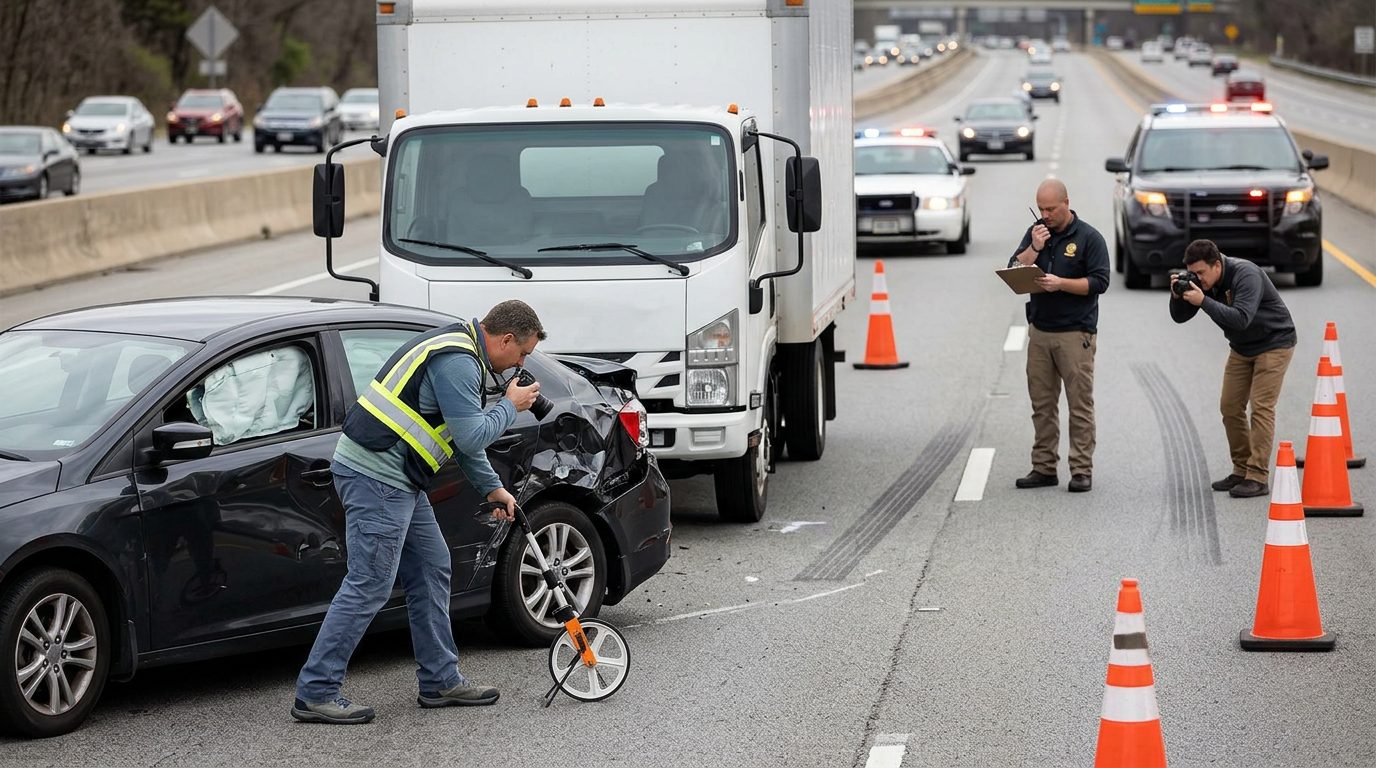
The facts of the crash, including the police report, witness accounts and vehicle evidence, often decide how this question plays out.
Fault can also be shared among several parties. In a truck crash, both the driver’s conduct and the trucking company’s conduct can be part of that question.
When punitive damages may be part of a spinal cord injury claim
Virginia allows punitive damages for actual malice, or for willful or wanton conduct or recklessness showing a conscious disregard for the safety of others, capped at $350,000 (Va. Code § 8.01-38.1). The jury is not told about the cap (Va. Code § 8.01-38.1).
Punitive damages are not part of every claim, because they depend on the conduct involved.
How a spinal cord injury that causes a death is handled
A Virginia wrongful death action is filed by the decedent’s personal representative within two years of the death (Va. Code §§ 8.01-50(C), 8.01-244(B)), on behalf of the family members the statute protects.
Family members do not file the case themselves: the action is brought by the personal representative of the person who died, and the family members the statute protects share in any recovery.
Virginia wrongful death damages cover the family’s sorrow, mental anguish and loss of the decedent’s companionship, guidance and care; lost income and services; medical expenses from the injury; funeral expenses; and, for willful or wanton conduct, punitive damages (Va. Code § 8.01-52).
Families often mix up the injury claim with the wrongful death claim.

What to preserve after a crash that causes a spinal cord injury
Virginia requires a driver involved in a crash with injury or death to stop and report it to police immediately (Va. Code §§ 46.2-371, 46.2-894).
Useful records include the police report number, medical records and imaging, a daily journal of symptoms and daily activity limits, and photos of the scene and vehicles.
Truck crashes add another source of records. Federal rules require a motor carrier to keep records of duty status and supporting documents for at least six months from the date of receipt (49 C.F.R. § 395.8). Six months is a minimum, so early attention to the crash matters.
Those facts shape how Virginia law applies to the claim.
Frequently asked questions
Can a spinal cord injury cause paralysis?
Yes. Paralysis is one possible effect, and it depends on where the injury sits on the spinal cord and how severe it is.
Related practice areas
- Virginia Car Accident Lawyer: What Hiring One Involves