
Virginia car accident claims
What Hiring a Virginia Car Accident Lawyer Involves
How a personal injury firm builds a crash claim, from gathering the first evidence to talking with insurers, for people across the Shenandoah Valley and the Richmond area.
About Correll Law Firm
2
Offices, in Winchester and Harrisonburg
Free
First case evaluation, confidential, with no obligation to continue
Published October 22, 2026
A personal injury lawyer handles the legal work of a Virginia car accident claim, from gathering evidence to negotiating with insurers and filing suit if needed. The firm, with offices in Winchester and Harrisonburg, handles car accident claims for people across the Shenandoah Valley and the Richmond area. This page explains what that work involves and what to know early.
What a personal injury lawyer does on a Virginia car accident claim
A personal injury lawyer builds the claim from the evidence up, and most of that work happens before any courtroom appearance.
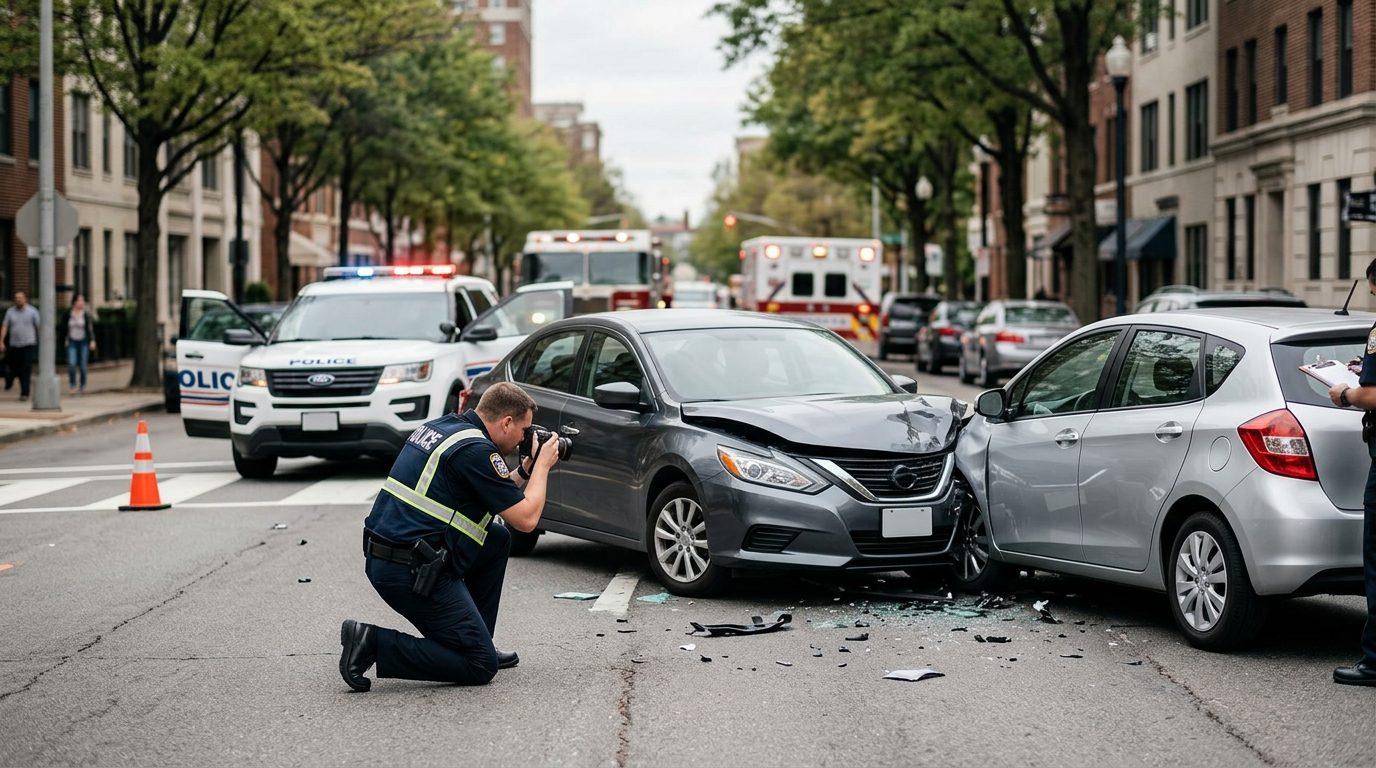
Gathering starts with the police report, medical records, repair estimates, and wage records. Each one shows part of the story: how the crash happened, what injuries followed, and what work or income was lost.
Insurers begin forming their positions early. That is why evidence gathering often starts soon after the crash, before an insurer’s view of the claim hardens.
From there, a lawyer communicates with the insurer, evaluates the claim, and negotiates. If talks do not resolve the claim, a lawsuit may be filed.
You stay in control of key decisions, such as whether to accept an offer. A lawyer can explain your options, but the choice is yours.
Crashes on rural roads and interstates in the Shenandoah Valley often leave fewer independent witnesses. Photos and early records can carry more weight in those cases.
If a Virginia crash left you or a family member hurt, the firm offers to talk through your situation and whether you may have a claim. Talk it through with Correll Law Firm — we can walk you through how a situation like yours is usually handled and what your options are.

Steps to take right after a crash in Virginia
Get medical care first, then make sure the crash is reported. Virginia requires a driver involved in a crash with injury or death to stop and report it to police immediately (Va. Code §§ 46.2-371, 46.2-894).
Get checked by a doctor even when pain seems minor, since some injuries appear days later.
Photograph the vehicles, the road, and any visible injuries. Write down the other driver’s details and any witness names.
Keep a simple diary of symptoms, appointments, and missed work. Save bills, receipts, and repair estimates in one folder.
If an insurance adjuster calls, note the date, the caller, and what was discussed. You may wish to talk with a lawyer before giving a recorded statement.
Deadlines and timing that shape when to talk with a lawyer
Virginia generally allows two years from the date of injury to file a personal injury lawsuit (Va. Code § 8.01-243(A)); the clock runs from the date of injury, not the date of discovery, with narrow exceptions.
Some claims carry notice requirements that run out sooner. For example, a claim against a county, city, or town for negligence requires a written statement, including the time and place of injury, filed within six months after the claim accrues, though failure to file is not a bar if the attorney, chief executive, or mayor, or any insurer or entity providing coverage or indemnification of the claim, had actual knowledge of the claim within that period (Va. Code § 15.2-209). A claim against the Commonwealth or a transportation district requires a written statement, including the time and place of injury and the agency or agencies alleged to be liable, filed within one year, though failure to file is not a bar if the Division of Risk Management, any insurer or entity providing coverage or indemnification of the claim, or the Attorney General (or, for a transportation district, the commission chairman) had actual knowledge of the claim within that year (Va. Code § 8.01-195.6).
A crash involving a government vehicle or road can raise these rules, so the dates need checking early.
You may wish to speak with a lawyer early, so someone can check these dates against your facts. Waiting can leave less time for the steps a claim requires.
How fault, injuries and losses affect a car accident claim
Fault and losses both shape what a car accident claim can recover, so both matter from the first conversation.
Virginia follows contributory negligence: if you are found even partly at fault, you may be barred from recovering, with limited exceptions (Contributory negligence bars recovery in Virginia). Talk to a lawyer about your facts.
Fault often turns on what each driver could have seen and done.
Evidence often decides these questions. Police reports, witness statements, photos, and vehicle data often show who had the chance to avoid the crash.
Losses may include medical treatment, lost income, and pain and suffering from the injury. Provable lost income is not reduced because of reimbursement from another source, and that reimbursement is not admitted into evidence (Va. Code § 8.01-35).
When a car accident is fatal: the wrongful death claim
A Virginia wrongful death action is filed by the decedent’s personal representative within two years of the death (Va. Code §§ 8.01-50(C), 8.01-244(B)), on behalf of the family members the statute protects.
The statute sets an order for who receives damages, including a surviving spouse, children, and certain parents or relatives who depended on the decedent (Va. Code § 8.01-53).
Virginia wrongful death damages cover the family’s sorrow, mental anguish and loss of the decedent’s companionship, guidance and care; lost income and services; medical expenses from the injury; funeral expenses; and, for willful or wanton conduct, punitive damages (Va. Code § 8.01-52).
Families often have questions about timing and who may bring the claim. Those questions are a reason to talk with a lawyer promptly.

Questions to bring to a first discussion with a lawyer
Bring the facts you have, and write down the questions that matter most to you. Useful questions include:
- Who would work on the claim day to day?
- How are updates shared with you?
- What information is needed first?
- What are the likely next steps, and could the claim be resolved through negotiation or would it require a lawsuit?
Timelines depend on the facts and on whether the claim is resolved through negotiation or a lawsuit. A clear explanation of the process helps you weigh your options.
What should I bring to a first discussion?
Bring the police report number, witness names, photos, medical records, bills, and a list of missed work. A written timeline of the crash helps too.