
Spinal Cord Injury Truck Accidents | Virginia
Spinal Cord Injuries From Truck Crashes: Guidance for Virginia Families
Correll Law Firm represents people seriously hurt in commercial truck crashes, and their families, from the Shenandoah Valley to Richmond and Henrico County.
Published October 21, 2026
A spinal cord injury claim from a truck accident seeks compensation for the harm a crash causes, including medical care, lost income and lasting changes to daily life. Anyone searching for a spinal cord injury truck accident lawyer in Virginia should first understand how these claims work.
What Is a Spinal Cord Injury Claim From a Truck Accident?
A spinal cord injury claim is a request for compensation after a crash damages the spinal cord. The spinal cord carries signals between the brain and the rest of the body, so an injury can change how a person moves, feels and functions below the point of damage. The Christopher & Dana Reeve Foundation describes these injuries by type, level and completeness, and by their effects on movement, sensation and bodily function.
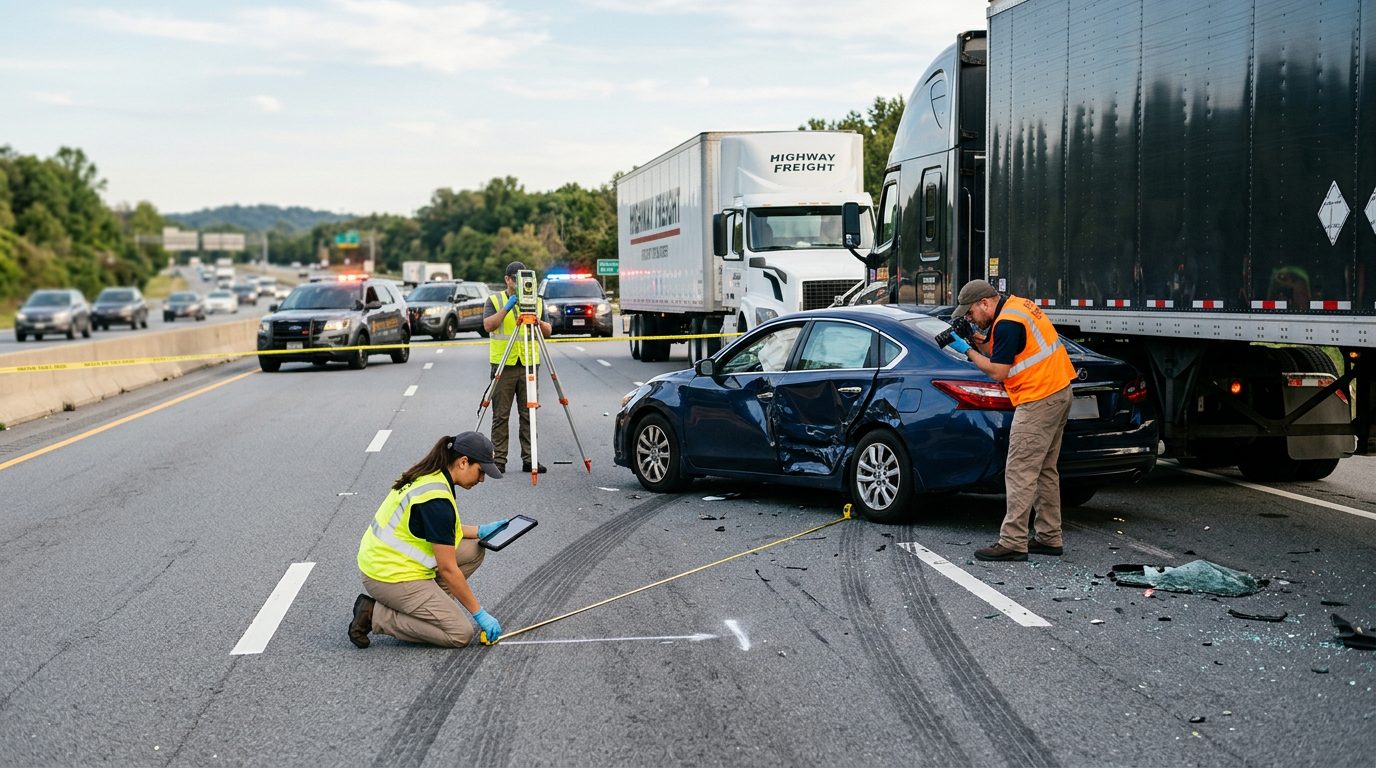
Commercial trucks weigh far more than passenger cars. Rollovers and jackknife crashes are among the ways a truck collision can cause serious spinal injuries. Injuries like these often bring long recoveries, so a claim usually looks at the future as well as the past.
Drivers, passengers, pedestrians and cyclists are among the people hurt in these crashes. When a crash causes death, a different kind of claim applies, covered below.
If you or someone you love was hurt in a truck crash, you do not have to face the claim process alone, and the firm is ready to listen. Talk it through with Correll Law Firm — we can walk you through how a situation like yours is usually handled and what your options are.
What Does a Spinal Cord Injury Claim Cover?
A claim can seek compensation for medical care, lost income, future care and the changes a serious injury brings to daily life. Common categories include:
- Past medical care: emergency treatment, surgery, hospital stays, imaging and rehabilitation.
- Future care: ongoing therapy, medications, medical equipment and help at home.
- Lost income: wages missed during recovery and, if the injury limits work, lost ability to earn later.
- Home and vehicle changes: ramps, bathroom modifications or adapted vehicles that a lasting injury may require.
- Pain and emotional distress: the physical and mental effects of the injury on the injured person.
Wrongful death claims work differently. Virginia wrongful death damages cover the family’s sorrow, mental anguish and loss of the decedent’s companionship, guidance and care; lost income and services; medical expenses from the injury; funeral expenses; and, for willful or wanton conduct, punitive damages (Va. Code § 8.01-52).
How Is Pain and Suffering Calculated in Virginia?
No single formula sets pain and suffering, and no two injuries affect a person the same way. The amount reflects how the injury changes the body, work, relationships and daily routine.
Several facts often shape this part of a claim:
- The type, level and completeness of the injury, as shown in medical records.
- How long symptoms and limits last, and whether they are expected to continue.
- The daily help and care the person needs.
- The person’s age, work and activities before the crash.
Testimony from the injured person and family members can describe these changes. Medical experts can explain long-term effects in terms a jury can follow. Each claim rests on its own facts.
Is a Spinal Cord Injury Considered a Disability?
A spinal cord injury can cause lasting disability, and whether it fits a particular legal definition turns on that definition. Doctors describe these injuries by level along the spine: cervical, thoracic, lumbar or sacral. They also describe whether an injury is complete or incomplete, as the Reeve Foundation’s overview of spinal cord injury explains.
The level of injury shapes which functions are affected, so it matters in medical records and in how a claim is documented. Records that describe the injury’s type, level and completeness, along with its daily effects, help show how lasting the harm is. That evidence also supports the lost income and future care needs a claim may include.
How Does the Legal Process Work?
A truck crash claim usually moves through investigation, a demand to insurers and, if needed, a lawsuit. The steps below show the usual order.
- Investigation. Police reports, medical records, driver logs, maintenance records and scene evidence are gathered.
- Liability review. The facts are reviewed to identify who may be responsible and how the crash happened.
- Damages review. Medical bills, lost income, future care and daily effects are documented with medical records and testimony.
- Demand and negotiation. The claim is presented to the at-fault party’s insurer, and both sides may negotiate.
- Lawsuit, if needed. If a fair resolution is not reached, a lawsuit may be filed and the case may move toward trial.
Timelines vary. Claims can take months or years, depending on the injury, the number of parties and whether the case resolves before trial.
Who Can Be Responsible After a Truck Crash?
More than one party can share responsibility after a truck crash.
Federal rules also set duties for trucking companies. Under 49 C.F.R. § 396.3, every motor carrier must systematically inspect, repair and maintain the motor vehicles it controls. Parts and accessories must be in safe and proper operating condition at all times. Depending on the crash, a claim may look at the driver’s conduct, the company’s maintenance and records, and other parties involved.
Not sure what your next step is?
Talk it through with Correll Law Firm — we can walk you through how a situation like yours is usually handled and what your options are.
Common Questions About Spinal Cord Injury Claims
Here are short answers to questions people often ask about these claims.
How much is a spinal cord injury claim worth?
No fixed amount applies, because the value depends on the facts of the injury, its lasting effects and the care it requires.
What if I was partly at fault?
Virginia follows contributory negligence: if you are found even partly at fault, you may be barred from recovering, with limited exceptions (Contributory negligence bars recovery in Virginia). Talk to a lawyer about your facts.
How long do I have to file a claim?
Virginia generally allows two years from the date of injury to file a personal injury lawsuit (Va. Code § 8.01-243(A)); the clock runs from the date of injury, not the date of discovery, with narrow exceptions.
Will my case go to trial?
Some claims resolve through negotiation, while others need a lawsuit and, possibly, a trial.
Spinal Cord Injury Truck Accident Claims
Correll Law Firm handles spinal cord injury and truck accident claims for people in Virginia. The firm’s offices are in Winchester and Harrisonburg. The firm handles car accidents, truck and commercial vehicle accidents, catastrophic injuries, traumatic brain injury, spinal cord injury and wrongful death.
The firm represents people seriously hurt in these crashes and families in wrongful death cases. It serves people from the Shenandoah Valley, Richmond, Henrico County and across Virginia.
Claims like these may involve outside medical experts and accident reconstruction professionals, who can explain injuries and how a crash happened.

What Evidence Matters Early in a Truck Crash Claim?
Early action matters because some trucking records and tests are kept or taken within set periods. Records that are not requested early may no longer exist when a claim begins.
Under 49 C.F.R. § 396.3, maintenance records must be kept where the vehicle is housed or maintained for 1 year, and for 6 months after the vehicle leaves the carrier’s control.
Under 49 C.F.R. § 382.303, an employer must test surviving drivers for alcohol and controlled substances after certain crashes. If an alcohol test is not given within 2 hours, the employer must keep a record of why. Attempts stop after 8 hours for alcohol and 32 hours for controlled substances.
Virginia requires a driver involved in a crash with injury or death to stop and report it to police immediately (Va. Code §§ 46.2-371, 46.2-894).